


2 months 3 days ago
To all this, someone is sure to object that life ought to subject itself to reason, to which we will reply that nobody ought to do what he is unable to do, and life cannot subject itself to reason. "Ought, therefore can," some Kantian will retort. To which we shall demur: "Cannot, therefore ought not." And life cannot submit itself to reason, because the end of life is living and not understanding.

3 months 2 weeks ago
Next to the ridicule of denying an evident truth, is that of taking much pains to defend it; and no truth appears to me more evident, than that beasts are endow'd with thought and reason as well as men. The arguments are in this case so obvious, that they never escape the most stupid and ignorant.
▼
Source
source
Part 3, Section 16

1 month 2 weeks ago
It's misleading to suppose there's any basic difference between education & entertainment. This distinction merely relieves people of the responsibility of looking into the matter.
▼
Source
source
(1957) from "Classroom Without Walls", Explorations Vol. 7, 1957; reprinted in Explorations in Communication ed. E. Carpenter & M. McLuhan, (Boston: Beacon, 1960); and again in McLuhan: Hot and Cool ed. G. E. Stearn (NY: Dial, 1967).

2 months 1 week ago
To have accomplished nothing and to die overworked.
3 months 2 weeks ago
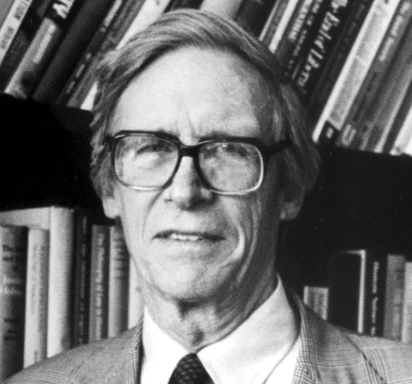
I have tried to set forth a theory that enables us to understand and to assess these feelings about the primacy of justice. Justice as fairness is the outcome: it articulates these opinions and supports their general tendency.
▼
Source
source
Chapter IX, Section 87, p. 586
2 months 3 weeks ago
If you want me to believe in God, you must make me touch him.
▼
Source
source
as quoted in Diderot and the Encyclopædists (1897) by John Morley, p. 92.

3 months 2 weeks ago
Politics is concerned with herds rather than with individuals, and the passions which are important in politics are, therefore, those in which the various members of a given herd can feel alike.
2 months 1 week ago
The open society is one that is deemed in principle to embrace all humanity.
▼
Source
source
Chapter IV

3 months 2 weeks ago
If slavery, barbarism and desolation are to be called peace, men can have no worse misfortune. No doubt there are usually more and sharper quarrels between parents and children, than between masters and slaves ; yet it advances not the art of household management to change a father's right into a right of property, and count children but as slaves. Slavery, then, and not peace, is furthered by handing the whole authority to one man.
▼
Source
source
Ch. 6, On Monarchy

3 months 3 weeks ago
There are four classes of Idols which beset men's minds. To these for distinction's sake I have assigned names - calling the first class, Idols of the Tribe; the second, Idols of the Cave; the third, Idols of the Market-Place; the fourth, Idols of the Theater.
▼
Source
source
Aphorism 39
2 days ago
That the individual is of himself a world's history, and possesses his property in the rest of the world's history, goes beyond what is Christian. To the Christian the world's history is the higher thing, because it is the history of Christ or 'man'; to the egoist only his history has value, because he wants to develop only himself not the mankind-idea, not God's plan, not the purposes of Providence, not liberty, and the like. He does not look upon himself as a tool of the idea or a vessel of God, he recognizes no calling, he does not fancy that he exists for the further development of mankind and that he must contribute his mite to it, but he lives himself out, careless of how well or ill humanity may fare thereby.
▼
Source
source
Cambridge 1995, p. 323
3 months 3 weeks ago
The two ways of contemplation are not unlike the two ways of action commonly spoken of by the ancients: the one plain and smooth in the beginning, and in the end impassable; the other rough and troublesome in the entrance, but after a while fair and even. So it is in contemplation: If a man will begin with certainties, he shall end in doubts; but if he will be content to begin with doubts he shall end in certainties.
▼
Source
source
Book I, v, 8

1 week 1 day ago
The manner of men's Hero-worship, verily it is the innermost fact of their existence, and determines all the rest,-at public hustings, in private drawing-rooms, in church, in market, and wherever else. Have true reverence, and what indeed is inseparable therefrom, reverence the right man, all is well; have sham-reverence, and what also follows, greet with it the wrong man, then all is ill, and there is nothing.

3 months 3 weeks ago
When our Lord and Master Jesus Christ said, "Repent," he willed the entire life of believers to be one of repentance.
▼
Source
source
Thesis 1
1 day ago
We know nothing of tomorrow; our business is to be good and happy today.
▼
Source
source
Vol. I, ch. 12, p. 472
1 week 1 day ago
Innumerable are the illusions and legerdemain-tricks of Custom: but of all these, perhaps the cleverest is her knack of persuading us that the Miraculous, by simple repetition, ceases to be Miraculous.
▼
Source
source
Bk. III, ch. 8.

1 week 5 days ago
Jesus, in some respects, was an anarchist, for he had no idea of civil government. That government seems to him purely and simply an abuse.
▼
Source
source
Ch. 7.

2 months 3 weeks ago
How shall the dead arise, is no question of my faith; to believe only possibilities, is not faith, but mere philosophy.
▼
Source
source
Section 48
2 months ago
It is not honourable to attack an enemy without putting yourself at risk.

2 months 2 weeks ago
A people who are still, as it were, but in the gristle, and not yet hardened into the bone of manhood.
1 week 1 day ago
All old Poems, Homer's and the rest, are authentically Songs. I would say, in strictness, that all right Poems are; that whatsoever is not sung is properly no Poem, but a piece of Prose cramped into jingling lines,-to the great injury of the grammar, to the great grief of the reader, for most part! What we wants to get at is the thought the man had, if he had any: why should he twist it into jingle, if he could speak it out plainly? It is only when the heart of him is rapt into true passion of melody, and the very tones of him, according to Coleridge's remark, become musical by the greatness, depth and music of his thoughts, that we can give him right to rhyme and sing; that we call him a Poet, and listen to him as the Heroic of Speakers,-whose speech is Song.
1 month 4 weeks ago
Ideas, cultures, and histories cannot seriously be understood or studied without their force, or more precisely their configurations of power, also being studied.

2 months 3 weeks ago
In cities men cannot be prevented from concerting together, and from awakening a mutual excitement which prompts sudden and passionate resolutions. Cities may be looked upon as large assemblies, of which all the inhabitants are members; their populace exercises a prodigious influence upon the magistrates, and frequently executes its own wishes without their intervention. Variant translation: In towns it is impossible to prevent men from assembling, getting excited together and forming sudden passionate resolves. Towns are like great meeting houses with all the inhabitants as members. In them the people wield immense influence over their magistrates and often carry their desires into execution without intermediaries.
▼
Source
source
Chapter XVII.


3 months 2 weeks ago
In every country it always is and must be the interest of the great body of the people to buy whatever they want of those who sell it cheapest. The proposition is so very manifest that it seems ridiculous to take any pains to prove it; nor could it ever have been called in question had not the interested sophistry of merchants and manufacturers confounded the common sense of mankind. Their interest is, in this respect, directly opposite to that of the great body of the people.
▼
Source
source
Chapter III, Part II, p. 531.

3 months 2 weeks ago
I have said more than once, that I hold space to be something purely relative, as time; an order of coexistences, as time is an order of successions.
▼
Source
source
Third letter to Samuel Clarke, February 25, 1716
3 months 6 days ago
What is to prevent one from telling truth as he laughs, even as teachers sometimes give cookies to children to coax them into learning their A B C?
▼
Source
source
Book I, satire i, line 24 (translation by H. Fairclough)

3 months 3 weeks ago
The worst of my actions or conditions seem not so ugly unto me as I find it both ugly and base not to dare to avouch for them.
3 months 2 weeks ago
They should always be heard, and fairly and kindly answer'd, when they ask after any thing they would know, and desire to be informed about. Curiosity should be as carefully cherish'd in children, as other appetites suppress'd.
▼
Source
source
Sec. 108
2 months 3 weeks ago
In any country where talent and virtue produce no advancement, money will be the national god. Its inhabitants will either have to possess money or make others believe that they do. Wealth will be the highest virtue, poverty the greatest vice. Those who have money will display it in every imaginable way. If their ostentation does not exceed their fortune, all will be well. But if their ostentation does exceed their fortune they will ruin themselves. In such a country, the greatest fortunes will vanish in the twinkling of an eye. Those who don't have money will ruin themselves with vain efforts to conceal their poverty. That is one kind of affluence: the outward sign of wealth for a small number, the mask of poverty for the majority, and a source of corruption for all.
1 month 2 weeks ago
Our book technology has Gutenberg at one end and the Ford assembly lines at the other. Both are obsolete.
▼
Source
source
(p. 99)
2 months 1 week ago
The blessing that the market does not ask about birth is paid for in the exchange society by the fact that the possibilities conferred by birth are molded to fit the production of goods that can be bought on the market.
▼
Source
source
E. Jephcott, trans., p. 9.

2 months 1 week ago
We are accustomed to speak of ideas as reproduced, as passed from mind to mind, as similar or dissimilar to one another, and, in short, as if they were substantial things; nor can any reasonable objection be raised to such expressions. But taking the word "idea" in the sense of an event in an individual consciousness, it is clear that an idea once past is gone forever, and any supposed recurrence of it is another idea. These two ideas are not present in the same state of consciousness, and therefore cannot possibly be compared.

3 months 1 week ago
Frazer's account of the magical and religious views of mankind is unsatisfactory; it makes these views look like errors.
▼
Source
source
Ch. 7 : Remarks on Frazer's Golden Bough, p. 119

2 months 1 week ago
I am he that liveth, and was dead; and, behold, I am alive for evermore, Amen; and have the keys of hell and of death. Write the things which thou hast seen, and the things which are, and the things which shall be hereafter.
▼
Source
source
Revelation 1:18-19

2 months ago
On the whole, the scientist is better off if he collects his facts by accident, little by little, so he can study them before he tries to fit them into a jigsaw puzzle, This is how the late Tom Lethbridge came to arrive at his theories about other dimensions of reality. It is also how Guy Lyon Playfair came to develop his own theories about the nature of the poltergeist.
▼
Source
source
p. 196
2 months ago
No art can be judged by purely aesthetic standards, although a painting or a piece of music may appear to give a purely aesthetic pleasure. Aesthetic enjoyment is an intensification of the vital response, and this response forms the basis of all value judgements. The existentialist contends that all values are connected with the problems of human existence, the stature of man, the purpose of life. These values are inherent in all works of art, in addition to their aesthetic values, and are closely connected with them.
▼
Source
source
The Chicago Review, Volume 13, no. 2, 1959, p. 152-181
2 months 3 weeks ago
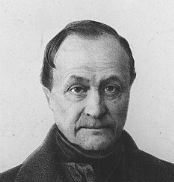
In the final, positive state, the mind has given over the vain search after Abolute notions, the origin and destination of the universe, and the cause of phenomenon, and applies itself to the tudy of their laws, - that is, their invariable relations of succession and resemblance. Reasoning and observation, duly combined, are the means of this knowledge. What is now understood when we speak of an explanation of the facts is simply the establishment of a connection between single phenomena and some general facts, the number of which continually diminishes with the progress of science.
▼
Source
source
Vol I
2 months 2 weeks ago
A man full of warm, speculative benevolence may wish his society otherwise constituted than he finds it, but a good patriot and a true politician always considers how he shall make the most of the existing materials of his country. A disposition to preserve and an ability to improve, taken together, would be my standard of a statesman. Everything else is vulgar in the conception, perilous in the execution.
2 days ago
If it is the drive of our time, after freedom of thought is won, to pursue it to that perfection through which it changes to freedom of the will in order to realize the latter as the principle of a new era, then the final goal of education can no longer be knowledge, but the will born out of knowledge, and the spoken expression of that for which it has to strive is: the personal or free man. Truth consists in nothing other than man's revelation of himself, and thereto belongs the discovery of himself, the liberation from all that is alien, the uttermost abstraction or release from all authority, the re-won naturalness. Such thoroughly true men are not supplied by school; if they are there, they are there in spite of school.
▼
Source
source
p. 21

4 months 2 weeks ago
I may live for thirty years, or perhaps forty, or maybe just one day: therefore I have resolved to use this day, or whatever I have to say in these thirty years or whatever I have to say this one day I may have to live - I have resolved to use it in such a way that if not one day in my whole past life has been used well, this one by the help of God will be.
2 months 2 weeks ago
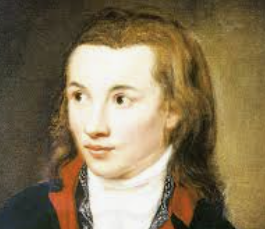
Fate and temperament are two words for one and the same concept.
▼
Source
source
As quoted in Demian (1965) by Hermann Hesse, trans. Michael Roloff and Michael Lebeck
3 months 2 weeks ago
All who are not lunatics are agreed about certain things. That it is better to be alive than dead, better to be adequately fed than starved, better to be free than a slave. Many people desire those things only for themselves and their friends; they are quite content that their enemies should suffer. These people can only be refuted by science: Humankind has become so much one family that we cannot ensure our own prosperity except by ensuring that of everyone else. If you wish to be happy yourself, you must resign yourself to seeing others also happy.
▼
Source
source
"The Science to Save Us from Science," The New York Times Magazine, 3/19/1950
2 months 2 days ago
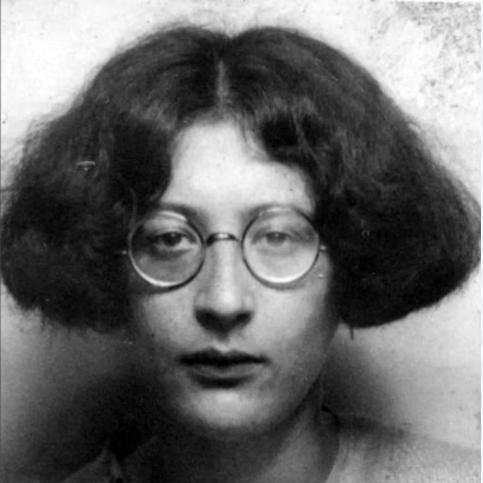
One of the most exquisite pleasures of human love - to serve the loved one without his knowing it - is only possible, as regards the love of God, through atheism.
▼
Source
source
Last Notebook (1942) p. 84
3 months 4 days ago
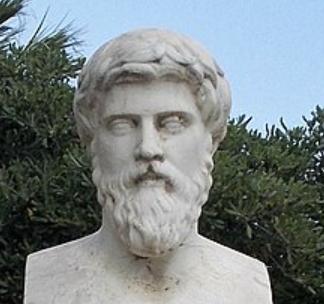
Lysander said, "Where the lion's skin will not reach, it must be pieced with the fox's."
▼
Source
source
60 Lysander
3 months 2 weeks ago
The more exquisite any good is, of which a small specimen is afforded us, the sharper is the evil, allied to it; and few exceptions are found to this uniform law of nature. The most sprightly wit borders on madness; the highest effusions of joy produce the deepest melancholy; the most ravishing pleasures are attended with the most cruel lassitude and disgust; the most flattering hopes make way for the severest disappointments. And, in general, no course of life has such safety (for happiness is not to be dreamed of) as the temperate and moderate, which maintains, as far as possible, a mediocrity, and a kind of insensibility, in every thing. As the good, the great, the sublime, the ravishing are found eminently in the genuine principles of theism; it may be expected, from the analogy of nature, that the base, the absurd, the mean, the terrifying will be equally discovered in religious fictions and chimeras.
▼
Source
source
Part XV - General corollary
2 months 1 week ago
The skeptic is the least mysterious man in the world, and yet, starting from a certain moment, he no longer belongs to this world.
2 months 4 weeks ago
Avoid doing what you would blame others for doing.
▼
Source
source
As quoted in Diogenes Laërtius, The Lives and Opinions of Eminent Philosophers, I, 36 Cf. Golden Rule
2 months 2 weeks ago
How can a rational being be ennobled by anything that is not obtained by its own exertions?
▼
Source
source
Ch. 3
CivilSimian.com created by AxiomaticPanic, CivilSimian, Kalokagathia