

1 week 4 days ago
There is no science apart from the general. It may even be said that the very object of the exact sciences is to spare us these direct verifications.
▼
Source
source
Ch. I. (1905) Tr. George Bruce Halstead

3 months 2 weeks ago
And now, at half-past ten o'clock, I hear the cockerels crow in Hubbard's barns, and morning is already anticipated. It is the feathered, wakeful thought in us that anticipates the following day.
▼
Source
source
July 11, 1851
3 weeks 5 days ago
[H]ere we come to the nub of the issue: the alleged moral force of the term "natural". If any creature, by its very nature, causes terrible suffering, albeit unwittingly, is it morally wrong to change that nature? If a civilised human were to come to believe s/he had been committing acts that caused grievous pain for no good reason, then s/he would stop - and want other moral agents to prevent the recurrence of such behaviour. May we assume that the same would be true of a lion, if the lion were morally and cognitively "uplifted" so as to understand the ramifications of what (s)he was doing? Or a house cat tormenting a mouse? Or indeed a human sociopath?
▼
Source
source
"Reprogramming Predators", BLTC Research, 2009

1 week 1 day ago
Literature, the strange entity so called,-that indeed is here. If Literature continue to be the haven of expatriated spiritualisms, and have its Johnsons, Goethes and true Archbishops of the World, to show for itself as heretofore, there may be hope in Literature. If Literature dwindle, as is probable, into mere merry-andrewism, windy twaddle, and feats of spiritual legerdemain, analogous to rope-dancing, opera-dancing, and street-fiddling with a hat carried round for halfpence, or for guineas, there will be no hope in Literature.

3 months 2 weeks ago
All's well that ends well; which is the epitaph I should put on my tombstone if I were the last man left alive.
▼
Source
source
Letter to Lucy Donnely, April 22, 1906

1 month 2 weeks ago
To attain this end we must secure a preponderance of virtue over vice and must endeavor to secure that the honest man may, even in this world, receive a lasting reward for his virtue. But in these great endeavors we are gravely hampered by the political institutions of today. What is to be done in these circumstances? To favor revolutions, overthrow everything, repel force by force?... No! We are very far from that. Every violent reform deserves censure, for it quite fails to remedy evil while men remain what they are, and also because wisdom needs no violence.
▼
Source
source
Book V, Ch. 7

2 months 1 week ago
See thou tell no man; but go thy way, shew thyself to the priest, and offer the gift that Moses commanded, for a testimony unto them.
▼
Source
source
8:4 (KJV) Said to a man cured of leprosy.

3 months 1 week ago
At the end of reasons comes persuasion.
3 months 3 weeks ago
In judging policies we should consider the results that have been achieved through them rather than the means by which they have been executed.
▼
Source
source
From an undated letter to Piero Soderini (translated here by Dr. Arthur Livingston), in The Living Thoughts of Machiavelli, by Count Carlo Sforza, published by Cassell, London (1942), p. 85

2 months ago
The moment we choose to love we begin to move against domination, against oppression. The moment we choose to love we begin to move towards freedom, to act in ways that liberate ourselves and others.

1 month 4 weeks ago
Witness the tragic condition of Russia. The methods of State centralization have paralysed individual initiative and effort; the tyranny of the dictatorship has cowed the people into slavish submission and all but extinguished the fires of liberty; organized terrorism has depraved and brutalized the masses and stifled every idealistic aspiration; institutionalized murder has cheapened human life, and all sense of the dignity of man and the value of life has been eliminated; coercion at every step has made effort bitter, labour a punishment, has turned the whole of existence into a scheme of mutual deceit, and has revived the lowest and most brutal instincts of man. A sorry heritage to begin a new life of freedom and brotherhood.
3 months 2 weeks ago
It was mathematics, the non-empirical science par excellence, wherein the mind appears to play only with itself, that turned out to be the science of sciences, delivering the key to those laws of nature and the universe that are concealed by appearances.
▼
Source
source
p. 7

3 months 2 weeks ago
Hatred comes from the heart; contempt from the head; and neither feeling is quite within our control.
▼
Source
source
"Psychological Observations"
1 week 2 days ago
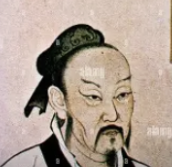
A real man is he whose goodness is a part of himself.
▼
Source
source
"Discipline and Character", no. 45

2 months 1 week ago
Now precisely because Galilean science is, in the formation of its concepts, the technic of a specific Lebenswelt, it does not and cannot transcend this Lebenswelt. It remains essentially within the basic experiential framework and within the universe of ends set by this reality.
▼
Source
source
p. 164

1 day ago
I shall never be ashamed of citing a bad author if the line is good.
▼
Source
source
Alternate translation: I shall never be ashamed to go to a bad author for a good quotation. Chapter 11, Section 8
3 months 2 weeks ago
Most men do not feel in themselves the competence required for leading their group to victory, and therefore seek out a captain who appears to possess the courage and sagacity necessary for the achievement of supremacy. Even in religion this impulse appears. Nietzsche accused Christianity of inculcating a slave-morality, but ultimate triumph was always the goal. "Blessed are the meek, for they shall inherit the earth."
▼
Source
source
Ch. 2: Leaders and Followers
3 months 1 week ago
A philosopher is a man who has to cure many intellectual diseases in himself before he can arrive at the notions of common sense.
▼
Source
source
p. 44e
2 months 1 week ago
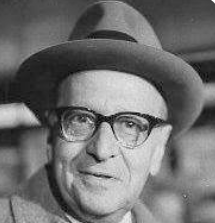
All things in nature become identical with the phenomena they present when submitted to the practices of our laboratories, whose problems no less than their apparatus express in turn the problems and interests of society as it is. This view may be compared with that of a criminologist maintaining that trustworthy knowledge of a human being can be obtained only by the well-tested and streamlined examining methods applied to a suspect in the hands of the metropolitan police.
▼
Source
source
describing the pragmatist view, p. 49.
3 months 6 days ago
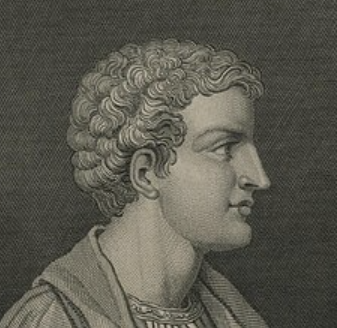
The years as they pass plunder us of one thing after another.
▼
Source
source
Book II, epistle ii, line 55
2 months 2 days ago
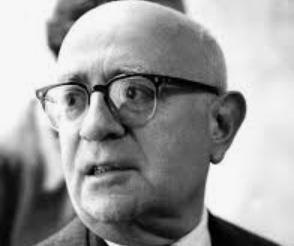
The importance of the culture industry in the spiritual constitution of the masses is no dispensation for reflection on its objective legitimation, its essential being, least of all by a science which thinks itself pragmatic.
1 week 1 day ago
They understood in their heart that it was indispensable to be brave; that Odin would have no favor for them, but despise and thrust them out, if they were not brave. Consider too whether there is not something in this! It is an everlasting duty, valid in our day as in that, the duty of being brave. Valor is still value. The first duty for a man is still that of subduing Fear. We must get rid of Fear; we cannot act at all till then.
2 months 1 week ago
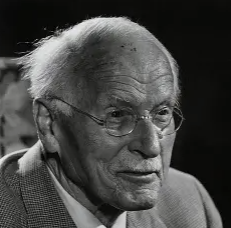
Since in the Middle Ages the psychic relation to woman was expressed in the collective worship of Mary, the image of woman lost a value to which human beings had a natural right. This value could find its natural expression only through individual choice, and it sank into the unconscious when the individual form of expression was replaced by a collective one. In the unconscious the image of woman received an energy charge that activated the archaic and infantile dominants. And since all unconscious contents, when activated by dissociated libido, are projected upon the external object, the devaluation of the real woman was compensated by daemonic features. She no longer appeared as an object of love, but as a persecutor or witch. The consequence of increasing Mariolatry was the witch hunt, that indelible blot on the later Middle Ages.
▼
Source
source
Psychological Types (1921), CW 6. P.344


2 months 2 weeks ago
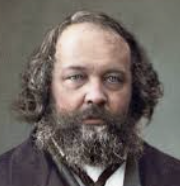
To revolt is a natural tendency of life. Even a worm turns against the foot that crushes it. In general, the vitality and relative dignity of an animal can be measured by the intensity of its instinct to revolt.
▼
Source
source
"On the International Workingmen's Association and Karl Marx"
1 day ago
For we are mistaken when we look forward to death; the major portion of death has already passed. Whatever years be behind us are in death's hands.

4 months 2 weeks ago
We certainly must contend by every argument against him who does away with knowledge or reason or mind and then makes any dogmatic assertion about anything. The philosopher, who pays the highest honor to these things, must necessarily, as it seems, because of them refuse to accept the theory of those who say the universe is at rest, whether as a unity or in many forms, and must also refuse utterly to listen to those who say that being is universal motion; he must say that being and the universe consist of both.

3 months 2 weeks ago
My philosophical views approach somewhat closely those of the late Countess of Conway, and hold a middle position between Plato and Democritus, because I hold that all things take place mechanically as Democritus and Descartes contend against the views of Henry More and his followers, and hold too, nevertheless, that everything takes place according to a living principle and according to final causes - all things are full of life and consciousness, contrary to the views of the Atomists.
▼
Source
source
Letter to Thomas Burnet (1697), as quoted in Platonism, Aristotelianism and Cabalism in the Philosophy of Leibniz (1938) by Joseph Politella, p. 18
2 months 1 week ago
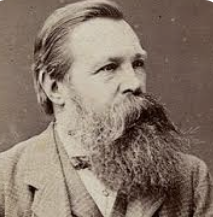
The class of the wholly propertyless, who are obliged to sell their labor to the bourgeoisie in order to get, in exchange, the means of subsistence for their support. This is called the class of proletarians, or the proletariat.

4 months 1 week ago
Even before the bomb, one did not breathe too easily in this tortured world. Now we are given a new source of anguish; it has all the promise of being our greatest anguish ever. There can be no doubt that humanity is being offered its last chance. Perhaps this is an occasion for the newspapers to print a special edition. More likely, it should be cause for a certain amount of reflection and a great deal of silence.

3 months 2 weeks ago
For the moment, the jazz is playing; there is no melody, just notes, a myriad of tiny tremors. The notes know no rest, an inflexible order gives birth to them then destroys them, without ever leaving them the chance to recuperate and exist for themselves.... I would like to hold them back, but I know that, if I succeeded in stopping one, there would only remain in my hand a corrupt and languishing sound. I must accept their death; I must even want that death: I know of few more bitter or intense impressions.
2 months 2 days ago
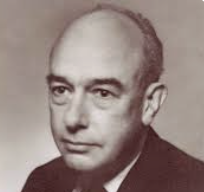
Life is agid. Life is fulgid. Life is a burgeoning, a quickening of the dim primordial urge in the murky wastes of time. Life is what the least of us make most of us feel the least of us make the most of.
▼
Source
source
Quine's response in 1988 when asked his philosophy of life. (He invented the word "agid".) It makes up the entire Chapter 54 in Quine in Dialogue (2008).

3 months 2 weeks ago
The best government is a benevolent tyranny tempered by an occasional assassination.
▼
Source
source
Attributed to Voltaire in Likharev, K.K. (2021). On Government and Politics. In: Likharev, K.K. (eds) Essential Quotes for Scientists and Engineers.
3 months 2 weeks ago
The means employed by Nature to bring about the development of all the capacities of men is their antagonism in society, so far as this is, in the end, the cause of a lawful order among men.
▼
Source
source
Fourth Thesis

2 months 4 weeks ago
No one entrusts a secret to a drunken man; but one will entrust a secret to a good man; therefore, the good man will not get drunk.
▼
Source
source
As quoted in Epistulae morales ad Lucilium by Seneca, Epistle LXXXIII (trans. R. M. Gummere)

4 months 2 weeks ago
If you suspect that my interest in the Bible is going to inspire me with sudden enthusiasm for Judaism and make me a convert of mountain‐moving fervor and that I shall suddenly grow long earlocks and learn Hebrew and go about denouncing the heathen — you little know the effect of the Bible on me. Properly read, it is the most potent force for atheism ever conceived.

2 months 2 days ago
At the bottom of the heart of every human being, from earliest infancy until the tomb, there is something that goes on indomitably expecting, in the teeth of all experience of crimes committed, suffered, and witnessed, that good and not evil will be done to him. It is this above all that is sacred in every human being.The good is the only source of the sacred. There is nothing sacred except the good and what pertains to it.
▼
Source
source
p. 51

1 month 2 weeks ago
In this book we turn to the study of new patterns of energy arising from man's physical and psychic artifacts and social organizations. The only method for perceiving process and pattern is by inventory of effects obtained by the comparison and contrast of developing situations.
▼
Source
source
(p. 8)

3 months 3 weeks ago
The worst of my actions or conditions seem not so ugly unto me as I find it both ugly and base not to dare to avouch for them.

3 months 2 weeks ago
So long as antimilitarists propose no substitute for war's disciplinary function, no moral equivalent of war, analogous, as one might say, to the mechanical equivalent of heat, so long they fail to realize the full inwardness of the situation.
▼
Source
source
The Moral Equivalent of War
3 months 1 week ago
Knowledge is in the end based on acknowledgement.
1 month 4 weeks ago
Needless to say, I am not opposed to woman suffrage on the conventional ground that she is not equal to it. I see neither physical, psychological, nor mental reasons why woman should not have the equal right to vote with man. But that can not possibly blind me to the absurd notion that woman will accomplish that wherein man has failed. If she would not make things worse, she certainly could not make them better. To assume, therefore, that she would succeed in purifying something which is not susceptible of purification, is to credit her with supernatural powers. Since woman's greatest misfortune has been that she was looked upon as either angel or devil, her true salvation lies in being placed on earth; namely, in being considered human, and therefore subject to all human follies and mistakes. Are we, then, to believe that two errors will make a right? Are we to assume that the poison already inherent in politics will be decreased, if women were to enter the political arena?
2 months 1 week ago
Loren von Stein thus turned the dialectic into an ensemble of objective laws calling for social reform as the adequate solution of all contradictions and neutralized the critical elements of the dialectic.
▼
Source
source
P. 388
3 months 2 weeks ago
A just system must generate its own support.
▼
Source
source
Chapter V, Section 41, p. 261
1 month 2 weeks ago
The media themselves are the avant-garde of our society. Avant-garde no longer exists in painting, music and poetry, it's the media themselves.
▼
Source
source
p. 274

1 week 5 days ago
As a rule, all heroism is due to a lack of reflection, and thus it is necessary to maintain a mass of imbeciles. If they once understand themselves the ruling men will be lost.
▼
Source
source
Orlando, in Caliban, act 2, sc. 1 (1878).

3 months 3 weeks ago
The freest importation of salt provisions, in the same manner, could have as little effect upon the interest of the graziers of Great Britain as that of live cattle. Salt provisions are not only a very bulky commodity, but when compared with fresh meat, they are a commodity both of worse quality, and as they cost more labour and expence, of higher price. They could never, therefore, come into competition with the fresh meat, though they might with the salt provisions of the country.
▼
Source
source
Chapter II

3 months 3 weeks ago
You worry whether the drought will end. It is far better that you pray that God may water your mind lest virtue wither away in it. You are greatly concerned with money that is lost or being wasted, or you worry about the advance of old age. I think it much to be desired that you provide first of all for the needs of your soul.
3 months 3 weeks ago
To found a great empire for the sole purpose of raising up a people of customers, may at first appear a project fit only for a nation of shopkeepers. It is however, a project altogether unfit for a nation of shopkeepers; but extremely fit for a nation whose government is influenced by shopkeepers.
▼
Source
source
Chapter VII, Part Third, p. 667.
3 months 2 weeks ago
Preference of vice to virtue, a manifest wrong judgment.
▼
Source
source
Book II, Ch. 21, sec. 70
CivilSimian.com created by AxiomaticPanic, CivilSimian, Kalokagathia