

2 months 6 days ago
People have committed suicide because of their failure to realize the passions for love, power, fame, revenge. Cases of suicide because of a lack of sexual satisfaction are virtually nonexistent.
▼
Source
source
p. 30

1 week 2 days ago
Then it is that the height of unhappiness is reached, when men are not only attracted, but even pleased, by shameful things, and when there is no longer any room for a cure, now that those things which once were vices have become habits.
2 months 3 weeks ago
Seldom, or perhaps never, does a marriage develop into an individual relationship smoothly and without crises; there is no coming to consciousness without pain.
▼
Source
source
p. 193


5 days ago
We accepted a definition of ourselves which confined the self to the source and to the limitations of conscious attention. This definition is miserably insufficient, for in fact we know how to grow brains and eyes, ears and fingers, hearts and bones, in just the same way that we know how to walk and breathe, talk and think-only we can't put it into words. Words are too slow and too clumsy for describing such things, and conscious attention is too narrow for keeping track of all their details.
▼
Source
source
p. 112

2 months 1 week ago
Man is said to be a reasoning animal. I do not know why he has not been defined as an affective or feeling animal. Perhaps that which differentiates him from other animals is feeling rather than reason. More often I have seen a cat reason than laugh or weep. Perhaps it weeps or laughs inwardly - but then perhaps, also inwardly, the crab resolves equations of the second degree.

4 months 3 weeks ago
No matter how outrageous a lie may be, it will be accepted if stated loudly enough and often enough.

4 months 3 weeks ago
Therefore only an utterly senseless person can fail to know that our characters are the result of our conduct.

1 month 1 day ago
Rather than trying to escape violence, human beings more often become habituated to it. History abounds with long conflicts - the Thirty Years' War in early seventeenth-century Europe, the Time of Troubles in Russia, twentieth-century guerrilla conflicts - in which continuous slaughter has been accepted as normal. Famously adaptable, the human animal quickly learns to live with violence and soon comes to find satisfaction in it.
▼
Source
source
In the Puppet Theatre: Roof Gardens, Feathers and Human Sacrifice (p. 80)

4 months 2 days ago
There is the name and the thing: the name is a voice which denotes and signifies the thing; the name is no part of the thing, nor of the substance; 'tis a foreign piece joined to the thing, and outside it. God, who is all fulness in Himself and the height of all perfection, cannot augment or add anything to Himself within; but His name may be augmented and increased by the blessing and praise we attribute to His exterior works: which praise, seeing we cannot incorporate it in Him, forasmuch as He can have no accession of good, we attribute to His name, which is the part out of Him that is nearest to us. Thus is it that to God alone glory and honour appertain; and there is nothing so remote from reason as that we should go in quest of it for ourselves; for, being indigent and necessitous within, our essence being imperfect, and having continual need of amelioration, 'tis to that we ought to employ all our endeavour.
▼
Source
source
Ch. 16

2 months 3 weeks ago
Your worst sin is that you have destroyed and betrayed yourself for nothing.

3 months 2 weeks ago
With a malicious man carry on no conflict, and do not molest him in any way whatever.
2 months 1 week ago
...as the great Unitarian preacher Channing pointed out, that in France and Spain there are multitudes who have proceeded from rejecting Popery to absolute atheism, because "the fact is, that false and absurd doctrines, when exposed, have a natural tendency to beget skepticism in those who receive them without reflection. None are so likely to believe too little as those who have begun by believing too much." Here is, indeed, the terrible danger of believing too much. But no! the terrible danger comes from another quarter - from seeking to believe with the reason and not with the life.

2 months 2 weeks ago
Yea; have ye never read, Out of the mouth of babes and sucklings thou hast perfected praise?
▼
Source
source
21:16 (KJV)

4 months 1 week ago
We should never take pleasure in causing pain to others, even to those who have wronged us, but rather strive to do good to all.

4 months 3 days ago
Like strawberry wives, that laid two or three great strawberries at the mouth of their pot, and all the rest were little ones.
▼
Source
source
No. 54
2 weeks 6 days ago
If children are a joy for the well-to-do, they are a torment for seven-eights of all civlizees, who cannot afford to maintain and educate them.

3 months 3 weeks ago
Virtue is debased by self-justification.
▼
Source
source
Oedipe, act II, scene IV, 1718
1 week 2 days ago
For this reason those who are tossed about at sea, who proceed uphill and downhill over toilsome crags and heights, who go on campaigns that bring the greatest danger, are heroes and front-rank fighters; but persons who live in rotten luxury and ease while others toil, are mere turtle-doves safe only because men despise them.

1 month 2 weeks ago
We don't need fossils - the case for evolution is watertight without them; so it is paradoxical to use gaps in the fossil record as though they were evidence against evolution.
▼
Source
source
The Greatest Show on Earth: The Evidence for Evolution (2009) (p. 164)

3 months 3 weeks ago
Dreams are the touchstones of our characters.

4 months 2 days ago
I know God only as he became human, so shall I have him in no other way.
▼
Source
source
Das Marburger religionsgesprach 1529: Versuch einer Rekonstruction (Leipzig, 1929), p. 27; also LW 38, 3-90

4 months 3 days ago
We must learn how to imitate Cicero from Cicero himself. Let us imitate him as he imitated others.
▼
Source
source
in The Erasmus Reader (1990), p. 130.

2 months 2 weeks ago
Buddhism calls anger "corruption of the mind," Manicheism "root of the tree of death." I know this, but what good does it do me to know?
1 month 3 weeks ago
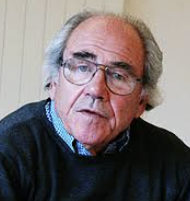
THERE IS NEVER ANYTHING TO PRO-DUCE. In spite of all its materialist efforts, production remains a utopia. We can wear ourselves out in materializing things, in rendering them visible, but we will never cancel the secret.
▼
Source
source
(p. 65)
2 months 2 weeks ago
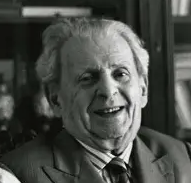
To be or not to be is not the question where transcendence is concerned. The statement of being's other, of the otherwise than being, claims to state a difference over and beyond that which separates being from nothingness - the very difference of the beyond, the difference of transcendence.
▼
Source
source
Otherwise than Being, or Beyond Essence (1974) Chapter I, Section 1.

3 months 4 weeks ago
There is no method of reasoning more common, and yet none more blameable, than, in philosophical disputes, to endeavour the refutation of any hypothesis, by a pretence of its dangerous consequences to religion and morality. When any opinion leads to absurdities, it is certainly false; but it is not certain that an opinion is false, because it is of dangerous consequence. Such topics, therefore, ought entirely to be forborne; as serving nothing to the discovery of truth, but only to make the person of an antagonist odious.
▼
Source
source
Of Liberty and Necessity, Part II
1 week 2 days ago
Let us greedily enjoy our friends, because we do not know how long this privilege will be ours.

3 months 3 weeks ago
Every step of real movement is more important than a dozen programmes.
▼
Source
source
Letter to W. Bracke, 5 May 1875
2 months 2 weeks ago
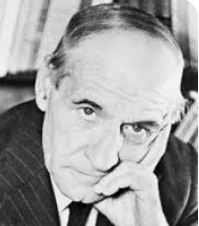
The specialist serves as a striking concrete example of the species, making clear to us the radical nature of the novelty. For, previously, men could be divided simply into the learned and the ignorant, those more or less the one, and those more or less the other. But your specialist cannot be brought in under either of these two categories. He is not learned , for he is formally ignorant of all that does not enter into his speciality; but neither is he ignorant, because he is "a scientist," and "knows" very well his own tiny portion of the universe. We shall have to say that he is a learned ignoramus, which is a very serious matter, as it implies that he is a person who is ignorant, not in the fashion of the ignorant man, but with an the petulance of one who is learned in his own special line.
▼
Source
source
Chapter XII: The Barbarism Of "Specialisation"

3 months 6 days ago
Govern your tongue before all other things, following the gods.
▼
Source
source
Symbol 7
1 month 1 week ago
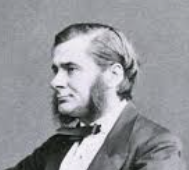
Social progress means a checking of the cosmic process at every step and the substitution for it of another, which may be called the ethical process; the end of which is not the survival of those who may happen to be the fittest, in respect of the whole of the conditions which obtain, but of those who are ethically the best.

3 months 3 weeks ago
Of course God knew what would happen if they used their freedom the wrong way: apparently He thought it worth the risk.
▼
Source
source
Book II, Chapter 3, "The Shocking Alternative"

2 months 3 weeks ago
Corrupt influence, which is itself the perennial spring of all prodigality, and of all disorder; which loads us, more than millions of debt; which takes away vigor from our arms, wisdom from our councils, and every shadow of authority and credit from the most venerable parts of our constitution.

3 months 3 weeks ago
Nothing can be preserved that is not good.
▼
Source
source
Books

2 months 1 week ago
Capitalism dislikes silence.

3 months 3 weeks ago
The history of mankind can be seen, in the large, as the realization of Nature's secret plan to bring forth a perfectly constituted state as the only condition in which the capacities of mankind can be fully developed, and also bring forth that external relation among states which is perfectly adequate to this end.
▼
Source
source
Eighth Thesis

2 months 1 week ago
The struggle to end sexist oppression that focuses on destroying the cultural basis for such domination strengthens other liberation struggles. Individuals who fight for the eradication of sexism without struggles to end racism or classism undermine their own efforts. Individuals who fight for the eradication of racism or classism while supporting sexist oppression are helping to maintain the cultural basis of all forms of group oppression.
2 months 2 weeks ago
Master, we saw one casting out devils in thy name; and we forbad him, because he followeth not with us. And Jesus said unto him, Forbid him not: for he that is not against us is for us.
▼
Source
source
Luke 9:49-50 (KJV)

3 months 3 weeks ago
As far as men go, it is not what they are that interests me, but what they can become.
▼
Source
source
Act 5, sc. 3
3 months 3 weeks ago
Every man takes the limits of his own field of vision for the limits of the world.
▼
Source
source
"Psychological Observations"
2 months 2 weeks ago
When we have no further desire to show ourselves, we take refuge in music, the Providence of the abulic.

1 month 3 weeks ago
Technologies themselves, regardless of content, produce a hemispheric bias in the users.
▼
Source
source
p. 71
3 months 3 weeks ago
The eye may see for the hand, but not for the mind.
3 months 3 weeks ago
Do not be too moral. You may cheat yourself out of much life so. Aim above morality. Be not simply good; be good for something.
▼
Source
source
Pearls of Thought (1881) p. 177

3 months 2 weeks ago
Struggling to be brief I become obscure.
▼
Source
source
Line 25
3 months 3 weeks ago
In order to abolish the idea of private property, the idea of communism is completely sufficient. It takes actual communist action to abolish actual private property. History will com to it; and this movement, which in theory we already know to be a self-transcending movement, will constitute in actual fact a very severe and protracted process. But we must regard it as a real advance to have gained beforehand a consciousness of the limited character a well as of the goal of this historical movement - and a consciousness which reaches out beyond it.
▼
Source
source
p. 99, The Marx-Engels Reader
3 months 3 weeks ago
If the stars should appear one night in a thousand years, how would men believe and adore, and preserve for many generations the remembrance of the city of God which had been shown! But every night come out these envoys of beauty, and light the universe with their admonishing smile.
▼
Source
source
Nature
2 months 2 weeks ago
The will is a unity of two different aspects or moments: first, the individual's ability to abstract from every specific condition and, by negating it, to return to the absolute liberty of the pure ego; secondly, the individual's act of freely adopting a concrete condition, freely affirming his existence as a particular, limited ego.
▼
Source
source
P. 185
2 months 2 weeks ago
The tendency to regard continuity, in the sense in which I shall define it, as an idea of prime importance in philosophy conveniently may be be termed synechism. The present paper is intended chiefly to show what synechism is, and what it leads to.
CivilSimian.com created by AxiomaticPanic, CivilSimian, Kalokagathia