


2 months 1 week ago
Underlying even the so-called problem of knowledge there is simply this human feeling, just as underlying the inquiry into the "why," the cause, there is simply the search for the "wherefore," the end. All the rest is either to deceive oneself or to wish to deceive others; and to wish to deceive others in order to deceive oneself.

2 months 2 days ago
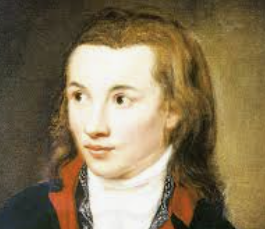
Here take back the stuff that I am, nature, knead it back into the dough of being, make of me a bush, a cloud, whatever you will, even a man, only no longer make me me.
▼
Source
source
B 37 "Speech of a suicide composed shortly before the act."
2 months 2 weeks ago
The spirit of Poesy is the morning light, which makes the Statue of Memnon sound.

3 months 3 weeks ago
Whensoever therefore the legislative shall transgress this fundamental rule of society; and either by ambition, fear, folly or corruption, endeavour to grasp themselves, or put into the hands of any other, an absolute power over the lives, liberties, and estates of the people; by this breach of trust they forfeit the power the people had put into their hands for quite contrary ends, and it devolves to the people, who have a right to resume their original liberty, and, by the establishment of a new legislative, (such as they shall think fit) provide for their own safety and security, which is the end for which they are in society.
▼
Source
source
Second Treatise of Civil Government, Ch. XIX, sec. 222

3 months 3 weeks ago
The national debt has given rise to joint stock companies, to dealings in negotiable effects of all kinds, and to agiotage, in a word to stock-exchange gambling and the modern bankocracy.
▼
Source
source
Vol. I, Ch. 31, pg. 827.

4 months ago
No wind serves him who addresses his voyage to no certain port.
▼
Source
source
Book II, Ch. 1
Just now
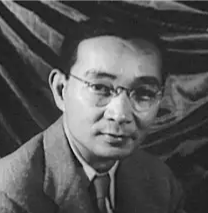
I do not think that any civilization can be called complete until it has progressed from sophistication to unsophistication, and made a conscious return to simplicity of thinking and living, and I call no man wise until he has made the progress from the wisdom of knowledge to the wisdom of foolishness, and become a laughing philosopher, feeling first life's tragedy and then life's comedy. For we must weep before we can laugh. Out of sadness comes the awakening, and out of the awakening comes the laughter of the philosopher, with kindliness and tolerance to boot.
▼
Source
source
Ch. I : The Awakening, p. 13

3 months 3 weeks ago
I regard utility as the ultimate appeal on all ethical questions; but it must be utility in the largest sense, grounded on the permanent interests of man as a progressive being.
▼
Source
source
Ch. 1: Introductory
3 months 1 week ago
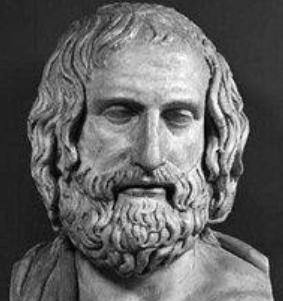
The Greeks follow a wrong usage in speaking of coming into being and passing away; for nothing comes into being or passes away, but there is mingling and separation of things that are. So they would be right to call coming into being mixture, and passing away separation.
▼
Source
source
Frag. B 17, quoted in John Burnet's Early Greek Philosophy, (1920), Chapter 6.
2 months 1 week ago
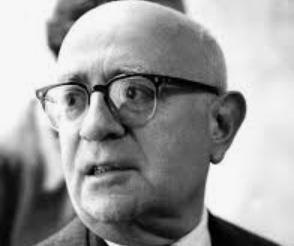
Traditional philosophy's claim to totality, culminating in the thesis that the real is rational, is indistinguishable from apologetics.
▼
Source
source
p. 7

1 month 2 weeks ago
The unformulated message of an assembly of news items from every quarter of the globe is that the world today is one city. All war is civil war. All suffering is our own.
▼
Source
source
p. 291
2 months 2 days ago
What concerns me alone I only think, what concerns my friends I tell them, what can be of interest to only a limited public I write, and what the world ought to know is printed...
▼
Source
source
B 52
2 months 3 weeks ago
Who am I? Subject and object in one - contemplating and contemplated, thinking and thought of. As both must I have become what I am.
▼
Source
source
Jane Sinnett, trans 1846 p. 71

1 month 1 day ago
One should be wary of assuming that we're the folk who can properly look after ourselves, whereas our descendants, if they become genetically pre-programmed ecstatics, will get trapped in robot-serviced states of infantile dependence. For it shouldn't be forgotten that exuberantly happy people also have a fierce will to survive. They love life dearly. They take on daunting challenges against seemingly impossible odds. One of the hallmarks of many endogenous depressive states, on the other hand, is so-called behavioural despair. If one learns that apparently no amount of effort can rescue one from an aversive stimulus, then one tends to sink into a lethargic stupor. This syndrome of "learned helplessness" may persist even when the opportunity to escape from the nasty stimulus subsequently arises.
▼
Source
source
4. Objections, 4.2

3 months 3 weeks ago
I am trying here to prevent anyone saying the really foolish thing that people often say about Him: 'I'm ready to accept Jesus as a great moral teacher, but I don't accept His claim to be God.' That is the one thing we must not say. A man who was merely a man and said the sort of things Jesus said would not be a great moral teacher. He would be either a lunatic-on a level with the man who says he is a poached egg-or else he would be the Devil of Hell. You must make your choice. Either this man was, and is, the Son of God: or else a madman or something worse. You can shut Him up for a fool, you can spit at Him and kill Him as a demon; or you can fall at His feet and call Him Lord and God. But let us not come with any patronising nonsense about His being a great human teacher. He has not left that open to us. He did not intend to.
▼
Source
source
Book II, Chapter 3, "The Shocking Alternative"
3 months 3 weeks ago
Every poet and musician and artist, but for Grace, is drawn away from love of the thing he tells to love of the telling till, down in Deep Hell, they cannot be interested in God at all but only in what they say about Him.
▼
Source
source
Ch. 9

2 months 5 days ago
Those who have a spark of self-respect left, prefer open defiance, prefer crime to the emaciated, degraded position of poverty.
2 months 1 week ago
Once the philosophical foundation of democracy has collapsed, the statement that dictatorship is bad is rationally valid only for those who are not its beneficiaries, and there is no theoretical obstacle to the transformation of this statement into its opposite.
▼
Source
source
p. 29.
2 months 2 weeks ago
The only possible way of accounting for the laws of nature and for uniformity in general is to suppose them results of evolution. This supposes them not to be absolute, not to be obeyed precisely. It makes an element of indeterminacy, spontaneity, or absolute chance in nature. Just as, when we attempt to verify any physical law, we find our observations cannot be precisely satisfied by it, and rightly attribute the discrepancy to errors of observation, so we must suppose far more minute discrepancies to exist owing to the imperfect cogency of the law itself, to a certain swerving of the facts from any definite formula.

2 months 2 weeks ago
To live in a saint's heart? I'm afraid of setting the sky ablaze.

3 months 3 weeks ago
What do I care about Jupiter? Justice is a human issue, and I do not need a god to teach it to me.
▼
Source
source
Orestes, Act 2

1 week ago
Accept in an unruffled spirit that which is inevitable.
2 months 1 week ago
In the world of action, we know that it is disastrous to treat animals or human beings as though they were stocks and stones. Why should we suppose this treatment to be any less mistaken in the world of ideas?
▼
Source
source
p. 21.
1 month 2 weeks ago
Psychic communal integration, made possible at last by the electronic media, could create the universality of consciousness foreseen by Dante when he predicted that men would continue as no more than broken fragments until they were unified into an inclusive consciousness...This is a new interpretation of the mystical body of Christ; and Christ, after all, is the ultimate extension of man.
2 months 4 days ago
The existential split in man would be unbearable could he not establish a sense of unity within himself and with the natural and human world outside.
▼
Source
source
p. 262

3 months 4 days ago
By the air which I breathe, and by the water which I drink, I will not endure to be blamed on account of this discourse.
▼
Source
source
As reported by Heraclides Ponticus (c. 360 BC), and Diogenes Laërtius, in Lives and Opinions of Eminent Philosophers, "Pythagoras", Sect. 6, in the translation of C. D. Yonge
2 months 2 weeks ago
Time with its continuity logically involves some other kind of continuity than its own. Time, as the universal form of change, cannot exist unless there is something to undergo change, and to undergo a change continuous in time, there must be a continuity of changeable qualities.
3 months 2 weeks ago
It is a sign of wisdom to be able to use parrhesia without falling into the garrulousness of athuroglossos... One of the problems... how to distinguish that which must be said from that which should be kept silent.
2 months 2 weeks ago
What am I, other than a chance in the infinite probabilities of not having been!
3 months 3 weeks ago
... in such a matter he would never have been guided by his first thoughts (which would probably have been right) nor even by his twenty-first (which would have at least been explicable). Beyond doubt he would have prolonged deliberation till his hundred-and-first; and they would be infallibly and invincibly wrong. This is what always happens to the deliberations of a simple man who thinks he is a subtle one.
2 months 2 weeks ago
When two, or more men, know of one and the same fact, they are said to be CONSCIOUS of it one to another; which is as much as to know it together.
▼
Source
source
The First Part, Chapter 7, p. 31
4 months ago
Accustom him to every thing, that he may not be a Sir Paris, a carpet-knight, but a sinewy, hardy, and vigorous young man.
▼
Source
source
Ch. 26. Of the Education of Children, tr. Cotton, rev. W. Hazlitt, 1842
2 months 2 weeks ago
The abolition of private property is, doubtless, the shortest and most significant way to characterize the revolution in the whole social order which has been made necessary by the development of industry - and for this reason it is rightly advanced by communists as their main demand.
2 months 2 days ago
We do not think good metaphors are anything very important, but I think that a good metaphor is something even the police should keep an eye on...
▼
Source
source
E 91 Variant translation: A good metaphor is something even the police should keep an eye on.
2 months 2 weeks ago
You are forgiven everything provided you have a trade, a subtitle to your name, a seal on your nothingness.
3 months 4 days ago
Time is the soul of this world.
▼
Source
source
As quoted in Wisdom (2002) by Desmond MacHale
2 months 2 weeks ago
Existing is plagiarism.

3 months 3 weeks ago
And every man, in love or pride, Of his fate is ever wide.
▼
Source
source
Nemesis

1 week 6 days ago
Alas, the Hero from of old has had to cramp himself into strange shapes: the world knows not well at any time what to do with him, so foreign is his aspect in the world!
2 months 2 weeks ago
Nothing is a better proof of how far humanity has regressed than the impossibility of finding a single nation, a single tribe, among whom birth still provokes mourning and lamentations.
2 months 1 week ago
Spinoza, for example, thought that insight into the essence of reality, into the harmonious structure of the eternal universe, necessarily awakens love for this universe. For him, ethical conduct is entirely determined by such insight into nature, just as our devotion to a person may be determined by insight into his greatness or genius. Fears and petty passions, alien to the great love of the universe, which is logos itself, will vanish, according to Spinoza, once our understanding of reality is deep enough.
▼
Source
source
p. 14.
1 month 2 weeks ago
Literacy, the visual technology, dissolved the tribal magic by means of its stress on fragmentation and specialization and created the individual.
3 months 4 days ago
Attempt nothing above thy strength!
3 months 3 weeks ago
I entered the [Communist] Party because its cause was just and I will leave it when it ceases to be just.
▼
Source
source
Hugo to Hoederer, Act 5, sc. 3

2 months 4 weeks ago
It is proof of a base and low mind for one to wish to think with the masses or majority, merely because the majority is the majority. Truth does not change because it is, or is not, believed by a majority of the people.
▼
Source
source
Included as a quotation in The Great Quotations (1977) by George Seldes, p. 35
2 days ago
This letter, if judged by the novelty and profundity of ideas it contains, is perhaps the most substantial piece of writing in the whole literature of mankind.
▼
Source
source
Symmetry (1952), quote on p. 138; referring to a letter by Évariste Galois to Auguste Chevalier from May 29, 1832, two days before Galois' death, containing a testamentary summary of Galois' discoveries

3 months 3 weeks ago
Corn is a necessary, silver is only a superfluity.
▼
Source
source
Chapter XI, Part III, (First Period) p. 223.

2 months 5 days ago
Violence and freedom are the two endpoints on the scale of power.
2 months 2 weeks ago
Man consists in Truth. If he exposes Truth, he exposes himself. If he betrays Truth, he betrays himself. We speak not here of lies, but of acting against Conviction.
3 months 3 weeks ago
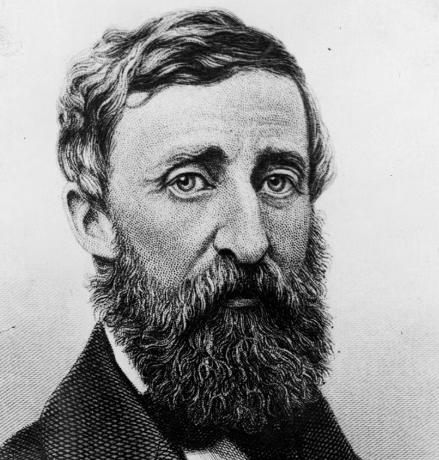
There are a thousand hacking at the branches of evil to one who is striking at the root, and it may be that he who bestows the largest amount of time and money on the needy is doing the most by his mode of life to produce that misery which he strives in vain to relieve.
▼
Source
source
p. 87
CivilSimian.com created by AxiomaticPanic, CivilSimian, Kalokagathia