

2 weeks 2 days ago
A modern philosopher who has never once suspected himself of being a charlatan must be such a shallow mind that his work is probably not worth reading.
▼
Source
source
Metaphysical Horror

4 months ago
You're either excluding the right people or including the wrong people.
▼
Source
source
ComfortDragon
4 months 1 week ago
Since you cannot do good to all, you are to pay special regard to those who, by the accidents of time, or place, or circumstance, are brought into closer connection with you.
▼
Source
source
1:28:29 English Latin Latin: Sed cum omnibus prodesse non possis, his potissimum consulendum est, qui pro locorum et temporum vel quarumlibet rerum opportunitatibus constrictius tibi quasi quadam sorte iunguntur.
1 month 1 week ago
Many conflicts within Third World countries are related to the practice of exploiting resources faster than nature can renew them or diverting them away from where people need them. Dams in every society have become major sources of conflict. As water scarcity grows, neighbors, families turn against each other.

1 month 3 weeks ago
In television, images are projected at you. You are the screen. The images wrap around you. You are the vanishing point.
▼
Source
source
The diplomat, Issues 197-208, 1966, p. 20

3 months 2 weeks ago
It is true: Man is the microcosm: I am my world.
▼
Source
source
Journal entry (12 October 1916), p. 84e

4 months 3 days ago
I consider as lovers of books not those who keep their books hidden in their store-chests and never handle them, but those who, by nightly as well as daily use thumb them, batter them, wear them out, who fill out all the margins with annotations of many kinds, and who prefer the marks of a fault they have erased to a neat copy full of faults.
▼
Source
source
Letter to an unidentified friend (1489), as translated in Collected Works of Erasmus (1974), p. 58

2 weeks 6 days ago
Empire is emerging today as the center that supports the globalization of productive networks and casts its widely inclusive net to try to envelop all power relations within its world order - and yet at the same time it deploys a powerful police function against the new barbarians and the rebellious slaves who threaten its order.
4 months 3 weeks ago
But it is clear there is a difference in the ends proposed: for in some cases they are activities, and in others results beyond the mere activities, and where there are certain ends beyond and beside the actions, the results are naturally superior to the activities. Now, as there are numerous kinds of actions and numerous arts and sciences, it follows that the ends are also various. Thus the end of the healing art is health, of ship-building ships, of strategy victory, of economy wealth.

3 months 3 weeks ago
Perfect humility dispenses with modesty.

3 months 3 weeks ago
There is an inconvenience which attends all abstruse reasoning. That it may silence, without convincing an antagonist, and requires the same intense study to make us sensible of its force, that was at first requisite for its invention. When we leave our closet, and engage in the common affairs of life, its conclusions seem to vanish, like the phantoms of the night on the appearance of the morning; and 'tis difficult for us to retain even that conviction, which we had attain'd with difficulty.
▼
Source
source
Part 1, Section 1
1 month 3 weeks ago
The TV camera has no shutter. It does not deal with aspects or facets of objects in high resolution. It is a means of direct pick-up by the electrical groping over surfaces.
▼
Source
source
Arts in society, Volume 3, 1964, p. 242
2 months 6 days ago
Man's biological weakness is the condition of human culture.
▼
Source
source
Ch. 2
4 months 1 week ago
As the soul is the life of the body, so God is the life of the soul. As therefore the body perishes when the soul leaves it, so the soul dies when God departs from it.
▼
Source
source
p. 277
3 months 1 week ago
Lycurgus the Lacedæmonian brought long hair into fashion among his countrymen, saying that it rendered those that were handsome more beautiful, and those that were deformed more terrible. To one that advised him to set up a democracy in Sparta, "Pray," said Lycurgus, "do you first set up a democracy in your own house."
▼
Source
source
57 Lycurgus
4 months 1 day ago
The mariner of old said to Neptune in a great tempest, "O God! thou mayest save me if thou wilt, and if thou wilt thou mayest destroy me; but whether or no, I will steer my rudder true."
▼
Source
source
Book II, Ch. 16. Of Glory

3 months 1 week ago
But Hermotimus, the Colophonian, rendered more abundant what was formerly published by Eudoxus and Theætetus, and invented a multitude of elements, and wrote concerning some geometrical places. But Philippus the Mendæan, a disciple of Plato, and by him inflamed in the mathematical disciplines, both composed questions, according to the institutions of Plato, and proposed as the object of his enquiry whatever he thought conduced to the Platonic philosophy.
▼
Source
source
Ch. IV.

2 weeks 1 day ago
Consider the great elements of human enjoyment, the attainments and possessions that exalt man's life to its present height, and see what part of these he owes to institutions, to Mechanism of any kind; and what to the instinctive, unbounded force, which Nature herself lent him.
3 months 3 weeks ago
My argument against God was that the universe seemed so cruel and unjust. But how had I got this idea of just and unjust? A man does not call a line crooked unless he has some idea of a straight line. What was I comparing this universe with when I called it unjust?
▼
Source
source
Book II, Chapter 1, "The Rival Conceptions of God"
4 months 1 week ago
What should a philosopher say, then, in the face of each of the hardships of life? "It was for this that I've been training myself, it was for this that I was practising."
▼
Source
source
Book III, ch. 10,7.
1 month 6 days ago
It is a paradoxical but profoundly true and important principle of life that the most likely way to reach a goal is to be aiming not at that goal itself but at some more ambitious goal beyond it.
▼
Source
source
Vol. 7 (1954). Also in Civilization on Trial (1957 ) p. 247
2 weeks 6 days ago
There is only one purpose to which a whole society can be directed by a deliberate plan. That purpose is war, and there is no other.
▼
Source
source
Ch. V: "The Totalitarian Regimes", §7, p. 90
4 months 1 week ago
Tentative efforts lead to tentative outcomes. Therefore, give yourself fully to your endeavors. Decide to construct your character through excellent actions, and determine to pay the price for a worthy goal. The trials you encounter will introduce you to your strengths. Remain steadfast... and one day you will build something that endures, something worthy of your potential.
3 months 3 weeks ago
The essence of the modern state is the union of the universal with the full freedom of the particular, and with the welfare of individuals.
▼
Source
source
Sect. 260

3 months 5 days ago
That which exercises reason is more excellent than that which does not exercise reason; there is nothing more excellent than the universe, therefore the universe exercises reason.
▼
Source
source
As quoted in De Natura Deorum by Cicero, ii. 8.; iii. 9.
3 months 3 weeks ago
The scene should be gently open'd, and his entrance made step by step, and the dangers pointed out that attend him from several degrees, tempers, designs, and clubs of men. He should be prepared to be shocked by some, and caress'd by others; warned who are like to oppose, who to mislead, who to undermine him, and who to serve him. He should be instructed how to know and distinguish them; where he should let them see, and when dissemble the knowledge of them and their aims and workings.
▼
Source
source
Sec. 94


3 months 3 weeks ago
When people begin to philosophize they seem to think it necessary to make themselves artificially stupid.
▼
Source
source
Theory of Knowledge, 1913
3 months 3 weeks ago
To understand a name you must be acquainted with the particular of which it is a name.

3 months 3 weeks ago
If it be said, that an Omnipotent Creator, though under no necessity of employing contrivances such as man must use, thought fit to use them in order to leave traces that would enable man to recognize his creative hand, the answer is that this equally implies a limit to his omnipotence. For if he wanted men to know that they themselves and the world are his work, he, being omnipotent, had only to will that they should be aware of it.
▼
Source
source
pages 177-178;Early Modern Texts page 16
2 months 2 weeks ago
Freedom of thought and of expression are not mere rights to be claimed. They have their roots deep in the existence of individuals as developing careers in time. Their denial and abrogation is an abdication of individuality and a virtual rejection of time as opportunity.
1 month 2 weeks ago
It is a very helpful insight to say we are vehicles for our DNA, we are hosts for DNA parasites which are our genes. Those are insights which help us to understand an aspect of life. But it's emotive to say, that's all there is to it, we might as well give up going to Shakespeare plays and give up listening to music and things, because that's got nothing to do with it. That's an entirely different subject.
1 month 6 days ago
There are no signposts in the sky to show a man has passed that way before. There are no channels marked. The flier breaks each second into new uncharted seas.
▼
Source
source
North to the Orient (1935) Ch. 1
2 days ago
All women's dresses, in every age and country, are merely variations on the eternal struggle between the admitted desire to dress and the unadmitted desire to undress.
▼
Source
source
In Vogue, as quoted by The Reader's Digest, Vols. 30-31 (1937), p. 69
2 weeks 6 days ago
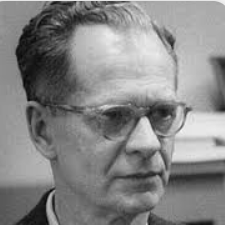
Ethical control may survive in small groups, but the control of the population as a whole must be delegated to specialists-to police, priests, owners, teachers, therapists, and so on, with their specialized reinforcers and their codified contingencies.
▼
Source
source
Beyond Freedom and Dignity (1971), p. 155
3 months 3 weeks ago
I think He made one law of that kind in order that there might be obedience. In all these other matters what you call obeying Him is but doing what seems good in your eyes also. Is love content with that? You do them, indeed, because they are His will, but not only because they are his will. Where can you taste the joy of obeying unless he bids you do something for which His bidding is the only reason?

3 months ago
We indeed, who are beings of finite powers, are forced to make use of instruments. And the use of an instrument sheweth the agent to be limited by rules of another's prescription, and that he cannot obtain his end but in such a way, and by such conditions. Whence it seems a clear consequence, that the supreme unlimited agent useth no tool or instrument at all. The will of an Omnipotent Spirit is no sooner exerted than executed, without the application of means; which, if they are employed by inferior agents, it is not upon account of any real efficacy that is in them, or necessary aptitude to produce any effect, but merely in compliance with the laws of nature, or those conditions prescribed to them by the First Cause, who is Himself above all limitation or prescription whatsoever.
▼
Source
source
Philonous to Hylas. The Second Dialogue
4 months 3 weeks ago
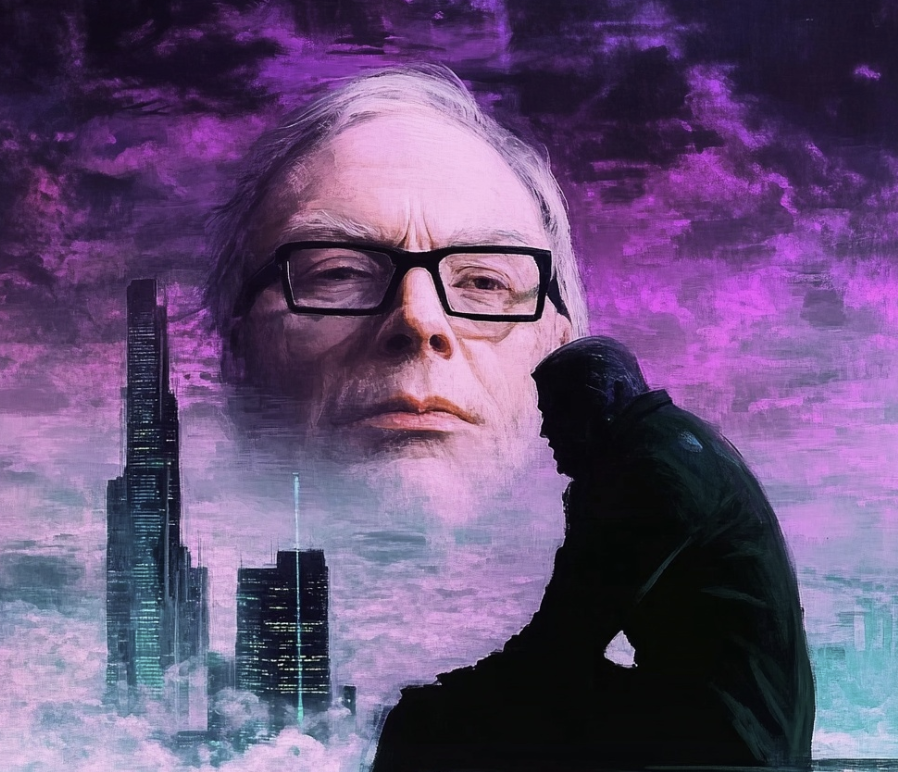
It built itself up endlessly, like a chess game, and the telemetrists began to use a computer to program the computer that designed the program for the computer that programmed the robot-controlling computer.

3 months 3 weeks ago
The whole mystery of commodities, all the magic and necromancy that surrounds the products of labor as long as they take the form of commodities, vanishes therefore, so soon as we come to other forms of production.
▼
Source
source
Vol. I, ch.1, section 4.

2 months 2 weeks ago
Saints live in flames; wise men, next to them.
2 months 2 weeks ago
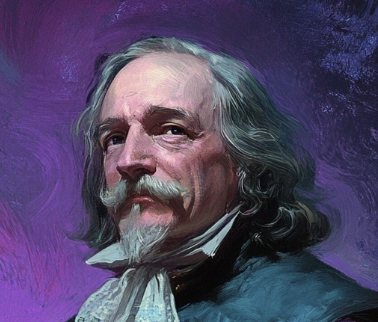
Whatsoever therefore is consequent to a time of Warre, where every man is Enemy to every man; the same is consequent to the time, wherein men live without other security, than what their own strength, and their own invention shall furnish them withall. In such condition, there is no place for Industry; because the fruit thereof is uncertain: and consequently no Culture of the Earth; no Navigation, nor use of the commodities that may be imported by Sea; no commodious Building; no Instruments of moving, and removing things as require much force; no Knowledge of the face of the Earth; no account of Time; no Arts; no Letters; no Society; and which is worst of all, continuall feare, and danger of violent death; And the life of man solitary, poore, nasty, brutish, and short.
▼
Source
source
The First Part, Chapter 13, p. 62
2 months 1 week ago
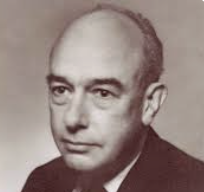
How are we to adjudicate among rival ontologies? Certainly the answer is not provided by the semantical formula "To be is to be the value of a variable"; this formula serves rather, conversely, in testing the conformity of a given remark or doctrine to a prior ontological standard.
▼
Source
source
"On What There Is"
2 months 1 day ago
It was Rudolf Carnap's dream for the last three decades of his life to show that science proceeds by a formal syntactic method; today no one to my knowledge holds out any hope for that project.
▼
Source
source
Hilary Putnam, in: James Conant, Urszula M. Zeglen (2012) Hilary Putnam: Pragmatism and Realism. p. 14
2 weeks 1 day ago
Democracy is, by the nature of it, a self-canceling business; and it gives in the long run a net result of zero.
▼
Source
source
Ch. 6, Laissez-Faire.
4 days ago
Not everything assumes a name. Some things lead beyond words. Art inflames even a frozen, darkened soul to a high spiritual experience. Through art we are sometimes visited - dimly, briefly - by revelations such as cannot be produced by rational thinking. Like that little looking-glass from the fairy-tales: look into it and you will see - not yourself - but for one second, the Inaccessible, whither no man can ride, no man fly. And only the soul gives a groan...
2 months 2 weeks ago
How did this division of the nations come about, what was its basis? The division is in accordance with all the previous history of the nationalities in question. It is the beginning of the decision on the life or death of all these nations, large and small. All the earlier history of Austria up to the present day is proof of this and 1848 confirmed it. Among all the large and small nations of Austria, only three standard-bearers of progress took an active part in history, and still retain their vitality - the Germans, the Poles and the Magyars. Hence they are now revolutionary. All the other large and small nationalities and peoples are destined to perish before long in the revolutionary world storm. (Weltsturm). For that reason they are now counter-revolutionary.
▼
Source
source
The Magyar Struggle in Neue Rheinische Zeitung (13 January 1849).
3 months 3 weeks ago
Change is one thing, progress is another.
2 months 2 weeks ago
I cannot escape the objection that there is no state of mind, however simple, that does not change every moment.
▼
Source
source
An Introduction to Metaphysics (1903), translated by T. E. Hulme. New York: G. P. Putnam's Sons, 1912, p. 44
2 weeks 1 day ago
Where this will end? In the Abyss, one may prophecy; whither all Delusions are, at all moments, travelling; where this Delusion has now arrived. For if there be a Faith, from of old, it is this, as we often repeat, that no Lie can live for ever. The very Truth has to change its vesture, from time to time; and be born again. But all Lies have sentence of death written down against them, and Heaven's Chancery itself; and, slowly or fast, advance incessantly towards their hour.
▼
Source
source
Pt. I, Bk. VI, ch. 3.

2 months 1 week ago
During his lifetime Gurdjieff did not publish any books on the techniques of his teaching, and his pupils were bound to secrecy on the subject. Since his death in Paris in 1949, however, many of his works have been published, and there has been a flood of memoirs by disciples and admirers. Gurdjieff was in almost ever respect the antithesis of Aleister Crowley. Whereas Crowley craved publicity, Gurdjieff shunned it. Crowley was forgotten for two decades after his death; Gurdjieff on the contrary, has become steadily better known, and his influence continues to grow. One of the main reasons for this is that there was so little of the charlatan about him. He is no cult figure with hordes of gullible disciples. What he has to teach makes an appeal to the intelligence, and can be fully understood only by those who are prepared to make a serious effort.
CivilSimian.com created by AxiomaticPanic, CivilSimian, Kalokagathia