


1 week 1 day ago
To roam in open walks, that the soul may increase and lift itself up in the free air and with much spirit; sometimes travel and a change of country will give vigor, and marriage and more liberal drink. Sometimes even to the point of drunkenness, not that it drowns us, but that it depresses us: for it washes away cares and moves the mind from below, and, as with certain diseases, so it heals sadness.
3 months 1 week ago
I have enough to eat till my hunger is stayed, to drink till my thirst is sated; to clothe myself withal; and out of doors not Callias there, with all his riches, is more safe than I from shivering; and when I find myself indoors, what warmer shirting do I need than my bare walls? what ampler greatcoat than the tiles above my head?
▼
Source
source
iv. 34

3 months 3 weeks ago
Standing on the bare ground, - my head bathed by the blithe air, and uplifted into infinite space, - all mean egotism vanishes. I become a transparent eye-ball; I am nothing; I see all; the currents of the Universal Being circulate through me; I am part or particle of God.
▼
Source
source
Nature

3 months 3 weeks ago
There are a thousand hacking at the branches of evil to one who is striking at the root, and it may be that he who bestows the largest amount of time and money on the needy is doing the most by his mode of life to produce that misery which he strives in vain to relieve.
▼
Source
source
p. 87
3 months 3 weeks ago
Man Thinking must not be subdued by his instruments.
▼
Source
source
par. 20

3 months 3 weeks ago
The spurious axioms of the third kind from conditions proper to the subject whence they are transferred rashly to the object are plentiful, not, as in those of the Second Class, because the only way to the intellectual concept lies through the sensuous data, but because only by aid of the latter can the concept be applied to that which is given by experience, that is, can we know whether something is contained under a certain intellectual concept or not. To this class belongs the threadbare one of the schools: whatever exists contingently does at some time not exist. This spurious principle springs from the poverty of the intellect, having insight frequently into the nominal, rarely into the real, marks of contingency or necessity.
3 months 3 weeks ago
Every poet has trembled on the verge of science.
▼
Source
source
July 18, 1852

4 months 1 week ago
Custom renders love attractive; for that which is struck by oft-repeated blows however lightly, yet after long course of time is overpowered and gives way. See you not too that drops of water falling on rocks after long course of time scoop a hole through these rocks?
▼
Source
source
Book IV, lines 1283-1287 (tr. Munro)

2 months 2 weeks ago
The only thing the young should be taught is that there is virtually nothing to be hoped for from life. One dreams of a Catalogue of Disappointments which would include all the disillusionments reserved for each and every one of us, to be posted in the schools.
3 months 3 weeks ago
All thought must, directly or indirectly, by way of certain characters, relate ultimately to intuitions, and therefore, with us, to sensibility, because in no other way can an object be given to us.
▼
Source
source
B 33
3 months 3 weeks ago
As we passed under the last bridge over the canal, just before reaching the Merrimack, the people coming out of church paused to look at us from above, and apparently, so strong is custom, indulged in some heathenish comparisons; but we were the truest observers of this sunny day.

2 months 2 weeks ago
To-day the Enlightenment ideal has been changed into a reality; not only in legislation, which is the mere framework of public life, but in the heart of every individual, whatever his ideas may be, and even if he be a reactionary in his ideas, that is to say, even when he attacks and castigates institutions by which those rights are sanctioned.... The sovereignty of the unqualified individual, of the human being as such, generically, has now passed from being a juridical idea or ideal to be a psychological state inherent in the average man. And note this, that when what was before an ideal becomes a component part of reality, it inevitably ceases to be an ideal. The prestige and the magic that are attributes of the ideal are volatilised.
▼
Source
source
Chap.II: The Rise Of The Historic Level
3 days ago
As for the beauty of the gods, not even Hermes tried to describe it in his tale; he said that it transcended description, and must be comprehended by the eye of the mind; for in words it was hard to portray and impossible to convey to mortal ears. Never indeed will there be or appear an orator so gifted that he could describe such surpassing beauty as shines forth on the countenance of the gods.

3 months 3 weeks ago
Life is a task to be done. It is a fine thing to say defunctus est; it means that the man has done his task.
▼
Source
source
"On the Sufferings of the World"

3 months 3 weeks ago
And as to you, Sir, treacherous in private friendship (for so you have been to me, and that in the day of danger) and a hypocrite in public life, the world will be puzzled to decide whether you are an apostate or an impostor; whether you have abandoned good principles, or whether you ever had any.
▼
Source
source
Letter to George Washington, 30 July 1796
1 week 1 day ago
Belief and work, knowledge and action are one and the same thing.
1 week 1 day ago
Besides, he who follows another not only discovers nothing but is not even investigating.
2 months 2 weeks ago
But yet they that have no Science, are in better, and nobler condition with their naturall Prudence; than men, that by their mis-reasoning, or by trusting them that reason wrong, fall upon false and absurd generall rules.
▼
Source
source
The First Part, Chapter 5, p. 21

2 weeks ago
Properly speaking, the Land belongs to these two: To the Almighty God; and to all His Children of Men that have ever worked well on it, or that shall ever work well on it. No generation of men can or could, with never such solemnity and effort, sell Land on any other principle: it is not the property of any generation, we say, but that of all the past generations that have worked on it, and of all the future ones that shall work on it.
2 weeks ago
Paganism we recognized as a veracious expression of the earnest awe-struck feeling of man towards the Universe; veracious, true once, and still not without worth for us. But mark here the difference of Paganism and Christianism; one great difference. Paganism emblemed chiefly the Operations of Nature; the destinies, efforts, combinations, vicissitudes of things and men in this world; Christianism emblemed the Law of Human Duty, the Moral Law of Man. One was for the sensuous nature: a rude helpless utterance of the first Thought of men,-the chief recognized virtue, Courage, Superiority to Fear. The other was not for the sensuous nature, but for the moral. What a progress is here, if in that one respect only-!

2 months 2 weeks ago
Get thee hence, Satan: for it is written, Thou shalt worship the Lord thy God, and him only shalt thou serve.
▼
Source
source
4:10 (KJV) Said to Satan.

2 months 6 days ago
The huge laugh is a most extreme expression of freedom.

3 months 3 weeks ago
I do not think it can be questioned that sympathy is a genuine motive, and that some people at some times are made somewhat uncomfortable by the sufferings of some other people. It is sympathy that has produced the many humanitarian advances of the last hundred years. We are shocked when we hear stories of the ill-treatment of lunatics, and there are now quite a number of asylums in which they are not ill-treated. Prisoners in Western countries are not supposed to be tortured, and when they are, there is an outcry if the facts are discovered. We do not approve of treating orphans as they are treated in Oliver Twist.

3 months 2 weeks ago
A philosopher is a man who has to cure many intellectual diseases in himself before he can arrive at the notions of common sense.
▼
Source
source
p. 44e
2 weeks ago
O reader, to what shifts is poor Society reduced, struggling to give still some account of herself, in epochs when Cash Payment has become the sole nexus of man to men!
▼
Source
source
Ch. 6, Laissez-Faire.

1 month 3 weeks ago
If you want to be happy, be.
▼
Source
source
Attributed in Wisdom for the Soul : Five Millennia of Prescriptions for Spiritual Healing (2006) by Larry Chang, p. 352
2 months 2 weeks ago
To read is to let someone else work for you - the most delicate form of exploitation.
3 months 3 weeks ago
The Austrians are a highly civilised race, half-surrounded by Slavs in a relatively backward state of culture. ... Servia, a country so barbaric that a man can secure the throne by instigating the assassination of his predecessor, is engaged constantly in fermenting the racial discontent of men of the same race who are Austrian subjects.
▼
Source
source
War: The Offspring of Fear (1914), quoted in Ray Monk, Bertrand Russell: The Spirit of Solitude, 1872-1921 (1996), p. 373

2 months 3 weeks ago
The conception of Rights involves that when men are to live in a community, each must so restrict his freedom as to permit the coexistence of the freedom of all others. But it does not involve that this particular person, A, is to restrict his freedom by the freedom of those particular persons, B, C, and D. That it has happened so that I, A, must conform myself particularly to the freedom of these, B, C, and D, of all other men, is purely the result of my living together with them; and I so live with them, simply by my free-will, not because there is an obligation for me to do so.
▼
Source
source
P. 23-24

3 months 2 weeks ago
Quality leadership is neither the product of one great individual nor the result of odd historical accidents. Rather, it comes from deeply bred traditions and communities that shape and mold talented and gifted persons. Without a vibrant tradition of resistance passed on to new generations, there can be no nurturing of a collective and critical consciousness-only professional conscientiousness survives.
▼
Source
source
(p37)

3 months 1 week ago
Of all things the worst to teach the young is dalliance, for it is this that is the parent of those pleasures from which wickedness springs.

3 months 3 weeks ago
They should always be heard, and fairly and kindly answer'd, when they ask after any thing they would know, and desire to be informed about. Curiosity should be as carefully cherish'd in children, as other appetites suppress'd.
▼
Source
source
Sec. 108
3 months 3 weeks ago
The christian religion is a parody on the worship of the Sun, in which they put a man whom they call Christ, in the place of the Sun, and pay him the same adoration which was originally paid to the Sun.
▼
Source
source
An Essay on the Origin of Free-Masonry (1803-1805); found in manuscript form after Paine's death and thought to have been written for an intended part III of The Age of Reason. It was partially published in 1810 and published in its entirety in 1818.

1 month 2 days ago
So what is the alternative to traditional anthropocentric ethics? Antispeciesism is not the claim that "All Animals Are Equal", or that all species are of equal value, or that a human or a pig is equivalent to a mosquito. Rather the antispeciesist claims that, other things being equal, equally strong interests should count equally. Experiences that are subjectively negative or positive in hedonic tone to the same degree must count for the same.
▼
Source
source
"The Antispeciesist Revolution", Institute for Ethics and Emerging Technologies, 26 Jul. 2013

2 months 1 week ago
The English never abolish anything. They put it in cold storage.
▼
Source
source
Ch. 36, January 19, 1945.

3 months 3 weeks ago
He advanced toward me without moving his hat, or making the least inclination of his body; but there appeared more real politeness in the open, humane air of his countenance, than in drawing one leg behind the other, and carrying that in the hand which is made to be worn on the head. "Friend," said he, "I perceive thou art a stranger, if I can do thee any service thou hast only to let me know it." "Sir," I replied, bowing my body, and sliding one leg toward him, as is the custom with us, "I flatter myself that my curiosity, which you will allow to be just, will not give you any offence, and that you will do me the honor to inform me of the particulars of your religion." "The people of thy country," answered the Quaker, "are too full of their bows and their compliments; but I never yet met with one of them who had so much curiosity as thyself. Come in and let us dine first together."
▼
Source
source
Voltaire's account of meeting the Quaker Andrew Pit
2 months 2 days ago
A major task in organizing is to determine, first, where the knowledge is located that can provide the various kinds of factual premises that decisions require.
▼
Source
source
p. 24.
1 week 1 day ago
We often want one thing and pray for another, not telling the truth even to the gods.
▼
Source
source
Line 2.
2 months 2 weeks ago
Beware of false prophets, which come to you in sheep's clothing, but inwardly they are ravening wolves.
▼
Source
source
Matthew 7:15 (KJV)

3 months 3 weeks ago
The world is sacred because it gives an inkling of a meaning that escapes us.
▼
Source
source
p. 280
3 months 1 week ago
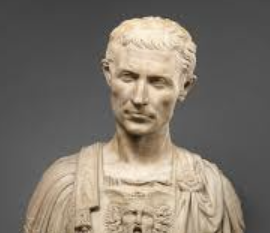
It is worth observing, how we feel ourselves affected in reading the characters of Cæsar, and Cato, as they are so finely drawn and contrasted in Salust. In one, the ignoscendo, largiundo; in the other, nil largiundo. In one, the miseris perfugium; in the other, malis perniciem. In the latter we have much to admire, much to reverence, and perhaps something to fear; we respect him, but we respect him at a distance. The former makes us familiar with him; we love him, and he leads us whither he pleases.
▼
Source
source
Edmund Burke, A Philosophical Enquiry into the Origin of Our Ideas of the Sublime and Beautiful (2nd ed. 1759), pp. 206-207

3 months 2 weeks ago
Christianity has functioned for the normative self-understanding of modernity as more than a mere precursor or a catalyst. Egalitarian universalism, from which sprang the ideas of freedom and social solidarity, of an antonomous conduct of life and emancipation, of the individual morality of conscience, human rights, and democracy, is the direct heir to the judaic ethic of justice and the Christian ethic of love. This legacy, substantially unchanged, has been the object of continual critical appropriation and reinterpretation. To this day, there is no alternative to it. And in the light of the current challenges of a postnational constellation, we continue to draw on the substance of this heritage. Everything else is just idle postmodern talk.
▼
Source
source
Habermas (2006) "Conversation about God and the World." Time of transitions. Cambridge: Polity Press, p. 150-151.

2 months 4 weeks ago
I think that democratic communities have a natural taste for freedom: left to themselves, they will seek it, cherish it, and view any privation of it with regret. But for equality, their passion is ardent, insatiable, incessant, invincible: they call for equality in freedom; and if they cannot obtain that, they still call for equality in slavery.
▼
Source
source
Book Two, Chapter I.

3 months 3 weeks ago
It's a bit embarrassing to have been concerned with the human problem all one's life and find at the end that one has no more to offer by way of advice than 'Try to be a little kinder.'
▼
Source
source
As quoted in Huston Smith, "Aldous Huxley--A Tribute," The Psychedelic Review, (1964) Vol I, No.3, (Aldous Huxley Memorial Issue), p. 264-5

4 months 3 weeks ago
Men grew desperate and the border between bitter frustration and wild destruction is sometimes easily crossed.

4 months 1 week ago
If the people have no faith in their rulers, there is no standing for the state.

1 month 2 weeks ago
Youth is wholly experimental.
▼
Source
source
Letter to a Young Gentleman Scribner's Magazine (September 1888).

3 months 3 weeks ago
This disposition to admire, and almost to worship, the rich and powerful, and to despise or, at least, neglect persons of poor and mean conditions, though necessary both to establish and to maintain the distinction of ranks and the order of society, is, at the same time, the great and most universal cause of the corruption of our moral sentiments.
▼
Source
source
Section III, Chap. III.
2 months 2 weeks ago
As incompetent in life as in death, I loathe myself and in this loathing I dream of another life, another death. And for having sought to be a sage such as never was, I am only a madman among the mad.
2 weeks 5 days ago
The Turks teach women that they have no souls, and are unworthy to enter paradise. The French would persuade them that they have no intellects, and are not made to engage in mental labors, and to tread the paths of art and science.
▼
Source
source
The Theory of Social Organization
CivilSimian.com created by AxiomaticPanic, CivilSimian, Kalokagathia