



2 months 5 days ago
Once again, I experienced that overwhelming joy in the universe that I had felt in London outside the V and A. But this time, my consciousness of the world seemed larger, more complex. It was the mystic's sensation of oneness, of everything blending into everything else. Everything I looked at reminded me of something else, which also became present to my consciousness, as if I were simultaneously seeing a million worlds and smelling a million scents and hearing a million sounds-- not mixed up, but each separate and clear. I was overwhelmed with a sense of my smallness in the face of this vast, beautiful, objective universe, this universe whose chief miracle is that it exists, as well as myself. It is no dream, but a great garden in which life is trying to obtain a foothold. I experienced a desire to burst into tears of gratitude; then I controlled it, and the feeling subsided into a calm sense of immense, infinite beauty.
▼
Source
source
pp. 237-238
2 months 1 week ago
Meditation on any theme, if positive and honest, inevitably separates him who does the meditating from the opinion prevailing around him, from that which ... can be called "public" or "popular" opinion.
▼
Source
source
p. 15
3 months 3 weeks ago
Ideal legislators do not vote their interests.
▼
Source
source
Chapter V, Section 43, p. 284

2 months 2 weeks ago
Wherefore think ye evil in your hearts? For whether is easier, to say, Thy sins be forgiven thee; or to say, Arise, and walk? But that ye may know that the Son of man hath power on earth to forgive sins, (then saith he to the sick of the palsy,) Arise, take up thy bed, and go unto thine house.
▼
Source
source
9:4-6 (KJV) Said to some scribes.

3 months 3 weeks ago
I am here to plead his cause with you. I plead not for his life, but for his character - his immortal life; and so it becomes your cause wholly, and is not his in the least. Some eighteen hundred years ago Christ was crucified; this morning, perchance, Captain Brown was hung. These are the two ends of a chain which is not without its links. He is not Old Brown any longer; he is an angel of light.
2 months 2 weeks ago
If our Bodily Life is a burning, our Spiritual Life is a being burnt, a Combustion (or, is precisely the inverse the case?); Death, therefore, perhaps a Change of Capacity.

2 months 1 week ago
Religion in so far as it is a source of consolation is a hindrance to true faith; and in this sense atheism is a purification. I have to be an atheist with that part of myself which is not made for God. Among those in whom the supernatural part of themselves has not been awakened, the atheists are right and the believers wrong.
▼
Source
source
"Faiths of Meditation; Contemplation of the divine" as translated in The Simone Weil Reader (1957) edited by George A. Panichas, p. 417
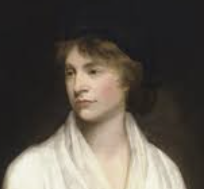
2 months 2 weeks ago
It would be an endless task to trace the variety of meannesses, cares, and sorrows, into which women are plunged by the prevailing opinion that they were created rather to feel than reason, and that all the power they obtain, must be obtained by their charms and weakness.
▼
Source
source
Ch. 4

3 months 3 weeks ago
To different minds, the same world is a hell, and a heaven.
▼
Source
source
December 20, 1822
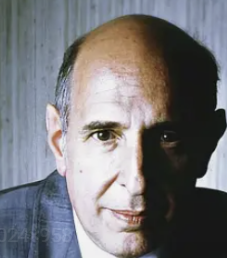
3 days ago
I am now even more persuaded of the urgent need to study why Socrates was accused. The dislike of philosophy is perennial, and the seeds of the condemnation of Socrates are present at all times, not in the bosoms of pleasure-seekers, who don't give a damn, but in those of high-minded and idealistic persons who do not want to submit their aspirations to examination.
▼
Source
source
Western Civ, p. 19.

3 months 3 weeks ago
Under no pretext should arms and ammunition be surrendered; any attempt to disarm the workers must be frustrated, by force if necessary.
▼
Source
source
Address of the Central Committee to the Communist League in London, March 1850
3 months 3 weeks ago
The object of art - like every other product - creates a public which is sensitive to art and enjoys beauty.
▼
Source
source
Introduction, p. 12.
4 months 3 weeks ago
As for him who neither possesses nor can acquire them, let him take to heart the words of Hesiod: He is the best of all who thinks for himself in all things. He, too, is good who takes advice from a wiser (person). But he who neither thinks for himself, nor lays to heart another's wisdom, this is a useless man.
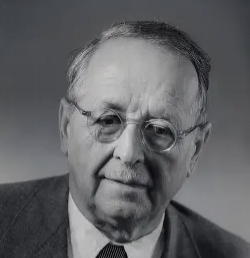
2 days ago
It was my wish to present this great subject as an illustration of the itermingling of philosophical, mathematical, and physical thought, a study which is dear to my heart. This could be done only by building up the theory systematically from the foundations, and by restricting attention throughout to the principles. But I have not been able to satisfy these self-imposed requirements: the mathematician predominates at the expense of the philosopher.
▼
Source
source
From the Author's Preface to First Edition
2 months 3 weeks ago
The God of the Christians is a father who makes much of his apples, and very little of his children.
▼
Source
source
No. 16

1 week 6 days ago
The barrenest of all mortals is the sentimentalist.
▼
Source
source
Characteristics.
4 months 1 week ago
There is no body but eats and drinks. But they are few who can distinguish flavors.

3 months 3 weeks ago
There is not a negro from the coast of Africa who does not, in this respect, possess a degree of magnanimity which the soul of his sordid master is too often scarce capable of conceiving. Fortune never exerted more cruelly her empire over mankind, than when she subjected those nations of heroes to the refuse of the jails of Europe, to wretches who possess the virtues neither of the countries which they come from, nor of those which they go to, and whose levity, brutality, and baseness, so justly expose them to the contempt of the vanquished.
▼
Source
source
Chap. II.

3 months 3 weeks ago
My form remains one, though the matter in it changes continually. I am, in that respect, like a curve in a waterfall.
▼
Source
source
Ch. 16: "Miracles of the New Creation"

3 months 3 days ago
Disbelieve nothing wonderful concerning the gods, nor concerning divine dogmas.
▼
Source
source
Symbol 4

2 months 2 weeks ago
We are so lonely in life that we must ask ourselves if the loneliness of dying is not a symbol of our human existence.
2 months 2 weeks ago
It is of great importance to observe that the character of every man is, in some degree, formed by his profession. A man of sense may only have a cast of countenance that wears off as you trace his individuality, whist the weak, common man has scarcely ever any character, but what belongs to the body; at least, all his opinions have been so steeped in the vat consecrated by authority, that the faint spirit which the grape of his own vine yields, cannot be distinguished.
▼
Source
source
Ch. 1
1 month 4 days ago
Life itself is always pulling you away from the understanding of life.
2 months 2 weeks ago
Nature is an Æolian Harp, a musical instrument; whose tones again are keys to higher strings in us.

2 months 3 weeks ago
There are two things which a democratic people will always find very difficult-to begin a war and to end it.
▼
Source
source
Book Three, Chapter XXII.
2 months 5 days ago
All men are stuck in a kind of fog. They're surrounded by a wall of fog. They think this is perfectly normal, but it's not. It means that since they can't see much beyond their own little situation, they tend to vegetate. They need some immediate stimulus to keep them alert.
▼
Source
source
p. 20
4 months ago
Insurrection ... never brings about the desired improvement. For insurrection lacks discernment; it generally harms the innocent more than the guilty. Hence, no insurrection is ever right, no matter how right the cause it seeks to promote.
▼
Source
source
pp. 62-63
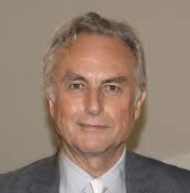
1 month 2 weeks ago
For his purposes (and mine), scientific medicine is defined as the set of practices which submit themselves to the ordeal of being tested. Alternative medicine is defined as that set of practices which cannot be tested, refuse to be tested, or consistently fail tests. If a healing technique is demonstrated to have curative properties in properly controlled double-blind trials, it ceases to be alternative. It simply, as Diamond explains, becomes medicine. Conversely, if a technique devised by the President of the Royal College of Physicians consistently fails in double-blind trials, it will cease to be a part of 'orthodox' medicine. Whether it will then become 'alternative' will depend upon whether it is adopted by a sufficiently ambitious quack (there are always sufficiently gullible patients).
▼
Source
source
Foreword to Snake Oil and Other Preoccupations by John Diamond, Vintage, 2001.
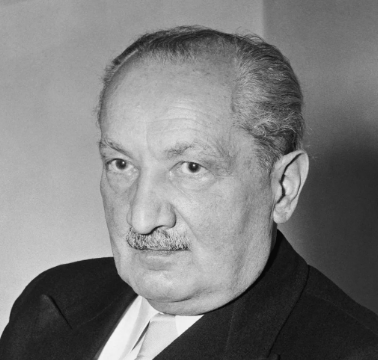
3 months 2 weeks ago
In order to remain silent Da-sein must have something to say.
▼
Source
source
Stambaugh translation

3 months 4 weeks ago
Man is forming thousands of ridiculous relations between himself and God.
▼
Source
source
Ch. 12
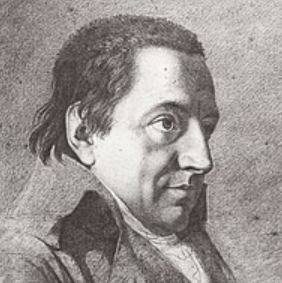
2 months 3 weeks ago
I have distinctly announced the grounds upon which I regard the Apostle John as the only teacher of true Christianity:-namely, that the Apostle Paul and his party, as the authors of the opposite system of Christianity, remained half Jews, and left unaltered the fundamental error of Judaism as well as of Heathenism, which we must afterwards notice. For the present the following may be enough: -It is only with John that the philosopher can deal, for he alone has respect for Reason, and appeals to that evidence which alone has weight with the philosopher-the internal. "If any man will do the will of him that sent me, he shall know of the doctrine, whether it be of God." But this Will of God, accord ing to John, is, that we should truly believe in God, and in Jesus Christ whom he hath sent. The other promulgators of Christianity, however, rely upon the external evidence of Miracle, which, to us at least, proves nothing.
▼
Source
source
P. 96-97
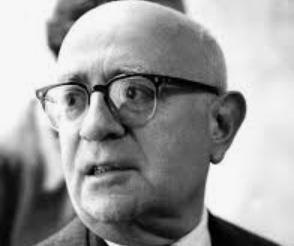
2 months 1 week ago
In the products of the culture industry human beings get into trouble only so that they can be rescued unharmed, usually by representatives of a benevolent collective; and then, in illusory harmony, they are reconciled with the general interest whose demands they had initially experienced as irreconcilable with their own.
▼
Source
source
Section 14
2 months 5 days ago
Taken as a whole, the Cross Correspondences and the Willet scripts are among the most convincing evidence that at present exists for life after death. For anyone who is prepared to devote weeks to studying them, they prove beyond all reasonable doubt that Myers, Gurney, and Sidgwick went on communicating after death.
▼
Source
source
p. 136
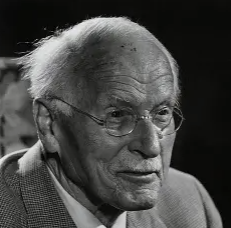
2 months 2 weeks ago
Emotion is the chief source of all becoming-conscious. There can be no transforming of darkness into light and of apathy into movement without emotion.
▼
Source
source
Psychological Aspects of the Mother Archetype
1 month 4 days ago
One can never pay in gratitude; one can only pay "in kind" somewhere else in life.
▼
Source
source
North to the Orient (1935) Ch. 19

3 months 3 weeks ago
I will not be modest. Humble, as much as you like, but not modest. Modesty is the virtue of the lukewarm.
▼
Source
source
Act 4, sc. 5
3 months 3 weeks ago
And all the time - such is the tragi-comedy of our situation - we continue to clamor for those very qualities we are rendering impossible. You can hardly open a periodical without coming across the statement that what our civilization needs is more "drive", or dynamism, or self-sacrifice, or "creativity". In a sort of ghastly simplicity we remove the organ and demand the function. We make men without chests and expect of them virtue and enterprise. We laugh at honour and are shocked to find traitors in our midst. We castrate and bid the geldings be fruitful.
3 months 3 weeks ago
O tenderly the haughty day Fills his blue urn with fire; One morn is in the mighty heaven, And one in our desire.
▼
Source
source
Ode, st. 1
2 months 2 weeks ago
If death had only negative aspects, dying would be an unmanageable action.
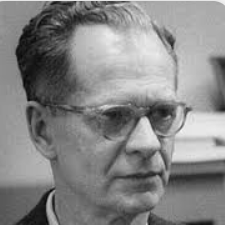
2 weeks 4 days ago
Ethical control may survive in small groups, but the control of the population as a whole must be delegated to specialists-to police, priests, owners, teachers, therapists, and so on, with their specialized reinforcers and their codified contingencies.
▼
Source
source
Beyond Freedom and Dignity (1971), p. 155

4 months 3 weeks ago
Forgetting our intentions is the most frequent of all acts of stupidity.


3 months 1 week ago
'Tis not in strength of body nor in gold that men find happiness, but in uprightness and in fulness of understanding.

3 months 3 weeks ago
Every man would like to be God, if it were possible; some few find it difficult to admit the impossibility.
▼
Source
source
Ch. 1: The Impulse to Power
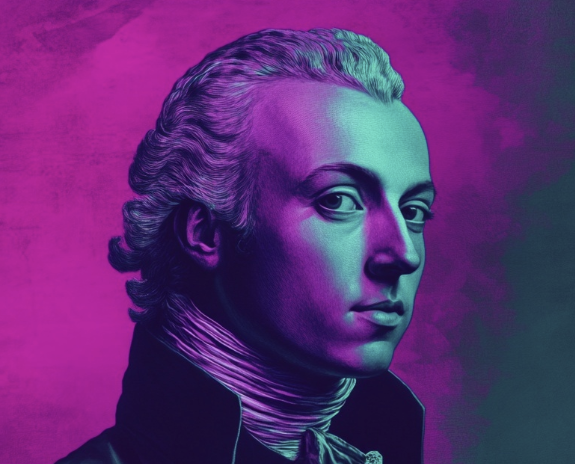
3 months 3 weeks ago
Human reason has this peculiar fate that in one species of its knowledge it is burdened by questions which, as prescribed by the very nature of reason itself, it is not able to ignore, but which, as transcending all its powers, it is also not able to answer.
▼
Source
source
Preface, A vii
2 months 1 week ago
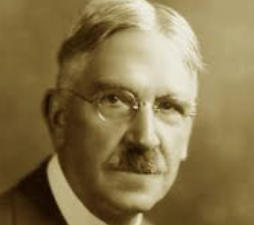
... classic philosophy maintained that change, and consequently time, are marks of inferior reality, holding that true and ultimate reality is immutable and eternal. Human reasons, all too human, have given birth to the idea that over and beyond the lower realm of things that shift like the sands on the seashore there is the kingdom of the unchanging, of the complete, the perfect. The grounds for the belief are couched in the technical language of philosophy, but the grounds for the cause is the heart's desire for surcease from change, struggle, and uncertainty. The eternal and immutable is the consummation of mortal man's quest for certainty.
4 months 3 weeks ago
May not we then confidently pronounce that man happy who realizes complete goodness in action, and is adequately furnished with external goods? Or should we add, that he must also be destined to go on living not for any casual period but throughout a complete lifetime in the same manner, and to die accordingly, because the future is hidden from us, and we conceive happiness as an end, something utterly and absolutely final and complete? If this is so, we shall pronounce those of the living who possess and are destined to go on possessing the good things we have specified to be supremely blessed, though on the human scale of bliss.
1 week 6 days ago
To me, in these circumstances, that of "Hero-worship" becomes a fact inexpressibly precious; the most solacing fact one sees in the world at present. There is an everlasting hope in it for the management of the world. Had all traditions, arrangements, creeds, societies that men ever instituted, sunk away, this would remain. The certainty of Heroes being sent us; our faculty, our necessity, to reverence Heroes when sent: it shines like a polestar through smoke-clouds, dust-clouds, and all manner of down-rushing and conflagration.
CivilSimian.com created by AxiomaticPanic, CivilSimian, Kalokagathia