


1 month 3 weeks ago
As Narcissus fell in love with an outering (projection, extension) of himself, man seems invariably to fall in love with the newest gadget or gimmick that is merely an extension of his own body.



3 months 3 weeks ago
Our aim is precisely to establish the human kingdom as a pattern of values in distinction from the material world. But the subjectivity which we thus postulate as the standard of truth is no narrowly individual subjectivism, for as we have demonstrated, it is not only one's own self that one discovers in the cogito, but those of others too. Contrary to the philosophy of Descartes, contrary to that of Kant, when we say "I think" we are attaining to ourselves in the presence of the other, and we are just as certain of the other as we are of ourselves. Thus the man who discovers himself directly in the cogito also discovers all the others, and discovers them as the condition of his own existence. He realizes that he can't be anything unless others recognize him as such. I cannot obtain any truth whatsoever about myself, except through the mediation of another. The other is indispensable to my existence, and equally so to any knowledge I can have of myself.
▼
Source
source
p. 45
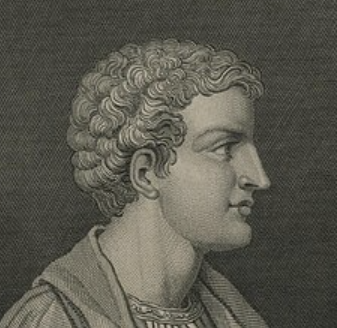
3 months 1 week ago
Tis not sufficient to combine well-chosen words in a well-ordered line.
▼
Source
source
Book I, satire iv, line 54 (translated by John Conington)

3 months 3 weeks ago
The method of "postulating" what we want has many advantages; they are the same as the advantages of theft over honest toil.
▼
Source
source
Ch. 7: Rational, Real and Complex Numbers

2 months 3 weeks ago
Volumes might be written upon the impiety of the pious.
▼
Source
source
Pt. I, The Unknowable; Ch. V, The Reconciliation
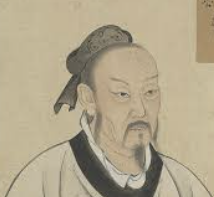
2 weeks 6 days ago
In order to properly understand the big picture, everyone should fear becoming mentally clouded and obsessed with one small section of truth.
▼
Source
source
Quoted in: Joan Klostermann-Ketels (2011) HumaniTrees, p. 96
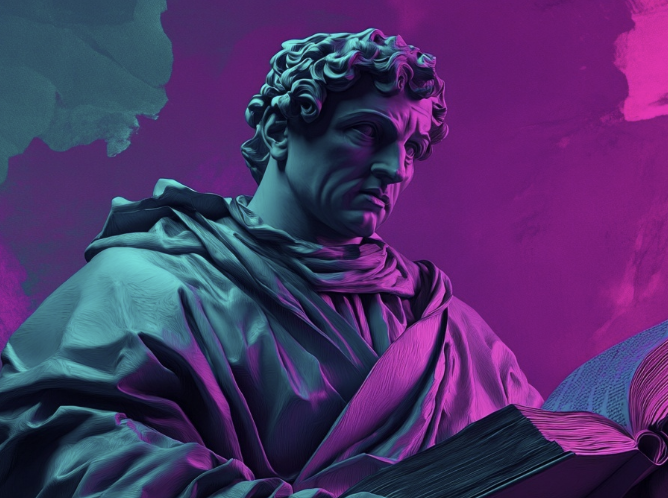
4 months 1 day ago
A penny saved is of more value than a penny paid out.
▼
Source
source
What Luther Says, Section on "Life, Human," No. 2438. Rules for a Thrifty Life. 2, p. 784


2 months 6 days ago
I have said that, in a sense, the parasites were a 'shadow' of man's cowardice and passivity. Their strength could increase in an atmosphere of defeat and panic, for it fed on human fear. In that case, the best way to combat them was to change the atmosphere to one of strength and purpose.
▼
Source
source
p. 188
2 weeks 5 days ago
The way positive reinforcement is carried out is more important than the amount.
▼
Source
source
As quoted in Meditations for Parents Who Do Too Much (1993) by Jonathon Lazear and Wendy Lazear, p. 5

3 months 3 weeks ago
A spurious axiom of the first class is: Whatever is, is somewhere and sometime.

4 months 2 weeks ago
History is a story without an end.
2 months ago
Now, moral philosophers generally prefer to talk about virtues, or about (specific) duties, rights, and so on, rather than about moral images of the world. There are obvious reasons for this; nevertheless, I think that it is a mistake, and that Kant is profoundly right. What we require in moral philosophy is, first and foremost, a moral image of the world, or rather--since, here again, I am more of a pluralist than Kant--a number of complementary moral images of the world.
▼
Source
source
Lecture III: Equality and Our Moral Image of the World
4 months 6 days ago
The source of the errors of these two sects, is in not having known that the state of man at the present time differs from that of his creation; so that the one, remarking some traces of his first greatness and being ignorant of his corruption, has treated nature as sound and without need of redemption, which leads him to the height of pride; whilst the other, feeling the present wretchedness and being ignorant of the original dignity, treats nature as necessarily infirm and irreparable, which precipitates it into despair of arriving at real good, and thence into extreme laxity.
4 months 1 week ago
Hope has two beautiful daughters. Their names are anger and courage; anger at the way things are, and courage to see that they do not remain the way they are.
▼
Source
source
As quoted in Spirituality and Liberation: Overcoming the Great Fallacy (1988) by Robert McAfee Brown, p. 136

3 months 4 days ago
Holding fast to these things, you will know the worlds of gods and mortals which permeates and governs everything. And you will know, as is right, nature similar in all respects, so that you will neither entertain unreasonable hopes nor be neglectful of anything.
▼
Source
source
As quoted in Divine Harmony: The Life and Teachings of Pythagoras by John Strohmeier and Peter Westbrook.

3 months ago
The proximity between the counterfeit and the good coin does not make the good coin counterfeit nor the counterfeit good. In the same way the proximity between truth and falsehood does not make truth falsehood nor falsehood truth.
▼
Source
source
III. The Classes of Seekers, p. 33.

3 months 3 weeks ago
What can be said can and should always be said more and more simply and clearly.

2 months 3 weeks ago
Your worst sin is that you have destroyed and betrayed yourself for nothing.

2 months 1 week ago
To fall into a habit is to begin to cease to be.

1 month 1 week ago
We should be clear that neither genuine religious nor genuine moral impulses will ever be expressed in terms that tie the two essentially together. If you view religion as necessary for ethics, you've reduced us to the ethical level of 4 year olds. "If you follow these commandments you'll go to heaven, if you don't' you'll burn in hell" is just a spectacular version of the carrots and sticks with which you raise your children.
3 months 3 weeks ago
As for the square at Meknes, where I used to go every day, it's even simpler: I do not see it at all anymore. All that remains is the vague feeling that it was charming, and these five words that are indivisibly bound together: a charming square at Meknes. ... I don't see anything any more: I can search the past in vain, I can only find these scraps of images and I am not sure what they represent, whether they are memories or just fiction.
▼
Source
source
Diary entry of Friday 3:00pm (9 February?)

1 month 2 days ago
Whoever imposes severe punishment becomes repulsive to the people; while he who awards mild punishment becomes contemptible. But whoever imposes punishment as deserved becomes respectable. For punishment when awarded with due consideration, makes the people devoted to righteousness and to works productive of wealth and enjoyment; while punishment, when ill-awarded under the influence of greed and anger or owing to ignorance, excites fury even among hermits and ascetics dwelling in forests, not to speak of householders.
▼
Source
source
Book I : "Concerning Discipline" Chapter 4 "Determination of the Place of Varta and of Dandaniti"
2 months 6 days ago
...the Outsider's problem is the problem of denial of self-expression.
▼
Source
source
Chapter Four The Attempt to Gain Control

3 months 2 weeks ago
I am showing my pupils details of an immense landscape which they cannot possibly know their way around.
▼
Source
source
p. 56e
2 months 2 weeks ago
The assurance that we have no means of answering [final] questions is no valid excuse for callousness towards them. The more deeply should we feel, down to the roots of our being, their pressure and their sting. Whose hunger has ever been [sated] with the knowledge that he could not eat?
▼
Source
source
p. 15
2 months 2 weeks ago
The rise of new science in the seventeenth century laid hold upon general culture in the next century. The enlightenment... testified to the widespread belief that at last light had dawned, that dissipation of ignorance, superstition, and bigotry was at hand, and the triumph of reason was assured -- for reason was counterpart in man of the laws of nature which science was disclosing. The reign of law in the natural world was to be followed by the reign of law in human affairs.

2 months 3 weeks ago
But as to our country and our race, as long as the well compacted structure of our church and state, the sanctuary, the holy of holies of that ancient law, defended by reverence, defended by power, a fortress at once and a temple, shall stand inviolate on the brow of the British Sion-as long as the British Monarchy, not more limited than fenced by the orders of the State, shall, like the proud Keep of Windsor, rising in the majesty of proportion, and girt with the double belt of its kindred and coeval towers, as long as this awful structure shall oversee and guard the subjected land-so long as the mounds and dykes of the low, fat, Bedford level will have nothing to fear from all the pickaxes of all the levellers of France.
▼
Source
source
pp. 52-53

3 months 3 weeks ago
United States! the ages plead, - Present and Past in under-song, - Go put your creed into your deed, Nor speak with double tongue.
▼
Source
source
Ode, st. 5

3 months 1 week ago
There were two brothers called Both and Either; perceiving Either was a good, understanding, busy fellow, and Both a silly fellow and good for little, Philip said, "Either is both, and Both is neither."
▼
Source
source
35 Philip
3 months 1 week ago
I am a utilitarian. I am also a vegetarian. I am a vegetarian because I am a utilitarian.
▼
Source
source
Utilitarianism and Vegetarianism, Philosophy & Public Affairs, 9(4): 325 (1980).

4 months 3 weeks ago
Our destiny exercises its influence over us even when, as yet, we have not learned its nature: it is our future that lays down the law of our today.
3 months 3 weeks ago
It is generally admitted that most grown-up people, however regrettably, will try to have a good time.
2 months 2 days ago
Food probably has a very great influence on the condition of men. Wine exercises a more visible influence, food does it more slowly but perhaps just as surely. Who knows if a well-prepared soup was not responsible for the pneumatic pump or a poor one for a war?
▼
Source
source
A 14
2 months 1 week ago
By becoming the pure subject who knows the world objectively, man ultimately realizes that absolute consciousness with respect to which the body and individual existence are no longer anything but objects; death is deprived of meaning. Reduced to the status of object of consciousness, the body could not be conceived as an intermediary between "things" and the consciousness which knows them.
▼
Source
source
p. 204
3 months 3 weeks ago
The truth can wait, for she lives a long life.
▼
Source
source
Willen in der Natur (On the Will in Nature), 1836;
4 months 3 weeks ago
Tolerance and apathy are the last virtues of a dying society.

3 months 1 week ago
The right-minded man, ever inclined to righteous and lawful deeds, is joyous day and night, and strong, and free from care. But if a man take no heed of the right, and leave undone the things he ought to do, then will the recollection of no one of all his transgressions bring him any joy, but only anxiety and self-reproaching.


2 months 4 weeks ago
Pour recueillir les biens inestimables qu'assure la liberté de la presse, il faut savoir se soumettre aux maux inévitables qu'elle fait naître. Translation: In order to enjoy the inestimable benefits that the liberty of the press ensures, it is necessary to submit to the inevitable evils it creates.
▼
Source
source
Chapter XI.
2 months 1 week ago
To be old is a glorious thing when one has not unlearned what it means to begin, this old man had perhaps first learned it thoroughly in old age.
▼
Source
source
p. 6
3 months 1 week ago
"Young men," said Cæsar, "hear an old man to whom old men hearkened when he was young."
▼
Source
source
Cæsar Augustus
2 months 3 weeks ago
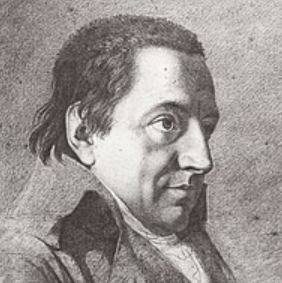
It is a proof that the state is not an arbitrary invention, but is established by nature and reason, when we actually find that, in places where men have lived together for a time and have become educated, states are erected, although the people in the one such place know not that the same thing has been done in other places. Each people, which does not live in a condition of nature, but has a government, no matter how constituted, has a right to compel its recognition from all adjoining states.
▼
Source
source
P. 474, 477
1 week 1 day ago
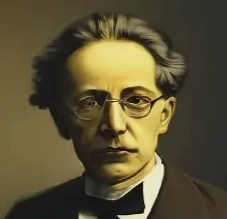
I love men too, not merely individuals, but every one. But I love them with the consciousness of egoism; I love them because love makes me happy, I love because loving is natural to me, because it pleases me. I know no 'commandment of love'.
▼
Source
source
Cambridge 1995, p. 258

3 months 3 weeks ago
"Milton was right," said my Teacher. "The choice of every lost soul can be expressed in the words 'Better to reign in Hell than to serve in Heaven.' There is always something they insist on keeping even at the price of misery."
▼
Source
source
Ch. 9
4 months 2 weeks ago
Goodbye, friend Elijiah, and remember that, although people apply the phrase to Aurora, it is, from this point on, Earth itself that is the true World of the Dawn.
3 months 3 weeks ago
When Confucius and the Indian Scriptures were made known, no claim to monopoly of ethical wisdom could be thought of... It is only within this century [the 1800 's] that England and America discovered that their nursery tales were old German and Scandinavian stories; and now it appears that they came from India, and are therefore the property of all the nations.
▼
Source
source
Quoted in S. Londhe, A Tribute to Hinduism, 2008

2 months 2 weeks ago
The more we try to wrest ourselves from our ego, the deeper we sink into it.
CivilSimian.com created by AxiomaticPanic, CivilSimian, Kalokagathia