

2 months 4 days ago
Rather, power is most powerful, most stable, where it creates a feeling of freedom and where it does not need to resort to violence.

3 months 3 weeks ago
The only thing that will redeem mankind is co-operation, and the first step towards co-operation lies in the hearts of individuals.
▼
Source
source
p. 212

1 week 5 days ago
It lies deep in our habits, confirmed by all manner of educational and other arrangements for several centuries back, to consider human talent as best of all evincing itself by the faculty of eloquent speech. Our earliest schoolmasters teach us, as the one gift of culture they have, the art of spelling and pronouncing, the rules of correct speech; rhetorics, logics follow, sublime mysteries of grammar, whereby we may not only speak but write. And onward to the last of our schoolmasters in the highest university, it is still intrinsically grammar, under various figures grammar. To speak in various languages, on various things, but on all of them to speak, and appropriately deliver ourselves by tongue or pen,-this is the sublime goal towards which all manner of beneficent preceptors and learned professors, from the lowest hornbook upwards, are continually urging and guiding us.

3 months 3 weeks ago
A propensity to hope and joy is real riches: One to fear and sorrow, real poverty.
▼
Source
source
Part I, Essay 18: The Sceptic
3 months 3 weeks ago
I want you to read the true system of the heart, drafted by a decent man and published under another name. I do not want you to be biased against good and useful books merely because a man unworthy of reading them has the audacity to call himself the Author.
▼
Source
source
First Dialogue; translated by Judith R. Bush, Christopher Kelly, Roger D. Masters

4 months 1 week ago
Suppose a person entering a house were to feel heat on the porch, and going further, were to feel the heat increasing, the more they penetrated within. Doubtless, such a person would believe there was a fire in the house, even though they did not see the fire that must be causing all this heat. A similar thing will happen to anyone who considers this world in detail: one will observe that all things are arranged according to their degrees of beauty and excellence, and that the nearer they are to God, the more beautiful and better they are.
▼
Source
source
Art. 1

3 months 3 weeks ago
Mercy to the guilty is cruelty to the innocent.
▼
Source
source
Section II, Chap. III.
2 months 3 weeks ago
Government must be a transparent garment which tightly clings to the people's body.
▼
Source
source
Act I.

1 month 2 weeks ago
Prose is private drama; poetry is corporate drama.
▼
Source
source
(p. 275)
1 week 4 days ago
Sir William Hunter, estimated that 40,000,000 of the people of India were seldom or never able to satisfy their hunger. In 1901, 272,000 died of plague introduced from abroad, in 1902, 500,000 died of plague; in 1903, 800,000; in 1904, 1,000,000. We can now understand why there are famines in India. Their cause, in plain terms, is not the absence of food, but the inability of the people to pay for it. It was hoped the railways would solve the problem...the fact that the worst famines have come since the building of the railways...behind all these, as the fundamental source of the terrible famines in India, lies such merciless exploitation, such unbalanced exploitation of goods, and such brutal collection of high taxes in the very midst of famine....
▼
Source
source
(source: The Case for India - By Will Durant Simon and Schuster, New York. 1930 p.50-53).
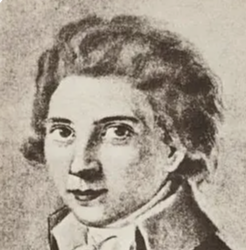
2 months 3 weeks ago
In England ... everything becomes professional ... even the rogues of that island are pedants.
▼
Source
source
"Selected Aphorisms from the Lyceum (1797)"
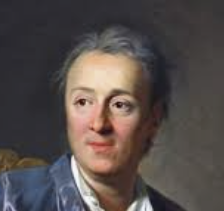
2 months 3 weeks ago
Shakespeare's fault is not the greatest into which a poet may fall. It merely indicates a deficiency of taste.
3 months 2 weeks ago
A sovereign shows himself to be a tyrant if he disregards his honest advisors, or punishes them for what they have said.
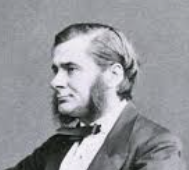
1 month 1 week ago
The foundation of morality is to have done, once and for all, with lying; to give up pretending to believe that for which there is no evidence, and repeating unintelligible propositions about things beyond the possibilities of knowledge.
▼
Source
source
Science and Morals
3 months 3 weeks ago
Hear the verbal protestations of all men: Nothing so certain as their religious tenets. Examine their lives: You will scarcely think that they repose the smallest confidence in them. The greatest and truest zeal gives us no security against hypocrisy: The most open impiety is attended with a secret dread and compunction. No theological absurdities so glaring that they have not, sometimes, been embraced by men of the greatest and most cultivated understanding. No religious precepts so rigorous that they have not been adopted by the most voluptuous and most abandoned of men.
▼
Source
source
Part XV - General corollary
2 months 2 weeks ago
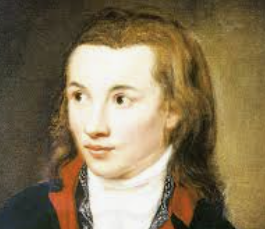
There is, properly speaking, no Misfortune in the world. Happiness and Misfortune stand in continual balance. Every Misfortune is, as it were, the obstruction of a stream, which, after overcoming this obstruction, but bursts through with the greater force.

2 months 4 days ago
The dominant, almost general, idea of revolution - particularly the Socialist idea - is that revolution is a violent change of social conditions through which one social class, the working class, becomes dominant over another class, the capitalist class. It is the conception of a purely physical change, and as such it involves only political scene shifting and institutional rearrangements. Bourgeois dictatorship is replaced by the "dictatorship of the proletariat" - or by that of its "advance guard," the Communist Party. Lenin takes the seat of the Romanovs, the Imperial Cabinet is rechristened Soviet of People's Commissars, Trotsky is appointed Minister of War, and a labourer becomes the Military Governor General of Moscow. That is, in essence, the Bolshevik conception of revolution, as translated into actual practice.
3 months 3 weeks ago
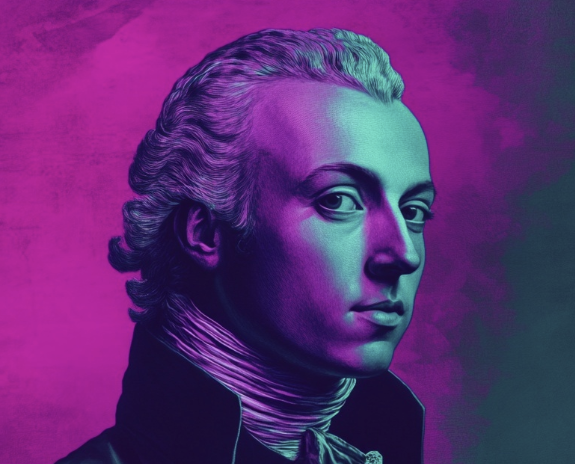
All human knowledge begins with intuitions, proceeds from thence to concepts, and ends with ideas.
▼
Source
source
B 730; Variant translation: All our knowledge begins with the senses, proceeds then to the understanding, and ends with reason. There is nothing higher than reason.

2 months 1 week ago
To all this, someone is sure to object that life ought to subject itself to reason, to which we will reply that nobody ought to do what he is unable to do, and life cannot subject itself to reason. "Ought, therefore can," some Kantian will retort. To which we shall demur: "Cannot, therefore ought not." And life cannot submit itself to reason, because the end of life is living and not understanding.

3 months 4 weeks ago
The greatest thing in the world is to know how to belong to oneself.
▼
Source
source
Ch. 39

2 months 3 weeks ago
In their nomination to office they will not appoint to the exercise of authority as to a pitiful job, but as to a holy function.
▼
Source
source
Volume iii, p. 356
4 months 2 weeks ago
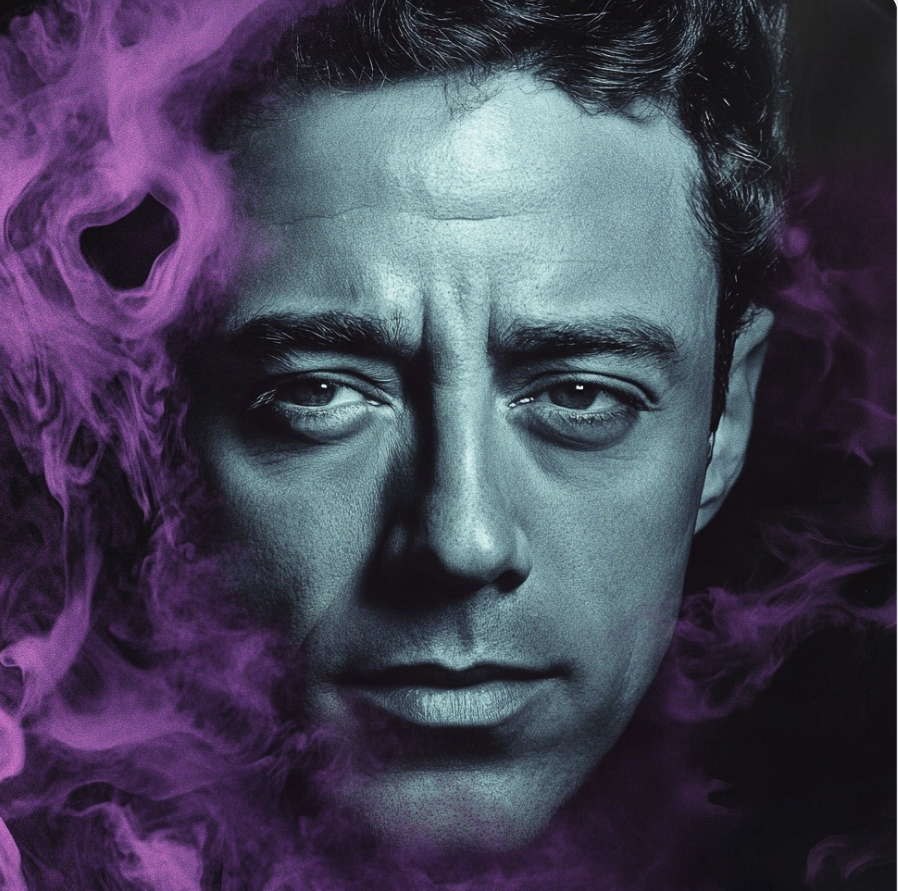
Time will prolong time, and life will serve life. In this field that is both limited and bulging with possibilities, everything to himself, except his lucidity, seems unforeseeable to him. What rule, then, could emanate from that unreasonable order? The only truth that might seem instructive to him is not formal: it comes to life and unfolds in men. The absurd mind cannot so much expect ethical rules at the end of its reasoning as, rather, illustrations and the breath of human lives.
3 months 1 week ago
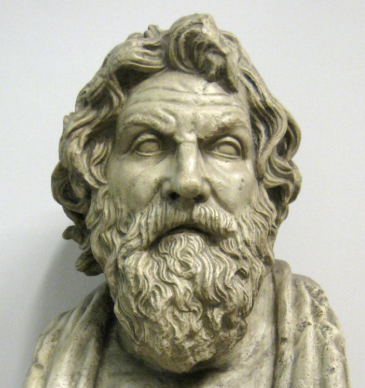
Once, when he was applauded by rascals, he remarked, "I am horribly afraid I have done something wrong."
▼
Source
source
§ 5
3 months 2 weeks ago
If someone asked us 'but is that true?' we might say "yes" to him; and if he demanded grounds we might say "I can't give you any grounds, but if you learn more you too will think the same."
3 months 3 days ago
Do not ask who started it.
▼
Source
source
Finish it A Dictionary of Thoughts (1908) by Tryon Edwards, p. 234

3 months 2 weeks ago
Then he tried to recall the lessons of Mr. Wisdom. "it is I myself, eternal Spirit, who drives this Me, the slave, along that ledge. I ought not to care whether he falls and breaks his neck or not. It is not he that is real, it is I - I - I.
▼
Source
source
Pilgrim's Regress 137
2 months 2 weeks ago
The true philosophical Act is annihilation of self (Selbsttodtung); this is the real beginning of all Philosophy; all requisites for being a Disciple of Philosophy point hither. This Act alone corresponds to all the conditions and characteristics of transcendental conduct.
4 months 6 days ago
Who are those people by whom you wish to be admired? Are they not these about whom you are in the habit of saying that they are mad? What then? Do you wish to be admired by the mad?
▼
Source
source
Book I, ch. 21, 4.
3 months 3 weeks ago
I must confess that I am deeply troubled. I fear that human beings are intent upon acting out a vast deathwish and that it lies with us now to make every effort to promote resistance to the insanity and brutality of policies which encompass the extermination of hundreds of millions of human beings.
▼
Source
source
Letter to Rudolf Carnap, June 21, 1962

4 months 2 weeks ago
An observer studying the Solar system dispassionately, and finding himself capable of bringing the four giant planets to his notice, could reasonably say that the Solar system consisted of one star, four planets, and some traces of debris.

4 months 1 week ago
We must consider both the ultimate end and all clear sensory evidence, to which we refer our opinions; for otherwise everything will be full of uncertainty and confusion.
2 months 2 weeks ago
The general co-operation of all members of society for the purpose of planned exploitation of the forces of production, the expansion of production to the point where it will satisfy the needs of all, the abolition of a situation in which the needs of some are satisfied at the expense of the needs of others, the complete liquidation of classes and their conflicts, the rounded development of the capacities of all members of society through the elimination of the present division of labor, through industrial education, through engaging in varying activities, through the participation by all in the enjoyments produced by all, through the combination of city and country - these are the main consequences of the abolition of private property.
2 months 3 weeks ago
The state is therefore everyone; the rules within the state are laws which safeguard the welfare of all and which must originate from the welfare of all.
3 months 4 weeks ago
It may be observed, that provinces amid the vicissitudes to which they are subject, pass from order into confusion, and afterward recur to a state of order again; for the nature of mundane affairs not allowing them to continue in an even course, when they have arrived at their greatest perfection, they soon begin to decline. In the same manner, having been reduced by disorder, and sunk to their utmost state of depression, unable to descend lower, they, of necessity, reascend; and thus from good they gradually decline to evil, and from evil again return to good. The reason is, that valor produces peace; peace, repose; repose, disorder; disorder, ruin; so from disorder order springs; from order virtue, and from this, glory and good fortune.
▼
Source
source
Book V, Chapter 1
1 week 5 days ago
War is a quarrel between two thieves too cowardly to fight their own battle; therefore they take boys from one village and another village, stick them into uniforms, equip them with guns, and let them loose like wild beasts against each other.
▼
Source
source
Quoted by Emma Goldman in her essay, "Patriotism: A Menace to Liberty", chapter five of Anarchism and Other Essays (2nd revised edition, 1911).
1 week 5 days ago
"Normal science" means research firmly based upon one or more past scientific achievements, achievements that some particular scientific community acknowledges for a time as supplying the foundation for its further practice.
▼
Source
source
p. 10
2 months 1 week ago
"God does not think, He creates; He does not exist, He is eternal," wrote Kierkegaard (Afslutende uvidenskabelige Efterskrift); but perhaps it is more exact to say with Mazzini, the mystic of the Italian city, that "God is great because his thought is action" (Ai giovani d'Italila), because with Him to think is to create, and He gives existence to that which exists in His thought by the mere fact of thinking it, and the impossible is unthinkable by God. It is not written in the Scriptures that God creates with His word - that is to say, with His thought - and that by this, by His Word, He made everything that exists? And what God has once made does He ever forget? May it not be that all the thoughts that have ever passed through the Supreme Consciousness still subsist therein? In Him, who is eternal, is not all existence eternalized?
3 months 3 weeks ago
I should like to believe my people's religion, which was just what I could wish, but alas, it is impossible. I have really no religion, for my God, being a spirit shown merely by reason to exist, his properties utterly unknown, is no help to my life. I have not the parson's comfortable doctrine that every good action has its reward, and every sin is forgiven. My whole religion is this: do every duty, and expect no reward for it, either here or hereafter.
▼
Source
source
Greek Exercises (1888), written two days after his sixteenth birthday.

1 month 3 weeks ago
Do not resist the evil-doer and take no part in doing so, either in the violent deeds of the administration, in the law courts, the collection of taxes, or above all in soldiering, and no one in the world will be able to enslave you.
▼
Source
source
V. "Do not resist the evil-doer" is an allusion to the words of Jesus Christ in Matthew 5:39.
2 months 1 week ago
I do not accept any absolute formulas for living. No preconceived code can see ahead to everything that can happen in a man's life. As we live, we grow and our beliefs change. They must change. So I think we should live with this constant discovery. We should be open to this adventure in heightened awareness of living. We should stake our whole existence on our willingness to explore and experience.
▼
Source
source
As quoted in Martin Buber : An Intimate Portrait (1971), p. 56
2 months 1 week ago
Nobody is bound to have an optimistic outlook on the future: that is not a precept of the Christian religion. ... It is a matter of immense importance that illusions should be dispelled and man come face to face with positive realities.
▼
Source
source
p. 131
3 months 2 weeks ago
The condemned man found himself transformed into a hero by the sheer extend of his widely advertised crimes, and sometimes the affirmation of his belated repentance. Against the law, against the rich, the powerful, the magistrates, the constabulary or the watch, against taxes and their collectors, he appeared to have waged a struggle with which one all too easily identified. The proclamation of these crimes blew up to epic proportions the tiny struggle that passed unperceived in everyday life. If the condemned man was shown to be repentant, accepting the verdict, asking both God and man for forgiveness for his crimes, it was as if he had come through some process of purification: he died, in his own way, like a saint.
▼
Source
source
Chapter One: The Spectacle of the scaffold, pp. 67
1 week 5 days ago
Not only was Thebes built by the music of an Orpheus; but without the music of some inspired Orpheus was no city ever built, no work that man glories-in ever done.
▼
Source
source
Bk. III, ch. 8.
3 months 3 weeks ago
The act of navigation is not favourable to foreign commerce, or to the growth of that opulence which can arise from it. ... As defence, however, is of much more importance than opulence, the act of navigation is, perhaps, the wisest of all the commercial regulations of England.
▼
Source
source
Chapter II
3 months 4 weeks ago
The most manifest sign of wisdom is a continual cheerfulness; her state is like that in the regions above the moon, always clear and serene.
▼
Source
source
Book I, Ch. 26
3 months 3 weeks ago
Every man would like to be God, if it were possible; some few find it difficult to admit the impossibility.
▼
Source
source
Ch. 1: The Impulse to Power
3 months 4 weeks ago
Habit is a second nature.
▼
Source
source
Book III, Ch. 10

2 weeks 2 days ago
In a liberal society you're not going to agree on the deepest... moral frameworks, but you are going to agree on factual information, and... if you can't agree on factual information it's very hard to deliberate in common... on what needs to be done in the future, and that's the situation we now face.
▼
Source
source
23:00
3 months 3 weeks ago
When I was a boy, I had a clock with a pendulum that could be lifted off. I found that the clock went very much faster without the pendulum. If the main purpose of a clock is to go, the clock was the better for losing its pendulum. True, it could no longer tell the time, but that did not matter if one could teach oneself to be indifferent to the passage of time. The linguistic philosophy which cares only about language and not about the world, is like the boy who preferred the clock without the pendulum because, although it no longer told the time, it went more easily than before and at a more exhilarating pace.
▼
Source
source
Foreword to Ernest Gellner Words and Things, 1959
3 months 3 weeks ago
It goes without saying that the normal durability of fixed capital is calculated on the supposition that all the conditions under which it can perform its functions normally during that time are fulfilled, just as we assume, in placing a mans life at 30 years on the average,that he will wash himself.
▼
Source
source
Volume II, Ch. VIII, p. 176-177.
CivilSimian.com created by AxiomaticPanic, CivilSimian, Kalokagathia