


3 months 1 week ago
An honest man nearly always thinks justly.
▼
Source
source
As quoted in A Dictionary of Thoughts: Being a Cyclopedia of Laconic Quotations from the Best Authors of the World, Both Ancient and Modern (1908) by Tryon Edwards, p. 277.

2 months 1 week ago
Knowledge, having irritated and stimulated our appetite for power, will lead us inexorably to our ruin.

1 month 1 day ago
What concerns me most here are the ways in which contemporary voices considered to be leftist have abandoned the philosophical ideas that are central to any left-wing standpoint: a commitment to universalism over tribalism, a firm distinction between justice and power, and a belief in the possibility of progress.
▼
Source
source
Polity (2023), p. 5
4 months 1 week ago
What is the essence of life? To serve others and to do good. Often given as a saying of Aristotle with no reference.

4 months 1 week ago
Now just as the historical gives occasion for the contemporary to become a disciple, but only it must be noted through receiving the condition from the God himself, since otherwise we speak Socratically, so the testimony of contemporaries gives occasion for each successor to become a disciple, but only it must be noted through receiving the condition from the God himself.
1 month 1 week ago
I once had a conversation with a famous French philosopher who's a friend of mine. And I said to him, "Why the hell do you write so badly? Pourquoi tu écris si mal?" ... And this was Michel Foucault. He was a very smart guy and wrote a lot of very good stuff but in general he just wrote badly. When you heard him give a lecture in Berkeley, it was perfectly clear, just as clear as I am. ... And he said, "Well, in France, it would be regarded as somewhat childish and naive if you wrote clearly. ... In France you've got to have 10% incomprehensible."
▼
Source
source
Otherwise people won't think it's deep. They won't think you're a profound thinker.
1 month 3 weeks ago
It is a paralogism to say, that the good of the individual should give way to that of the public; this can never take place, except when the government of the community, or, in other words, the liberty of the subject is concerned; this does not affect such cases as relate to private property, because the public good consists in everyone's having his property, which was given him by the civil laws, invariably preserved.
▼
Source
source
Book XXVI, Chapter 15.

3 months 1 week ago
I mistrust illuminations: what we take for a discovery is very often only a familiar thought that we have not recognized.
▼
Source
source
p. 439

3 months 1 week ago
Those who believe that they are exclusively in the right are generally those who achieve something.
▼
Source
source
"Note on Dogma"

3 months 3 weeks ago
What is love's perfection? To love our enemies, and to love them to the end that they may be our brothers.
▼
Source
source
First Homily, as translated by John Burnaby (1955), p. 266

3 months 5 days ago
Not only must people know, they must see with their own eyes. Because they must be made to be afraid; but also because they must be the witnesses, the guarantors, of the punishment, and because they must to a certain extent take part in it.
▼
Source
source
Chapter One, pp.58

2 months 3 weeks ago
A bad feeling is a commotion of the mind repugnant to reason, and against nature.
▼
Source
source
As quoted in Tusculanae Quaestiones by Cicero, iv. 6.
1 month 3 weeks ago
Men can be provincial in time, as well as in place.
▼
Source
source
Preface, p. ix
2 weeks 6 days ago
Dialogue never ends not for lack of time or opportunity but for essential reasons.
▼
Source
source
Chapter 7, Vigilance and Interruption, p. 121
3 months 1 week ago
Most boys or youths who have had much knowledge drilled into them, have their mental capacities not strengthened, but over-laid by it. They are crammed with mere facts, and with the opinions or phrases of other people, and these are accepted as a substitute for the power to form opinions of their own: and thus the sons of eminent fathers, who have spared no pains in their education, so often grow up mere parroters of what they have learnt, incapable of using their minds except in the furrows traced for them. Mine, however, was not an education of cram. My father never permitted anything which I learnt to degenerate into a mere exercise of memory. He strove to make the understanding not only go along with every step of the teaching, but, if possible, precede it. Anything which could be found out by thinking I never was told, until I had exhausted my efforts to find it out for myself.
▼
Source
source
(p. 31)

1 month 3 weeks ago
Depression is a narcissistic malady.
1 day ago
The scientific enterprise as a whole does from time to time prove useful, open up new territory, display order, and test long-accepted belief. Nevertheless, the individual engaged on a normal research problem is almost never doing any one of these things. Once engaged, his motivation is of a rather different sort. What then challenges him is the conviction that, if only he is skillful enough, he will succeed in solving a puzzle that no one before has solved or solved so well.
▼
Source
source
p. 38.

1 month 3 weeks ago
The fierce willingness to repudiate domination in a holistic manner is the starting point for progressive cultural revolution.
▼
Source
source
Women, Art, and Society: Fourth Edition (2007) by Whitney Chadwick ISBN 0-500-20393-8
2 months 1 week ago
Awareness of time: assault on time . . .
1 month 2 weeks ago
Over Christmas, Allen Newell and I created a thinking machine.
▼
Source
source
Simon (1956) quoted on CMU Libraries: Problem Solving Research

3 months 2 weeks ago
Love in animals, has not for its only object animals of the same species, but extends itself farther, and comprehends almost every sensible and thinking being. A dog naturally loves a man above his own species, and very commonly meets with a return of affection.
▼
Source
source
Part 2, Section 12

1 month 3 weeks ago
The simultaneous existence of opposite virtues in the soul - like pincers to catch hold of God.
▼
Source
source
p. 92

3 months 1 week ago
Luxury is the opposite of the naturally necessary.
▼
Source
source
Notebook V, The Chapter on Capital, p. 448.

2 days ago
An intellectual dapperling of these times boasts chiefly of his irresistible perspicacity, his "dwelling in the daylight of truth," and so forth; which, on examination, turns out to be a dwelling in the rush-light of "closet logic," and a deep unconsciousness that there is any other light to dwell in or any other objects to survey with it.
1 day ago
We may, to be more precise, have to relinquish the notion, explicit or implicit, that changes of paradigm carry scientists and those who learn from them closer and closer to the truth.
▼
Source
source
p. 170
1 month 1 week ago
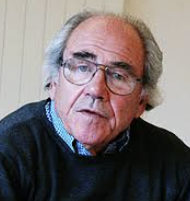
To dissimulate is to pretend not to have what one has. To simulate is to feign to have what one doesn't have. One implies a presence, the other an absence. But it is more complicated than that because simulating is not pretending: "Whoever fakes an illness can simply stay in bed and make everyone believe he is ill. Whoever simulates an illness produces in himself some of the symptoms" (Littré). Therefore, pretending, or dissimulating, leaves the principle of reality intact: the difference is always clear, it is simply masked, whereas simulation threatens the difference between the "true" and the "false," the "real" and the "imaginary."
▼
Source
source
"The Precession of Simulacra," p. 3
2 months 1 week ago
We are near awakening when we dream that we dream.

3 months 1 week ago
The whole conception of God is a conception derived from the ancient Oriental despotisms. It is a conception quite unworthy of free men. When you hear people in church debasing themselves and saying that they are miserable sinners, and all the rest of it, it seems contemptible and not worthy of self-respecting human beings. We ought to stand up and look the world frankly in the face. We ought to make the best we can of the world, and if it is not so good as we wish, after all it will still be better than what these others have made of it in all these ages. A good world needs knowledge, kindliness, and courage; it does not need a regretful hankering after the past, or a fettering of the free intelligence by the words uttered long ago by ignorant men.
▼
Source
source
"What We Must Do"
3 months 1 week ago
How can great minds be produced in a country where the test of a great mind is agreeing in the opinions of small minds?
▼
Source
source
As quoted in Egoists: A Book of Supermen (1909) by James Huneker, p. 367

2 months 1 week ago
The men of England - the men, I mean of light and leading in England.
▼
Source
source
Volume iii, p. 365

3 months 1 week ago
Nothing is yet in its true form.
2 months 1 week ago
Public life is a situation of power and energy; he trespasses against his duty who sleeps upon his watch, as well as he that goes over to the enemy.
1 month 6 days ago
You could read Kant by yourself, if you wanted; but you must share a joke with someone else.
▼
Source
source
Virginibus Puerisque, Ch. 1. Cornhill Magazine,

1 month 3 weeks ago
Phenomenology is not a philosophy; it is a philosophical method, a tool. It is like an adjustable spanner that can be used for dismantling a refrigerator or a car, or used for hammering in nails, or even for knocking somebody out.
▼
Source
source
p. 92
2 months 1 week ago
True confessions are written with tears only. But my tears would drown the world, as my inner fire would reduce it to ashes.
1 month 3 weeks ago
Action is the pointer which shows the balance. We must not touch the pointer but the weight.
▼
Source
source
p. 97
3 months 3 weeks ago
Let each look to his own heart: let him not keep hatred against his brother for any hard word; on account of earthly contention let him not become earth.
▼
Source
source
First Homily, Paragraph 11, as translated by H. Browne, Nicene and Post-Nicene Fathers, First Series, Vol. 7 (1888)
2 months 3 days ago
In proportion as a man's interests become humane and his efforts rational, he appropriates and expands a common life, which reappears in all individuals who reach the same impersonal level of ideas.
▼
Source
source
Ch. VIII: Ideal Society
3 months 1 week ago
Physics is mathematical not because we know so much about the physical world, but because we know so little: it is only its mathematical properties that we can discover.
▼
Source
source
An Outline of Philosophy Ch.15 The Nature of our Knowledge of Physics, 1927
2 months 1 week ago
Religious persecution may shield itself under the guise of a mistaken and over-zealous piety.
▼
Source
source
Speech in opening the impeachment of Warren Hastings (18 February 1788), quoted in The Works of the Right Honourable Edmund Burke, Volume the Tenth (1899), pp. 7-8
1 month 6 days ago
In every part and corner of our life, to lose oneself is to be a gainer; to forget oneself is to be happy.
▼
Source
source
Old Mortality (1884).
1 month 3 weeks ago
It is the fallacy of all intellectuals to believe that intellect can grasp life. It cannot, because it works in terms of symbols and language. There is another factor involved: consciousness. If the flame of consciousness is low, a symbol has no power to evoke reality, and intellect is helpless.
▼
Source
source
p. 112
2 months 1 week ago
But where is the antidote for lucid despair, perfectly articulated, proud, and sure? All of us are miserable, but how many know it? The consciousness of misery is too serious a disease to figure in an arithmetic of agonies or in the catalogues of the Incurable. It belittles the prestige of hell, and converts the slaughterhouses of time into idyls. What sin have you committed to be born, what crime to exist? Your suffering like your fate is without motive. To suffer, truly to suffer, is to accept the invasion of ills without the excuse of causality, as a favor of demented nature, as a negative miracle. . .

3 months 1 week ago
To-day unbind the captive, So only are ye unbound; Lift up a people from the dust, Trump of their rescue, sound!
▼
Source
source
Boston Hymn, st. 17
3 months 3 weeks ago
He who created us without our help will not save us without our consent.
▼
Source
source
St. Augustine, Sermo 169, 11, 13: PL 38, 923 as quoted in Fr. Mitch Pacwa, S. J.. Saved: A Bible Study Guide for Catholics (p. 15). Our Sunday Visitor. Kindle Edition.

2 weeks 3 days ago
In the world as we find it, even the barest requirements of a life worth living cannot all be always met in full. Toppling a tyranny may trigger civil war. Protecting a broad range of liberal freedoms may result in the regime that guarantees them being short lived. At the same time, supporting a strong state as a bulwark against anarchy may worsen the abuse of power. Wise policy can temper these conflicts. It cannot hope to overcome them.
▼
Source
source
'Modus Vivendi' (p.28)

3 months 1 day ago
The hopes of the right-minded may be realized, those of fools are impossible.
2 months 1 week ago
Law and arbitrary power are in eternal enmity. Name me a magistrate, and I will name property; name me power, and I will name protection. It is a contradiction in terms, it is blasphemy in religion, it is wickedness in politics, to say that any man can have arbitrary power. In every patent of office the duty is included. For what else does a magistrate exist? To suppose for power is an absurdity in idea. Judges are guided and governed by the eternal laws of justice, to which we are all subject. We may bite our chains, if we will, but we shall be made to know ourselves, and be taught that man is born to be governed by law; and he that will substitute will in the place of it is an enemy to God.
▼
Source
source
Speech in opening the impeachment of Warren Hastings (16 February 1788), quoted in The Works of the Right Honourable Edmund Burke, Volume the Ninth (1899), p. 458
3 months 1 week ago
In the highest civilization, the book is still the highest delight. He who has once known its satisfactions is provided with a resource against calamity.
▼
Source
source
Quotation and Originality

3 months 2 weeks ago
The oldest and best known evil was ever more supportable than one that was new and untried.
▼
Source
source
Book III, Ch. 9. Of Vanity
CivilSimian.com created by AxiomaticPanic, CivilSimian, Kalokagathia