

2 months 1 week ago
Hatred is a feeling which leads to the extinction of values.
▼
Source
source
Cited in the Oxford Dictionary of Quotations by Subject, ed. Susan Ratcliffe (2010), p. 223

3 months 3 weeks ago
There are other letters for the child to learn than those which Cadmus invented.
2 months 1 week ago
Because energy is not restrained by other elements that are at once antagonistic and cooperative, action proceeds by jerks and spasms. There is discontinuity.
▼
Source
source
p. 189

1 month 2 weeks ago
I am often accused of expressing contempt and despising religious people. I don't despise religious people, I despise what they stand for. I like to quote the British journalist Johann Hari who said, "I have so much respect for you, that I cannot respect your ridiculous ideas."
▼
Source
source
Reason Rally, National Mall, Washington, DC, 2012-03-24 Richard Dawkins and his Foundation at the Reason Rally, YouTube, 7 April 2012


3 months 3 weeks ago
Be not afraid of life. Believe that life is worth living, and your belief will help create the fact.
▼
Source
source
"Is Life Worth Living?"

3 months 3 weeks ago
These numerous points at which money is withdrawn from circulation and accumulated in numerous individual hoards or potential money-capitals appears as so many obstacles to circulation, because they immobilise the money and deprive it of its capacity to circulate for a certain time.
▼
Source
source
Vol. II, Ch. XXI, p. 497.

2 months 2 weeks ago
Basically-I speak of life as it is and not of abstract philosophical constructs-life is only bearable because one does not go to the end; doing something is only possible when one has particular illusions and that holds also for friendships, for everything.
2 months 2 weeks ago
When we assume God to be a guiding principle-well, sure enough, a god is usually characteristic of a certain system of thought or morality. For instance, take the Christian God, the summum bonum: God is love, love being the highest moral principle; and God is spirit, the spirit being the supreme idea of meaning. All our Christian moral concepts derive from such assumptions, and the supreme essence of all of them is what we call God.
▼
Source
source
Nietzsche's Zarathustra (1988), p. 40
2 months 1 week ago
At the parting of ways in the life-order, where the question is between the new creation or decay, that man will be decisive for new creation who is able on his own initiative to seize the helm and steer a course of his own choosing - even if that course be opposed to the will of the masses. Should the emergence of such persons become impossible a lamentable shipwreck will be inevitable.
2 months 2 weeks ago
Compared to the refined culture of sclerotic forms and frames, which mask everything, the lyrical mode is utterly barbarian in its expression. Its value resides precisely in its savage quality: it is only blood, sincerity, and fire.
4 months 5 days ago
No man is free who is not master of himself.
▼
Source
source
Fragment 35 (Oldfather translation)
3 months 1 week ago
For many, as Cranton tells us, and those very wise men, not now but long ago, have deplored the condition of human nature, esteeming life a punishment, and to be born a man the highest pitch of calamity; this, Aristotle tells us, Silenus declared when he was brought captive to Midas.

4 weeks ago
The repression of liberty that took place in the countries in which Communist regimes were established cannot be adequately explained as a product of backwardness, or of errors in the application of Marxian theory. It was the result of a resolute attempt to realize an Enlightenment utopia - a condition of society in which no serious form of conflict any longer exists.
▼
Source
source
'Isaiah Berlin: The Value of Decency' (p.99)

3 months 3 weeks ago
In the part of this universe that we know there is great injustice, and often the good suffer, and often the wicked prosper, and one hardly knows which of those is the more annoying.
▼
Source
source
"The Argument for the Remedying of Injustice"
4 months 5 days ago
Why, what is weeping and sighing? A judgement. What is misfortune? A judgement. What are strife, disagreement, fault-finding, accusing, impiety, foolishness? They are all judgements.
▼
Source
source
Book III, ch. 3, 18, 19.
2 months 3 days ago
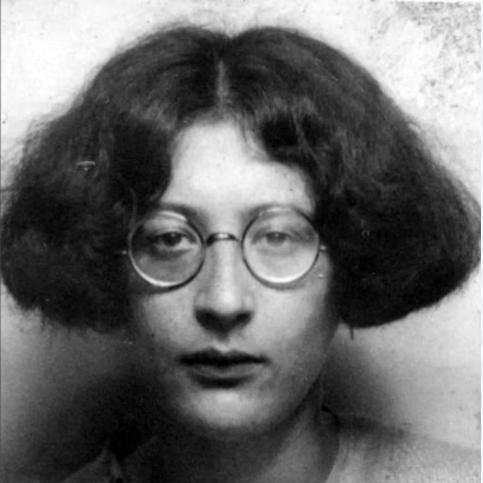
That man and woman have an equality of duties and rights is accepted by woman even less than by man. Behind his destiny woman must annihilate herself, must be only his complement. A woman dedicates herself to the vocation of her husband; she fills up and performs the subordinate parts in it. But if she has any destiny, any vocation of her own, she must renounce it, in nine cases out of ten.
2 months 1 week ago
Truth is sought not because it is truth but because it is good.
▼
Source
source
p. 213

1 week 5 days ago
Talk never yet could guide any man's or nation's affairs; nor will it yours, except towards the Limbus Patrum, where all talk, except a very select kind of it, lodges at last.

3 months 2 weeks ago
Do not allow your dreams of a beautiful world to lure you away from the claims of men who suffer here and now.
▼
Source
source
p. 485
2 months 2 weeks ago
Losing love is so rich a philosophical ordeal that it makes a hairdresser into a rival of Socrates.


4 months ago
Finally, every man will become dear and pleasing to every other man; all will be beloved by all! and, what is still more desirable, beloved also by Christ; to become acceptable to whom is the highest felicity of human nature.

3 months 2 weeks ago
To convince someone of the truth, it is not enough to state it, but rather one must find the path from error to truth.
▼
Source
source
Ch. 7 : Remarks on Frazer's Golden Bough, p. 119
4 months 5 days ago
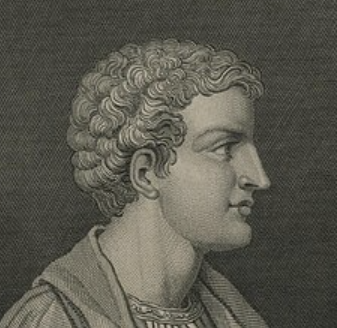
Were I a nightingale, I would act the part of a nightingale; were I a swan, the part of a swan.
▼
Source
source
Book I, ch. 16, 20.
3 months 1 week ago
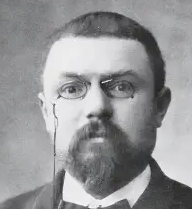
In adversity, remember to keep an even mind.
▼
Source
source
Book II, ode iii, line 1
2 weeks 1 day ago
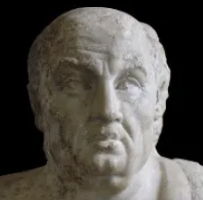
If all the parts of the universe are interchained in a certain measure, any one phenomenon will not be the effect of a single cause, but the resultant of causes infinitely numerous; it is, one often says, the consequence of the state of the universe the moment before.

2 months 4 days ago
One simple method is to take a pen or pencil and hold it up against a blank wall or ceiling. Now concentrate on the pen as if it is the most important thing in the world. Then allow your sense to relax, so you see the pen against the background of the wall. Concentrate again. Relax again. Keep on doing this until you become aware of the ability to focus attention at will. You will find that this unaccustomed activity of the will is tiring; it produces a sense of strain behind the eyes. My own perception is that if you persist, in spite of the strain, the result is acute discomfort, followed by a sudden immense relief - the 'peak experience'.
▼
Source
source
p. 33
6 days ago
But how much more highly do I think of these men! They can do these things, but decline to do them. To whom that ever tried have these tasks proved false? To what man did they not seem easier in the doing? Our lack of confidence is not the result of difficulty. The difficulty comes from our lack of confidence.
▼
Source
source
Also translated as: It is not because things are difficult that we do not dare, but because we do not dare, things are difficult. Verse 26
2 days ago
Never for a moment do we lay aside our mistrust of the ideals established by society, and of the convictions which are kept by it in circulation. We always know that society is full of folly and will deceive us in the matter of humanity. ... humanity meaning consideration for the existence and the happiness of individual human beings.
▼
Source
source
Chapter 26
2 months 1 week ago
The inversion of external compulsion into the compulsion of conscience ... produces the machine-like assiduity and pliable allegiance required by the new rationality.
▼
Source
source
p. 34.
3 months 2 weeks ago
The safest road to Hell is the gradual one - the gentle slope, soft underfoot, without sudden turnings, without milestones, without signposts.
▼
Source
source
Letter XII
3 months 2 weeks ago
Put in a nut-shell, my thesis amounts to this. The repeated attempts made by Rudolf Carnap to show that the demarcation between science and metaphysics coincides with that between sense and nonsense have failed. The reason is that the positivistic concept of 'meaning' or 'sense' (or of verifiability, or of inductive confirmability, etc.) is inappropriate for achieving this demarcation - simply because metaphysics need not be meaningless even though it is not science. In all its variations demarcation by meaninglessness has tended to be at the same time too narrow and too wide: as against all intentions and all claims, it has tended to exclude scientific theories as meaningless, while failing to exclude even that part of metaphysics which is known as 'rational theology'.
▼
Source
source
Ch 11. "The Demarcation between Science and Metaphysics." (Summary, p. 253)
3 months 3 weeks ago
My life is like a stroll upon the beach, As near the ocean's edge as I can go.
▼
Source
source
"The Fisher's Boy", in Edmund Clarence Stedman (ed.) An American Anthology, 1787-1900, Boston and New York: Houghton, Mifflin and Co., 1900
2 months 1 week ago
I do not think discursively. It is not so much that I arrive at truth as that I take my start from it.
▼
Source
source
Introduction
3 months 4 weeks ago
I prefer the company of peasants because they have not been educated sufficiently to reason incorrectly.
1 week 5 days ago
Paganism we recognized as a veracious expression of the earnest awe-struck feeling of man towards the Universe; veracious, true once, and still not without worth for us. But mark here the difference of Paganism and Christianism; one great difference. Paganism emblemed chiefly the Operations of Nature; the destinies, efforts, combinations, vicissitudes of things and men in this world; Christianism emblemed the Law of Human Duty, the Moral Law of Man. One was for the sensuous nature: a rude helpless utterance of the first Thought of men,-the chief recognized virtue, Courage, Superiority to Fear. The other was not for the sensuous nature, but for the moral. What a progress is here, if in that one respect only-!
1 month 2 weeks ago
However many ways there may be of being alive, it is certain that there are vastly more ways of being dead.
▼
Source
source
Chapter 1 "Explaining the Very Improbable"

3 months 3 weeks ago
A mind does not receive truth as a chest receives jewels that are put into it, but as the stomach takes up food into the system. It is no longer food, but flesh, and is assimilated. The appetite and the power of digestion measure our right to knowledge. He has it who can use it. As soon as our accumulation overruns our invention or power to use, the evils of intellectual gluttony begin,- congestion of the brain, apoplexy, and strangulation.
▼
Source
source
"The Natural History of Intellect", p. 30
1 month 2 weeks ago
When Fortune is on our side, popular favor bears her company.
▼
Source
source
Maxim 275
4 months 3 weeks ago
Homer has taught all other poets the art of telling lies skillfully.
3 months 2 weeks ago
You could send your soul after the good you had expected, instead of turning it to the good you had got. You could refuse the real good; you could make the real fruit taste insipid by thinking of the other.
3 months 2 weeks ago
If a victory is told in detail, one can no longer distinguish it from a defeat.
▼
Source
source
Act 1

2 months 3 days ago
This perversion of the ethical values soon crystallized into the all-dominating slogan of the Communist Party: THE END JUSTIFIES ALL MEANS. Similarly in the past the Inquisition and the Jesuits adopted this motto and subordinated to it all morality. It avenged itself upon the Jesuits as it did upon the Russian Revolution. In the wake of this slogan followed lying, deceit, hypocrisy and treachery, murder, open and secret. It should be of utmost interest to students of social psychology that two movements as widely separated in time and ideas as Jesuitism and Bolshevism reached exactly similar results in the evolution of the principle that the end justifies all means. The historic parallel, almost entirely ignored so far, contains a most important lesson for all coming revolutions and for the whole future of mankind.

3 months 2 weeks ago
The 'Enlightenment', which discovered the liberties, also invented the disciplines.
3 months 3 weeks ago
The most violent, mean and malignant passions of the human breast, the Furies of private interest.
▼
Source
source
Author's prefaces to the First Edition.
3 months 2 weeks ago
The will to the "true world" in the sense of Plato and Christianity ... is in truth a no-saying to our present world, precisely the one in which art is at home.
▼
Source
source
p. 74

2 months 4 days ago
God functions like a stabilizer of time.

2 months 1 week ago
I do not understand these men who tell me that the prospect of the yonder side of death has never tormented them, that the thought of their own annihilation never disquiets them. For my part I do not wish to make peace between my heart and my head, between my faith and my reason - I wish rather that there should be war between them.
1 month 2 weeks ago
It is fashionable to wax apocalyptic about the threat to humanity posed by the AIDS virus, "mad cow" disease, and many others, but I think a case can be made that faith is one of the world's great evils, comparable to the smallpox virus but harder to eradicate.
▼
Source
source
Is Science a Religion?, The Humanist
CivilSimian.com created by AxiomaticPanic, CivilSimian, Kalokagathia