


3 months 3 weeks ago
From each according to his abilities, to each according to his needs.
▼
Source
source
The Criticism of the Gotha Program (1875) Variant translation: From each according to his ability, to each according to his need.

2 months 3 weeks ago
We must not always judge of the generality of the opinion by the noise of the acclamation.
▼
Source
source
No. 1

2 months 5 days ago
We cannot think first and act afterwards. From the moment of birth we are immersed in action, and can only fitfully guide it by taking thought.
▼
Source
source
Ch. 12: "Religion and Science", p. 261
1 month 3 weeks ago
What froze me was the fact that I had absolutely no reason to move in any direction. What had made me move through so many dead and pointless years was curiosity. Now even that flickered out.
2 months 5 days ago
When you are criticising the philosophy of an epoch, do not chiefly direct your attention to those intellectual positions which its exponents feel it necessary explicitly to defend. There will be some fundamental assumptions which adherents of all the variant systems within the epoch unconsciously presuppose. Such assumptions appear so obvious that people do not know what they are assuming because no other way of putting things has ever occurred to them. With these assumptions a certain limited number of types of philosophic systems are possible, and this group of systems constitutes the philosophy of the epoch.
▼
Source
source
Ch. 3: "The Century of Genius", p. 69

4 months ago
There is nothing I congratulate myself on more heartily than on never having joined a sect.
▼
Source
source
As quoted in Thomas More and Erasmus (1965) by Ernest Edwin Reynolds, p. 248 [citation needed]

2 months 4 days ago
The individual begins that long effort as an Outsider; he may finish it as a saint.
▼
Source
source
Chapter Nine, Breaking the Circuit, final sentence
2 months 3 weeks ago
They say in the grave there is peace, and peace and the grave are one and the same.
▼
Source
source
Act I.
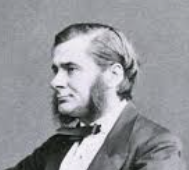
1 month 6 days ago
I cannot say that I am in the slightest degree impressed by your bigness, or your material resources, as such. Size is not grandeur, and territory does not make a nation. The great issue, about which hangs true sublimity, and the terror of overhanging fate, is what are you going to do with all these things?
▼
Source
source
"Address on University Education" (1876), delivered at the formal opening of Johns Hopkins University, Baltimore, Maryland, September 12, 1876. Huxley, American Addresses (1877), p. 125.

3 months 2 weeks ago
I assert(1) There is no method of discovering a scientific theory.(2) There is no method of ascertaining the truth [i.e., verification] of a scientific hypothesis...(3) There is no method of ascertaining whether a hypothesis is 'probable', in the sense of the probability calculus.
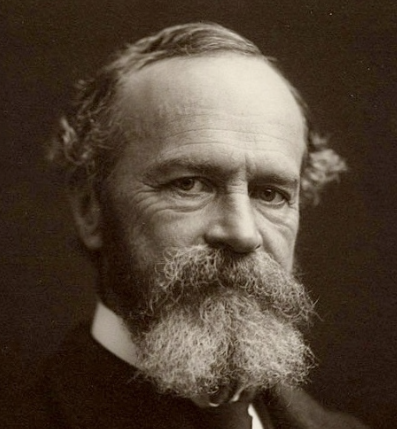
3 months 2 weeks ago
Pragmatism, on the other hand, asks its usual question. "Grant an idea or belief to be true," it says, "what concrete difference will its being true make in anyone's actual life? How will the truth be realized? What experiences will be different from those which would obtain if the belief were false? What, in short, is the truth's cash-value in experiential terms?"
▼
Source
source
Lecture VI, Pragmatism's Conception of Truth

2 weeks 2 days ago
A specter haunts the world and it is the specter of migration.
▼
Source
source
213
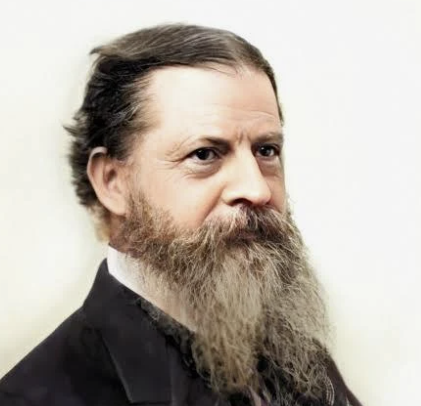
2 months 2 weeks ago
All nature abounds in proofs of other influences than merely mechanical action, even in the physical world. They crowd in upon us at the rate of several every minute. And my observation of men has led me to this little generalization. Speaking only of men who really think for themselves and not of mere reporters, I have not found that it is the men whose lives are mostly passed within the four walls of a physical laboratory who are most inclined to be satisfied with a purely mechanical metaphysics. On the contrary, the more clearly they understand how physical forces work the more incredible it seems to them that such action should explain what happens out of doors. A larger proportion of materialists and agnostics is to be found among the thinking physiologists and other naturalists, and the largest proportion of all among those who derive their ideas of physical science from reading popular books.
▼
Source
source
Lecture II : The Universal Categories, §3. Laws: Nominalism, CP 5.65
3 weeks 6 days ago
If there is anything unique about the human animal it is that it has the ability to grow knowledge at an accelerating rate while being chronically incapable of learning from experience. Science and technology are cumulative, whereas ethics and politics deal with recurring dilemmas. Whatever they are called, torture and slavery are universal evils; but these evils cannot be consigned to the past like redundant theories in science. They return under different names: torture as enhanced interrogation techniques, slavery as human trafficking. Any reduction in universal evils is an advance in civilization. But, unlike scientific knowledge, the restraints of civilized life cannot be stored on a computer disc. They are habits of behaviour, which once broken are hard to mend. Civilization is natural for humans, but so is barbarism.
▼
Source
source
An Old Chaos: Humanism and Flying Saucers (p. 75)
3 weeks 3 days ago
Our main conclusions about the state are that a minimal state, limited, to the narrow functions of protection against force, theft, fraud, enforcement of contracts, and so on, is justified, but any more extensive state will violate persons' rights not to be forced to do certain things, and is unjustified; and that the minimal state is inspiring as well as right.
▼
Source
source
Preface, p. ix
2 months 1 week ago
But if one Subject giveth Counsell to another, to do anything contrary to the Lawes, whether that Counsell proceed from evil intention, or from ignorance onely, it is punishable by the Common-wealth; because ignorance of the Law, is no good excuse, where every man is bound to take notice of the Lawes to which he is subject.
▼
Source
source
The Second Part, Chapter 25, p. 132

4 months 5 days ago
Thus the sum of things is ever being renewed, and mortal creatures live dependent one upon another. Some species increase, others diminish, and in a short space the generations of living creatures are changed and, like runners, pass on the torch of life.
▼
Source
source
Book II, line 75 (tr. Rouse)
2 months 3 weeks ago
Old religious factions are volcanoes burnt out.
▼
Source
source
Speech on the Petition of the Unitarians

4 months 2 weeks ago
What, then, is that incalculable feeling that deprives the mind of the sleep necessary to life? A world that can be explained even with bad reasons is a familiar world. But, on the other hand, in a universe suddenly divested of illusions and lights, man feels an alien, a stranger. His exile is without remedy since he is deprived of the memory of a lost home or the hope of a promised land. This divorce between man and his life, the actor and his setting, is properly the feeling of absurdity.

1 week 5 days ago
Everywhere the human soul stands between a hemisphere of light and another of darkness on the confines of two everlasting hostile empires, - Necessity and Free Will.
▼
Source
source
Essays, Goethe's Works.

3 months 3 weeks ago
It seems to me that science has a much greater likelihood of being true in the main than any philosophy hitherto advanced (I do not, of course, except my own). In science there are many matters about which people are agreed; in philosophy there are none. Therefore, although each proposition in a science may be false, and it is practically certain that there are some that are false, yet we shall be wise to build our philosophy upon science, because the risk of error in philosophy is pretty sure to be greater than in science. If we could hope for certainty in philosophy, the matter would be otherwise, but so far as I can see such a hope would be chimerical.
▼
Source
source
Logical Atomism, 1924
Just now
The entire heaven, making its parts everywhere harmonize with him, is filled with spirits emanating out of the Sun. For this god is ruler of five orbits in the heavens, and whilst traversing three out of these orbits, he produces in three the Graces, themselves three in number, the remaining circles form the Scales to the Balance of supreme Necessity.

3 months 2 weeks ago
Not till then did his controllers allow him to suspect that death itself might not after all cure the illusion of being a soul-nay, might prove the entry into a world where that illusion raged infinite and unchecked. Escape for the soul, if not for the body, was offered him. He became able to know (and simultaneously refused the knowledge) that he had been wrong from the beginning, that souls and personal responsibility existed. He half saw: he wholly hated. The physical torture of the burning was not fiercer than his hatred of that.
▼
Source
source
Ch. 16 : Banquet at Belbury, section 6

4 months 2 weeks ago
The fact that the general incidence of leukemia has doubled in the last two decades may be due, partly, to the increasing use of x-rays for numerous purposes. The incidence of leukemia in doctors, who are likely to be so exposed, is twice that of the general public. In radiologists the incidence is ten times greater.
4 months 3 weeks ago
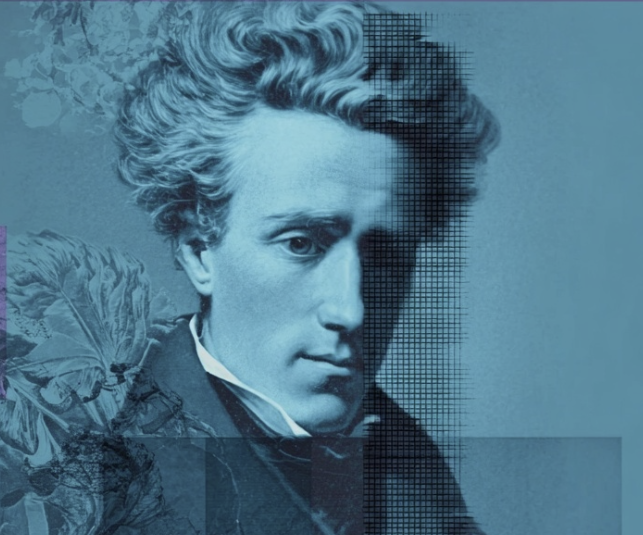
Happy is the one in whom there is true sorrow over his sin, so that the extreme unimportance to him of everything else is only the negative expression of the confirmation that one thing is unconditionally important to him, so that the unconditional unimportance to him of everything else is a deadly sickness that still is very far from being a sickness unto death but is precisely unto life, because the life is in this, that one thing is unconditionally important to him: to find forgiveness.
2 months 4 days ago
No art can be judged by purely aesthetic standards, although a painting or a piece of music may appear to give a purely aesthetic pleasure. Aesthetic enjoyment is an intensification of the vital response, and this response forms the basis of all value judgements. The existentialist contends that all values are connected with the problems of human existence, the stature of man, the purpose of life. These values are inherent in all works of art, in addition to their aesthetic values, and are closely connected with them.
▼
Source
source
The Chicago Review, Volume 13, no. 2, 1959, p. 152-181

4 months 1 week ago
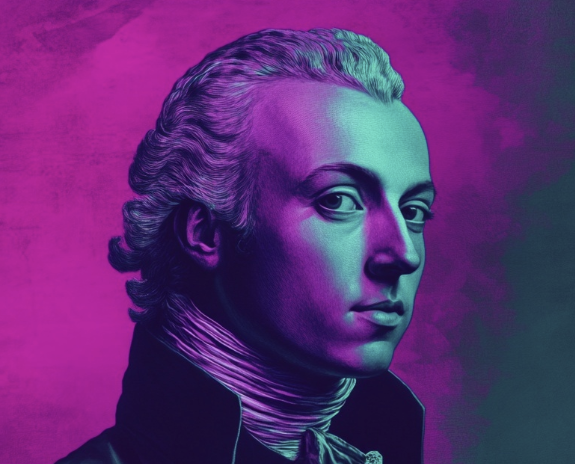
Religious law makes it illegal for the ignorant to drink wine, but intelligence makes it legal for the intellectual.
3 months 3 weeks ago
A whole from necessary substances is impossible. The whole, therefore, of substances is a whole of contingent things, and the world consists essentially of only contingent things.
2 months 1 week ago
Whoever abhors the name and fancies that he is godless - when he addresses with his whole devoted being the Thou of his life that cannot be restricted by any other, he addresses God.
4 months 2 weeks ago
I consider one of the most important duties of any scientist the teaching of science to students and to the general public.

2 months 2 weeks ago
Why don't I commit suicide? Because I am as sick of death as I am of life.
1 month 1 week ago
No doubt a tumult caused by local and temporary irritation ought to be suppressed with promptitude and vigour. Such disturbances, for example, as those which Lord George Gordon raised in 1780, should be instantly put down with the strong hand. But woe to the Government which cannot distinguish between a nation and a mob! Woe to the Government which thinks that a great, a steady, a long continued movement of the public mind is to be stopped like a street riot! This error has been twice fatal to the great House of Bourbon. God be praised, our rulers have been wiser. The golden opportunity which, if once suffered to escape, might never have been retrieved, has been seized. Nothing, I firmly believe, can now prevent the passing of this noble law, this second Bill of Rights.
▼
Source
source
Speech in the House of Commons on the Reform Bill (5 July 1831), quoted in Speeches of the Right Honourable T. B. Macaulay, M.P. (1854), pp. 34-35
1 month 3 weeks ago
There is no practice of nonviolence that does not negotiate fundamental ethical and political ambiguities, which means that "nonviolence" is not an absolute principle, but the name of an ongoing struggle.
▼
Source
source
p. 23

4 months 6 days ago
Once for all, then, a short precept is given thee: Love, and do what thou wilt: whether thou hold thy peace, through love hold thy peace; whether thou cry out, through love cry out; whether thou correct, through love correct; whether thou spare, through love do thou spare: let the root of love be within, of this root can nothing spring but what is good.
▼
Source
source
Tractatus VII, 8 Latin: "dilige et quod vis fac."; falsely often: "ama et fac quod vis." Translation by Professor Joseph Fletcher: Love and then what you will, do.

2 months 3 weeks ago
What song the Syrens sang, or what name Achilles assumed when he hid himself among women, though puzzling questions, are not beyond all conjecture.
▼
Source
source
Chapter V. Cf Suetonius, Lives of the Twelve Caesars: "Tiberius," Ch 70
4 months 2 weeks ago
To have time was at once the most magnificent and the most dangerous of experiments. Idleness is fatal only to the mediocre.
2 months 2 weeks ago
Let us not pretend to doubt in philosophy what we do not doubt in our hearts.
▼
Source
source
Vol. V, par. 265

3 months 3 weeks ago
In our science and philosophy, even, there is commonly no true and absolute account of things. The spirit of sect and bigotry has planted its hoof amid the stars. You have only to discuss the problem, whether the stars are inhabited or not, in order to discover it.
▼
Source
source
p. 490
3 months 3 weeks ago
Not to be absolutely certain is, I think, one of the essential things in rationality.
▼
Source
source
"Don't Be Too Certain!"

3 months 1 week ago
A righteous government is of all the most to be wished for,Bearing of blessing and good fortune in the highest.Guided by the law of Truth, supported by dedication and zeal,It blossoms into the Best of Order, a Kingdom of Heaven!To effect this I shall work now and ever more.
▼
Source
source
Vohu-Khshathra Gatha; Yasna 51, 1.
2 months ago
Cautiousness in judgment is nowadays to be recommended to each and every one: if we gained only one incontestable truth every ten years from each of our philosophical writers the harvest we reaped would be sufficient. ... To grow wiser means to learn to know better and better the faults to which this instrument with which we feel and judge can be subject.
▼
Source
source
A 38
1 week 6 days ago
How highly should we honor the Macedonians, who for the greater part of their lives never cease from fighting with the barbarians for the sake of the security of Greece? For who is not aware that Greece would have constantly stood in the greater danger, had we not been fenced by the Macedonians and the honorable ambition of their kings?
▼
Source
source
Histories, IX, 35:2 (Loeb)
2 months 2 weeks ago
Morality must be the heart of our existence, if it is to be what it wants to be for us. ... The highest form of philosophy is ethics. Thus all philosophy begins with "I am." The highest statement of cognition must be an expression of that fact which is the means and ground for all cognition, namely, the goal of the I.
▼
Source
source
Fichte Studies § 556
2 months 3 weeks ago
The possibility of divorce renders both marriage partners stricter in their observance of the duties they owe to each other. Divorces help to improve morals and to increase the population.
6 days ago
I am owner of my might, and I am so when I know myself as unique. In the unique one the owner himself returns into his creative nothing, of which he is born. Every higher essence above me, be it God, be it man, weakens the feeling of my uniqueness, and pales only before the sun of this consciousness. If I concern myself for myself, the unique one, then my concern rests on its transitory, mortal creator, who consumes himself, and I may say: All things are nothing to me.
▼
Source
source
Dover 2005, p. 366
4 months 3 weeks ago
So it happens at times that a person believes that he has a world-view, but that there is yet one particular phenomenon that is of such a nature that it baffles the understanding, and that he explains differently and attempts to ignore in order not to harbor the thought that this phenomenon might overthrow the whole view, or that his reflection does not possess enough courage and resolution to penetrate the phenomenon with his world-view.

3 months 3 weeks ago
The plan we are advocating amounts essentially to this: that a certain small income, sufficient for necessaries, should be secured to all, whether they work or not, and that a larger income, as much larger as might be warranted by the total amount of commodities produced, should be given to those who are willing to engage in some work which the community recognizes as useful.
▼
Source
source
Ch. IV: Work and Pay, discussing Universal Basic Income (UBI)
CivilSimian.com created by AxiomaticPanic, CivilSimian, Kalokagathia