


3 months 3 weeks ago
In order to abolish the idea of private property, the idea of communism is completely sufficient. It takes actual communist action to abolish actual private property. History will com to it; and this movement, which in theory we already know to be a self-transcending movement, will constitute in actual fact a very severe and protracted process. But we must regard it as a real advance to have gained beforehand a consciousness of the limited character a well as of the goal of this historical movement - and a consciousness which reaches out beyond it.
▼
Source
source
p. 99, The Marx-Engels Reader
3 months 3 weeks ago
To discover the various use of things is the work of history.
▼
Source
source
Vol. I, Ch. 1, Section 1, pg. 42.

3 months 4 weeks ago
The worst evil is hardness of heart. Those who do not repent, who deliberately remain in their habits of sin, have the most to fear.
▼
Source
source
p. 146

3 months 3 weeks ago
Look round the world: contemplate the whole and every part of it: You will find it to be nothing but one great machine, subdivided into an infinite number of lesser machines, which again admit of subdivisions, to a degree beyond what human senses and faculties can trace and explain. All these various machines, and even their most minute parts, are adjusted to each other with an accuracy, which ravishes into admiration all men, who have ever contemplated them. The curious adapting of means to ends, throughout all nature, resembles exactly, though it much exceeds, the productions of human contrivance; of human design, thought, wisdom, and intelligence.
▼
Source
source
Philo to Cleanthes, Part II
2 months 6 days ago
Nonbeing must in some sense be, otherwise what is it that there is not? This tangled doctrine might be nicknamed Plato's beard; historically it has proved tough, frequently dulling the edge of Occam's razor.
▼
Source
source
"On What There Is"

1 day ago
Life, liberty, and the pursuit of property were just what Aristotle did not talk about. They are the conditions of happiness; but the essence of happiness, according to Aristotle, is virtue. So the moderns decided to deal with the conditions and to let happiness take care of itself.
▼
Source
source
Commerce and Culture, p. 284.
3 months 2 weeks ago
The particularity (Jeweiligkeit) of the places and their manifoldness are grounded in space, and the particularity of the time points is grounded in time. That basic characteristic of the thing, that essential determination of the thingness of the thing to be this one (je dieses), is grounded in the essence of space and time. Our question "What is a thing?" includes, therefore, the questions "What is space?" and "What is time?" It is customary The particularity (Jeweiligkeit) os the places.
▼
Source
source
p. 16

2 weeks 2 days ago
A specter haunts the world and it is the specter of migration.
▼
Source
source
213
2 months 2 weeks ago
People think they have taken quite an extraordinarily bold step forward when they have rid themselves of belief in hereditary monarchy and swear by the democratic republic. In reality, however, the state is nothing but a machine for the oppression of one class by another, and indeed in the democratic republic no less than in the monarchy.
▼
Source
source
Introduction to 1891 edition of Karl Marx's, The Civil War in France

3 months 2 weeks ago
Respect the child. Be not too much his parent. Trespass not on his solitude.
▼
Source
source
Education
2 months 6 days ago
I remember well a junior seminar I gave with Paul Tillich shortly before the outbreak of the Third Reich. A participant spoke out against the idea of the meaning of existence. She said life did not seem very meaningful to her and she didn't know whether it had a meaning. The very voluble Nazi contingent became very excited by this and scraped the floor noisily with their feet. Now, I do not wish to maintain that this Nazi foot-shuffling proves or refutes anything in particular, but I do find it highly significant. I would say it is a touchstone for the relation of thinking to freedom. It raises the question whether thought can bear the idea that a given reality is meaningless and that mind is unable to orientate itself; or whether the intellect has become so enfeebled that it finds itself paralysed by the idea that all is not well with the world.
▼
Source
source
pp. 19-20

1 week 4 days ago
But in the days that are now passing over us, even fools are arrested to ask the meaning of them; few of the generations of men have seen more impressive days. Days of endless calamity, disruption, dislocation, confusion worse confounded: if they are not days of endless hope too, then they are days of utter despair. For it is not a small hope that will suffice, the ruin being clearly, either in action or in prospect, universal. There must be a new world, if there is to be any world at all!

4 months 3 weeks ago
Thus every action must be due to one or other of seven causes: chance, nature, compulsion, habit, reasoning, anger, or appetite.
2 months 5 days ago
Life is an offensive, directed against the repetitious mechanism of the Universe.
▼
Source
source
p. 102.

5 days ago
What man can you show me who places any value on his time, who reckons the worth of each day, who understands that he is dying daily?

2 months 1 week ago
There is no substitute for the comfort supplied by the utterly taken-for-granted relationship.
▼
Source
source
A Severed Head (1961); 1976, p. 181.

2 months 3 weeks ago
Taxing is an easy business. Any projector can contrive new impositions, any bungler can add to the old.
3 months 2 weeks ago
United States! the ages plead, - Present and Past in under-song, - Go put your creed into your deed, Nor speak with double tongue.
▼
Source
source
Ode, st. 5
3 months 3 weeks ago
History is not like some individual person, which uses men to achieve its ends. History is nothing but the actions of men in pursuit of their ends.
▼
Source
source
The Holy Family, Ch. VI (1845).
3 months 3 weeks ago
During such calm sunshine of the mind, these spectres of false divinity never make their appearance.
▼
Source
source
Part XIV - Bad influence of popular religions on morality
2 months 1 week ago
All things in nature become identical with the phenomena they present when submitted to the practices of our laboratories, whose problems no less than their apparatus express in turn the problems and interests of society as it is. This view may be compared with that of a criminologist maintaining that trustworthy knowledge of a human being can be obtained only by the well-tested and streamlined examining methods applied to a suspect in the hands of the metropolitan police.
▼
Source
source
describing the pragmatist view, p. 49.
5 days ago
Death weighs on him who is known to all, but dies unknown to himself.
▼
Source
source
lines 401-403; (Chorus)
1 week 4 days ago
A gifted noble people; a people of wild strong feelings, and of iron restraint over these: the characteristic of noble-mindedness, of genius.

4 months 2 weeks ago
It built itself up endlessly, like a chess game, and the telemetrists began to use a computer to program the computer that designed the program for the computer that programmed the robot-controlling computer.

3 months 3 weeks ago
It is impossible to imagine a more dramatic and horrifying combination of scientific triumph with political and moral failure than has been shown to the world in the destruction of Hiroshima. From the scientific point of view, the atomic bomb embodies the results of a combination of genius and patience as remarkable as any in the history of mankind.
3 months 3 weeks ago
Too little liberty brings stagnation, and too much brings chaos.
▼
Source
source
Authority and the Individual (1949), p. 37

4 months 3 weeks ago
How could one speak properly about love if you were forgotten, you God of love, source of all love in heaven and on earth; you who spared nothing but in love gave everything; you who are love, so that one who loves is what he is only by being in you.
2 weeks 2 days ago
I did not direct my life. I didn't design it. I never made decisions. Things always came up and made them for me. That's what life is.
▼
Source
source
As quoted in "Unpacking the Skinner Box : Revisiting B. F. Skinner through a Postformal Lens" by Dana Salter in The Praeger Handbook of Education and Psychology Vol. 4 (2008) edited by Joe L. Kincheloe and Raymond A. Horn, Ch. 99, p. 872
3 months 2 weeks ago
I owed a magnificent day to the Bhagavad Gita. It was the first of books; it was as if an empire spoke to us, nothing small or unworthy, but large, serene, consistent, the voice of an old intelligence which in another age and climate had pondered and thus disposed of the same questions which exercise us.
▼
Source
source
October 1, 1848
2 months 6 days ago
We are really no longer ourselves a part of nature at the moment when we notice, when we recognize, that we are a part of nature.
▼
Source
source
Probleme der Moralphilosophie (Frankfurt: Suhrkamp, 1996), p. 154; as quoted in Andrew Bowie, Adorno and the Ends of Philosophy (Cambridge: Polity, 2013), p. 94

1 month 2 weeks ago
Primitivism has become the vulgar cliche of much modern art and speculation.
▼
Source
source
(p. 77)
4 months 3 weeks ago
It is true that in the confessional it is the pastor who preaches; but the true preacher is still the secret-sharer in your inner being. The pastor can preach only in vague generalities; the preacher in your inner being is just the opposite; he speaks simply and solely about you, to you, and within you.
3 months 2 weeks ago
Though thou loved her as thyself, As a self of purer clay, Tho' her parting dims the day, Stealing grace from all alive, Heartily know, When half-gods go, The gods arrive.
▼
Source
source
Give All to Love, st. 4
3 months 2 weeks ago
People seem not to see that their opinion of the world is also a confession of character.
▼
Source
source
Worship
1 month 2 weeks ago
By electricity we have not been driven out of our senses so much as our senses have been driven out of us.
▼
Source
source
(p. 375)

2 months 3 weeks ago
If you want to be respected by others the great thing is to respect yourself. Only by that, only by self-respect will you compel others to respect you.
▼
Source
source
Part III, Chapter 2

1 month 4 days ago
I've had letters from Chinese scientists at the peak of the SARS epidemic who said the problem is a hybridization between the viruses planted into GMO feed, which is then fed to animals, then the virus jumped from the animals to humans. We're going to see more and more of these kinds of risks. I think the whole issue of the H1N1 virus was the fact that it had genes for three influenza types--human, chicken, pig. All of these crossings are becoming possible because of the crossing of genes across species barriers.
▼
Source
source
On the SARS epidemic, as quoted in "A Visit to My Kitchen: Vandana Shiva", The Huffington Post
Just now
I understand the task of sociology to be description and determination of the historical-psychological origin of those forms in which interactions take place between human beings. The totality of these interactions, springing from the most diverse impulses, directed toward the most diverse objects, and aiming at the most diverse ends, constitutes "society."
▼
Source
source
p. 167

3 months 2 days ago
If thou intend to do any good; tarry not till to-morrow! for thou knowest not what may chance thee this night.
2 months 6 days ago
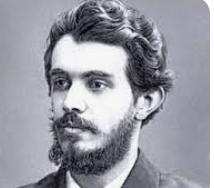
I do not think discursively. It is not so much that I arrive at truth as that I take my start from it.
▼
Source
source
Introduction

3 months 2 weeks ago
In the days before machinery men and women who wanted to amuse themselves were compelled, in their humble way, to be artists. Now they sit still and permit professionals to entertain them by the aid of machinery. It is difficult to believe that general artistic culture can flourish in this atmosphere of passivity.
3 months 2 weeks ago
Rhodora! if the sages ask thee why This charm is wasted on the earth and sky, Tell them, dear, that, if eyes were made for seeing, Then beauty is its own excuse for Being.
▼
Source
source
The Rhodora
3 months 3 weeks ago
Fanaticism is the danger of the world, and always has been, and has done untold harm. I might almost say that I was fanatical against fanaticism.
▼
Source
source
The Future of Science (1959), p. 79; also in BBC The Listener, Vol. 61 (1959), p. 505

2 months 3 days ago
The history of the American kings of capital and authority is the history of repeated crimes, injustice, oppression, outrage, and abuse, all aiming at the suppression of individual liberties and the exploitation of the people. A vast country, rich enough to supply all her children with all possible comforts, and insure well-being to all, is in the hands of a few, while the nameless millions are at the mercy of ruthless wealth gatherers, unscrupulous lawmakers, and corrupt politicians.The reign of these kings is holding mankind in slavery, perpetuating poverty and disease, maintaining crime and corruption; it is fettering the spirit of liberty, throttling the voice of justice, and degrading and oppressing humanity. It is engaged in continual war and slaughter, devastating the country and destroying the best and finest qualities of man; it nurtures superstition and ignorance, sows prejudice and strife, and turns the human family into a camp of Ishmaelites.

3 months 2 weeks ago
Friendship is unnecessary, like philosophy, like art, like the universe itself (for God did not need to create). It has no survival value; rather it is one of those things which give value to survival.

3 months 2 weeks ago
Many people think they are thinking when they are merely rearranging their prejudices.
▼
Source
source
To his young son from the Yosemite Valley on
3 months 2 weeks ago
Nature paints the best part of a picture, carves the best parts of the statue, builds the best part of the house, and speaks the best part of the oration.
▼
Source
source
Art
1 month 2 weeks ago
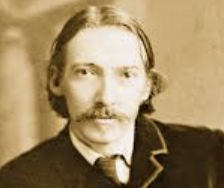
Perpetual devotion to what a man calls his business, is only to be sustained by perpetual neglect of many other things.
▼
Source
source
An Apology for Idlers.
2 months 1 week ago
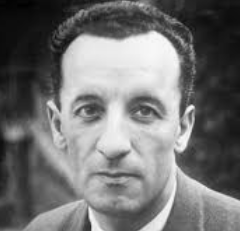
Lichtenberg ... held something of the following kind: one should neither affirm the existence of God nor deny it. ... It is not that he wished to leave certain perspectives open, nor to please everyone. It is rather that he was identifying himself, for his part, with a consciousness of self, of the world, and of others that was "strange" (the word is his) in a sense which is equally well destroyed by the rival explanations.
▼
Source
source
pp. 45-46
5 days ago
"He is a slave." His soul, however, may be that of a freeman. "He is a slave." But shall that stand in his way? Show me a man who is not a slave; one is a slave to lust, another to greed, another to ambition, and all men are slaves to fear.
CivilSimian.com created by AxiomaticPanic, CivilSimian, Kalokagathia