

2 months 2 weeks ago
One principle, that I believe is wanting in you, and all our too fervent and impetuous reformers, is the thought, that almost every institution or form of society is good in its place, and in the period of time to which it belongs. How many beautiful and admirable effects grew out of Popery and the monastic institutions, in the period, when they were in their genuine health and vigour! To them we owe almost all our logic and our literature. What excellent effects do we reap, even at this day, from the feudal system and from chivalry! In this point of view, nothing can, perhaps, be more worthy of our applause than the English constitution.
▼
Source
source
Letter to Percy Bysshe Shelley (4 March 1812), quoted in Thomas Jefferson Hogg, The Life of Percy Bysshe Shelley, Vol. II (1858), p. 86

4 months 2 weeks ago
Often, writers on historical events tend to consider ... a loss of willingness to fight as a sign of "decadence," as though there were something despicable about not being a bully and not being willing to engage in mass murder. Perhaps we ought to feel instead that to cease to be warlike means to begin to be civilized and decent.

1 month 2 weeks ago
Electricity does not centralize, but decentralizes.
▼
Source
source
(p. 36)
2 months 1 day ago
Astronomy is perhaps the science whose discoveries owe least to chance, in which human understanding appears in its whole magnitude, and through which man can best learn how small he is.
▼
Source
source
C 23
2 days ago
Existing social conditions favour the production of an infinite number of acts of violence and there has been no hesitation in urging the workers not to refrain from brutality when this might do them service.
▼
Source
source
p. 183
3 months 3 weeks ago
A mother gave her children Aesop's fables to read, in the hope of educating and improving their minds; but they very soon brought the book back, and the eldest, wise beyond his years, delivered himself as follows: This is no book for us; it's much too childish and stupid. You can't make us believe that foxes and wolves and ravens are able to talk; we've got beyond stories of that kind! In these young hopefuls you have the enlightened Rationalists of the future.
▼
Source
source
"Similes, Parables and Fables" Parerga and Paralipomena

1 month 1 week ago
In one point I fully agree with the gentlemen to whose general views I am opposed. I feel with them, that it is impossible for us, with our limited means, to attempt to educate the body of the people. We must at present do our best to form a class who may be interpreters between us and the millions whom we govern; a class of persons, Indian in blood and colour, but English in taste, in opinions, in morals, and in intellect. To that class we may leave it to refine the vernacular dialects of the country, to enrich those dialects with terms of science borrowed from the Western nomenclature, and to render them by degrees fit vehicles for conveying knowledge to the great mass of the population.

1 month 3 weeks ago
The only absolute knowledge attainable by man is that life is meaningless.
▼
Source
source
Ch. 5, translated by David Patterson, 1983
2 months 3 weeks ago
It is so by nature that the plant will develop with regularity, that the animal will move purposefully, and that human beings will think. Why should I take exception to recognizing also the last as the expression of an original force of nature, as I do the first and the second?
▼
Source
source
P. Preuss, trans. (1987), p. 11

4 months 2 weeks ago
Every rebellion implies some kind of unity.

1 month 4 days ago
I ... understand why the saints were rarely married women. I am convinced it has nothing inherently to do, as I once supposed, with chastity or children. It has primarily to do with distractions ... Women's normal occupations in general run counter to creative life, or contemplative life or saintly life.
▼
Source
source
Ch. 2
3 months 3 weeks ago
What are the earth and all its interests beside the deep surmise which pierces and scatters them?
1 week ago
If one takes pleasure in calling the gold standard a "barbarous relic," one cannot object to the application of the same term to every historically determined institution. Then the fact that the British speak English - and not Danish, German, or French - is a barbarous relic too, and every Briton who opposes the substitution of Esperanto for English is no less dogmatic and orthodox than those who do not wax rapturous about the plans for a managed currency.
▼
Source
source
The Gold Standard - LvMI, excerpt from chapter 17 of Human Action
1 week 4 days ago
It might have been supposed that the building of 30,000 miles of railways would have brought a measure of prosperity to India. But these railways were built not for India but for England; not for the benefit of the Hindu, but for the purposes of the British army and British trade... The railroads are entirely in European hands, and the Government refuse to appoint even one Hindu to the Railway Board. The railways lose money year after year, and are helped by the Government out of the revenues of the people. All the loses are borne by the people, all the gains are gathered by the trader.

2 months 1 week ago
The only way to give finality to the world is to give it consciousness. For where there is no consciousness there is no finality, finality presupposing a purpose. And... faith in God is based simply upon the vital need of giving finality to existence, of making it answer to a purpose. We need God, not in order to understand the why, but in order to feel and sustain the ultimate wherefore, to give a meaning to the Universe.
3 months 1 week ago
A soldier told Pelopidas, "We are fallen among the enemies." Said he, "How are we fallen among them more than they among us?"
▼
Source
source
63 Pelopidas
1 month 2 weeks ago
The new media are not bridges between man and nature: they are nature.
▼
Source
source
(p. 14)

4 months 1 week ago
Praise be to God with all due praise, and a prayer for Muhammad His chosen servant and apostle. The purpose of this treatise is to examine, from the standpoint of the study of the Law, whether the study of philosophy and logic is allowed by the Law, or prohibited, or commanded either by way of recommendation or as obligatory.

3 months 3 weeks ago
A witty saying proves nothing.
▼
Source
source
Le dîner du comte de Boulainvilliers (1767): Deuxième Entretien

3 months 3 weeks ago
Is not marriage an open question, when it is alleged, from the beginning of the world, that such as are in the institution wish to get out, and such as are out wish to get in?
▼
Source
source
Montaigne; or, The Skeptic
2 days ago
You do not ask what is the value, or what is the use, of this feeling. Of what use is the universe? What is the practical application of a million galaxies? Yet just because it has no use, it has a use-which may sound like a paradox, but is not. What, for instance, is the use of playing music? If you play to make money, to outdo some other artist, to be a person of culture, or to improve your mind, you are not really playing-for your mind is not on the music. You don't swing. When you come to think of it, playing or listening to music is a pure luxury, an addiction, a waste of valuable time and money for nothing more than making elaborate patterns of sound.
▼
Source
source
p. 92

4 months 6 days ago
O pitiable minds of men, O blind intelligences! In what gloom of life, in how great perils is passed all your poor span of time! not to see that all nature barks for is this, that pain be removed away out of the body, and that the mind, kept away from care and fear, enjoy a feeling of delight!
▼
Source
source
Book II, lines 14-19 (tr. Rouse)
2 months 2 weeks ago
No explanation is required for Holy Writing. Whoso speaks truly is full of eternal life, and wonderfully related to genuine mysteries does his Writing appear to us, for it is a Concord from the Symphony of the Universe.
2 months 2 weeks ago
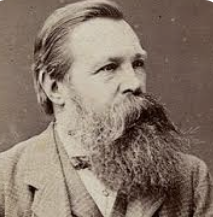
From the moment when labour can no longer be converted into capital, money, or rent, into a social power capable of being monopolized, i.e., from the moment when individual property can no longer be transformed into bourgeois property, into capital, from that moment, you say individuality vanishes.

4 months 1 week ago
The superior man thinks of virtue; the small man thinks of comfort. The superior man thinks of the sanctions of law; the small man thinks of favors which he may receive.
1 month 2 weeks ago
By simply moving information and brushing information against information, any medium whatever creates vast wealth.
2 months 3 weeks ago
There is nothing whatever in Existence but immediate and living Thought:-Thought, I say, but by no means a thinking substance, a dead body in which thought inheres,-with which no-thought indeed a no-thinker is full surely at hand:-Thought, I say, and also the real Life of this Thought, which at bot tom is the Divine Life; both of which-Thought and , this its real Life-are molten together into one inward organic Unity; like as, outwardly, they are one simple, identical, eternal, and unchangeable Unity.
▼
Source
source
P. 56
2 months 2 weeks ago
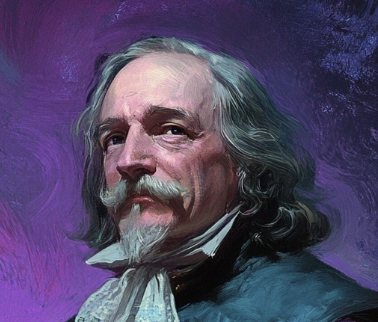
And seeing every man is presumed to do all things in order to his own benefit, no man is a fit Arbitrator in his own cause.
▼
Source
source
The First Part, Chapter 15, p. 78
3 weeks ago
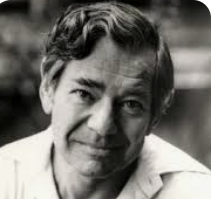
Heresy is a set of opinions "at variance with established or generally received principles." In this sense, heresy is the price of all originality and innovation.

3 months 2 weeks ago
If we cannot "practice the presence of God," it is something to practice the absence of God, to become increasingly aware of our unawareness till we feel like man who should stand beside a great cataract and hear no noise, or like a man in a story who looks in a mirror and finds no face there, or a man in a dream who stretches his hand to visible objects and gets no sensation of touch. To know that one is dreaming is to no longer be perfectly asleep. Bur for news of the fully waking world you must go to my betters.
▼
Source
source
"Charity"
3 months 2 weeks ago
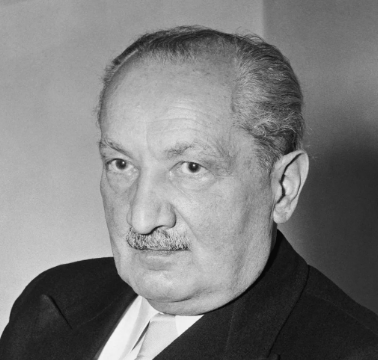
Our elucidations of the preliminary concept of phenomenology show that its essential character does not consist in its actuality as a philosophical "movement." Higher than actuality stands possibility. We can understand phenomenology solely by seizing upon it as a possibility.
▼
Source
source
Introduction: The Exposition of the Question of the Meaning of Being (Stambaugh translation)
2 months 1 week ago
I am I and my circumstance, and if I don't save it I don't save myself.
2 months 1 week ago
Apart from the fact there is no normal standard of health, nobody has proved that man is necessarily cheerful by nature. And further, man, by the very fact of being man, of possessing consciousness, is, in comparison with the ass or the crab, a diseased animal. Consciousness is a disease.

2 months 2 weeks ago
A harmonious being cannot believe in God. Saints, criminals, and paupers have launched him, making him available to all unhappy people.

3 months 1 week ago
Make thyself pure, 0 righteous man! Anyone in the world here below can win purity for himself, namely, when he cleanses himself with Good Thoughts, Good Words, and Good Deeds.

4 months 3 weeks ago
There are many people who reach their conclusions about life like schoolboys; they cheat their master by copying the answer out of a book without having worked out the sum for themselves.
2 months 1 week ago
No criticism can be brought against a branch of technical science from outside; no thought fitted out with the knowledge of a period and setting its course by definite historical aims could have anything to say to the specialist. Such thought and the critical, dialectical element it communicates to the process of cognition, thereby maintaining conscious connection between that process and historical life, do not exist for empiricism; nor do the associated categories, such as the distinction between essence and appearance, identity in change, and rationality of ends, indeed, the concept of man, of personality, even of society and class taken in the sense that presupposes specific viewpoints and directions of interest.
▼
Source
source
p. 145.
2 months 2 weeks ago
Everyone is mistaken, everyone lives in illusion. At best, we can admit a scale of fictions, a hierarchy of unrealities, giving preference to one rather than to another; but to choose, no, definitely not that...
2 days ago
Just as no thing or organism exists on its own, it does not act on its own. Furthermore, every organism is a process: thus the organism is not other than its actions. To put it clumsily: it is what it does. More precisely, the organism, including its behavior, is a process which is to be understood only in relation to the larger and longer process of its environment. For what we mean by "understanding" or "comprehension" is seeing how parts fit into a whole, and then realizing that they don't compose the whole, as one assembles a jigsaw puzzle, but that the whole is a pattern, a complex wiggliness, which has no separate parts. Parts are fictions of language, of the calculus of looking at the world through a net which seems to chop it up into bits. Parts exist only for purposes of figuring and describing, and as we figure the world out we become confused if we do not remember this all the time.
▼
Source
source
p. 73
4 months 2 weeks ago
One might think that a period which, in a space of fifty years, uproots, enslaves, or kills seventy million human beings should be condemned out of hand. But its culpability must still be understood... In more ingenuous times, when the tyrant razed cities for his own greater glory, when the slave chained to the conqueror's chariot was dragged through the rejoicing streets, when enemies were thrown to the wild beasts in front of the assembled people, the mind did not reel before such unabashed crimes, and the judgment remained unclouded. But slave camps under the flag of freedom, massacres justified by philanthropy or by a taste for the superhuman, in one sense cripple judgment. On the day when crime dons the apparel of innocence, through a curious transposition peculiar to our times, it is innocence that is called upon to justify itself.
3 months 3 weeks ago
In these frequent talks about the books I read, he used, as opportunity offered, to give me explanations and ideas respecting civilization, government, morality, mental cultivation, which he required me afterwards to restate to him in my own words. He also made me read, and give him a verbal account of, many books which would not have interested me sufficiently to induce me to read them of myself: among others, Millar's Historical View of the English Government, a book of great merit for its time, and which he highly valued; Mosheim's Ecclesiastical History, McCrie's Life of John Knox, and even Sewel's and Rutty's Histories of the Quakers. He was fond of putting into my hands books which exhibited men of energy and resource in unusual circumstances, struggling against difficulties and overcoming them: of such works I remember Beaver's African Memoranda, and Collins's account of the first settlement of New South Wales.
▼
Source
source
(p. 8)
2 months 3 weeks ago
The first philosophers were astronomers. The heavens remind man ... that he is destined not merely to act, but also to contemplate.
▼
Source
source
Introduction, Z. Hanfi, trans., in The Fiery Brook (1972), pp. 101-102

2 months 3 weeks ago
I should not be surprized at seeing a French Army conveyed by a British Navy to an attack upon this Kingdom.
▼
Source
source
Letter to French Laurence (12 May 1797) after hearing of the mutinies in the Royal Navy, quoted in R. B. McDowell (ed.)

2 months 4 days ago
the impressionable mind of the child realizes early enough that the lives of their parents are in contradiction to the ideas they represent; that, like the good Christian who fervently prays on Sunday, yet continues to break the Lord's commands the rest of the week, the radical parent arraigns God, priesthood, church, government, domestic authority, yet continues to adjust himself to the condition he abhors.

3 months 3 weeks ago
The man who esteems himself as he ought, and no more than he ought, seldom fails to obtain from other people all the esteem that he himself thinks due. He desires no more than is due to him, and he rests upon it with complete satisfaction.
▼
Source
source
Section III.

3 months 2 weeks ago
Today, criminal justice functions and justifies itself only by this perpetual reference to something other than itself, by this unceasing reinscription in non-juridical systems.
1 month 2 weeks ago
Powerful indeed is the empire of habit.
▼
Source
source
Maxim 305
2 months 1 week ago
You do not attain to knowledge by remaining on the shore and watching the foaming waves, you must make the venture and cast yourself in, you must swim, alert and with all your force, even if a moment comes when you think you are losing consciousness; in this way, and in no other, do you reach anthropological insight.
▼
Source
source
p. 148
4 months 2 weeks ago
Science fiction offers its writers chances of embarrassment that no other form of fiction does.
CivilSimian.com created by AxiomaticPanic, CivilSimian, Kalokagathia