

2 months 1 week ago
Should it be proved that woman is naturally weaker than man, from whence does it follow that it is natural for her to labour to become still weaker than nature intended her to be? Arguments of this cast are an insult to common sense, and savour of passion. The divine right of husbands, like the divine right of kings, may, it is to be hoped, in this enlightened age, be contested without danger, and though conviction may not silence many boisterous disputants, yet, when any prevailing prejudice is attacked, the wise will consider, and leave the narrow-minded to rail with thoughtless vehemence at innovation.
▼
Source
source
Ch. 3

3 months 1 week ago
Patriots always talk of dying for their country, and never of killing for their country.
▼
Source
source
Has Man a Future? (1962), p. 78

3 months 1 week ago
The Bhagavad-Gita is perhaps the most systematic scriptural statement of the Perennial Philosophy. To a world at war, a world that, because it lacks the intellectual and spiritual prerequisites to peace, can only hope to patch up some kind of precarious armed truce, it stands pointing, clearly and unmistakably, to the only road of escape from the self-imposed necessity of self-destruction.



3 months 2 weeks ago
How just, how suitable to our crime is the punishment with which Providence threatens us? We have enslaved multitudes, and shed much innocent blood in doing it; and now are threatened with the same. And while other evils are confessed, and bewailed, why not this especially, and publicly; than which no other vice, if all others, has brought so much guilt on the land?

3 months 1 week ago
Do not allow your dreams of a beautiful world to lure you away from the claims of men who suffer here and now. Our fellow men have a claim to our help; no generation must be sacrificed for the sake of future generations, for the sake of an ideal of happiness that may never be realised.

3 months 1 week ago
Every explanation is after all an hypothesis.
▼
Source
source
Ch. 7 : Remarks on Frazer's Golden Bough, p. 123

3 months 2 weeks ago
What is prudence in the conduct of every private family, can scarce be folly in that of a great kingdom.
▼
Source
source
Chapter II, p. 490.

2 months 2 weeks ago
For those endowed with insight there is in reality no object of love but God, nor does anyone but He deserve love Love, Longing, Intimacy and Contentment.
▼
Source
source
Islamic Texts Society. 2011. p. 23. ISBN 978-1-903682-27-2. Translated with an introduction and notes by Eric Ormsby.


3 months 1 week ago
Farewell to the monsters, farewell to the saints. Farewell to pride. All that is left is men.
▼
Source
source
Act 10, sc. 4
1 month 3 weeks ago
A on his lips and not-A in his heart.
▼
Source
source
E 95

3 months 1 week ago
But let there be no misunderstanding: it is not that a real man, the object of knowledge, philosophical reflection or technological intervention, has been substituted for the soul, the illusion of theologians. The man described for us, whom we are invited to free, is already in himself the effect of a subjection more profound than himself. A 'soul' inhabits him and brings him to existence, which is itself a factor in the mastery that power exercises over the body. The soul is the effect and instrument of a political anatomy; the soul is the prison of the body.
5 days ago
Of the radical and iconoclastic ideals preached in the early years of the revolution, all were discarded except those which helped the state to exert absolute control over the individual. Hence the idea of collective education and reduction of parental authority to the minimum continued to hold sway, but an end was put to "progressive" educational methods designed to promote initiative and independence. Strict discipline became once more the rule, and in this respect Soviet schools differed from Tsarist ones only in the immensely increased emphasis on indoctrination. In due course, puritanical sexual ethics were restored to favour.
▼
Source
source
(pg. 53)

1 month 1 week ago
Having acknowledged the measure of the good to be pleasure, i.e., beauty, the European upper classes went back in their comprehension of art to the gross conception of the primitive Greeks which Plato had already condemned. And with this understanding of life, a theory of art was formulated.
1 month 1 week ago
By all means begin your folio; even if the doctor does not give you a year, even if he hesitates about a month, make one brave push and see what can be accomplished in a week.
▼
Source
source
316
4 months 2 days ago
How abundantly do spiritual beings display the powers that belong to them! We look for them, but do not see them; we listen to, but do not hear them; yet they enter into all things, and there is nothing without them.
3 months 1 week ago
The logical picture of the facts is the thought.
▼
Source
source
(3) Original German: Das logische Bild der Tatsachen ist der Gedanke.

3 months 1 week ago
Our colleges ought to have lit up in us a lasting relish for the better kind of man, a loss of appetite for mediocrities, and a disgust for cheapjacks. We ought to smell, as it were, the difference of quality in men and their proposals when we enter the world of affairs about us.
▼
Source
source
The Social Value of the College-Bred
1 month 1 week ago
Darwin made it possible to be an intellectually fulfilled atheist.
▼
Source
source
Chapter 1 "Explaining the Very Improbable" (p. 6)
3 months 1 week ago
A difference which makes no difference is no difference at all.
▼
Source
source
As quoted in William James: The Essential Writings (1971), edited by Bruce W. Wilshire, p. xiii
4 months 1 week ago
Those who purge the soul believe that the soul can receive no benefit from any teachings offered to it until someone by cross-questioning reduces him who is cross-questioned to an attitude of modesty, by removing the opinions that obstruct the teachings, and thus purges him and makes him think that he knows only what he knows, and no more.
3 months 1 week ago
The moment we no longer have a free press, anything can happen. What makes it possible for a totalitarian or any other dictatorship to rule is that people are not informed; how can you have an opinion if you are not informed? If everybody always lies to you, the consequence is not that you believe the lies, but rather that nobody believes anything any longer. This is because lies, by their very nature, have to be changed, and a lying government has constantly to rewrite its own history. On the receiving end you get not only one lie - a lie which you could go on for the rest of your days - but you get a great number of lies, depending on how the political wind blows. And a people that no longer can believe anything cannot make up its mind. It is deprived not only of its capacity to act but also of its capacity to think and to judge. And with such a people you can then do what you please.
▼
Source
source
p. 70
1 month 3 weeks ago
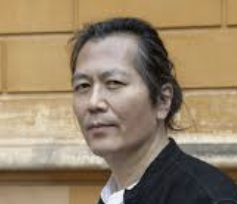
Ritual practices ensure that we treat not only other people but also things in beautiful ways, that there is an affinity between us and other people as well as things.
6 days ago
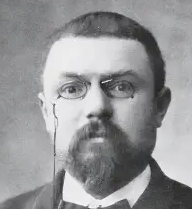
We have not a direct intuition of simultaneity, nor of the equality of two durations. If we think we have this intuition, this is an illusion. We replace it by the aid of certain rules which we apply almost always without taking count of them....We ...choose these rules, not because they are true, but because they are the most convenient, and we may recapitulate them as follows: "The simultaneity of two events, or the order of their succession, the equality of two durations, are to be so defined that the enunciation of the natural laws may be as simple as possible. In other words, all these rules, all these definitions, are only the fruit of an unconscious opportunism."
2 months 1 week ago
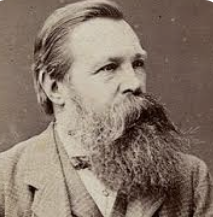
Having destroyed the social power of the nobility and the guildmasters, the bourgeois also destroyed their political power. Having raised itself to the actual position of first class in society, it proclaims itself to be also the dominant political class. This it does through the introduction of the representative system which rests on bourgeois equality before the law and the recognition of free competition, and in European countries takes the form of constitutional monarchy. In these constitutional monarchies, only those who possess a certain capital are voters - that is to say, only members of the bourgeoisie. These bourgeois voters choose the deputies, and these bourgeois deputies, by using their right to refuse to vote taxes, choose a bourgeois government.

4 months 2 weeks ago
Everything which distinguishes man from the animals depends upon this ability to volatilize perceptual metaphors in a schema, and thus to dissolve an image into a concept. For something is possible in the realm of these schemata which could never be achieved with the vivid first impressions: the construction of a pyramidal order according to castes and degrees, the creation of a new world of laws, privileges, subordinations, and clearly marked boundaries, a new world, one which now confronts that other vivid world of first impressions as more solid, more universal, better known, and more human than the immediately perceived world, and thus as the regulative and imperative world.

3 months 1 week ago
The hearing ear is always found close to the speaking tongue.
▼
Source
source
Race

3 months 2 weeks ago
Money is always to be found when men are to be sent to the frontiers to be destroyed: when the object is to preserve them, it is no longer so.
▼
Source
source
"Charity", 1770
3 months 1 week ago
Every really able man, in whatever direction he work,-a man of large affairs, an inventor, a statesman, an orator, a poet, a painter,-if you talk sincerely with him, considers his work, however much admired, as far short of what it should be.
▼
Source
source
Immortality
2 months 3 days ago
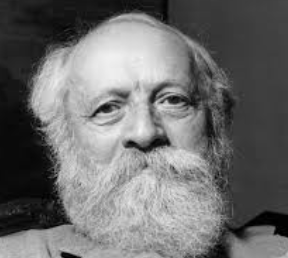
To be old is a glorious thing when one has not unlearned what it means to begin, this old man had perhaps first learned it thoroughly in old age.
▼
Source
source
p. 6
3 months 1 week ago
Can a society in which thought and technique are scientific persist for a long period, as, for example, ancient Egypt persisted, or does it necessarily contain within itself forces which must bring either decay or explosion? "Can a Scientific Community Be Stable?,"
▼
Source
source
Lecture, Royal Society of Medicine, London, 11/29/1949

3 months 2 weeks ago
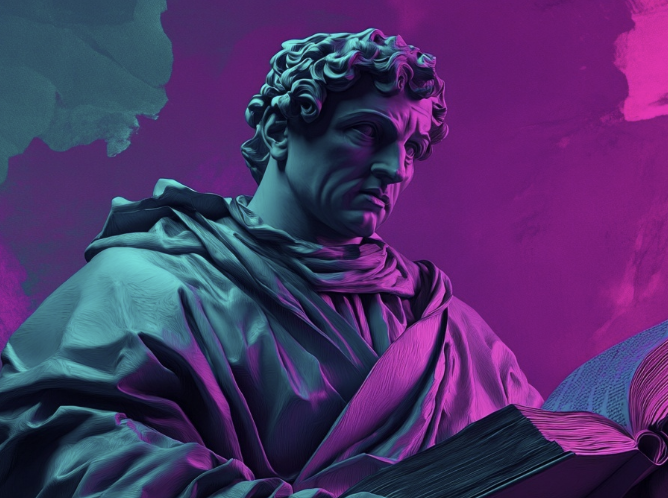
The origin of our passions, the root and spring of all the rest, the only one which is born with man, which never leaves him as long as he lives, is self-love; this passion is primitive, instinctive, it precedes all the rest, which are in a sense only modifications of it. In this sense, if you like, they are all natural. But most of these modifications are the result of external influences, without which they would never occur, and such modifications, far from being advantageous to us, are harmful. They change the original purpose and work against its end; then it is that man finds himself outside nature and at strife with himself.
3 months 2 weeks ago
Peace is more important than all justice; and peace was not made for the sake of justice, but justice for the sake of peace.
▼
Source
source
On Marriage

2 months 5 days ago
Enter by the narrow gate; for wide is the gate and broad is the way that leads to destruction, and there are many who go in by it. Because narrow is the gate and difficult is the way which leads to life, and there are few who find it.
▼
Source
source
Matthew 7:13-14 (NKJV) (Also Luke 13:24)
3 months 1 week ago
So that is what hell is. I would never have believed it. You remember: the fire and brimstone, the torture. Ah! the farce. There is no need for torture: Hell is other people.
▼
Source
source
Garcin, Act 1, sc. 5

4 months 1 week ago
I don't believe in flying saucers... The energy requirements of interstellar travel are so great that it is inconceivable to me that any creatures piloting their ships across the vast depths of space would do so only in order to play games with us over a period of decades.
1 month 1 week ago
Natural selection is an extremely simple process, in the sense that very little machinery needs to be set up in order for it to work. Of course the effects and consequences of natural selection are complex in the extreme. But in order to set natural selection going on a real planet, all that is required is the existence of inherited information.
▼
Source
source
Chapter 2, "Silken Fetters" (p. 68)

3 months 3 weeks ago
Not to be a proud and haughty person, you have to follow the old proverb and "know thyself." That is to say, you must regard your special talents, whatever beauty or fame you have, as gifts from God, and not as things you earned for yourself. Whatever is low and mean is not God's doing, however. Here you can only blame yourself. Remember the squalor of your birth and how naked and poor you were when you crawled into the light of day like a little animal.
▼
Source
source
p.154
1 month 2 weeks ago
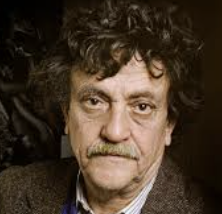
The big advantage of being a chemistry major was the freedom to be tasteless.
1 month 3 weeks ago
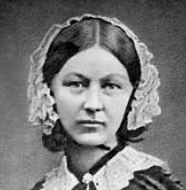
You ask me why I do not write something... I think one's feelings waste themselves in words; they ought all to be distilled into actions and into actions which bring results.
▼
Source
source
Letter to a friend, quoted in The Life of Florence Nightingale (1913) by Edward Tyas Cook, p. 94
3 months 2 weeks ago
Adam was created righteous, acceptable, and without sin. He had no need from his labor in the garden to be made righteous and acceptable to God. Rather, the Lord gave Adam work in order to cultivate and protect the garden. This would have been the freest of all works because they were done simply to please God and not to obtain righteousness. ... The works of the person who trusts God are to be understood in a similar manner. Through faith we are restored to paradise and created anew. We have no need of works in order to be righteous; however, in order to avoid idleness and so that the body might be cared for an disciplined, works are done freely to please God.
▼
Source
source
pp. 73-74

2 months 1 week ago
Nostalgia, more than anything, gives us the shudder of our own imperfection.

1 month 4 weeks ago
To desire friendship is a great fault. Friendship should be a gratuitous joy like those afforded by art or life. We must refuse it so that we may be worthy to receive it; it is of the order of grace.
▼
Source
source
p. 274

2 months 3 weeks ago
If melodiously piping flutes sprang from the olive, would you doubt that a knowledge of flute-playing resided in the olive? And what if plane trees bore harps which gave forth rhythmical sounds? Clearly you would think in the same way that the art of music was possessed by plane trees. Why, then, seeing that the universe gives birth to beings that are animate and wise, should it not be considered animate and wise itself?
▼
Source
source
As quoted in De Natura Deorum by Cicero, ii. 8.
2 months 1 week ago
What can be said, lacks reality. Only what fails to make its way into words exists and counts.

1 month 1 week ago
The global village is a place of very arduous interfaces and very abrasive situations.
1 month 4 weeks ago
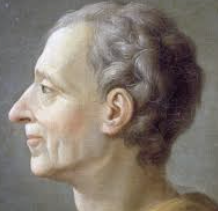
People here argue about religion interminably, but it appears that they are competing at the same time to see who can be the least devout.
▼
Source
source
No. 46. (Usbek writing to Rhedi)

3 months 1 week ago
"Their own strength has betrayed them. They have [...] pulled down Deep Heaven on their heads."
▼
Source
source
Ch. 13 : They Have Pulled Down Deep Heaven on Their Heads
1 month 1 week ago
Powerful indeed is the empire of habit.
▼
Source
source
Maxim 305
CivilSimian.com created by AxiomaticPanic, CivilSimian, Kalokagathia