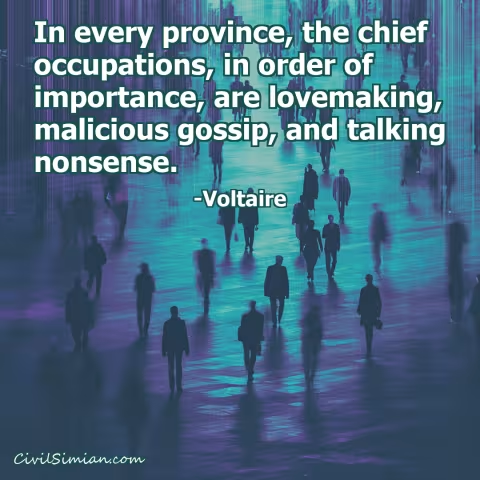
Is attributed to Jesus in the Gospel of Thomas, which is a non-canonical early Christian text



Although usury is itself a form of credit in its bourgeoisified form, the form adapted to capital, in its pre-bourgeois form it is rather the expression of the lack of credit.
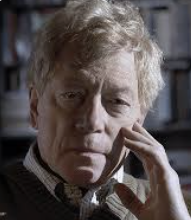
In all the areas of life where people have sought and found consolation through forbidding their desires-sex in particular, and taste in general-the habit of judgment is now to be stamped out.
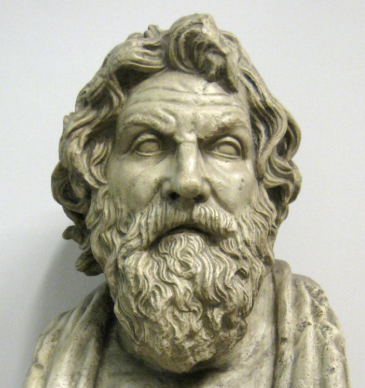
Wealth and poverty do not lie in a person's estate, but in their souls.

The worst of my actions or conditions seem not so ugly unto me as I find it both ugly and base not to dare to avouch for them.
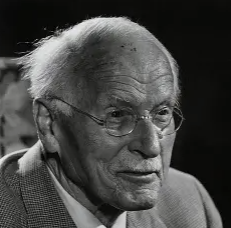
No psychic value can disappear without being replaced by another of equivalent intensity.
Heresy is a set of opinions "at variance with established or generally received principles." In this sense, heresy is the price of all originality and innovation.
Without the interplay of human against human, the chief interest in life is gone; most of the intellectual values are gone; most of the reason for living is gone.

One of the greatest delusions of the average man is to forget that life is death's prisoner.

[T]hings are impressed better by active than by passive repetition. ...[I]t pays better to wait and recollect by an effort from within, than to look at the book again.

To become sober is: to come to oneself in self-knowledge and before God as nothing before him, yet infinitely, unconditionally engaged.
No moral system can rest solely on authority.

In order to make himself thoroughly undesirable, he will speak.

Why do ye also transgress the commandment of God by your tradition? For God commanded, saying, Honour thy father and mother: and, He that curseth father or mother, let him die the death. But ye say, Whosoever shall say to his father or his mother, It is a gift, by whatsoever thou mightest be profited by me; And honour not his father or his mother, he shall be free. Thus have ye made the commandment of God of none effect by your tradition. Ye hypocrites, well did Esaias prophesy of you, saying, This people draweth nigh unto me with their mouth, and honoureth me with their lips; but their heart is far from me. But in vain they do worship me, teaching for doctrines the commandments of men.
Hear first the four roots of all things: shining Zeus, life-bringing Hera, Aidoneus, and Nestis, who wets with tears the mortal wellspring.

Wherever you encounter truth, look upon it as Christianity.

In the history of madness, two events signal this change with singular clarity: in 1657, the founding of the Hôpital Général, and the Great Confinement of the poor; and in 1794, the liberation of the mad in chains at Bicêtre. Between these two singular and symmetrical events, something happened, whose ambiguity has perplexed historians of medicine: blind repression in an absolutist regime, according to some, and, according to others, the progressive discovery, by science and philanthropy, of madness in its positive truth. In fact, beneath these reversible meanings, a structure was taking shape, which did not undo that ambiguity but was decisive for it. This structure explains the passage from the medieval and humanist experience of madness to the experience that is our own, which confines madness in mental illness.
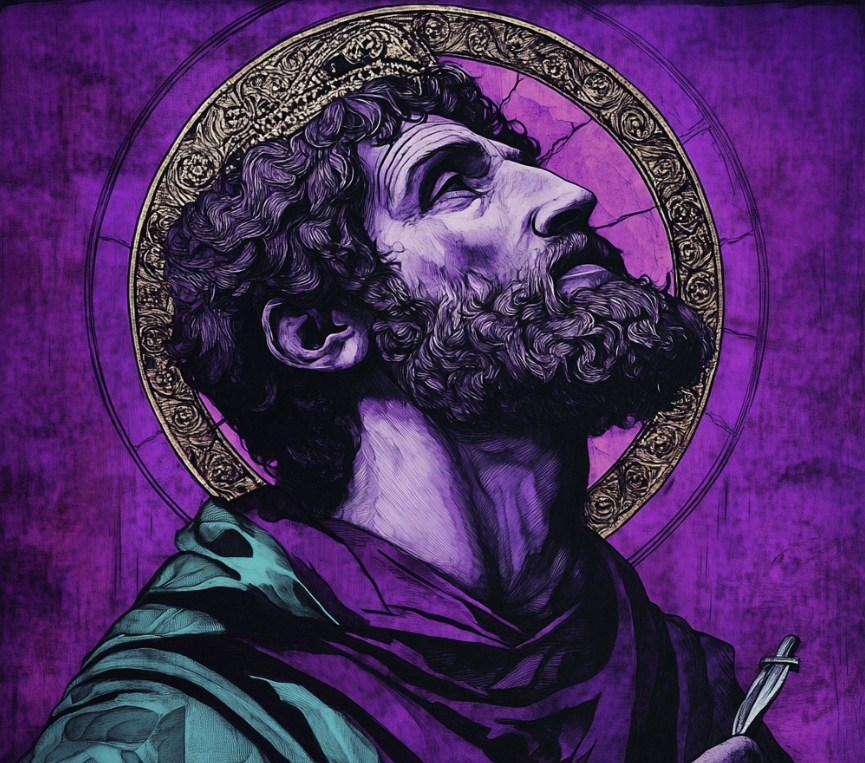
Now, justification in this life is given to us according to these three things: first by the laver of regeneration by which all sins are forgiven; then, by a struggle with the faults from whose guilt we have been absolved; the third, when our prayer is heard, in which we say: Forgive us our debts, because however bravely we fight against our faults, we are men; but the grace of God so aids as we fight in this corruptible body that there is reason for His hearing us as we ask forgiveness.
At the edge of life you feel that you are no longer master of the life within you, that subjectivity is an illusion, and that uncontrollable forces are seething inside you, evolving with no relation to a personal center or a definite, individual rhythm.

I was aggressively nonpolitical. I believed that people who make a fuss about politics do so because their heads are too empty to think about more important things. So I felt nothing but impatient contempt for Osborne's Jimmy Porter and the rest of the heroes of social protest.

Through laziness and cowardice a large part of mankind, even after nature has freed them from alien guidance, gladly remain immature. It is because of laziness and cowardice that it is so easy for others to usurp the role of guardians. It is so comfortable to be a minor!
Individuality, conceived as a temporal development involves uncertainty, indeterminacy, or contingency. Individuality is the source of whatever is unpredictable in the world.

That there should one Man die ignorant who had capacity for Knowledge, this I call a tragedy.
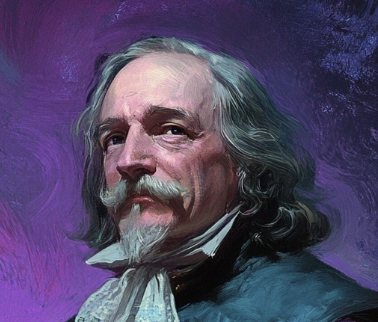
Science is the knowledge of Consequences, and dependence of one fact upon another: by which, out of that we can presently do, we know how to do something else when we will, or the like, another time.
During and after World War II, a large number of academic economists were exposed directly to business life, and had more or less extensive opportunities to observe how decisions were actually made in business organizations. Moreover, those who became active in the development of the new management science were faced with the necessity of developing decision-making procedures that could actually be applied in practical situations. Surely these trends would be conducive to moving the basic assumptions of economic rationality in the direction of greater realism.
God, the supreme being, is neither circumscribed by space, nor touched by time; he cannot be found in a particular direction, and his essence cannot change. The secret conversation is thus entirely spiritual; it is a direct encounter between God and the soul, abstracted from all material constraints.

Where without any change in circumstances the things held to be just by law are seen not to correspond with the concept of justice in actual practice, such laws are not really just; but wherever the laws have ceased to be advantageous because of a change in circumstances, in that case the laws were for that time just when they were advantageous for the mutual dealings of the citizens, and subsequently ceased to be just when they were no longer advantageous.
When we have chosen the vocation in which we can contribute most to humanity, burdens cannot bend us because they are only sacrifices for all. Then we experience no meager, limited, egotistic joy, but our happiness belongs to millions, our deeds live on quietly but eternally effective, and glowing tears of noble men will fall on our ashes.
Such parliamentary bagpipes I myself have heard play tunes, much to the satisfaction of the people.
Nothing is more ancient than God, for He was never created; nothing more beautiful than the world, it is the work of that same God; nothing is more active than thought, for it flies over the whole universe; nothing is stronger than necessity, for all must submit to it.

Might is that which makes a thing of anybody who comes under its sway. When exercised to the full, it makes a thing of man in the most literal sense, for it makes him a corpse.

It is easy to live for others; everybody does. I call on you to live for yourselves.
Is it not a noble farce, wherein kings, republics, and emperors have for so many ages played their parts, and to which the whole vast universe serves for a theatre?

For the world, I count it not an Inn, but a Hospital, and a place, not to live, but to die in.
The world is rejuvenated, but as Heine so wittily remarked, it was rejuvenated by romanticism to such a degree that it became a baby again.

When an individual passes from one period of life to another a time comes when he cannot go on in senseless activity and excitement as before, but has to understand that although he has out-grown what before used to direct him, this does not mean that he must live without any reasonable guidance, but rather that he must formulate for himself an understanding of life corresponding to his age, and having elucidated it must be guided by it. And in the same way a similar time must come in the growth and development of humanity.

Virtue is debased by self-justification.
School children and students who love God should never say: "For my part I like mathematics"; "I like French"; "I like Greek." They should learn to like all these subjects, because all of them develop that faculty of attention which, directed toward God, is the very substance of prayer.
By narcissism is meant ceasing to have an authentic interest in the outside world but instead an intense attachment to oneself, to one's own group, clan, religion, nation, race, etc. - with consequent serious distortions of rational judgment. In general, the need for narcissistic satisfaction derives from the necessity to compensate for material and cultural poverty.
To the wild deep-hearted man all was yet new, not veiled under names or formulas; it stood naked, flashing in on him there, beautiful, awful, unspeakable. Nature was to this man, what to the Thinker and Prophet it forever is, preternatural. This green flowery rock-built earth, the trees, the mountains, rivers, many-sounding seas;-that great deep sea of azure that swims overhead; the winds sweeping through it; the black cloud fashioning itself together, now pouring out fire, now hail and rain.

A man is more a man through the things he keeps to himself than through those he says.
A handful of soldiers is always better than a mouthful of arguments.

Much more naturally than you do: because flight is a much more natural consequence of fear than of hate. He doesn't flee men because he hates them, but because he is afraid of them. He doesn't flee them in order to harm them, but to try o escape the harm they wish to do to him. They, on the contrary, don't seek him through friendship, but through hate. They seek him and he flees from them just as in the wilderness of Africa, where there are few men and many tigers, the men flee the tigers, the men flee the tigers, and the tigers seek the men.
Freedom of thought and of expression are not mere rights to be claimed. They have their roots deep in the existence of individuals as developing careers in time. Their denial and abrogation is an abdication of individuality and a virtual rejection of time as opportunity.
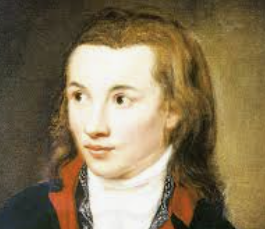
To romanticize the world is to make us aware of the magic, mystery and wonder of the world; it is to educate the senses to see the ordinary as extraordinary, the familiar as strange, the mundane as sacred, the finite as infinite.
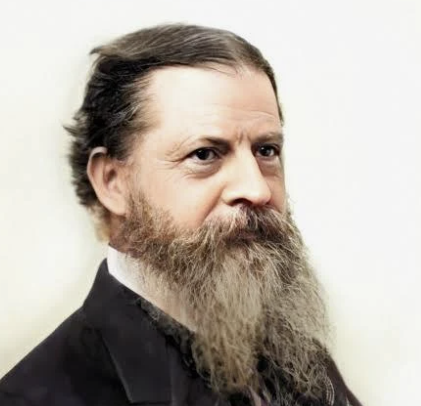
Now, to say that a lot of objects is finite, is the same as to say that if we pass through the class from one to another we shall necessarily come round to one of those individuals already passed; that is, if every one of the lot is in any one-to-one relation to one of the lot, then to every one of the lot some one is in this same relation.
That body is heavier than another which, in an equal bulk, moves downward quicker.
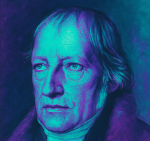
Discord which appears at first to be a lamentable breach and dissolution of the unity of a party, is really the crowning proof of its success.

I'm not clever enough to be a physicist. When asked about why he chose to become a biologist.
CivilSimian.com created by AxiomaticPanic, CivilSimian, Kalokagathia