


2 months 2 weeks ago
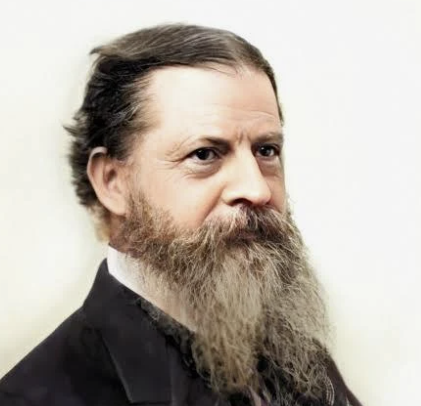
I think that I have succeeded in making it clear that this doctrine gives room for explanations of many facts which without it are absolutely and hopelessly inexplicable; and further that it carries along with it the following doctrines: first, a logical realism of the most pronounced type; second, objective idealism; third, tychism, with its consequent thoroughgoing evolutionism. We also notice that the doctrine presents no hindrences to spiritual influences, such as some philosophies are felt to do.

2 months 1 week ago
The way in which a society organizes the life of its members ... is one "project" of realization among others. But once the project has become operative in the basic institutions and relations, it tends to become exclusive and to determine the development of the society as a whole.
▼
Source
source
p. xlviii

2 months 2 weeks ago
But where is the antidote for lucid despair, perfectly articulated, proud, and sure? All of us are miserable, but how many know it? The consciousness of misery is too serious a disease to figure in an arithmetic of agonies or in the catalogues of the Incurable. It belittles the prestige of hell, and converts the slaughterhouses of time into idyls. What sin have you committed to be born, what crime to exist? Your suffering like your fate is without motive. To suffer, truly to suffer, is to accept the invasion of ills without the excuse of causality, as a favor of demented nature, as a negative miracle. . .
Just now
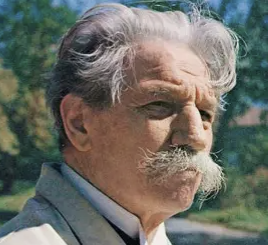
From my youth onwards, I have felt sure that all thought which thinks itself out to an issue ends in mysticism. In the stillness of the African jungle I have been able to work out this thought and give it expression.
2 months 2 weeks ago
Let us not pretend to doubt in philosophy what we do not doubt in our hearts.
▼
Source
source
Vol. V, par. 265

3 months 3 weeks ago
Here am I who have written on all sorts of subjects calculated to excite hostility, moral, political, and religious, and yet I have no enemies - except, indeed, all the Whigs, all the Tories, and all the Christians.
▼
Source
source
Statement to a friend shortly before his death, as recounted in Men of Letters by Lord Henry Brougham

3 months 3 weeks ago
Good and strong will. Mechanism must precede science (learning). Also in morals and religion? Too much discipline makes one narrow and kills proficiency. Politeness belongs, not to discipline, but to polish, and thus comes last.
▼
Source
source
Part III : Selection on Education from Kant's other Writings, Ch. I Pedagogical Fragments, # 9

3 months 3 weeks ago
Monopoly of one kind or another, indeed, seems to be the sole engine of the mercantile system.
▼
Source
source
Chapter VII, Part Third, p. 684.
3 months 2 weeks ago
To each according to his threat advantage does not count as a principle of justice.
▼
Source
source
Chapter III, Section 24, pg. 141

4 months 4 days ago
What then is time? If no one asks me, I know what it is. If I wish to explain it to him who asks, I do not know.
▼
Source
source
XI, 14
3 months 3 weeks ago
All natural philosophers, who wished to proceed mathematically in their work, have hence invariably (although unknown to themselves) made use of metaphysical principles, and must make use of such, it matters not how energetically they may otherwise repudiate any claim of metaphysics on their science.
▼
Source
source
Preface, Tr. Bax, 1883

2 months 3 days ago
The human body is an instrument for the production of art in the life of the human soul.
▼
Source
source
p. 349.
3 months 6 days ago
Thrasyllus the Cynic begged a drachm of Antigonus. "That," said he, "is too little for a king to give." "Why, then," said the other, "give me a talent." "And that," said he, "is too much for a Cynic (or, for a dog) to receive."
▼
Source
source
45 Antigonus I

4 months 1 week ago
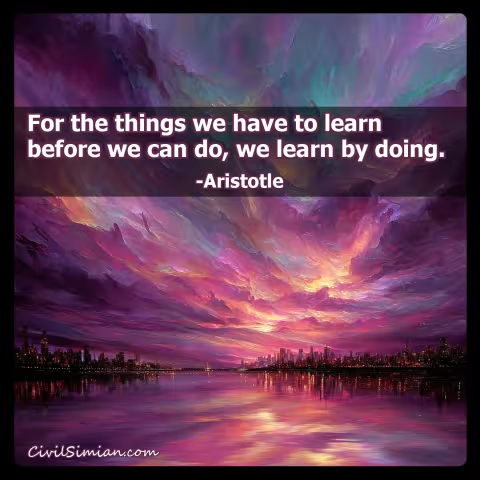
Man has three ways of acting wisely. First, on meditation; that is the noblest. Secondly, on imitation; that is the easiest. Thirdly, on experience; that is the bitterest.
2 months 3 days ago
The consequences of a plethora of half-digested theoretical knowledge are deplorable.
Just now
A person who thinks all the time has nothing to think about except thoughts. So he loses touch with reality, and lives in a world of illusion.
1 month 2 weeks ago
I have just discovered that without her father's consent this sweet, trusting, gullible six-year-old is being sent, for weekly instruction, to a Roman Catholic nun. What chance has she?
2 months 2 weeks ago
We must suffer to the end, to the moment when we stop believing in suffering.

2 months 3 weeks ago
So many of my thoughts and feelings are shared by the English that England has turned into a second native land of the mind for me.
▼
Source
source
Journeys to England and Ireland, 1835.
2 months 3 days ago
What the learned world tends to offer is one second-hand scrap of information illustrating ideas derived from another second-hand scrap of information. The second-handedness of the learned world is the secret of its mediocrity.

2 months 5 days ago
Culture is an instrument wielded by professors to manufacture professors, who, when their turn comes, will manufacture professors.
▼
Source
source
The Need for Roots, part 2: Uprootedness, chapter 1: Uprootedness in the Towns

2 months 2 weeks ago
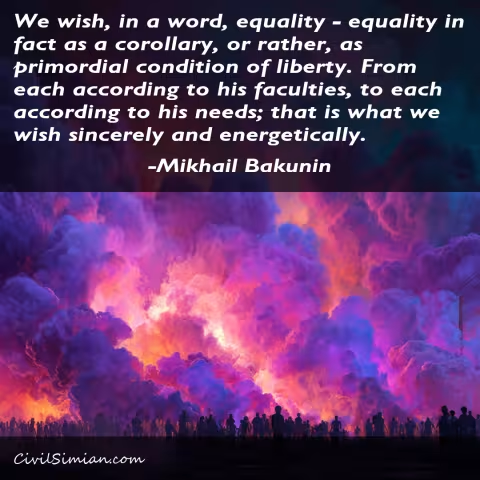
If the people are happy, united, wealthy, and powerful, we presume the rest. We conclude that to be good from whence good is derived.

3 months 2 weeks ago
As a philosopher, if I were speaking to a purely philosophic audience I should say that I ought to describe myself as an Agnostic, because I do not think that there is a conclusive argument by which one prove that there is not a God. On the other hand, if I am to convey the right impression to the ordinary man in the street I think that I ought to say that I am an Atheist, because, when I say that I cannot prove that there is not a God, I ought to add equally that I cannot prove that there are not the Homeric gods.
▼
Source
source
"Proof of God"

3 months 3 weeks ago
Those who read and rightly understand my teaching will not start an insurrection; they have not learned that from me.
▼
Source
source
p. 65

4 months 2 weeks ago
It is important to remember that the viciousness and wrongs of life stick out very plainly but that even at the worst times there is a great deal of goodness, kindness, and day-to-day decency that goes unnoticed and makes no headlines.
1 week 4 days ago
Marxism has been the greatest fantasy of our century. It was a dream offering the prospect of a society of perfect unity, in which all human aspirations would be fulfilled and all values reconciled.
▼
Source
source
Epilogue, p. 1206

4 months 2 weeks ago
Zeno: The many do not know that except by this devious passage through all things the mind cannot attain to the truth. Zeno: Most people are not aware that this roundabout progress through all things is the only way in which the mind can attain truth and wisdom.

2 months 2 days ago
Violence and freedom are the two endpoints on the scale of power.
1 month 3 weeks ago
So-called "realist" photography does not capture the "what is." Instead, it is preoccupied with what should not be, like the reality of suffering for example.
2 months 2 weeks ago
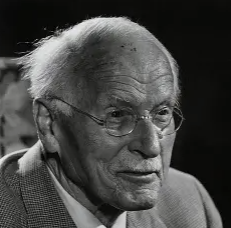
The discussion of the sexual problem is only a somewhat crude prelude to a far deeper question, and that is the question of the psychological relationship between the sexes. In comparison with this the other pales into insignificance, and with it we enter the real domain of woman. Woman's psychology is founded on the principle of Eros, the great binder and loosener, whereas from ancient times the ruling principle ascribed to man is Logos.
▼
Source
source
P.254

3 months 2 weeks ago
As for Adler, I was much impressed by a personal experience. Once, in 1919, I reported to him a case which to me did not seem particularly Adlerian, but which he found no difficulty in analyzing in terms of his theory of inferiority feelings, although he had not even seen the child. Slightly shocked, I asked him how he could be so sure. "Because of my thousandfold experience," he replied; whereupon I could not help saying: "And with this new case, I suppose, your experience has become thousand-and-one-fold."

4 months 3 days ago
Nothing is ever gotten out of nothing by divine power.
▼
Source
source
Book I, line 150 (tr. Munro)

3 months 2 weeks ago
What then did you expect when you unbound the gag that muted those black mouths? That they would chant your praises? Did you think that when those heads that our fathers had forcibly bowed down to the ground were raised again, you would find adoration in their eyes?
▼
Source
source
"Orphée Noir (Black Orpheus)" preface, Anthologie de la Nouvelle Poésie Nègre et Malgache
1 month 4 weeks ago
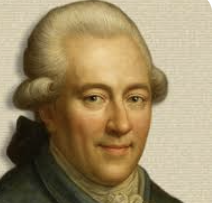
With a pen in my hand I have successfully stormed bulwarks from which others armed with sword and excommunication have been repulsed.
▼
Source
source
E 76
2 months 2 weeks ago
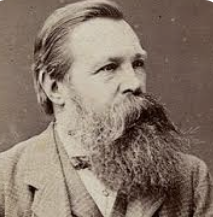
Labour is the source of all wealth, the political economists assert. And it really is the source -- next to nature, which supplies it with the material that it converts into wealth. But it is even infinitely more than this. It is the prime basic condition for all human existence, and this to such an extent that, in a sense, we have to say that labour created man himself.
▼
Source
source
The Part Played by Labour in the Transition from Ape to Man

2 months 3 days ago
Feminism in the United States has never emerged from the women who are most victimized by sexist oppression; women who are daily beaten down, mentally, physically, and spiritually-women who are powerless to change their condition in life. They are a silent majority. A mark of their victimization is that they accept their lot in life without visible question, without organized protest, without collective anger or rage.
▼
Source
source
p. 1.
3 months 2 weeks ago
It strikes everyone in beginning to form an acquaintance with the treasures of Indian literature, that a land so rich in intellectual products and those of the profoundest order of thought..."
▼
Source
source
quoted in De Riencourt, Amaury The Soul of India Harper & Brothers Publishers New York 1960 p. 301

2 months 1 day ago
The very proclaimers of "America first" have long before this betrayed the fundamental principles of real Americanism...the other truly great Americans who aimed to make of this country a haven of refuge, who hoped that all the disinherited and oppressed people in coming to these shores would give character, quality and meaning to the country.

1 week 3 days ago
He seldom or never spoke except actually to convey an idea. Measured by quantity of words, he was a talker of fully average copiousness; by extent of meaning communicated, he was the most copious I have listened to. How in few sentences he would sketch you off an entire biography, an entire object or transaction, keen, clear, rugged, genuine, completely rounded In! His words came direct from the heart by the inspiration of the moment.
3 months 2 weeks ago
Always remember that it is impossible to speak in such a way that you cannot be misunderstood: there will always be some who misunderstand you.

2 months 2 weeks ago
The life of the wealthy is one long Sunday.
2 months 2 weeks ago
Religious persecution may shield itself under the guise of a mistaken and over-zealous piety.
▼
Source
source
Speech in opening the impeachment of Warren Hastings (18 February 1788), quoted in The Works of the Right Honourable Edmund Burke, Volume the Tenth (1899), pp. 7-8

4 months 2 weeks ago
For those of us who have been thrown into hell, mysterious melodies and the torturing images of a vanished beauty will always bring us, in the midst of crime and folly, the echo of that harmonious insurrection which bears witness, throughout the centuries, to the greatness of humanity.

3 months 1 week ago
In forming a store of good works thou shouldst be diligent, so that it may come to thy assistance among the spirits.
1 month 2 weeks ago
If wine is to withdraw its most poetic countenance, the sun of the white dinner-cloth, a deity to be invoked by two or three, all fervent, hushing their talk, degusting tenderly, and storing reminiscences-for a bottle of good wine, like a good act, shines ever in the retrospect-if wine is to desert us, go thy ways, old Jack!
▼
Source
source
Pt. I, ch. III

3 months 4 weeks ago
Aristotle, a mere bond-servant to his logic, thereby rendering it contentious and well nigh useless.
▼
Source
source
Rerum Novarum
CivilSimian.com created by AxiomaticPanic, CivilSimian, Kalokagathia