


4 months 3 weeks ago
Individual science fiction stories may seem as trivial as ever to the blinder critics and philosophers of today — but the core of science fiction, its essence, the concept around which it revolves, has become crucial to our salvation if we are to be saved at all.
2 months 3 weeks ago
Every stage of education begins with childhood. That is why the most educated person on earth so much resembles a child.
▼
Source
source
"Miscellaneous Observations," Philosophical Writings, M. Stolijar, trans. (Albany: 1997) #48
4 months 4 days ago
But the other conception, namely the infusion of the soul, it is piously and suitably believed, was without any sin, so that while the soul was being infused, she would at the same time be cleansed from original sin and adorned with the gifts of God to receive the holy soul thus infused. And thus, in the very moment in which she began to live, she was without all sin.
▼
Source
source
Weimar edition of Martin Luther's Works, English translation edited by J. Pelikan [Concordia: St. Louis], Vol. 4, 694
4 days ago
Heinrich Himmler's political tendencies were philo-monarchist and Right-wing conservative, inherited from his father who had been the loyalist instructor of Heinrich, hereditary prince of Bavaria. He was especially fascinated by the ideal of the Order of Teutonic Knights, which we spoke of earlier. He wanted to make the SS a corps that would perform the same function of the state's central nucleus that the nobility had played with its unquestioning loyalty to the regime, but in a new form. For the formation of a man of the SS, he considered a blend of Spartan spirit and Prussian discipline. But he also had in view the order of Jesuits (Hitler jokingly used to call Himmler 'my Ignatius of Loyola').

2 weeks 3 days ago
Suppose Odin to have been the inventor of Letters, as well as "magic," among that people! It is the greatest invention man has ever made! this of marking down the unseen thought that is in him by written characters. It is a kind of second speech, almost as miraculous as the first.
2 months 2 weeks ago
The masses are our masters; and for every one who looks facts in the face his existence has become dependent on them, so that the thought of them must control his doings, his cares, and his duties. Even an articulated mass always tends to become unspiritual and inhuman. It is life without existence, superstitions without faith. It may stamp all flat; it is disinclined to tolerate independence and greatness, but prone to constrain people to become as automatic as ants.

3 months 3 weeks ago
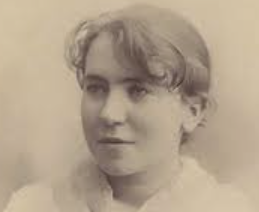
But your crime will be there, one hundred times denied, always there, dragging itself behind you. Then you will finally know that you have committed your life with one throw of the die, once and for all, and there is nothing you can do but tug our crime along until your death. Such is the law, just and unjust, of repentance. Then we will see what will become of your young pride.
▼
Source
source
Clytemnestra to her daughter Electra, Act 1
2 months 1 week ago
With all our boasted reforms, our great social changes, and our far-reaching discoveries, human beings continue to be sent to the worst of hells, wherein they are outraged, degraded, and tortured, that society may be "protected" from the phantoms of its own making.
2 weeks 3 days ago
It is a most important social act; nay, at bottom, the one important social act. Given the men a People choose, the People itself, in its exact worth and worthlessness, is given. A heroic people chooses heroes, and is happy; a valet or flunkey people chooses sham-heroes, what are called quacks, thinking them heroes, and is not happy.

3 months 3 weeks ago
Our greatest stupidities may be very wise.
▼
Source
source
p. 39e

3 months 3 weeks ago
The ornament of a house is the friends who frequent it.
▼
Source
source
Domestic Life

1 week 4 days ago
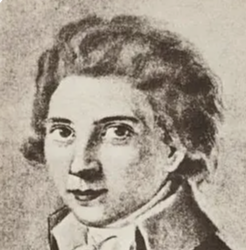
Prove your words by your deeds.
2 months 3 weeks ago
India is pre-eminently distinguished for the many traits of original grandeur of thought and of the wonderful remains of immediate knowledge.
▼
Source
source
quoted in Londhe, S. (2008). A tribute to Hinduism: Thoughts and wisdom spanning continents and time about India and her culture. New Delhi: Pragun Publication.

3 months 3 weeks ago
It is obvious that "obscenity" is not a term capable of exact legal definition; in the practice of the Courts, it means "anything that shocks the magistrate."
▼
Source
source
Ch. 10: Recrudescence of Puritanism

1 month 3 weeks ago
We now live in a technologically prepared environment that blankets the earth itself. The humanly contrived environment of electric information and power has begun to take precedence over the old environment of "nature." Nature, as it were, begins to be the content of our technology.
▼
Source
source
p. 276
2 months 6 days ago
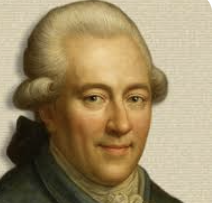
With a pen in my hand I have successfully stormed bulwarks from which others armed with sword and excommunication have been repulsed.
▼
Source
source
E 76
4 months 1 week ago
He who disdained not to assume us unto Himself, did not disdain to take our place and speak our words, in order that we might speak His words.
▼
Source
source
p.421
1 month 3 days ago
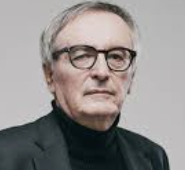
Human knowledge increases, while human irrationality stays the same. Scientific inquiry may be an embodiment of reason, but what such inquiry demonstrates is that humans are not rational animals. The fact that humanists refuse to accept the demonstration only confirms its truth.
▼
Source
source
An Old Chaos: Humanism and Flying Saucers (p. 81)
4 months 3 weeks ago
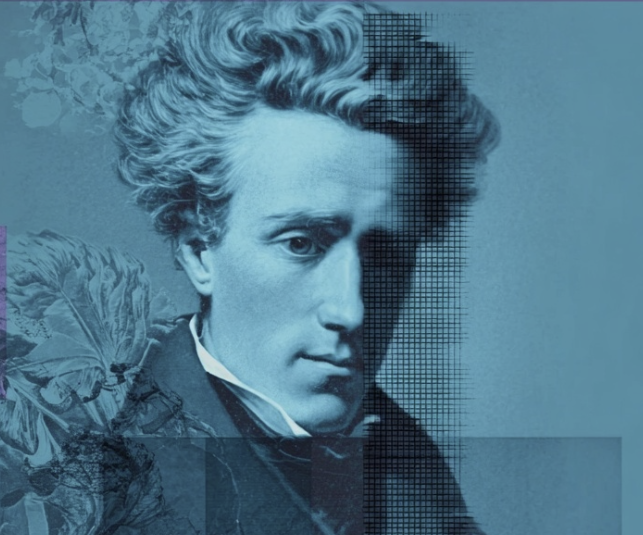
Once in his early youth a man allowed himself to be so far carried away in an overwrought irresponsible state as to visit a prostitute. It is all forgotten. Now he wants to get married. Then anxiety stirs. He is tortured day and night with the thought that he might possibly be a father, that somewhere in the world there could be a created being who owed his life to him. He cannot share his secret with anyone; he does not even have any reliable knowledge of the fact. –For this reason the incident must have involved a prostitute and taken place in the wantonness of youth; had it been a little infatuated or an actual seduction, it would be hard to imagine that he could know nothing about it, but now this this very ignorance is the basis of his agitated torment. On the other hand, precisely because of the rashness of the whole affair, his misgivings do not really start until he actually falls in love.
1 month 1 week ago
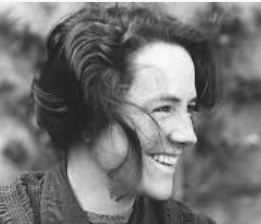
The punctuation of anniversaries is terrible, like the closing of doors, one after another between you and what you want to hold on to.
▼
Source
source
Diary entry on the first anniversary of the kidnapping and death of her son Charles Augustus Lindbergh III (1 March 1932)
1 month 3 weeks ago
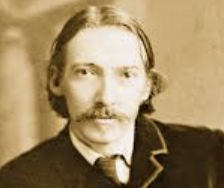
There are circumstances in which even the least energetic of mankind learn to behave with vigour and decision; and the most cautious forget their prudence and embrace foolhardy resolutions.
▼
Source
source
The Rajah's Diamond, Story of the Bandbox.
1 month 2 weeks ago
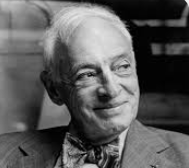
I never yet touched a fig leaf that didn't turn into a price tag.
▼
Source
source
Humboldt's Gift (1975), p. 159
2 weeks 3 days ago
But greatly his most important culture he had gathered - and this, too, by his own endeavors - from the better part of the district, the religious men; to whom, as to the most excellent, his own nature gradually attached and attracted him. He was religious with the consent of his whole faculties. Without religion he would have been nothing.
2 months 3 weeks ago
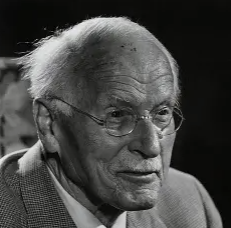
...the relatively unconscious man driven by his natural impulses because, imprisoned in his familiar world, he clings to the commonplace, the obvious, the probable, the collectively valid, using for his motto: 'Thinking is difficult. Therefore, let the herd pronounce judgement.'
▼
Source
source
Frequently misquoted as "Thinking is difficult, that's why most people judge" and close variants. Flying Saucers: A Modern Myth of Things Seen in the Sky. (1959), C.G. Jung, R.F.C. Hull (translator) (Princeton Press, 1979, ISBN 9780691018225

3 months 3 weeks ago
As for 'taking sides' - the choice, it seems to me, is no longer between two users of violence, two systems of dictatorship. Violence and dictatorship cannot produce peace and liberty; they can only produce the results of violence and dictatorship, results with which history has made us only too sickeningly familiar. The choice now is between militarism and pacifism. To me, the necessity of pacifism seems absolutely clear.
▼
Source
source
Authors Take Sides on the Spanish War (1937) edited by Nancy Cunard and published by the Left Review
2 months 6 days ago
The human tendency to regard little things as important has produced very many great things. G 46 Variant translation: The inclination of people to consider small things as important has produced many great things.
3 months 3 weeks ago
Philosophy, if it cannot answer so many questions as we could wish, has at least the power of asking questions which increase the interest of the world, and show the strangeness and wonder lying just below the surface even in the commonest things of daily life.
2 months 1 week ago
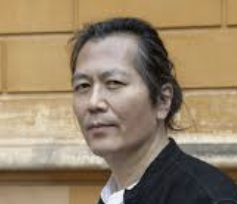
Eros conquers depression.

4 months 5 days ago
It would be an unsound fancy and self-contradictory to expect that things which have never yet been done can be done except by means which have never yet been tried.
▼
Source
source
Aphorism 6

4 months 4 days ago
Some impose upon the world that they believe that which they do not; others, more in number, make themselves believe that they believe, not being able to penetrate into what it is to believe.
▼
Source
source
Book II, Ch. 12. Apology for Raimond Sebond
3 months 3 weeks ago
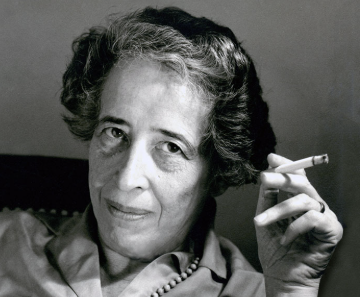
The case of the conscience of Eichmann, which is admittedly complicated but is by no means unique, is scarcely comparable to the case of the German generals, one of whom, when asked at Nuremberg, "How was it possible that all of you honorable generals could continue to serve a murderer with such unquestioning loyalty?," replied that it was "not the task of a soldier to act as judge over his supreme commander. Let history do that or God in Heaven."
▼
Source
source
Ch. VIII

3 weeks ago
Experience suggests that if men cannot struggle on behalf of a just cause because that just cause was victorious in an earlier generation, then they will struggle against the just cause. They will struggle for the sake of struggle. They will struggle, in other words, out of a certain boredom: for they cannot imagine living in a world without struggle. And if the greater part of the world in which they live is characterized by peaceful and prosperous liberal democracy, then they will struggle against that peace and prosperity, and against democracy. p. 330

2 months 3 weeks ago
Circumstances (which with some gentlemen pass for nothing) give in reality to every political principle its distinguishing colour, and discriminating effect. The circumstances are what render every civil and political scheme beneficial or noxious to mankind.

4 months 3 weeks ago
[B]ecause that which is finite is always bounded with reference to something... it is necessary that there should be no end... [N]umber also appears to be infinite, and mathematical magnitudes, and that which is beyond the heavens. And since that which is beyond is infinite, body also appears to be infinite, and it would seem that there are infinite worlds; for why is there rather void here than there? ...If also there is a vacuum, and an infinite place, it is necessary that there should be an infinite body: for in things which have a perpetual subsistence, capacity differs nothing from being. The speculation of the infinite is, however, attended with doubt: for many impossibilities happen both to those who do not admit that it has a subsistence, and to those who do. ...It is ...especially the province of a natural philosopher to consider if there be a sensible infinite magnitude.
3 weeks 1 day ago
There is a class of writers who are ever boasting of the progress of civilization and of the human mind in modern times. If we were to credit their pretensions, we should be led to believe that the science of society had reached its highest degree of perfection, because old metaphysical and economic theories have been somewhat refined upon.In answer to their boasts of social progress, it is not sufficient to refer to the deeply-rooted social evils which exist, and which prey upon our boasted civilized social order. We will mention but a single one, the frightful increase of national debts and of taxation.
▼
Source
source
The Theory of Social Organization. Harmonian Man: Selected Writings of Charles Fourier
3 months 3 weeks ago
I like a church, I like a cowl, I love a prophet of the soul, And on my heart monastic aisles Fall like sweet strains or pensive smiles; Yet not for all his faith can see, Would I that cowled churchman be. Why should the vest on him allure, Which I could not on me endure?
▼
Source
source
The Problem, st. 1
1 month 3 weeks ago
The more you make people alike, the more competition you have. Competition is based on the principle of conformity.
▼
Source
source
(p. 135)

3 weeks 1 day ago
The so-called communism of capital, that is, its drive toward an ever more extensive socialization of labor, points ambiguously toward the communism of the multitude.

4 months 2 weeks ago
They who know the truth are not equal to those who love it, and they who love it are not equal to those who delight in it.
1 month 5 days ago
The point is that philosophy is seen to have come full circle, and to have exhausted itself.
▼
Source
source
Chapter 5, Nietzsche's Styles, p. 95

3 months 2 days ago
He who discommendeth others obliquely commendeth himself.
▼
Source
source
Part I, Section XXXIV

3 months 1 day ago
So many of my thoughts and feelings are shared by the English that England has turned into a second native land of the mind for me.
▼
Source
source
Journeys to England and Ireland, 1835.
3 weeks 1 day ago
Perhaps some day soon we will have arrived at the point when we can look back with irony at the barbaric old times when in order to be free we had to keep our own brothers and sisters slaves or to be equal we were constrained to inhuman sacrifices of freedom.
3 months 3 weeks ago
We are in hell and I will have my turn!
▼
Source
source
Inès warns Garcin and Estelle not to make love in her presence, Act 1, sc. 5

2 months 2 weeks ago
I have never said that human society ought to be aristocratic, but a great deal more than that. What I have said, and still believe with ever-increasing conviction, is that human society is always, whether it will or no, aristocratic by its very essence, to the extreme that it is a society in the measure that it is aristocratic, and ceases to be such when it ceases to be aristocratic. Of course I am speaking now of society and not of the State.
▼
Source
source
Chap.II: The Rise Of The Historic Level
2 months 3 weeks ago
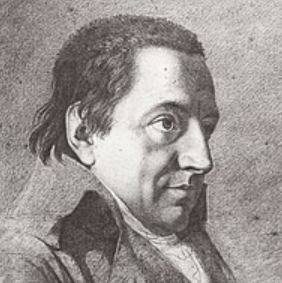
Thus then does the Doctrine of Knowledge, which in its substance is the realisation of the absolute Power of intelligising which has now been defined, end with the recognition of itself as a mere Schema in a Doctrine of Wisdom, although indeed a necessary and indispensable means to such a Doctrine: - a Schema, the sole aim of which is, with the knowledge thus acquired, - by which knowledge alone a Will, clear and intelligible to itself and reposing upon itself without wavering or perplexity, is possible, - to return wholly into Actual Life; - not into the Life of blind and irrational Instinct which we have laid bare in all its nothingness, but into the Divine Life which shall become visible to us.
2 months 3 weeks ago
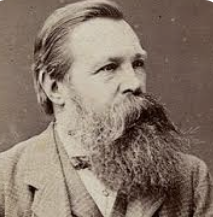
Education will enable young people quickly to familiarize themselves with the whole system of production and to pass from one branch of production to another in response to the needs of society or their own inclinations. It will, therefore, free them from the one-sided character which the present-day division of labor impresses upon every individual. Communist society will, in this way, make it possible for its members to put their comprehensively developed faculties to full use. But, when this happens, classes will necessarily disappear. It follows that society organized on a communist basis is incompatible with the existence of classes on the one hand, and that the very building of such a society provides the means of abolishing class differences on the other.

2 months 1 week ago
The very same reason which one man may regard as a motive for taking care to prolong his life may be regarded by another man as a motive for shooting himself.
4 months 4 days ago
The Virgin Mary remains in the middle between Christ and humankind. For in the very moment he was conceived and lived, he was full of grace. All other human beings are without grace, both in the first and second conception. But the Virgin Mary, though without grace in the first conception, was full of grace in the second ... whereas other human beings are conceived in sin, in soul as well as in body, and Christ was conceived without sin in soul as well as in body, the Virgin Mary was conceived in body without grace but in soul full of grace.
▼
Source
source
As quoted in Anderson, H. George; Stafford, J. Francis; Burgess, Joseph A., eds. (1992). The One Mediator, The Saints, and Mary. Lutherans and Catholics in Dialogue. VIII. Minneapolis: Augsburg. ISBN 0-8066-2579-1., p. 236
CivilSimian.com created by AxiomaticPanic, CivilSimian, Kalokagathia