


1 week 3 days ago
Speech is human, silence is divine, yet also brutish and dead: therefore we must learn both arts.
▼
Source
source
Notebooks (1830).

3 months 2 weeks ago
By the rude bridge that arched the flood, Their flag to April's breeze unfurled, Here once the embattled farmers stood, And fired the shot heard round the world.
▼
Source
source
Hymn sung at the Completion of the Battle Monument

3 months 2 weeks ago
Most people, at a crisis, feel more loyalty to their nation than to their class.
▼
Source
source
Ch. 8: Economic Power
1 week 3 days ago
The barrenest of all mortals is the sentimentalist.
▼
Source
source
Characteristics.
3 months 3 weeks ago
Of all the ways whereby children are to be instructed, and their manners formed, the plainest, easiest, and most efficacious, is, to set before their eyes the examples of those things you would have them do, or avoid; which, when they are pointed out to them, in the practice of persons within their knowledge, with some reflections on their beauty and unbecomingness, are of more force to draw or deter their imitation, than any discourses which can be made to them.
▼
Source
source
Sec. 82

2 months 1 week ago
Woe unto thee, Chorazin! woe unto thee, Bethsaida! for if the mighty works, which were done in you, had been done in Tyre and Sidon, they would have repented long ago in sackcloth and ashes. But I say unto you, It shall be more tolerable for Tyre and Sidon at the day of judgment, than for you. And thou, Capernaum, which art exalted unto heaven, shalt be brought down to hell: for if the mighty works, which have been done in thee, had been done in Sodom, it would have remained until this day. But I say unto you, That it shall be more tolerable for the land of Sodom in the day of judgment, than for thee.
▼
Source
source
11:21-24 (KJV)

3 months 2 weeks ago
One unscrupulous distortion of the truth tends to beget other and opposite distortions.
▼
Source
source
Ch. 14, p. 316 [2012 reprint]
3 months 6 days ago
Perseverance is more prevailing than violence; and many things which cannot be overcome when they are together, yield themselves up when taken little by little.
▼
Source
source
Sertorius 16 (Tr. Dryden and Clough)

3 months 2 weeks ago
It is also a study peculiarly adapted to an early stage in the education of philosophical students, since it does not presuppose the slow process of acquiring, by experience and reflection, valuable thoughts of their own.
▼
Source
source
(pp. 19-20)
3 months 2 weeks ago
Enjoyment of the work consists in participation in the creative state of the artist.
▼
Source
source
p. 117

2 months 2 days ago
The Outsider's case against society is very clear. All men and women have these dangerous, unnamable impulses, yet they keep up a pretense, to themselves, to others; their respectability, their philosophy, their religion, are all attempts to gloss over, to make civilized and rational something that is savage, unorganized, irrational. He is an Outsider because he stands for truth.
▼
Source
source
Chapter one, The Country of the Blind

2 months 5 days ago
Only he who has measured the dominion of force, and knows how not to respect it, is capable of love and justice.
▼
Source
source
p. 192

3 months 2 weeks ago
I am not asking anyone to accept Christianity if his best reasoning tells him that the weight of the evidence is against it.
▼
Source
source
Book III, Chapter 11, "Faith"
2 months 2 days ago
Everywhere and always, since its very inception, Christianity has turned the earth into a vale of tears; always it has made of life a weak, diseased thing, always it has instilled fear in man, turning him into a dual being, whose life energies are spent in the struggle between body and soul. In decrying the body as something evil, the flesh as the tempter to everything that is sinful, man has mutilated his being in the vain attempt to keep his soul pure, while his body rotted away from the injuries and tortures inflicted upon it.The Christian religion and morality extols the glory of the Hereafter, and therefore remains indifferent to the horrors of the earth. Indeed, the idea of self-denial and of all that makes for pain and sorrow is its test of human worth, its passport to the entry into heaven.
2 months 2 weeks ago
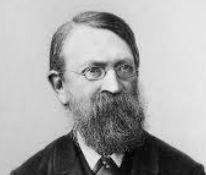
:...Vienna is the origin of so many schools of its own which were dominant in the 1920s. And one of the most fundamental and influential, in which we all were partially caught, was logical positivism. In fact, Mises' brother, Richard von Mises, became one of the leading figures. Now he and I all grew up in this Ernst Mach philosophy that ultimately everything must be rationally justified...
▼
Source
source
Friedrich Hayek, in 1985 interview, quoted in Alan Ebenstein, Hayek's Journey: The Mind of Friedrich Hayek (2003), Ch. 10. Epistemology, Psychology, and Methodology
2 months 1 week ago
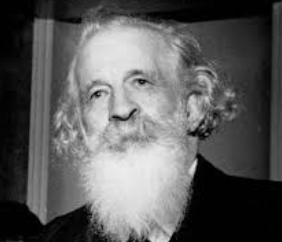
Reverie is not a mind vacuum. It is rather the gift of an hour which knows the plenitude of the soul.
▼
Source
source
Ch. 2, sect. 3
3 months 2 weeks ago
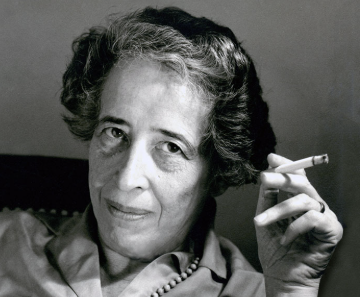
Metaphysical fallacies contain the only clues we have to what thinking means to those who engage in it.
▼
Source
source
p. 12

4 days ago
Fire tries gold, misfortune tries brave men.
▼
Source
source
De Providentia (On Providence), 5.9, translated by Aubrey Stewart Alternate translation: Fire is the test of gold; adversity, of strong men. (translator unknown).

1 month 5 days ago
What is this wide-spread component of the surface of the earth? and whence did it come? You may think this no very hopeful inquiry. You may not unnaturally suppose that the attempt to solve such problems as these can lead to no result, save that of entangling the inquirer in vague speculations, incapable of refutation and of verification. If such were really the case, I should have selected some other subject than a "piece of chalk" for my discourse. But, in truth, after much deliberation, I have been unable to think of any topic which would so well enable me to lead you to see how solid is the foundation upon which some of the most startling conclusions of physical science rest.
3 months 2 weeks ago
The essence of the Liberal outlook lies not in what opinions are held, but in how they are held: instead of being held dogmatically, they are held tentatively, and with a consciousness that new evidence may at any moment lead to their abandonment.

3 months 2 weeks ago
The hidden significance of these fables which is sometimes thought to have been detected, the ethics running parallel to the poetry and history, are not so remarkable as the readiness with which they may be made to express a variety of truths. As if they were the skeletons of still older and more universal truths than any whose flesh and blood they are for the time made to wear. It is like striving to make the sun, or the wind, or the sea symbols to signify exclusively the particular thoughts of our day. But what signifies it? In the mythus a superhuman intelligence uses the unconscious thoughts and dreams of men as its hieroglyphics to address men unborn. In the history of the human mind, these glowing and ruddy fables precede the noonday thoughts of men, as Aurora the sun's rays. The matutine intellect of the poet, keeping in advance of the glare of philosophy, always dwells in this auroral atmosphere.

1 month 2 weeks ago
Each of our senses makes its own space, but no sense can function in isolation. Only as sight relates the touch, or kinaesthesia, or sound, can the eye see.

2 months 2 weeks ago
Whenever a separation is made between liberty and justice, neither, in my opinion, is safe.
▼
Source
source
Letter to M. de Menonville
1 month 4 weeks ago
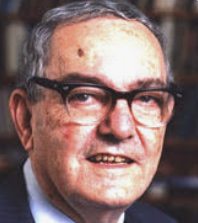
Since these questions lie in the future, imagination must supply the lack of experienced feeling in attaching value to them. But values can be only imperfectly anticipated.
2 months 1 week ago
History is nothing but assisted and recorded memory. It might almost be said to be no science at all, if memory and faith in memory were not what science necessarily rest on. In order to sift evidence we must rely on some witness, and we must trust experience before we proceed to expand it. The line between what is known scientifically and what has to be assumed in order to support knowledge is impossible to draw. Memory itself is an internal rumour; and when to this hearsay within the mind we add the falsified echoes that reach us from others, we have but a shifting and unseizable basis to build upon. The picture we frame of the past changes continually and grows every day less similar to the original experience which it purports to describe.
▼
Source
source
Ch. 2 "History"

3 months 1 week ago
One who is serious all day will never have a good time, while one who is frivolous all day will never establish a household.
▼
Source
source
Maxim no. 25.

4 months 2 weeks ago
If one thing goes without saying, almost anything can.


2 months 1 week ago
Thou sayest that I am a king. To this end was I born, and for this cause came I into the world, that I should bear witness unto the truth. Every one that is of the truth heareth my voice.
▼
Source
source
18:37, (KJV)
4 months 2 weeks ago
The ancient philosophers... all of them assert that the elements, and those things which are called by them principles, are contraries, though they establish them without reason, as if they were compelled to assert this by truth itself. They differ, however... that some of them assume prior, and others posterior principles; and some of them things more known according to reason, but others such as are more known according to sense: for some establish the hot and the cold, others the moist and the dry, others the odd and the even, and others strife and friendship, as the causes of generation. ...in a certain respect they assert the same things, and speak differently from each other. They assert different things... but the same things, so far as they speak analogously. For they assume principles from the same co-ordination; since, of contraries, some contain, and others are contained.
1 month 2 days ago
So dazzling was the spread of constellations that it had the impact of a vision, of some hidden insight. I drove home saying to myself: The dead, too, are like this, blazing within us - invisibly.
▼
Source
source
As quoted in No More Words : A Journal of My Mother, Anne Morrow Lindbergh (2001) by Reeve Lindbergh, p. 41
3 weeks 2 days ago
From each as they choose, to each as they are chosen.
▼
Source
source
Ch. 7 : Distributive Justice, Section I, Patterning, p. 160
1 month 2 weeks ago
Fortune is not satisfied with inflicting one calamity.
▼
Source
source
Maxim 274

3 months 3 weeks ago
Look round the world: contemplate the whole and every part of it: You will find it to be nothing but one great machine, subdivided into an infinite number of lesser machines, which again admit of subdivisions, to a degree beyond what human senses and faculties can trace and explain. All these various machines, and even their most minute parts, are adjusted to each other with an accuracy, which ravishes into admiration all men, who have ever contemplated them. The curious adapting of means to ends, throughout all nature, resembles exactly, though it much exceeds, the productions of human contrivance; of human design, thought, wisdom, and intelligence.
▼
Source
source
Philo to Cleanthes, Part II
2 months 2 weeks ago
When he entered into the Whig party, he did not conceive that they pretended to any discoveries. They did not affect to be better Whigs, than those were who lived in the days in which principle was put to the test. Some of the Whigs of those days were then living. They were what the Whigs had been at the Revolution; what they had been during the reign of queen Anne; what they had been at the accession of the present royal family.
▼
Source
source
p. 409

3 months 2 weeks ago
It is our interest and our task to make the revolution permanent until all the more or less propertied classes have been driven from their ruling positions, until the proletariat has conquered state power and until the association of the proletarians has progressed sufficiently far - not only in one country but in all the leading countries of the world - that competition between the proletarians of these countries ceases and at least the decisive forces of production are concentrated in the hands of the workers. Our concern cannot simply be to modify private property, but to abolish it, not to hush up class antagonisms but to abolish classes, not to improve the existing society but to found a new one.
▼
Source
source
Address of the Central Committee to the Communist League in London, March 1850

2 months 3 weeks ago
General ideas are no proof of the strength, but rather of the insufficiency of the human intellect.
▼
Source
source
Book One, Chapter III.
2 months 1 week ago
His master was angry, and delivered him to the torturers until he should pay all that was due to him. "So My heavenly Father also will do to you if each of you, from his heart, does not forgive his brother his trespasses."
▼
Source
source
18:34-35

2 months 6 days ago
Knowledge is employed in the service of the necessity of life and primarily in the service of the instinct of personal preservation. The necessity and this instinct have created in man the organs of knowledge and given them such capacity as they possess. Man sees, hears, touches, tastes and smells that which it is necessary for him to see, hear, touch, taste and smell in order to preserve his life. The decay or loss of any of these senses increases the risks with which his life is environed, and if it increases them less in the state of society in which we are actually living, the reason is that some see, hear, touch, taste and smell for others. A blind man, by himself and without a guide, could not live long. Society is an additional sense; it is the true common sense.
1 week 3 days ago
He who first shortened the labor of copyists by device of movable types was disbanding hired armies, and cashiering most kings and senates, and creating a whole new democratic world: he had invented the art of printing.
▼
Source
source
Bk. I, ch. 5.
2 months 5 days ago
The human soul has need of consented obedience and of liberty. Consented obedience is what one concedes to an authority because one judges it to be legitimate. It is not possible in relation to a political power established by conquest or coup d'etat nor to an economic power based upon money. Liberty is the power of choice within the latitude left between the direct constraint of natural forces and the authority accepted as legitimate. The latitude should be sufficiently wide for liberty to be more than a fiction, but it should include only what is innocent and should never be wide enough to permit certain kinds of crime.
3 months 1 week ago
Our own experience provides the basic material for our imagination, whose range is therefore limited. It will not help to try to imagine that one has webbing on one's arms, which enables one to fly around at dusk and dawn catching insects in one's mouth; that one has very poor vision, and perceives the surrounding world by a system of reflected high-frequency sound signals; and that one spends the day hanging upside down by one's feet in an attic. Insofar as I can imagine this (which is not very far), it tells me only what it would be like for me to behave as a bat behaves. But that is not the question. I want to know what it is like for a bat to be a bat. Yet if I try to imagine this, I am restricted to the resources of my own mind, and those resources are inadequate to the task.
▼
Source
source
p. 169.
2 months 2 weeks ago
Why is psychology the youngest of the empirical sciences? Why have we not long since discovered the unconscious and raised up its treasure-house of eternal images? Simply because we had a religious formula for everything psychic - and one that is far more beautiful and comprehensive than immediate experience. Though the Christian view of the world has paled for many people, the symbolic treasure-rooms of the East are still full of marvels that can nourish for a long time to come the passion for show and new clothes. What is more, these images - be they Christian or Buddhist or what you will - are lovely, mysterious, richly intuitive.
▼
Source
source
p. 7-8
3 months 2 weeks ago
Since reasoning, or inference, the principal subject of logic, is an operation which usually takes place by means of words, and in complicated cases can take place in no other way: those who have not a thorough insight into both the signification and purpose of words, will be under chances, amounting almost to certainty, of reasoning or inferring incorrectly.
▼
Source
source
p. 11: Cited in Gaines (1976) "Foundations of fuzzy reasoning" in: International Journal of Man-Machine Studies 8(6), p. 623
2 months 2 weeks ago
The breath of an aristocrat is the death rattle of freedom.
▼
Source
source
Act I.
2 months 2 weeks ago
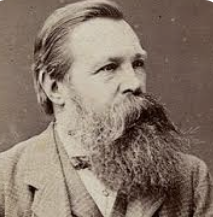
Having destroyed the social power of the nobility and the guildmasters, the bourgeois also destroyed their political power. Having raised itself to the actual position of first class in society, it proclaims itself to be also the dominant political class. This it does through the introduction of the representative system which rests on bourgeois equality before the law and the recognition of free competition, and in European countries takes the form of constitutional monarchy. In these constitutional monarchies, only those who possess a certain capital are voters - that is to say, only members of the bourgeoisie. These bourgeois voters choose the deputies, and these bourgeois deputies, by using their right to refuse to vote taxes, choose a bourgeois government.
4 weeks ago
A created thing is never invented and it is never true: it is always and ever itself.
▼
Source
source
Creation
4 months 2 weeks ago
When one plays for top prizes one must be prepared to pay top stakes.

3 months 1 week ago
The pleasures that give most joy are the ones that most rarely come.
3 months 2 weeks ago
In action, in desire, we must submit perpetually to the tyranny of outside forces; but in thought, in aspiration, we are free, free from our fellowmen, free from the petty planet on which our bodies impotently crawl, free even, while we live, from the tyranny of death.
CivilSimian.com created by AxiomaticPanic, CivilSimian, Kalokagathia