


3 months 2 days ago
To have committed every crime but that of being a father.

4 months 1 week ago
I am convinced that everything has come down to us from the banks of the Ganges, - astronomy, astrology, metempsychosis, etc.
▼
Source
source
M. de Voltaire par M. Bailly et précédées de quelques lettres de M. de Voltaire a l'auteur, Paris 1777, quoted in E. F. Bryant, The Quest for the Origins of Vedic Culture (2001), Ch. 1

4 months 1 week ago
The progress from an absolute to a limited monarchy, from a limited monarchy to a democracy, is a progress toward a true respect for the individual.

2 months 1 week ago
Guilt has to be understood not only as a way of checking one's own destructiveness, but as a mechanism for safeguarding the life of the other, one that emerges from our own need and dependency, from a sense that this life is not a life without another life. Indeed, when it turns into a safeguarding action, I am not sure it should still be called "guilt." If we do still use that term, we could conclude that "guilt" is strangely generative or that its productive form is reparation.
▼
Source
source
p. 93
4 months 1 week ago
We should be considerate to the living; to the dead we owe only the truth.
▼
Source
source
Letter to M. de Grenonville, 1719
5 months 1 week ago
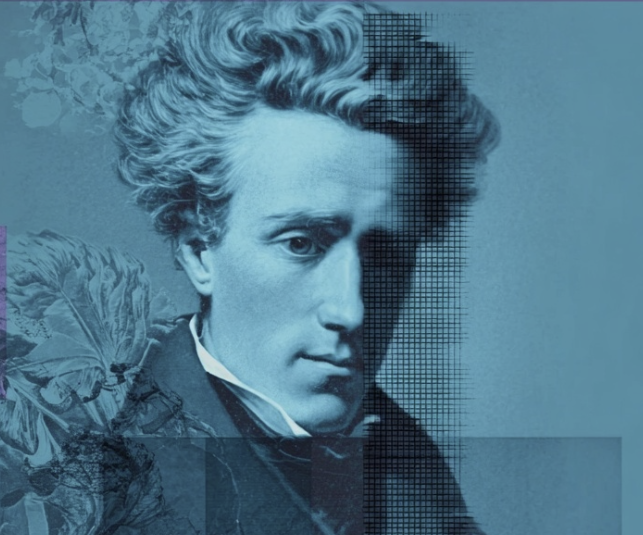
There is a contrast of primary significance between Augustine and Pelagius. The former crushes everything in order to rebuild it again. The other addresses himself to man as he is. The first system, therefore, in respect to Christianity, falls into three stages: creation – the fall and a consequent condition of death and impotence; a new creation - whereby man is placed in a position where he can choose; and then, if he chooses - Christianity. The other system addresses itself to man as he is (Christianity fits into the world). From this is seen the significance of the theory of inspiration for the first system; from this also is seen the relationship between the synergistic and the semipelagian conflict. It is the same question, only that the syngeristic struggle has its presupposition in the new creation of the Augustinian system.
2 months 3 weeks ago
Man must not only make himself: the weightiest thing he has to do is to determine what he is going to be. He is causa sui to the second power.
▼
Source
source
As quoted in Existentialism from Dostoevsky to Sartre, p. 155
2 months 1 week ago
The Marxist critique is only a critique of capital, a critique coming from the heart of the middle and petit bourgeois classes, for which Marxism has served for a century as a latent ideology.... The Marxist seeks a good use of economy. Marxism is therefore only a limited petit bourgeois critique, one more step in the banalization of life toward the "good use" of the social!
▼
Source
source
Canadian Journal of Political and Social Theory 15 (1987) "When Bataille Attacked the Metaphysical Principle of Economy"
4 months 6 days ago
It seems to me that the god that is commonly worshipped in civilized countries is not at all divine, though he bears a divine name, but is the overwhelming authority and respectability of mankind combined. Men reverence one another, not yet God. If I thought that I could speak with discrimination and impartiality of the nations of Christendom, I should praise them, but it tasks me too much. They seem to be the most civil and humane, but I may be mistaken.
5 months 3 days ago
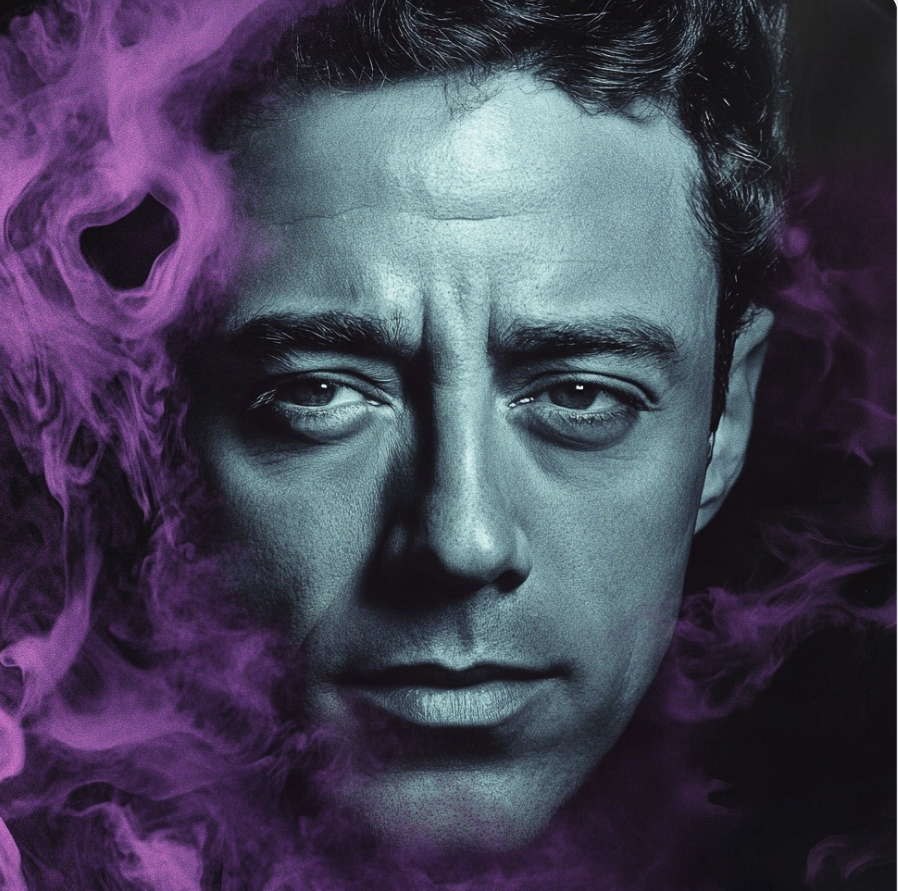
Man is the only creature who refuses to be what he is.
3 months 3 weeks ago
"These Macedonians," said he, "are a rude and clownish people, that call a spade a spade."
▼
Source
source
39 Philip
5 months 3 days ago
Weisinger, a couple of years ago, made up the following story: "Isaac Asimov was asked how Superman could fly faster than the speed of light, which was supposed to be an absolute limit. To this Asimov replied, 'That the speed of light is a limit is a theory; that Superman can travel faster than light is a fact.'"
3 months 2 days ago
The mind advances only when it has the patience to go in circles, in other words, to deepen.

4 months 5 days ago
Christian Apocalyptic offers us no such hope. It does not even foretell, (which would be more tolerable to our habits of thought) a gradual decay. It foretells a sudden, violent end imposed from without; an extinguisher popped onto the candle, a brick flung at the gramophone, a curtain rung down on the play - "Halt!"
2 months 3 days ago
Society in shipwreck is a comfort to all.
▼
Source
source
Maxim 144

4 months 1 day ago
When I am furious about something, I sometimes beat the ground or a tree with my walking stick. But I certainly do not believe that the ground is to blame or that my beating can help anything... And all rites are of this kind.
▼
Source
source
Ch. 7 : Remarks on Frazer's Golden Bough, p. 131
4 months 2 weeks ago
Materials are indifferent, but the use which we make of them is not a matter of indifference.
▼
Source
source
Book II, ch. 5, 1

2 months 2 weeks ago
Steiner goes further than this -- and this is his own central contribution to modern thought. He states that once we have made a habit of remembering Mozart and the stars, we shall find ourselves developing powers of 'spiritual vision.' We shall never again feel ourselves to be helpless victims of the external world.
▼
Source
source
p. 169

2 months 4 days ago
There is no connection between the elements in an electric world, which is equivalent to being surrounded by the human unconscious.
▼
Source
source
(p. 260)

2 months 4 weeks ago
Follow me, and I will make you fishers of men.
▼
Source
source
4:19 (KJV) Said to Peter and Andrew
4 months 5 days ago
"And I say also this. I do not think the forest would be so bright, nor the water so warm, nor love so sweet, if there were no danger in the lakes."
▼
Source
source
Hyoi, p. 76

3 months 1 week ago
Do not know the truth by the men, but know the truth, and then you will know who are truthful.
▼
Source
source
III. The Classes of Seekers, p. 29.
3 months 2 days ago
Knowledge is the plague of life, and consciousness, an open wound in its heart.
4 months 2 weeks ago
The principles of pleasure are not firm and stable. They are different in all mankind, and variable in every particular with such a diversity that there is no man more different from another than from himself at different times.
3 months 2 days ago
I thought that the only action a man could perform without shame was to take his life; that he had no right to diminish himself in the succession of days and the inertic of misery. No elect, I kept telling myself, but those who committed suicide.
6 days ago
"Do not die that we may not die," the dead cry out within you. "We had no time to enjoy the women we desired; be in time, sleep with them! We had no time to turn our thoughts into deeds; turn them into deeds! We had no time to grasp and to crystallize the face of our hope; make it firm!" ... But you must choose with care whom to hurl down again into the chasms of your blood, and whom you shall permit to mount once more into the light and the earth.

4 months 6 days ago
It appears then, that capitalist production comprises conditions independent of good or bad will, conditions which permit the working-class to enjoy that relative prosperity only momentarily, and at that always only as the harbinger of a coming crisis.
▼
Source
source
Vol. II, Ch. XX, p. 415.
4 months 3 weeks ago
Let each look to his own heart: let him not keep hatred against his brother for any hard word; on account of earthly contention let him not become earth.
▼
Source
source
First Homily, Paragraph 11, as translated by H. Browne, Nicene and Post-Nicene Fathers, First Series, Vol. 7 (1888)

3 months 1 week ago
Two things in America are astonishing: the changeableness of most human behavior and the strange stability of certain principles. Men are constantly on the move, but the spirit of humanity seems almost unmoved.
▼
Source
source
Book Three, Chapter XXI.
3 months 2 days ago
Can it really be that for us existence means exile, and nothingness, home?

1 month 1 week ago
Rather than trying to escape violence, human beings more often become habituated to it. History abounds with long conflicts - the Thirty Years' War in early seventeenth-century Europe, the Time of Troubles in Russia, twentieth-century guerrilla conflicts - in which continuous slaughter has been accepted as normal. Famously adaptable, the human animal quickly learns to live with violence and soon comes to find satisfaction in it.
▼
Source
source
In the Puppet Theatre: Roof Gardens, Feathers and Human Sacrifice (p. 80)

4 months 1 week ago
In ease of body and peace of mind, all the different ranks of life are nearly upon a level, and the beggar, who suns himself by the side of the highway, possesses that security which kings are fighting for.
▼
Source
source
Chap. I.
1 month 4 weeks ago
In an age of enormities, the emotions are naturally weakened. We are continually called upon to have feelings - about genocide, for instance, or about famine or the blowing up of passenger planes - and we are all aware that we are incapable of reacting appropriately. A guilty consciousness of emotional inadequacy or impotence makes people doubt their own human weight.
▼
Source
source
"The Distracted Public" (1990), p. 156
4 months 1 week ago
Do not be too moral. You may cheat yourself out of much life so. Aim above morality. Be not simply good; be good for something.
▼
Source
source
Pearls of Thought (1881) p. 177

3 months 3 weeks ago
Education is an ornament for the prosperous, a refuge for the unfortunate.
▼
Source
source
Freeman (1948), p. 161
2 months 3 days ago
To do two things at once is to do neither.
3 months 2 days ago
Fear for the Other, fear for the other man's death is my fear, but is in no way an individual's taking fright.
▼
Source
source
The Levinas reader by Levinas, Emmanuel p. 84

3 weeks 6 days ago
The highest ensign that men ever met and embraced under, the Cross itself, had no meaning save an accidental extrinsic one.
▼
Source
source
Bk. III, ch. 3.
6 days ago
With silent strides Odysseus then shot back the bolt,passed lightly through the courtyard and sped down the street.Some saw him take the graveyard's zigzag mountain path,some saw him leap on rocks that edged the savage shore,some visionaries saw him in the dead of nightswimming and talking secretly with the sea-demons,but only a small boy saw him in a lonely dreamsit crouched and weeping by the dark sea's foaming edge.
▼
Source
source
Book II, line 457

2 months 3 weeks ago
"The bitterest sorrow that man can know is to aspire to do much and to achieve nothing"... so Herodotus relates that a Persian said to a Theban at a banquet (book ix., chap. xvi.). And it is true. With knowledge and desire we can embrace everything , or almost everything; with the will nothing, or almost nothing. And contemplation is not happiness - no! not if this contemplation implies impotence. And out of this collision between our knowledge and our power pity arises.
2 months 1 week ago
We will never know if an advertisement or opinion poll has had a real influence on individual or collective wills, but we will never know either what would have happened if there had been no opinion poll or advertisement.

2 months 2 days ago
What I can't understand is why you can't see the extraordinary beauty of the idea that life started from nothing - that is such a staggering, elegant, beautiful thing, why would you want to clutter it up with something so messy as a God?
▼
Source
source
" During his conversation with the Archbishop of Canterbury, Dr. Rowan Williams, as quoted in The Telegraph, in 2012-02-24. In "Richard Dawkins: I can't be sure God does not exist"

4 months 5 days ago
To choose this or that is to affirm at the same time the value of what we choose, because we can never choose evil. We always choose the good, and nothing can be good for us without being good for all.
▼
Source
source
Existentialism and Human Emotions

4 months 1 week ago
There is an inconvenience which attends all abstruse reasoning. That it may silence, without convincing an antagonist, and requires the same intense study to make us sensible of its force, that was at first requisite for its invention. When we leave our closet, and engage in the common affairs of life, its conclusions seem to vanish, like the phantoms of the night on the appearance of the morning; and 'tis difficult for us to retain even that conviction, which we had attain'd with difficulty.
▼
Source
source
Part 1, Section 1
2 weeks 2 days ago
We have the right to conclude from this that syndicalist violence, perpetrated in the course of strikes by proletarians who desire the overthrow of the State, must not be confused with the acts of savagery which the superstition of the State suggested to the revolutionaries of 1793, when they had power in their hands and were able to oppress the conquered - following the principles which they had received from the Church and from the monarchy.
▼
Source
source
p. 108
4 months 1 week ago
Fools have a habit of believing that everything written by a famous author is admirable. For my part I read only to please myself and like only what suits my taste.

4 months 1 week ago
Love is better than hate, because it brings harmony instead of conflict into the desires of the persons concerned. Two people between whom there is love succeed or fail together, but when two people hate each other the success of either is the failure of the other.
3 weeks 6 days ago
The Age that admires talk so much can have little discernment for inarticulate work, or for anything that is deep and genuine. Nobody, or hardly anybody, having in himself an earnest sense for truth, how can anybody recognize an inarticulate Veracity, or Nature-fact of any kind; a Human Doer especially, who is the most complex, profound, and inarticulate of all Nature's Facts? Nobody can recognize him: till once he is patented, get some public stamp of authenticity, and has been articulately proclaimed, and asserted to be a Doer. To the worshipper of talk, such a one is a sealed book. An excellent human soul, direct from Heaven,-how shall any excellence of man become recognizable to this unfortunate? Not except by announcing and placarding itself as excellent,-which, I reckon, it above other things will probably be in no great haste to do.

2 months 2 weeks ago
There were honest people long before there were Christians and there are, God be praised, still honest people where there are no Christians. It could therefore easily be possible that people are Christians because true Christianity corresponds to what they would have been even if Christianity did not exist.
▼
Source
source
L 16

3 weeks ago
Now a life of honour includes various kinds of conduct; it may include the chest in which Regulus was confined, or the wound of Cato which was torn open by Cato's own hand, or the exile of Rutilius, or the cup of poison which removed Socrates from gaol to heaven.
CivilSimian.com created by AxiomaticPanic, CivilSimian, Kalokagathia