


3 months 3 weeks ago
He thinks like a philosopher, but governs like a king.
▼
Source
source
Of Frederick the Great XII

3 months 2 weeks ago
God can make good use of all that happens, but the loss is real.
2 months 2 weeks ago
It is impossible for any man, when the most favourable circumstances concur, to acquire sufficient knowledge and strength of mind to discharge the duties of a king, entrusted with uncontrolled power; how then must they be violated when his very elevation is an insuperable bar to the attainment of either wisdom or virtue; when all the feelings of a man are stifled by flattery, and reflection shut out by pleasure! Surely it is madness to make the fate of thousands depend on the caprice of a weak fellow creature, whose very station sinks him NECESSARILY below the meanest of his subjects! But one power should not be thrown down to exalt another--for all power intoxicates weak man; and its abuse proves, that the more equality there is established among men, the more virtue and happiness will reign in society.
▼
Source
source
Ch. 1
2 months 1 week ago
I write to thee on this subject, friend, because I am angry at a book which I have just left, which is so large, that it seems to contain universal science, but it hath almost split my head, without teaching me anything.
▼
Source
source
No. 66.
1 month 3 days ago
As human beings, we are endowed with this freedom of choice, and we cannot shuffle off our responsibility upon the shoulders of God or nature. We must shoulder it ourselves. It is up to us.
▼
Source
source
Ch. 3: Does History Repeat Itself?
1 day ago
Truth has no special time of its own. Its hour is now - always, and indeed then most truly when it seems most unsuitable to actual circumstances. Care for distress at home and care for distress elsewhere do but help each other if, working together, they wake men in sufficient numbers from their thoughtlessness, and call into life a new spirit of humanity.
▼
Source
source
Ch. XI : Conclusion
2 months ago
If people should ever start to do only what is necessary millions would die of hunger.
▼
Source
source
C 54 Variant translation: If all mankind were suddenly to practice honesty, many thousands of people would be sure to starve.

3 months 3 weeks ago
Too busy with the crowded hour to fear to live or die.
▼
Source
source
Quatrains, Nature

2 months 1 week ago
When I contemplate the green serenity of the fields or look into the depths of clear eyes through which shines a fellow-soul, my consciousness dilates, I feel the diastole of the soul and am bathed in the flood of the life that flows about me, and I believe in my future; but instantly the voice of mystery whispers to me, "Thou shalt cease to be!" the angel of Death touches me with his wing, and the systole of the soul floods the depth of my spirit with the blood of divinity.

4 months 5 days ago
To avoid falling into the toils of love is not so hard as, after you are caught, to get out of the nets you are in and to break through the strong meshes of Venus.
▼
Source
source
Book IV, lines 1146-1148 (tr. Munro)

1 week 5 days ago
Mahomet himself, after all that can be said about him, was not a sensual man. We shall err widely if we consider this man as a common voluptuary, intent mainly on base enjoyments, - nay on enjoyments of any kind. His household was of the frugalest; his common diet barley-bread and water: sometimes for months there was not a fire once lighted on his hearth. They record with just pride that he would mend his own shoes, patch his own cloak. A poor, hard-toiling, ill-provided man; careless of what vulgar men toil for.
2 months 2 weeks ago
We can never legitimately cut loose from our archetypal foundations unless we are prepared to pay the price of a neurosis, any more than we can rid ourselves of our body and its organs without committing suicide.
▼
Source
source
J.B. Priestley, Times Literary Supplement, London
1 month 2 weeks ago
It is sometimes expedient to forget who we are.
▼
Source
source
Maxim 233
2 months 1 week ago
Spirit is never an object; nor a spiritual reality an objective one. In the so-called objective world there's no such nature, thing, or objective reality as spirit. Hence it is easy to deny the reality of spirit. God is spirit because he is not object, because he is subject.
▼
Source
source
p. 10
2 months 1 week ago
Prosperity, both for individuals and for states, means possessions; and possessions mean burdens and harness and slavery; and slavery for the mind, too, because it is not only the rich man's time that is pre-empted, but his affections, his judgement, and the range of his thoughts.
▼
Source
source
"The Irony of Liberalism"

3 months 3 weeks ago
For the world to become philosophic amounts to philosophy's becoming world-order reality; and it means that philosophy, at the same time that it is realized, disappears.
3 months 2 weeks ago
This is precisely what is decisive in Nietzsche's conception of art, that he sees it in its essential entirety in terms of the artist; this he does consciously and in explicit opposition to that conception of art which represents it in terms of those who "enjoy" and "experience" it.That is a guiding principle of Nietzsche's teaching on art: art must be grasped in terms of creators and producers, not recipients. Nietzsche expresses it unequivocally in the following words (WM, 811): "Our aesthetics heretofore has been a woman's aesthetics, inasmuch as only the recipients of art have formulated their experiences of 'what is beautiful.' In all philosophy to date the artist is missing." Philosophy of art means "aesthetics" for Nietzsche too-but masculine aesthetics, not feminine aesthetics. The question of art is the question of the artist as the productive, creative one; his experiences of what is beautiful must provide the standard.
▼
Source
source
p. 70

1 month 2 weeks ago
The telegraph press mosaic is acoustic space as much as an electric circus.
2 months 2 weeks ago
It is in applied psychology, if anywhere, that today we should be modest and grant validity to a number of apparently contradictory opinions; for we are still far from having anything like a thorough knowledge of the human psyche, that most challenging field of scientific enquiry. For the present we have merely more or less plausible opinions that defy reconciliation.
▼
Source
source
p. 57
3 months 3 weeks ago
Through the fortunate effect of my frankness, I had the rarest and surest opportunity to know a man well, which is to study him at leisure in his private life and living, so to speak, with himself. For he share himself without reservation and made me feel as much at home in his house as in mine. I had almost no other abode than his own.
▼
Source
source
Second Dialogue; translated by Judith R. Bush, Christopher Kelly, Roger D. Masters
1 month 2 weeks ago
Society in shipwreck is a comfort to all.
▼
Source
source
Maxim 144
4 months 3 weeks ago
The essential nature (concerning the soul) cannot be corporeal, yet it is also clear that this soul is present in a particular bodily part, and this one of the parts having control over the rest (heart).
2 months ago
The Greeks possessed a knowledge of human nature we seem hardly able to attain to without passing through the strengthening hibernation of a new barbarism.
▼
Source
source
F 44

3 months 3 weeks ago
Most men would feel insulted, if it were proposed to employ them in throwing stones over a wall, and then in throwing them back, merely that they might earn their wages. But many are no more worthily employed now.
▼
Source
source
p. 485

3 months 3 weeks ago
With what consistency, or decency they complain so loudly of attempts to enslave them, while they hold so many hundred thousands in slavery; and annually enslave many thousands more, without any pretence of authority, or claim upon them?

2 months 3 weeks ago
Time which antiquates Antiquities, and hath an art to make dust of all things.
▼
Source
source
Chapter V

2 months 2 weeks ago
History proves nothing because it contains everything.
2 months 1 week ago
In order to be able to go on living it is possible that the bankrupt peoples will have to enter on a new path of self-denial, by curbing their covetousness and putting a check on the indefinite expansion of their wants, and by having smaller families.
▼
Source
source
p. 94
3 months 1 week ago
Pay attention to your enemies, for they are the first to discover your mistakes.
▼
Source
source
§ 12
1 month 3 weeks ago
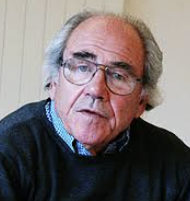
Photography and cinema contributed in large part to the secularization of history, to fixing it in its visible, "objective" form at the expense of the myths that once traversed it. Today cinema can place all its talent, all its technology in the service of reanimating what it itself contributed to liquidating. It only resurrects ghosts, and it itself is lost therein.
▼
Source
source
"History: A Retro Scenario," p. 48
2 months 2 weeks ago
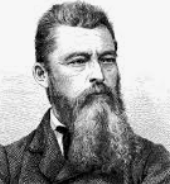
Hegel determines and presents only the most striking differences of various religions, philosophies, time and peoples, and in a progressive series of stages, but he ignores all that is common and identical in all of them. ... His system knows only subordination and succession; coordination and coexistence are unknown to it.
▼
Source
source
Z. Hanfi, trans., in The Fiery Brook (1972), p. 54
1 week 5 days ago
"By what method or methods can the able men from every rank of life be gathered, as diamond-grains from the general mass of sand: the able men, not the sham-able;-and set to do the work of governing, contriving, administering and guiding for us!" It is the question of questions. All that Democracy ever meant lies there: the attainment of a truer and truer Aristocracy, or Government again by the Best.

2 months 1 week ago
If you fast, you will give rise to sin for yourselves; and if you pray, you will be condemned; and if you give alms, you will do harm to your spirits. When you go into any land and walk about in the districts, if they receive you, eat what they will set before you, and heal the sick among them. For what goes into your mouth will not defile you, but that which issues from your mouth—it is that which will defile you.
1 month 2 weeks ago
Pornography and obscenity...work by specialism and fragmentation. They deal with a figure without a ground -- situations in which the human factor is suppressed in favor of sensations and kicks.
▼
Source
source
Letter to Clare Westcott, November 26 1975. Letters of Marshall McLuhan, p. 514
1 week 4 days ago
By now it may be clear that the position I'm developing is a sort of post-Darwinian Kantianism.
▼
Source
source
p. 104; from "The Road since Structure"

4 months ago
For what is life but a play in which everyone acts a part until the curtain comes down?
2 weeks 6 days ago
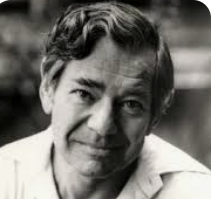
Heresy is a set of opinions "at variance with established or generally received principles." In this sense, heresy is the price of all originality and innovation.

2 months 3 weeks ago
The main business of religions is to purify, control, and restrain that excessive and exclusive taste for well-being which men acquire in times of equality.
▼
Source
source
Book One, Chapter V.

4 months 3 weeks ago
We are, all of us, growing volcanoes that approach the hour of their eruption; but how near or distant that is, nobody knows not even God.
3 months 3 weeks ago
The imagination is not a talent of some men but is the health of every man.
▼
Source
source
Poetry and Imagination
2 months 2 weeks ago
The initial revelation of any monastery: everything is nothing. Thus begin all mysticisms. It is less than one step from nothing to God, for God is the positive expression of nothingness.
1 month 2 weeks ago
Be your money's master, not its slave.
▼
Source
source
Maxim 657
1 month 2 weeks ago
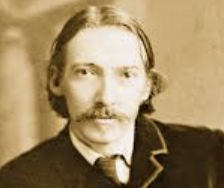
Fiction is to the grown man what play is to the child; it is there that he changes the atmosphere and tenor of his life.
▼
Source
source
A Gossip on Romance, printed in Longman's Magazine (November 1882).
2 months 3 weeks ago
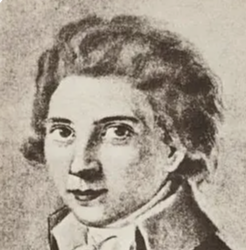
One can only become a philosopher, but not be one. As one believes he is a philosopher, he stops being one.
▼
Source
source
"Selected Aphorisms from the Athenaeum (1798)", Dialogue on Poetry and Literary Aphorisms, Ernst Behler and Roman Struc, trans. (Pennsylvania University Press:1968) #54
3 months 3 weeks ago
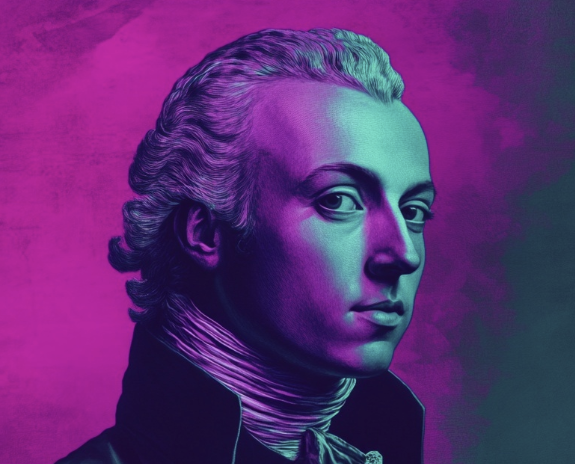
The means employed by Nature to bring about the development of all the capacities of men is their antagonism in society, so far as this is, in the end, the cause of a lawful order among men.
▼
Source
source
Fourth Thesis
2 months 2 weeks ago
The poor, by thinking unceasingly of money, reach the point of losing the spiritual advantages of non-possession, thereby sinking as low as the rich.

2 weeks 1 day ago
A further threat to liberalism has to do with the mode of cognition that we call modern natural science. The early liberals were very closely aligned with the founders of modern natural science, people like Bacon and Descartes and Newton, who believed that there was an objective world beyond our subjective consciousnesses, that we could perceive this world through the experimental method, and then come to manipulate it. Natural science gave us technology... that made the world much more habitable, by conquering disease, by inventing things that vastly increased human productivity. So... it's closely related to the wealth, and... the safety and comfort of a modern economically developed world.
▼
Source
source
18:49

8 months 1 week ago
A common goal...
Issue:
Because of subgrouping, physical separation, different types of genetics and other cultural factors, as well as limited isolation people subjectively deviate from their universal human necessity. They become aware of it when they are exposed to difference regularly.
Solution:
With controlled information delivery, as well as a clear ideological goal like universality, we can clear away the noise of chaos to understand deterministic goals directly.
2 months 2 weeks ago
To read is to let someone else work for you - the most delicate form of exploitation.
1 week 5 days ago
All greatness is unconscious, or it is little and naught.
CivilSimian.com created by AxiomaticPanic, CivilSimian, Kalokagathia