

2 months 3 weeks ago
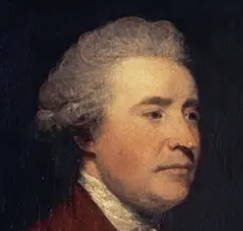
Boldness formerly was not the character of Atheists as such. ... But of late they are grown active, designing, turbulent, and seditious.
▼
Source
source
"Thoughts on French Affairs" (December 1791), in Three Memorials on French Affairs (1797), p. 53

3 months 2 weeks ago
He needs no library, for he has not done thinking; no church, for he is himself a prophet; no statute book, for he hath the Lawgiver; no money, for he is value itself; no road, for he is at home where he is.
▼
Source
source
December 26, 1839
7 months 3 weeks ago
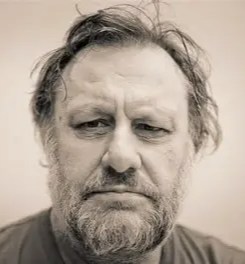
If we merely wait for the appropriate moment we will never live to see it, because this [appropriate moment] cannot arrive without the subjective conditions of the maturity of the revolutionary force being fulfilled - it can only arrive after a series of failed attempts.
2 months 6 days ago
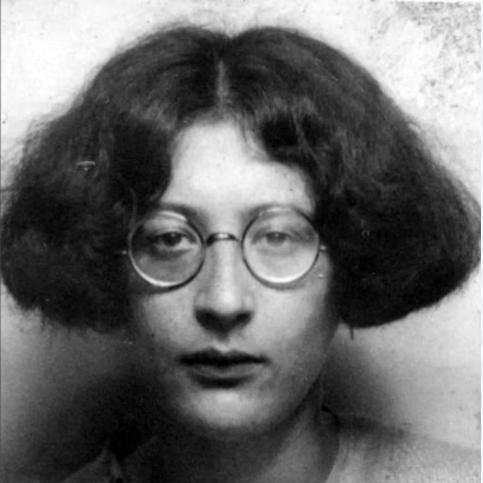
During the last quarter of a century all the authority associated with the function of spiritual guidance ... has seeped down into the lowest publications. ... Between a poem by Valéry and an advertisement for a beauty cream promising a rich marriage to anyone who used it there was at no point a breach of continuity. So as a result of literature's spiritual usurpation a beauty cream advertisement possessed, in the eyes of little village girls, the authority that was formerly attached to the words of priests.
▼
Source
source
"Morality and literature," p. 164

2 months 1 week ago
See ye not all these things? verily I say unto you, There shall not be left here one stone upon another, that shall not be thrown down.
▼
Source
source
24:2 (KJV)
3 months 2 weeks ago
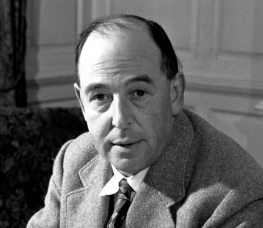
I believe Buddhism to be a simplification of Hinduism and Islam to be a simplification of Xianity.
▼
Source
source
Letter to Sheldon Vanauken (14 December 1950), quoted in Sleuthing C. S. Lewis (2001) by Kathryn Ann Lindskoog, p. 393

1 week 4 days ago
Alas, our noble men of genius, Heaven's real messengers to us, they also rendered nearly futile by the wasteful time;-preappointed they everywhere, and assiduously trained by all their pedagogues and monitors, to "rise in Parliament," to compose orations, write books, or in short speak words, for the approval of reviewers; instead of doing real kingly work to be approved of by the gods!
3 months 4 weeks ago
The strangest, most generous, and proudest of all virtues is true courage.

2 months 2 days ago
Passion, intellect, moral activity - these three have never been satisfied in a woman. In this cold and oppressive conventional atmosphere, they cannot be satisfied. To say more on this subject would be to enter into the whole history of society, of the present state of civilisation.
1 week 4 days ago
I came hither [Craigenputtoch] solely with the design to simplify my way of life and to secure the independence through which I could be enabled to remain true to myself.
▼
Source
source
Letter to Goethe, (1828).
2 months 1 week ago
The realer religion is, so much the more it means its own overcoming. It wills to cease to be the special domain "Religion" and wills to become life. It is concerned in the end not with specific religious acts, but with redemption from all that is specific.
▼
Source
source
p. 34

2 months 2 weeks ago
In theory, it matters little to me whether I live as whether I die; in practice, I am lacerated by every anxiety which opens an abyss between life and death.
2 months 3 weeks ago
Magnanimity in politics is not seldom the truest wisdom; and a great empire and little minds go ill together.
1 month 4 weeks ago
Opinion is the companion of probability within the medieval epistemology.
▼
Source
source
Chapter 3, Opinion, p. 28.

3 months 4 weeks ago
When speaking of the spiritual nature or the soul, we are referring to that which is "inner" or "new." When speaking of the bodily nature, or that which is flesh and blood, we are referring to that which is called "sensual," "outward," or "old." Paul writes in 2 Corinthians 4:16: "Even though our outer nature is wasting away, our inner nature is being renewed day by day."
▼
Source
source
p. 51
2 months 1 week ago
The passion of laughter is nothing else but a sudden glory arising from sudden conception of some eminency in ourselves, by comparison with the infirmities of others, or with our own formerly...
▼
Source
source
The Elements of Law, Natural and Politic Pt. I Human Nature (1640) Ch. 9
2 months 3 days ago
Where cruelty and injustice are concerned, hopelessness is submission, which I believe is immoral.
▼
Source
source
quoted in "Internal Exile" by Pankaj Mishra in The New Yorker, 2021
5 days ago
All vices sink into our whole being, if we do not crush them before they gain a footing; and in like manner these sad, pitiable, and discordant feelings end by feeding upon their own bitterness, until the unhappy mind takes a sort of morbid delight in grief... In like manner, wounds heal easily when the blood is fresh upon them: they can then be cleared out and brought to the surface, and admit of being probed by the finger: when disease has turned them into malignant ulcers, their cure is more difficult.
3 months 4 weeks ago
All of the days go toward death and the last one arrives there.
▼
Source
source
Ch. 20. Of the Force of Imagination
1 month 4 days ago
The way out of this violent cycle is to deepen democracy-to bring decisions that directly affect people's lives as close as possible to where people are and to where they can take responsibility.
1 month 2 weeks ago
He and his tyrannicide! I am in a mad fury about these explosions. If that is the new world! Damn O'Donovan Rossa; damn him behind and before, above, below, and roundabout; damn, deracinate, and destroy him, root and branch, self and company, world without end. Amen. I write that for sport if you like, but I will pray in earnest, O Lord, if you cannot convert, kindly delete him!
▼
Source
source
Letter to Sidney Colvin, 2 August 1881. Quoted in Terrorism and Literature Chapter 12 - "Parliament Is Burning" by Deaglán Ó Donghaile ISBN 9781316987292
3 months 1 week ago
We are responsible not only for what we do but also for what we could have prevented.
▼
Source
source
Introduction (p. xv)

4 months 1 week ago
By extensively studying all learning, and keeping himself under the restraint of the rules of propriety, one may thus likewise not err from what is right.
2 months 3 days ago
Corruption of politics has nothing to do with the morals, or the laxity of morals, of various political personalities. Its cause is altogether a material one. Politics is the reflex of the business and industrial world, the mottos of which are: "To take is more blessed than to give"; "buy cheap and sell dear"; "one soiled hand washes the other." There is no hope even that woman, with her right to vote, will ever purify politics.

2 months 3 weeks ago
Pass by us, and forgive us our happiness.
▼
Source
source
Part 4, Chapter 5
1 week 4 days ago
In a valiant suffering for others, not in a slothful making others suffer for us, did nobleness ever lie.
3 months 3 weeks ago
I take it for granted, when I am invited to lecture anywhere, - for I have had a little experience in that business, - that there is a desire to hear what I think on some subject, though I may be the greatest fool in the country, - and not that I should say pleasant things merely, or such as the audience will assent to; and I resolve, accordingly, that I will give them a strong dose of myself. They have sent for me, and engaged to pay for me, and I am determined that they shall have me, though I bore them beyond all precedent.
▼
Source
source
p. 484
3 months 2 weeks ago
The thing done avails, and not what is said about it. An original sentence, a step forward, is worth more than all the censures.
▼
Source
source
First Visit to England
1 month 4 weeks ago
It was Rudolf Carnap's dream for the last three decades of his life to show that science proceeds by a formal syntactic method; today no one to my knowledge holds out any hope for that project.
▼
Source
source
Hilary Putnam, in: James Conant, Urszula M. Zeglen (2012) Hilary Putnam: Pragmatism and Realism. p. 14
3 months 3 weeks ago
That virtue we appreciate is as much ours as another's. We see so much only as we possess.
▼
Source
source
June 22, 1839
2 months 2 days ago
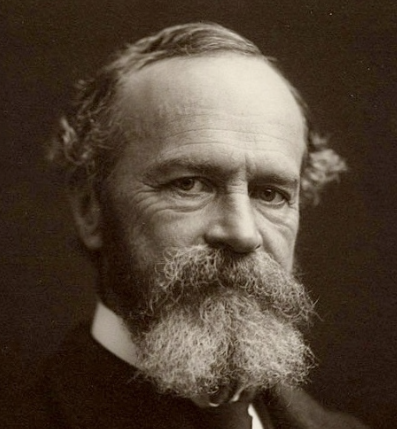
Moral activity? There is scarcely such a thing possible! Everything is sketchy. The world does nothing but sketch.
3 months 2 weeks ago
Need and struggle are what excite and inspire us; our hour of triumph is what brings the void. Not the Jews of the captivity, but those of the days of Solomon's glory are those from whom the pessimistic utterances in our Bible come.
▼
Source
source
"Is Life Worth Living?"
3 months 3 weeks ago
Without being known too well, it [India] has existed for millennia in the imagination of the Europeans as a wonderland. Its fame, which it has always had with regard to its treasures, both its natural ones, and in particular, its wisdom, has lured men there.
▼
Source
source
Friedrich Hegel .source: Contesting the Master Narrative, Jeffrey Cox and Shelton Stromquist Quoted from Gewali, Salil (2013).
1 month 2 weeks ago
Dialectic functions by converting everything it touches into figure but metaphor is a means of perceiving one thing in terms of another.
▼
Source
source
(p. 298)
1 month 4 weeks ago
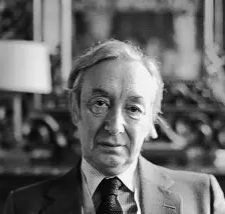
To me, believing that some correspondence intrinsically just is reference (not as a result of our operational and theoretical constraints, or our intentions, but as an ultimate metaphysical fact) amounts to a magical theory of reference. Reference itself becomes what Locke called a 'substantial form' (an entity which intrinsically belongs with a certain name) on such a view. Even if one is willing to contemplate such unexplainable metaphysical facts, the epistemological problems that accompany such a metaphysical view seem insuperable. For, assuming a world of mind- independent, discourse-independent entities (this is the presupposition of the view we are discussing), there are, as we have seen, many different 'correspondences' which represent possible or candidate reference relations (infinitely many, in fact, if there are infinitely many things in the universe).
▼
Source
source
Chap. 2 : A problem about reference
2 months 2 weeks ago
The criterion which we use to test the genuineness of apparent statements of fact is the criterion of verifiability. We say that a sentence is factually significant to any given person, if, and only if, he knows how to verify the proposition which it purports to express - that is, if he knows what observations would lead him, under certain conditions, to accept the proposition as being true, or reject it as being false.
▼
Source
source
p. 16.
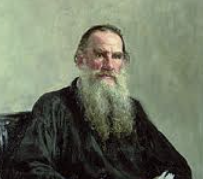
1 month 2 weeks ago
Art is not, as the metaphysicians say, the manifestation of some mysterious Idea of beauty or God; it is not, as the aesthetical physiologists say, [play or] a game in which one releases surplus energy, ...not the production of pleasing objects, and is above all, not pleasure itself, but it is the means of union among mankind, joining them in the same feelings, and necessary for the life and progress toward the good of the individual and of humanity.

4 months 1 week ago
If we admit the existence of the prophetic mission, by putting the idea of possibility, which is in fact ignorance, in place of certainty, and make miracles a proof of the truth of man who claims to be a prophet it becomes necessary that they should not be used by a person, who says that they can be performed by others than prophets, as the Mutakallimun do.

2 weeks 1 day ago
In situations of de facto diversity, attempts to impose a single way of life on an entire population is a formula for dictatorship.
3 months 3 weeks ago
In immediate self-consciousness the simple ego is absolute object, which, however, is for us or in itself absolute mediation, and has as its essential moment substantial and solid independence. The dissolution of that simple unity is the result of the first experience; through this there is posited a pure self-consciousness, and a consciousness which is not purely for itself, but for another, i.e. as an existent consciousness, consciousness in the form and shape of thinghood. Both moments are essential, since, in the first instance, they are unlike and opposed, and their reflexion into unity has not yet come to light, they stand as two opposed forms or modes of consciousness. The one is independent whose essential nature is to be for itself, the other is dependent whose essence is life or existence for another. The former is the Master, or Lord, the latter is the Bondsman.
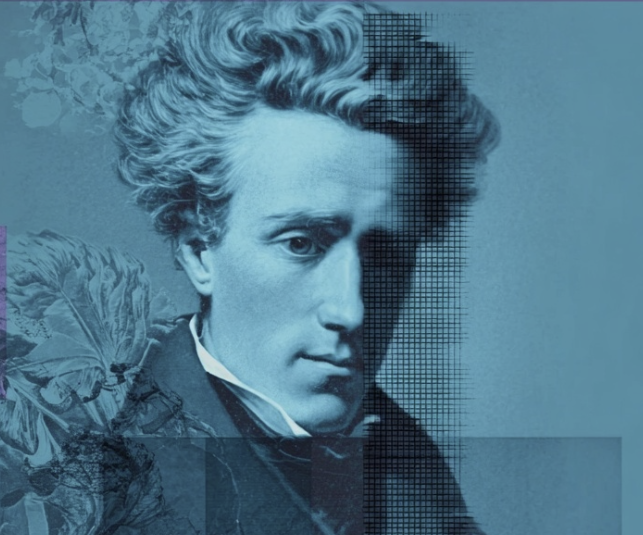
4 months 3 weeks ago
I have never definitely broken with Christianity nor renounced it. To attack it has never been my thought. No, from the time when there could be any question of the employment of my powers, I was firmly determined to employ them all to defend Christianity, or in any case to present it in its true form.
2 months 2 days ago
A girl, if she has any pride, is so ashamed of having anything she wishes to say out of the hearing of her own family, she thinks it must be something so very wrong, that it is ten to one, if she have the opportunity of saying it, that she will not. And yet she is spending her life, perhaps, in dreaming of accidental means of unrestrained communion.
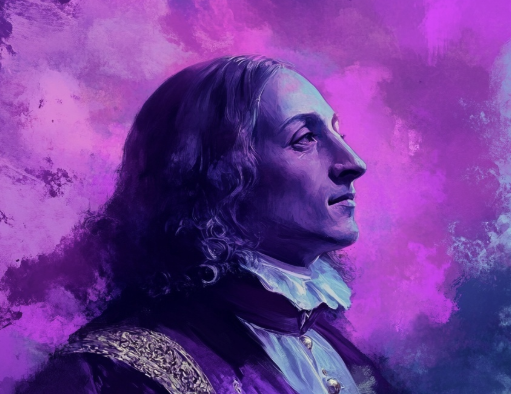
4 months 3 days ago
These five rules [above] form all that is necessary to render proofs convincing, immutable, and to say all, geometrical; and the eight rules together render them even more perfect.
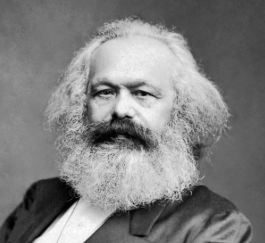
3 months 2 weeks ago
The executive of the modern State is but a committee for managing the common affairs of the whole bourgeoisie.
▼
Source
source
As quoted in the Communist Manifesto (1848) p. 7
5 days ago
You need a change of soul rather than a change of climate.
1 week 6 days ago
We sometimes imagine, under the influence of Spenglerian philosophy or some other kind of "historical morphology," that we live in a similar age [to the Romans], the last witnesses of a condemned civilization. But condemned by whom? Not by God, but by some supposed "historical laws." For although we do not know any historical laws, we are in fact able of inventing them quite freely, and such laws, once invented, can then be realized in the form of self-fulfilling prophecies.
▼
Source
source
Looking for the Barbarians
4 months 2 weeks ago
I was assailed by memories of a life that wasn't mine anymore, but one in which I'd found the simplest and most lasting joys.

3 months 3 weeks ago
Marriage is encouraged in China, not by the profitableness of children, but by the liberty of destroying them.
▼
Source
source
Chapter VIII, p. 87.
2 months ago
Sickness is mankind's greatest defect.
▼
Source
source
F 100

CivilSimian.com created by AxiomaticPanic, CivilSimian, Kalokagathia