


3 months 1 week ago
There is surely a piece of Divinity within us, something that was before the Elements, and owes no homage unto the Sun.
▼
Source
source
Section 11

5 months 3 days ago
It's my belief that the Universe possesses, in its essence, fractal properties of a very complex sort and that the pursuit of science shares those properties. It follows that any part of the Universe that remains un-understood, and any part of scientific investigation that remains unresolved, however small that might be in comparison to what is understood and resolved, contains within it all the complexity of the original. Therefore, we'll never finish. No matter how far we go, the road ahead will be as long as it was at the start, and that's the secret of the Universe.
2 months 1 day ago
To know what you prefer, instead of humbly saying Amen to what the world tells you you ought to prefer, is to have kept your soul alive.
▼
Source
source
An Inland Voyage (1878), Ch. III, "The Royal Sport Nautique".

4 months 1 day ago
Kierkegaard writes: If Christianity were so easy and cozy, why should God in his Scriptures have set Heaven and Earth in motion and threatened eternal punishments? - Question: But then in that case why is this Scriptures so unclear?
▼
Source
source
p. 31e

3 months 3 days ago
Men have superior strength of body; but were it not for mistaken notions of beauty, women would acquire sufficient to enable them to earn their own subsistence, the true definitions of independence; and to bear those bodily inconveniences and exertions that are requisite to strengthen the mind. Let us then, by being allowed to take the same exercise as boys, not only during infancy, but youth, arrive at perfection of body, that we may know how far the nation superiority of man extends . For what reason or virtue can be expected from a creature when the seed-time of life is neglected? None; did not the winds of heaven casually scatter many useful seeds in fallow ground.
▼
Source
source
Ch.5

3 weeks 5 days ago
No man lives without jostling and being jostled; in all ways he has to elbow himself through the world, giving and receiving offense.
3 months 3 days ago
It is the preservation of the species, not of individuals, which appears to be the design of Deity throughout the whole of nature.
▼
Source
source
Letter 22
3 weeks 5 days ago
A well-written Life is almost as rare as a well-spent one.
▼
Source
source
Richter (1827).

4 months 1 week ago
Nothing appears more surprising to those, who consider human affairs with a philosophical eye, than the easiness with which the many are governed by the few; and the implicit submission, with which men resign their own sentiments and passions to those of their rulers. When we enquire by what means this wonder is effected, we shall find, that, as Force is always on the side of the governed, the governors have nothing to support them but opinion. It is therefore, on opinion only that government is founded; and this maxim extends to the most despotic and most military governments, as well as to the most free and most popular.
▼
Source
source
Part I, Essay 4: Of The First Principles of Government

3 months 5 days ago
Opinion is ultimately determined by the feelings, and not by the intellect.
▼
Source
source
Pt. IV, Ch. 30 : General Considerations

3 months 6 days ago
Our patience will achieve more than our force.
2 months 2 weeks ago
A clash of doctrines is not a disaster - it is an opportunity.
▼
Source
source
Ch. 12: "Religion and Science", p. 259

2 months 3 weeks ago
In the most secret chamber of the spirit of him who believes himself convinced that death puts an end to his personal consciousness, his memory, for ever, and all unknown to him perhaps, there lurks a shadow, a vague shadow, a shadow of uncertainty, and while he says within himself, "Well, let us live this life that passes away, for there is no other!" the silence of this secret chamber speaks to him and murmurs, "Who knows!... " These voices are like the humming of a mosquito when the south-west wind roars through the trees in the wood; we cannot distinguish this faint humming, yet nevertheless, merged in the clamor of the storm, it reaches the ear.

4 months ago
Exercise is the technique by which one imposes on the body tasks that are both repetitive and different, but always graduated. By bending behavior towards a terminal state, exercise makes possible a perpetual characterization of the individual...It thus assures, in the form of continuity and constraint, a growth, an observation, a qualification.
2 months 2 weeks ago
Human beings, viewed as behaving systems, are quite simple. The apparent complexity of our behavior over time is largely a reflection of the complexity of the environment in which we find ourselves.
▼
Source
source
p. 53.

4 months 4 days ago
But since he has decided to have the impossibility of living, every misfortune is an opportunity which lays this importance of living before his eyes and obliges him to decide, once again, to die.
▼
Source
source
p. 158
4 weeks ago
A talent is formed in stillness, a character in the world's torrent.
▼
Source
source
Torquato Tasso, Act I, sc. ii
2 months 1 week ago
People hate it when they're tickled because laughter is not pleasant, if it goes on too long. I think it's a desperate sort of convulsion in desperate circumstances, which helps a little.
▼
Source
source
Interview Public Radio International

4 months 6 days ago
Some part of life - perhaps the most important part - must be left to the spontaneous action of individual impulse, for where all is system there will be mental and spiritual death.

2 months 3 weeks ago
Before his death, Rabbi Zusya said, "In the coming world, they will not ask me: 'Why were you not Moses?' They will ask me: 'Why were you not Zusya?'"
▼
Source
source
Tales of the Hasidim (1947), 1991 Ebook edition, p.251, as quoted in Jewish Currents.
2 months 1 week ago
There is a similarity between writers and SDS [Students for a Democratic Society, a radical left-wing group]: Plenty of paranoia, but no ideas.
3 months 1 day ago
The definition of definition is at bottom just what the maxim of pragmatism expresses.
▼
Source
source
Letter to William James
2 months 4 weeks ago
Understanding being nothing else, but conception caused by Speech.
▼
Source
source
The First Part, Chapter 4, p. 17
2 months 3 weeks ago
Genuine time, if it exists as anything else except the measure of motions in space, is all one with the existence of individuals as individuals, with the creative, with the occurrence of unpredictable novelties. Everything that can be said contrary to this conclusion is but a reminder that an individual may lose his individuality, for individuals become imprisoned in routine and fall to the level of mechanisms. Genuine time then ceases to be an integral element of their being. Our behavior becomes predictable, because it is but an external rearrangement of what went before.

4 months 3 weeks ago
It is not by change of place that we can come nearer to Him who is in every place, but by the cultivation of pure desires and virtuous habits.
▼
Source
source
p. 433

4 months 5 days ago
Because machines could be made progressively more and more efficient, Western man came to believe that men and societies would automatically register a corresponding moral and spiritual improvement. Attention and allegiance came to be paid, not to Eternity, but to the Utopian future. External circumstances came to be regarded as more important than states of mind about external circumstances, and the end of human life was held to be action, with contemplation as a means to that end. These false and historically, aberrant and heretical doctrines are now systematically taught in our schools and repeated, day in, day out, by those anonymous writers of advertising copy who, more than any other teachers, provide European and American adults with their current philosophy of life. And so effective has been the propaganda that even professing Christians accept the heresy unquestioningly and are quite unconscious of its complete incompatibility with their own or anybody else's religion.
1 week 6 days ago
I truly cannot say what the person who still has hope for man should think of the imminence of quasi-apocalyptic destruction. It would certainly force many to face the existential problem in all its nakedness, and subject them to extreme trials; but is this a worse evil than that of mankind's safe, secure, satisfied, and total consignment to the kind of happiness that befits Nietzsche's "last man": a comfortable consumer civilization of socialized human animals, aided by all the discoveries of science and industry and reproducing demographically in a squirming, catastrophic crescendo?
▼
Source
source
p. 140
3 months 1 day ago
Some words shall herein be capitalised when used, not as vernacular, but as terms defined. Thus an "idea" is the substance of an actual unitary thought or fancy; but "Idea," nearer Plato's idea of ἰδέα, denotes anything whose Being consists in its mere capacity for getting fully represented, regardless of any person's faculty or impotence to represent it.
▼
Source
source
I
1 month 1 week ago
Is there really someone who, searching for a group of wise and sensitive persons to regulate him for his own good, would choose that group of people that constitute the membership of both houses of Congress?
▼
Source
source
Ch. 2 : The State of Nature; Protective Associations, p. 14

4 months 4 days ago
To be taken without consent from my home and friends; to lose my liberty; to undergo all those assaults on my personality which modern psychotherapy knows how to deliver; to be re-made after some pattern of "normality" hatched in a Viennese laboratory to which I never professed allegiance; to know that this process will never end until either my captors have succeeded or I have grown wise enough to cheat them with apparent success-who cares whether this is called Punishment or not? "The Humanitarian Theory of Punishment"
▼
Source
source
1949

4 months 1 week ago
I have lived an honest and useful life to mankind; my time has been spend in doing good and I die in perfect composure and resignation to the will of my Creator, God.
▼
Source
source
Last will (1809), as quoted in The Fortnightly Review, vol. 31, pp. 398-399
4 months 1 week ago
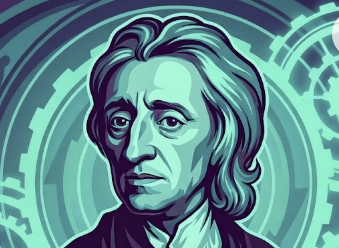
A criminal who, having renounced reason ... hath, by the unjust violence and slaughter he hath committed upon one, declared war against all mankind, and therefore may be destroyed as a lion or tyger, one of those wild savage beasts with whom men can have no society nor security. And upon this is grounded the great law of Nature, "Whoso sheddeth man's blood, by man shall his blood be shed."
▼
Source
source
Second Treatise of Civil Government, Ch. II, sec. 11

2 months 4 weeks ago
Understanding finds nothing but itself when it seeks the essence behind the appearance of things. 'It is manifest that behind the so-called curtain, which is to hide the inner world, there is nothing to be seen unless we ourselves go behind there, as much in order that we may thereby see, as that there may be something behind there which can be seen.'
▼
Source
source
P. 111

2 months 3 days ago
One of the things that happens at the speed of light is that people lose their goals in life. So what takes the place of goals and objectives? Well, role-playing is coming in very fast.
▼
Source
source
Interview between Californian Governor Jerry Brown and Marshall McLuhan, 1977
3 months 5 days ago
Only through blind Instinct, in which the only possible guidance of the Imperative is awanting, does the Power in Intuition remain undetermined; where it is schematised as absolute it becomes infinite; and where it is presented in a determinate form, as a principle, it becomes at least manifold. By the above-mentioned act of Intelligising, the Power liberates itself from Instinct, to direct itself towards Unity.

1 month 1 week ago
Human rights are not just cultural or legal constructions, as fashionable western relativists are fond of claiming. They are universal values. To deny the benefits of the new regime of rights to other cultures is to patronise them in a way that is reminiscent of the colonial era. If the new regime on torture is good enough for the US, who can say that it is not good for everyone?

2 months 4 weeks ago
So watch yourselves. If your brother sins, rebuke him, and if he repents, forgive him. If he sins against you seven times in a day, and seven times comes back to you and says, 'I repent,' forgive him.
▼
Source
source
(Luke 17:3-4) (NIV)

4 months ago
Reaching and understanding is the process of bringing about an agreement on the presupposed basis of validity claims that are mutually recognized.
▼
Source
source
p. 23

4 months 6 days ago
An early morning walk is a blessing for the whole day.
▼
Source
source
April 20, 1840
4 months 1 week ago
The next good quality belonging to a gentleman, is good breeding [manners]. There are two sorts of ill-breeding: the one a sheepish bashfulness, and the other a mis-becoming negligence and disrespect in our carriage; both of which are avoided by duly observing this one rule, not to think meanly of ourselves, and not to think meanly of others.
▼
Source
source
Sec. 141
4 months 6 days ago
If there were in the world today any large number of people who desired their own happiness more than they desired the unhappiness of others, we could have a paradise in a few years.
▼
Source
source
As quoted in Think, Vol. 27 (1961), p. 32
4 months 4 days ago
...man first of all exists, encounters himself, surges up in the world - and defines himself afterwards.

2 months 2 weeks ago
Black women control the world. We are through being discriminated against.
▼
Source
source
Communion: The Female Search for Love (2002) ISBN 0-06-093829-3
4 months 1 week ago
No doubt, when modesty was made a virtue, it was a very advantageous thing for the fools, for everybody is expected to speak of himself as if he were one.
▼
Source
source
Vol. 1, Ch. 3, Section 2: Pride

4 months 1 week ago
Through the fortunate effect of my frankness, I had the rarest and surest opportunity to know a man well, which is to study him at leisure in his private life and living, so to speak, with himself. For he share himself without reservation and made me feel as much at home in his house as in mine. I had almost no other abode than his own.
▼
Source
source
Second Dialogue; translated by Judith R. Bush, Christopher Kelly, Roger D. Masters
4 months 1 day ago
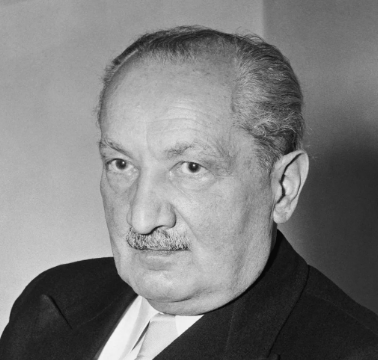
Technology is in its essence something that human beings cannot master of their own accord.

4 months 1 week ago
We may search long to find where God is, but we shall find Him in those who keep the words of Christ. For the Lord Christ saith, " If any man love me, he will keep my words; and we will make our abode with him."
▼
Source
source
p. 278
CivilSimian.com created by AxiomaticPanic, CivilSimian, Kalokagathia