


8 months 3 weeks ago
The Outsider's case against society is very clear. All men and women have these dangerous, unnamable impulses, yet they keep up a pretense, to themselves, to others; their respectability, their philosophy, their religion, are all attempts to gloss over, to make civilized and rational something that is savage, unorganized, irrational. He is an Outsider because he stands for truth.
▼
Source
source
Chapter one, The Country of the Blind

9 months 1 week ago
For it is easier for a camel to go through a needle's eye, than for a rich man to enter into the kingdom of God.
▼
Source
source
18:25 (KJV)

10 months 2 weeks ago
The poor, short lone fact dies at birth. Memory catches it up into her heaven and bathes it in immortal waters.
▼
Source
source
"Memory", p. 66
9 months 6 days ago
The very desire for guarantees that our values are eternal and secure in some objective heaven is perhaps only a craving for the certainties of childhood or the absolute values of our primitive past.

10 months 2 weeks ago
Hence money may be dirt, although dirt is not money.
▼
Source
source
Vol. I, Ch. 3, Section 2, pg. 123.

9 months 1 week ago
Great and enduring civilizations like those of the Hindus and the Chinese were built upon this foundation and developed from it a discipline of self-knowledge which they brought to a high pitch of refinement both in philosophy and practice.
▼
Source
source
Carl Jung, Modern Man in Search of a Soul. quoted in Hindu Culture, K. Guru Dutt, and quoted in Gewali, Salil (2013). Great Minds on India. New Delhi: Penguin Random House.

10 months 2 weeks ago
The principal source of the harm done by the State is the fact that power is its chief end.
▼
Source
source
Principles of Social Reconstruction (1917), Ch. II: The State




11 months 1 week ago
Perhaps we cannot prevent this world from being a world in which children are tortured. But we can reduce the number of tortured children. And if you don't help us, who else in the world can help us do this?

10 months 5 days ago
Neither our distance from a preventable evil nor the number of other people who, in respect to that evil, are in the same situation as we are, lessens our obligation to mitigate or prevent that evil.


6 months 2 weeks ago
Rats and roaches live by competition under the laws of supply and demand; it is the privilege of human beings to live under the laws of justice and mercy.
▼
Source
source
Economy and Pleasure
8 months 1 week ago
Conservatism is itself a modernism, and in this lies the secret of its success.
▼
Source
source
"Eliot and Conservatism" (p. 194)

9 months 3 weeks ago
For nature is not merely present, but is implanted within things, distant from none; naught is distant from her except the false, and that which existed never and nowhere-nullity. And while the outer face of things changeth so greatly, there flourisheth the origin of being more intimately within all things than they themselves. The fount of all kinds, Mind, God, Being, One, Truth, Destiny, Reason, Order.
▼
Source
source
VIII 10 as translated by Dorothea Waley Singer
11 months 4 days ago
Speaking with sense we must fortify ourselves in the common sense of all, as a city is fortified by its law, and even more forcefully. For all human laws are nourished by the one divine law. For it prevails as far as it will and suffices for all and is superabundant.

9 months 2 weeks ago
All things are artificial, for nature is the Art of God.
▼
Source
source
Section 16
8 months 3 weeks ago
I could see clearly that this problem could only be solved on the individual and personal level; political revolt is irrelevant. Both Camus and Sartre had been neatly hog-tied by their earlier radicalism. Camus came to see that rebellion is a political roundabout that revolves back to the same old tyranny; too ashamed to admit that he had outgrown his leftism, he found himself in an intellectual cul-de-sac. Sartre accused Camus of being a reactionary; but he paid for his own refusal to reexamine his political convictions by congealing into a grotesque attitude of permanent indignation, shaking his fist at some abstract Authority. Where politics is concerned, he seemed determined to be guided by his emotions.
▼
Source
source
p. 101
7 months ago
It is truly not the merit of the school if we do not come out selfish. Each sort of corresponding pride and every wind of covetousness, eagerness for office, mechanical and servile officiousness, hypocrisy, etc., is bound as much with extensive knowledge as with elegant, classical education, and since this whole instruction exercises no influence of any sort on our ethical behavior, it thus frequently falls to the fate of being forgotten in the same measure as it is not used: one shakes off the dust of the school.
▼
Source
source
p. 22
6 months 2 weeks ago
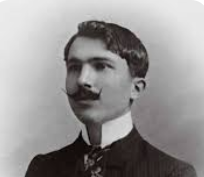
Blessed are those eyes that have seen more water than any man! Blessed be that haughty mind that aimed at the greatest hope! May you be blessed who row the current your life longand now with dry unfreshened lips descend to Hadesto find the hidden deathless springs and slake your thirst! My son, it's death who keeps and pours the deathless waters.
▼
Source
source
Voice of the Nile, from Odysseus' story, Book VIII, line 1290 (the first line is taken from an Egyptian hieroglyph.)


10 months 2 weeks ago
I should say that the universe is just there, and that is all.
▼
Source
source
BBC Radio Debate on the Existence of God, Bertrand Russell v. Frederick Copleston, 1948

10 months 2 weeks ago
Speed, it seems to me, provides the one genuinely modern pleasure.
▼
Source
source
Wanted, A New Pleasure
9 months 1 week ago
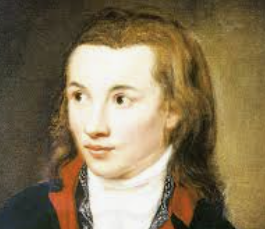
Fate and temperament are the names of a concept.
▼
Source
source
As quoted in Demian (1972) by Hermann Hesse, trans. W.J. Strachan
10 months 2 weeks ago
The secret of happiness is this: let your interests be as wide as possible, and let your reactions to the things and persons that interest you be as far as possible friendly rather than hostile.

10 months 2 weeks ago
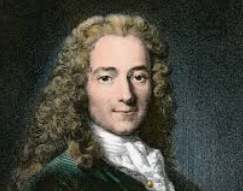
Religion may be purified. This great work was begun two hundred years ago: but men can only bear light to come in upon them by degrees.
▼
Source
source
The critical review, or annals of literature, Volume XXVI, by A Society of Gentlemen (1768) p. 450

8 months 1 week ago
The mother tongue is propaganda.
▼
Source
source
The University of Windsor review, Volumes 1-2, 1965, p. 10
10 months 2 weeks ago
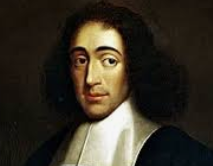
Human infirmity in moderating and checking the emotions I name bondage: for, when a man is a prey to his emotions, he is not his own master, but lies at the mercy of fortune: so much so, that he is often compelled, while seeing that which is better for him, to follow that which is worse.
▼
Source
source
Part IV, Preface; translation by R. H. M. Elwes
8 months 2 weeks ago
I once had a conversation with a famous French philosopher who's a friend of mine. And I said to him, "Why the hell do you write so badly? Pourquoi tu écris si mal?" ... And this was Michel Foucault. He was a very smart guy and wrote a lot of very good stuff but in general he just wrote badly. When you heard him give a lecture in Berkeley, it was perfectly clear, just as clear as I am. ... And he said, "Well, in France, it would be regarded as somewhat childish and naive if you wrote clearly. ... In France you've got to have 10% incomprehensible."
▼
Source
source
Otherwise people won't think it's deep. They won't think you're a profound thinker.

9 months 1 week ago
There are no solutions, only cowardice masquerading as such.


9 months 1 week ago
Privilege is a regulation rendering a few men, and those only, by the accident of their birth, eligible to certain situations. It kills all liberal ambition in the rest of mankind, by opposing to it an apparently insurmountable bar. It diminishes it in the favored class itself, by showing them the principal qualification as indefeasibly theirs. Privilege entitles a favored few to engross to themselves gratifications which the system of the universe left at large to all her sons; it puts into the hands of those few the means of oppression against the rest of their species; it fill them witth vain-glory, and affords them every incitement to insolence and a lofty disregard to the feeling and interests of others.
▼
Source
source
Book V, Chapter 11, "Moral Effects of Aristocracy"

10 months 2 weeks ago
So much of modern mathematical work is obviously on the border-line of logic, so much of modern logic is symbolic and formal, that the very close relationship of logic and mathematics has become obvious to every instructed student. The proof of their identity is, of course, a matter of detail: starting with premisses which would be universally admitted to belong to logic, and arriving by deduction at results which as obviously belong to mathematics, we find that there is no point at which a sharp line can be drawn, with logic to the left and mathematics to the right. If there are still those who do not admit the identity of logic and mathematics, we may challenge them to indicate at what point, in the successive definitions and deductions of Principia Mathematica, they consider that logic ends and mathematics begins. It will then be obvious that any answer must be quite arbitrary.
▼
Source
source
Ch. 18: Mathematics and Logic
8 months 2 weeks ago
Materialism ends up denying the existence of any irreducible subjective qualitative states of sentience or awareness.
▼
Source
source
Consciousness and Language (2002) p. 47.
9 months 1 week ago
What every man who loves his country hopes for in his inmost heart: the suppression of half his compatriots.

6 months 1 week ago
We know in bodies only matter, and we observe the faculty of feeling only in bodies: on what foundation then can we erect an ideal being, disowned by all our knowledge?
▼
Source
source
Ch. VI Concerning the Sensitive Faculty of Matter
10 months 2 weeks ago
It might be plausibly maintained, that in almost every one of the leading controversies, past or present, in social philosophy, both sides were in the right in what they affirmed, though wrong in what they denied.
▼
Source
source
J. S. Mill, Dissertations and discussions: political, philosophical, and historical, Volume 2, H. Holt, 1864, p. 11.

6 months 4 weeks ago
Unrighteous fortune seldom spares the highest worth; no one with safety can long front so frequent perils. Whom calamity oft passes by she finds at last.
▼
Source
source
lines 325-328; (Megara).

6 months 2 weeks ago
It is literally true that the toleration of banks of paper discount costs the United States one-half their war taxes; or, in other words, doubles the expenses of every war. Now think but for a moment, what a change of condition that would be, which should save half our war expenses, require but half the taxes, and enthral us in debt but half the time.
▼
Source
source
ME 13:364

6 months 1 week ago
A man should be upright, not kept upright.
▼
Source
source
III, 5

8 months 3 weeks ago
The real pioneers in ideas, in art and in literature have remained aliens to their time, misunderstood and repudiated.
11 months 1 week ago
Parmenides: Whatever the subject of your hypothesis, if you suppose that it is or is not, or that it experiences any other affection, you must consider what happens to it and to any other particular things you may choose, and to a greater number and to all in the same way; and you must consider other things in relation to themselves and to anything else you may choose in any instance, whether you suppose that the subject of your hypothesis exists or does not exist, if you are to train yourself completely to see the truth perfectly.
8 months 1 week ago
Environments work us over and remake us. It is man who is the content of and the message of the media, which are extensions of himself. Electronic man must know the effects of the world he has made above all things.
▼
Source
source
(p. 90)
11 months 4 days ago
War is the father and king of all: some he has made gods, and some men; some slaves and some free.
8 months 1 week ago
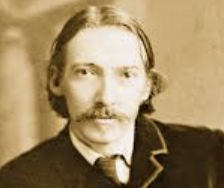
Every man is his own doctor of divinity, in the last resort.
▼
Source
source
An Inland Voyage (1878).
6 months 3 weeks ago
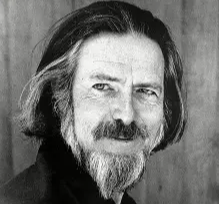
Buddhism ... is not a culture but a critique of culture, an enduring nonviolent revolution or "loyal opposition" to the culture in which it is involved.
▼
Source
source
p. 7
CivilSimian.com created by AxiomaticPanic, CivilSimian, Kalokagathia