

1 month 6 days ago
We, on the contrary, now send to the Brahmans English clergymen and evangelical linen-weavers, in order out of sympathy to put them right, and to point out to them that they are created out of nothing, and that they ought to be grateful and pleased about it. But it is Just the same as if we fired a bullet at a cliff. " In India, our religions wIll never at any time take root; the ancient wisdom of the human race will not be supplanted by the events in Galilee. On the contrary, Indian Wisdom flows back to Europe, and will produce a fundamental change in our knowledge and thought.
1 month 3 weeks ago
How long will men dare to call anything expedient that is not right? Can odium and infamy be of service to any empire, which ought to be supported by glory and by the good-will of its allies? I was often at variance even with my friend Cato. He seemed to me to guard the treasury and the revenues too obstinately, to refuse everything to the farmers of the revenue, and many things to our allies; while we ought to be generous to our allies, and to deal with the farmers of the revenue as leniently as we individually do with our own tenants, especially as the union of orders to which such a course would conduce is for the well-being of the state.

1 month 6 days ago
Just as we teach children to avoid being destroyed by motor cars if they can, so we should teach them to avoid being destroyed by cruel fanatics, and to this end we should seek to produce independence of mind, somewhat sceptical and wholly scientific, and to preserve, as far as possible, the instinctive joy of life that is natural to healthy children. This is the task of a liberal education: to give a sense of the value of things other than domination, to help create wise citizens of a free community, and through the combination of citizenship with liberty in individual creativeness to enable men to give to human life that splendour which some few have shown that it can achieve.

2 months 2 days ago
Just you think first, and don't bother to speak afterward, either.

1 month 1 week ago
The value of life lies not in the length of days, but in the use we make of them... Whether you find satisfaction in life depends not on your tale of years, but on your will.

1 day ago
Self-knowledge - the bitterest knowledge of all and also the kind we cultivate least: what is the use of catching ourselves out, morning to night, in the act of illusion, pitilessly tracing each act back to its root, and losing case after case before our own tribunal?

1 month 3 days ago
...the reality of society involves the socialization of certain unrealities.
1 month 3 weeks ago
What! You would convict me from my own words, and bring against me what I had said or written elsewhere. You may act in that manner with those who dispute by established rules. We live from hand to mouth, and say anything that strikes our mind with probability, so that we are the only people who are really at liberty.

1 month 4 days ago
God will look to every soul like its first love because He is its first love.

5 days ago
All the time that this horrid scene was acting or avenging, as well as for some time before, and ever since, the wicked instigators of this unhappy multitude, guilty, with every aggravation, of all their crimes, and screened in a cowardly darkness from their punishment, continued without interruption, pity, or remorse, to blow up the blind rage of the populace, with a continued blast of pestilential libels, which infected and poisoned the very air we breathed in.

1 month 3 weeks ago
There are only the wise of the highest class, and the stupid of the lowest class, who cannot be changed.

4 days ago
Originally, ethics has no existence apart from religion, which holds it in solution.
1 month 6 days ago
Man differs from other animals in one very important respect, and that is that he has some desires which are, so to speak, infinite, which can never be fully gratified, and which would keep him restless even in Paradise. The boa constrictor, when he has had an adequate meal, goes to sleep, and does not wake until he needs another meal. Human beings, for the most part, are not like this.

1 week 2 days ago
No natural boundary seems to be set to the efforts of man; and what is not yet done is only what he has not yet attempted to do. Variant: What is not yet done is only what we have not yet attempted to do.
2 months 5 days ago
Even Plato assumes that the genuinely perfect condition of man means no sex distinction (and how strange this is for people like Feuerbach who are so occupied with affirming sex-differentiation, regarding which they would do best to appeal to paganism). He assumes that originally there was only the masculine (and when there is no thought of femininity, sex-distinction is undifferentiated), but through degeneration and corruption the feminine appeared. He assumes that base and cowardly men became women in death, but he still gives them hope of being elevated again to masculinity. He thinks that in the perfect life the masculine, as originally, will be the only sex, that is, that sex-distinction is a matter of indifference. So it is in Plato, and this, the idea of the state notwithstanding, was the culmination of his philosophy. How much more so, then, the Christian view.

1 month 1 week ago
"How then shall they have the play-games you allow them, if none must be bought for them?" I answer, they should make them themselves, or at least endeavour it, and set themselves about it. ...And if you help them where they are at a stand, it will more endear you to them than any chargeable toys that you shall buy for them.
2 months 2 days ago
Anything could be found in figures if the search were long enough and hard enough and if the proper pieces of information were ignored or overlooked.
1 week 2 days ago
So many of my thoughts and feelings are shared by the English that England has turned into a second native land of the mind for me.
4 days ago
Show me what thou truly lovest, what thou seekest and strivest for with thy whole heart when thou hopest to attain to true en joyment of thyself-and thou hast thereby shown me thy Life. What thou lovest, in that thou livest. This very Love is thy Life, the root, the seat, the central point of thy being. All other emotions within thee have life only in so far as they are governed by this one central emotion.
1 week 2 days ago
Social positivism only accepts duties, for all and towards all. Its constant social viewpoint cannot include any notion of rights, for such notion always rests on individuality. We are born under a load of obligations of every kind, to our predecessors, to our successors, to our contemporaries. These obligations then increase or accumulate, for it is some time before we can return any service. ... Any human right is therefore as absurd as immoral. Since there are no divine rights anymore, this concept must therefore disappear completely as related only to the preliminary regime and totally inconsistent with the final state where there are only duties based on functions.

1 month ago
What cannot be imagined cannot even be talked about.
Just now
A naturall foole that could never learn by heart the order of numerall words, as one, two, and three, may observe every stroak of the Clock, and nod to it, or say one, one, one; but can never know what houre it strikes.
1 month 3 days ago
You take souls for vegetables.... The gardener can decide what will become of his carrots but no one can choose the good of others for them.

1 month 5 days ago
If a man own land, the land owns him.
1 month ago
One can mistrust one's own senses, but not one's own belief. If there were a verb meaning "to believe falsely," it would not have any significant first person, present indicative.

2 weeks 4 days ago
The Platonic doctrine of Ideas has been, in all ages, the derision of the vulgar, and the admiration of the wife. Indeed, if we consider that ideas are the most sublime objects of speculation, and that their nature is no less bright in itself, than difficult to investigate, this opposition in the conduct of mankind will be natural and necessary; for, from our connection with a material nature, our intellectual eye, previous to the irradiations of science, is as ill adapted to objects the most splendid of all, "as the eyes of bats to the light of day.

1 month 5 days ago
There are various, nay, incredible faiths; why should we be alarmed at any of them? What man believes, God believes.
1 month 1 week ago
Though the Earth, and all inferior Creatures be common to all Men, yet every Man has a Property in his own Person. Thus no Body has any Right to but himself.

1 month 5 days ago
In this third period (as it may be termed) of my mental progress, which now went hand in hand with hers, my opinions gained equally in breadth and depth, I understood more things, and those which I had understood before, I now understood more thoroughly. I had now completely turned back from what there had been of excess in my reaction against Benthamism. I had, at the height of that reaction, certainly become much more indulgent to the common opinions of society and the world, and more willing to be content with seconding the superficial improvement which had begun to take place in those common opinions, than became one whose convictions on so many points, differed fundamentally from them. I was much more inclined, than I can now approve, to put in abeyance the more decidedly heretical part of my opinions, which I now look upon as almost the only ones, the assertion of which tends in any way to regenerate society.
1 month 3 days ago
When the rich make war, it's the poor that die.
1 day ago
But no mental action seems necessary or invariable in its character. In whatever manner the mind has reacted under a given sensation, in that manner it is the more likely to react again; were this, however, an absolute necessity, habits would become wooden and ineradicable, and no room being left for the formulation of new habits, intellectual life would come to a speedy close. Thus, the uncertainty of the mental law is no mere defect of it, but is on the contrary of its essence. The truth is, the mind is not subject to "law," in the same rigid sense that matter is. It only experiences gentle forces which merely render it more likely to act a given way than it otherwise would be. There always remains a certain amount of arbitrary spontaneity in its action, without which it would be dead.

2 weeks 2 days ago
In anger we should refrain both from speech and action.
4 days ago
The new education must consist essentially in this, that it completely destroys freedom of will in the soil which it undertakes to cultivate, and produces on the contrary strict necessity in the decisions of the will, the opposite being impossible. Such a will can henceforth be relied on with confidence and certainty.
3 weeks 3 days ago
The earth's sweat, the sea.

1 month 1 week ago
They show as little Reason as Conscience who put the matter by with saying - "Men, in some cases, are lawfully made Slaves, and why may not these?" So men, in some cases, are lawfully put to death, deprived of their goods, without their consent; may any man, therefore, be treated so, without any conviction of desert? Nor is this plea mended by adding-"They are set forth to us as slaves, and we buy them without farther inquiry, let the sellers see to it." Such men may as well join with a known band of robbers, buy their ill-got goods, and help on the trade; ignorance is no more pleadable in one case than the other; the sellers plainly own how they obtain them. But none can lawfully buy without evidence that they are not concurring with Men-Stealers; and as the true owner has a right to reclaim his goods that were stolen, and sold; so the slave, who is proper owner of his freedom, has a right to reclaim it, however often sold.
2 months 2 days ago
The machine is only a tool after all, which can help humanity progress faster by taking some of the burdens of calculations and interpretations off its back. The task of the human brain remains what it has always been; that of discovering new data to be analyzed, and of devising new concepts to be tested.
1 month 4 days ago
A genuine first-hand religious experience like this is bound to be a heterodoxy to its witnesses, the prophet appearing as a mere lonely madman. If his doctrine prove contagious enough to spread to any others, it becomes a definite and labeled heresy. But if it then still prove contagious enough to triumph over persecution, it becomes itself an orthodoxy; and when a religion has become an orthodoxy, its day of inwardness is over: the spring is dry; the faithful live at second hand exclusively and stone the prophets in their turn. The new church, in spite of whatever human goodness it may foster, can be henceforth counted on as a staunch ally in every attempt to stifle the spontaneous religious spirit, and to stop all later bubblings of the fountain from which in purer days it drew its own supply of inspiration.
4 days ago
It was these Romans who reunited in one State the Culture which had now been produced by the intermixture of different races, and thereby completed the period of Ancient Time, and closed the simple course of Ancient Civilization. With respect to its influence on Universal History, this nation, more than any other, was the blind and unconscious instrument for the furtherance of a higher World-Plan; after having formed itself, by its internal des tiny indicated above, into a most fit and proper instrument for that purpose.

2 months 1 week ago
Who is the most moral man? First, he who obeys the law most frequently, who ... is continually inventive in creating opportunities for obeying the law. Then, he who obeys it even in the most difficult cases. The most moral man is he who sacrifices the most to custom. ... Self-overcoming is demanded, not on account of any useful consequences it may have for the individual, but so that hegemony of custom and tradition shall be made evident.
2 weeks 2 days ago
Reason not with him, that will deny the principal truths!
1 day ago
My faculty for disappointment surpasses understanding. It is what lets me comprehend Buddha, but also what keeps me from following him.

1 month 3 days ago
It seems to me certain that more people are killed out of righteous stupidity than out of wickedness.
1 month 5 days ago
Those services which the community will most readily pay for it is most disagreeable to render. You are paid for being something less than a man.

2 months 1 day ago
A punishment that penalizes without forestalling is indeed called revenge.
1 month 3 weeks ago
In archery we have something like the way of the superior man. When the archer misses the center of the target, he turns round and seeks for the cause of his failure in himself.
1 month 2 weeks ago
Thus he had a double thought: the one by which he acted as king, the other by which he recognized his true state, and that it was accident alone that had placed him in his present condition.
1 month 1 week ago
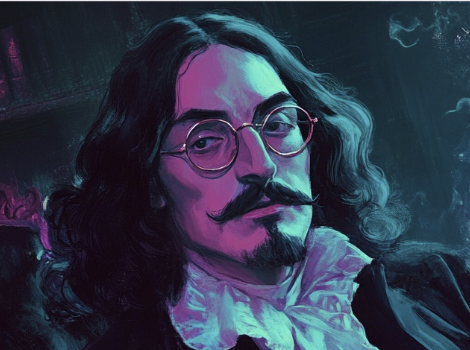
I should like you to consider that these functions (including passion, memory, and imagination) follow from the mere arrangement of the machine's organs every bit as naturally as the movements of a clock or other automaton follow from the arrangement of its counter-weights and wheels.
1 month 1 week ago
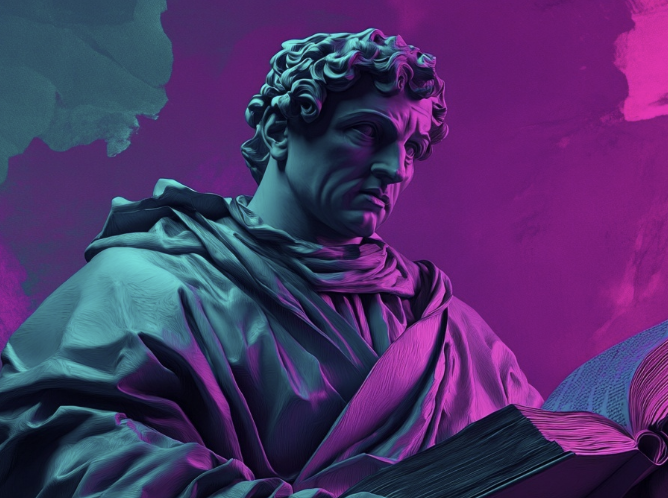
She is rightly called not only the mother of the man, but also the Mother of God ... It is certain that Mary is the Mother of the real and true God.
1 month 4 days ago
The truth remains that, after adolescence has begun, "words, words, words," must constitute a large part, and an always larger part as life advances, of what the human being has to learn.
CivilSimian.com created by AxiomaticPanic, CivilSimian, Kalokagathia