

7 months 1 week ago
We think in generalities, but we live in detail. To make the past live, we must perceive it in detail in addition to thinking of it in generalities.
▼
Source
source
"The Education of an Englishman" in The Atlantic Monthly, Vol. 138 (1926), p. 192.

8 months 2 weeks ago
We are but numbers, born to consume resources.
▼
Source
source
Book I, epistle ii, line 27

4 months 3 weeks ago
Love the little trade which thou hast learned, and be content therewith.
▼
Source
source
IV, 31
7 months 6 days ago
We say that someone occupies an official position, whereas it is the official position that occupies him.
▼
Source
source
F 47


7 months 3 weeks ago
I know every numbskull will babble on about "black man," "maneater," "chance," and "retrospective interpretation," in order to banish something terribly inconvenient that might sully the familiar picture of childhood innocence. Ah, these good, efficient, healthy-minded people, they always remind me of those optimistic tadpoles who bask in a puddle in the sun, in the shallowest of waters, crowding together and amiably wriggling their tails, totally unaware that the next morning the puddle will have dried up and left them stranded. On a phallic dream he had as a young child.
▼
Source
source
p. 14


8 months 3 weeks ago
In its widest possible sense, however, a man's Self is the sum total of all that he can call his, not only his body and his psychic powers, but his clothes and his house, his wife and children, his ancestors and friends, his reputation and works, his lands and horses, and yacht and bank-account. All these things give him the same emotions. If they wax and prosper, he feels triumphant; if they dwindle and die away, he feels cast down.
▼
Source
source
Ch. 10

9 months 1 week ago
Christ's whole body groans in pain. Until the end of the world, when pain will pass away, this man groans and cries to God. And each one of us has part in the cry of that whole body. Thou didst cry out in thy day, and thy days have passed away; another took thy place and cried out in his day. Thou here, he there, and another there. The body of Christ ceases not to cry out all the day, one member replacing the other whose voice is hushed. Thus there is but one man who reaches unto the end of time, and those that cry are always His members.
▼
Source
source
p.423

8 months 3 weeks ago
Opinion is like a pendulum and obeys the same law. If it goes past the centre of gravity on one side, it must go a like distance on the other; and it is only after a certain time that it finds the true point at which it can remain at rest.
▼
Source
source
Vol. 2 "Further Psychological Observations" as translated in Essays and Aphorisms (1970), as translated by R. J. Hollingdale

8 months 4 weeks ago
The christian religion is a parody on the worship of the Sun, in which they put a man whom they call Christ, in the place of the Sun, and pay him the same adoration which was originally paid to the Sun.
▼
Source
source
An Essay on the Origin of Free-Masonry (1803-1805); found in manuscript form after Paine's death and thought to have been written for an intended part III of The Age of Reason. It was partially published in 1810 and published in its entirety in 1818.

8 months 3 weeks ago
From another side: is Achilles possible with powder and lead? Or the Iliad with the printing press, not to mention the printing machine? Do not the song and saga of the muse necessarily come to an end with the printer's bar, hence do not the necessary conditions of epic poetry vanish?
▼
Source
source
Introduction, p. 31.
8 months 4 weeks ago
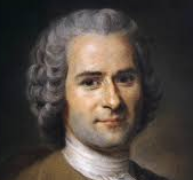
As a general rule-never substitute the symbol for the thing signified, unless it is impossible to show the thing itself; for the child's attention is so taken up with the symbol that he will forget what it signifies.

7 months 1 week ago
Feminism in the United States has never emerged from the women who are most victimized by sexist oppression; women who are daily beaten down, mentally, physically, and spiritually-women who are powerless to change their condition in life. They are a silent majority. A mark of their victimization is that they accept their lot in life without visible question, without organized protest, without collective anger or rage.
▼
Source
source
p. 1.
7 months 2 weeks ago
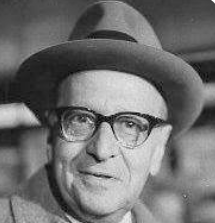
Although the formulations of science now offer the most advanced knowledge of nature, men continue to use obsolete forms of thought long discarded by scientific theory. In so far as these obsolete forms are superfluous for science, the fact that they persist violated the principle of the economy of thought, that characteristic trait of the bourgeois temper.
▼
Source
source
p. 133.

9 months ago
Human infirmity in moderating and checking the emotions I name bondage: for, when a man is a prey to his emotions, he is not his own master, but lies at the mercy of fortune: so much so, that he is often compelled, while seeing that which is better for him, to follow that which is worse.
▼
Source
source
Part IV, Preface; translation by R. H. M. Elwes
7 months 1 week ago
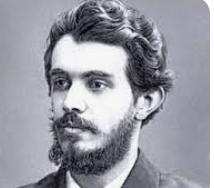
We used to pay too little attention to utopias, or even disregard them altogether, saying with regret they were impossible of realisation. Now indeed they seem to be able to be brought about far more easily than we supposed, and we are actually faced by an agonising problem of quite another kind: how can we prevent their final realisation? ... Utopias are more realisable than those 'realist politics' that are only the carefully calculated policies of office-holders, and towards utopias we are moving. But it is possible that a new age is already beginning, in which cultured and intelligent people will dream of ways to avoid ideal states and to get back to a society that is less 'perfect' and more free.
▼
Source
source
pp. 187-188. Aldous Huxley used this passage (in French translation) as the epigraph to Brave New World.

9 months 4 days ago
I find that the best virtue I have has in it some tincture of vice.
▼
Source
source
Book II, Ch. 20. That we taste nothing pure
5 months 2 weeks ago
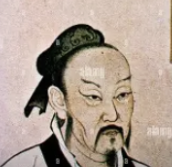
The principles of great men illuminate the universe.
▼
Source
source
Discipline and Character, no. 50
9 months 3 weeks ago
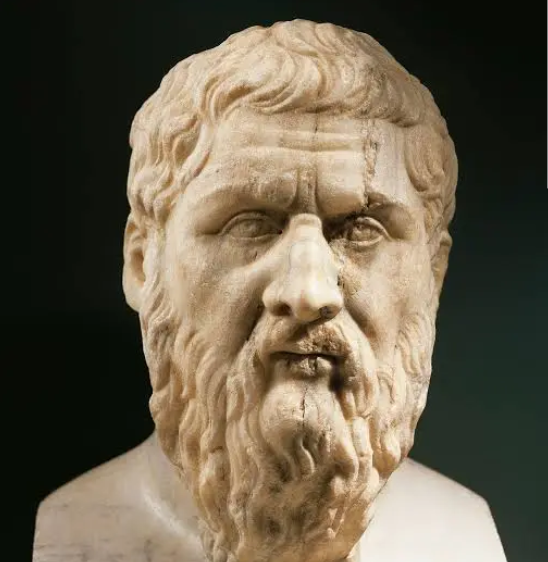
Law could never, by determining exactly what is noblest and must just for one and all, enjoin upon them that which is best; for the differences of men and of actions and the fact that nothing, I may say, in human life is ever at rest, forbid any science whatsoever to promulgate any simple rule for everything and for all time. So, that which is persistently simple is inapplicable to things which are never simple.
4 months 3 weeks ago
There are three relations [between thee and other things]: the one to the body which surrounds thee; the second to the divine cause from which all things come to all; and the third to those who live with thee.
▼
Source
source
VIII, 27
9 months 2 weeks ago
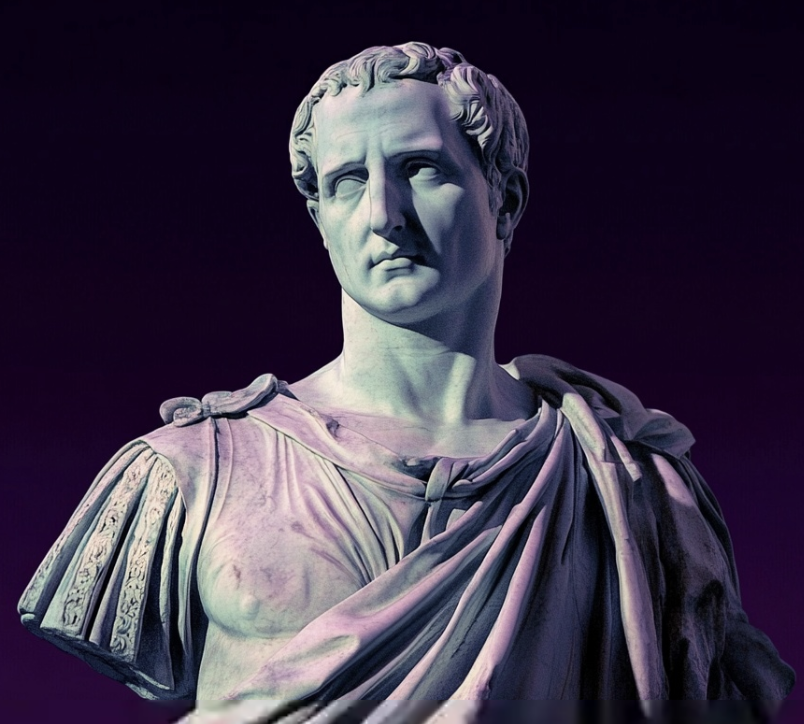
If you have a garden and a library, you have everything you need.
▼
Source
source
To Varro, in Ad Familiares IX, 4

7 months 3 weeks ago
A good man with a good conscience doesn't walk so fast.
▼
Source
source
Scene X.

6 months 3 weeks ago
The new media are not bridges between man and nature: they are nature.
▼
Source
source
(p. 14)
6 months 2 weeks ago
One naturally regrets not being an expert or one of those insiders who thoroughly understand. It's hell to be an amateur. A little reflection calms your sorrow, however. The experts in their own little speedboat, the rest of us floating with the rest of mankind in a great barge - that is the picture.
▼
Source
source
The Day They Signed the Treaty (1979), p. 224

7 months 1 week ago
Rome is the Great Beast of atheism and materialism, adoring nothing but itself. Israel is the Great Beast of religion. Neither one nor the other is likable. The Great Beast is always repulsive.
▼
Source
source
p. 123


4 months 3 weeks ago
The most insistent and formidable concern of agriculture, wherever it is taken seriously, is the distinct individuality of every farm, every field on every farm, every farm family, and every creature on every farm.
▼
Source
source
Imagination in Place

5 months 4 days ago
A mellow understanding of life and of human nature is, and always has been, the Chinese ideal of character, and from that understanding other qualities are derived, such as pacifism, contentment, calm and strength of endurance which distinguish the Chinese character.
▼
Source
source
p. 43

7 months 1 week ago
Like monarchy, monotheism had a martial origin. "It is only on the march and it time of war," says Robertson Smith in The Prophets of Israel, "that a nomad people feels any urgent need of a central authority, and so it came about that in the first beginnings of national organization, centering in the sanctuary of the ark, Israel was thought of mainly as a host of Jehovah. the very name of Israel is martial, and means 'God (El) fighteth,' and Jehovah in the Old Testament is Iahwé Cebāôth - the Jehovah of the armies of Israel. It was on the battlefield that Jehovah's presence was most clearly realized; but in primitive nations the leader in time of war is also the natural judge in time of peace."

8 months 3 weeks ago
Children are all foreigners.
▼
Source
source
September 25, 1839
5 months 1 week ago
Have the courage to be ignorant of a great number of things, in order to avoid the calamity of being ignorant of everything.
▼
Source
source
Lecture IX : On the Conduct of the Understanding

8 months 3 weeks ago
To be shaken out of the ruts of ordinary perception, to be shown for a few timeless hours the outer and inner world, not as they appear to an animal obsessed with survival or to a human being obsessed with words and notions, but as they are apprehended, directly and unconditionally, by Mind at Large - this is an experience of inestimable value to everyone and especially to the intellectual.

8 months 3 weeks ago
The process of being brought up, however well it is done, cannot fail to offend.
4 months 3 weeks ago
I'm not a Baptist in any formal way. I go to the Baptist church, where my wife plays the piano, on days of bad weather. On days of good weather, I ramble off into the woods somewhere. I am a person who takes the Gospel seriously, but I have had trouble conforming my thoughts to a denomination.
▼
Source
source
The Brian Lehrer Show
8 months 1 week ago
Anger begins in folly, and ends in repentance.
▼
Source
source
As quoted in Treasury of Thought: Forming an Encyclopædia of Quotations from Ancient and Modern Authors (1894) by Maturin Murray Ballou
7 months 1 week ago
Culture is an instrument wielded by professors to manufacture professors, who, when their turn comes, will manufacture professors.
▼
Source
source
The Need for Roots, part 2: Uprootedness, chapter 1: Uprootedness in the Towns

7 months 1 week ago
This perversion of the ethical values soon crystallized into the all-dominating slogan of the Communist Party: THE END JUSTIFIES ALL MEANS. Similarly in the past the Inquisition and the Jesuits adopted this motto and subordinated to it all morality. It avenged itself upon the Jesuits as it did upon the Russian Revolution. In the wake of this slogan followed lying, deceit, hypocrisy and treachery, murder, open and secret. It should be of utmost interest to students of social psychology that two movements as widely separated in time and ideas as Jesuitism and Bolshevism reached exactly similar results in the evolution of the principle that the end justifies all means. The historic parallel, almost entirely ignored so far, contains a most important lesson for all coming revolutions and for the whole future of mankind.
7 months 3 weeks ago
Life has always seemed to me like a plant that lives on its rhizome. Its true life is invisible, hidden in the rhizome. The part that appears above ground lasts only a single summer. What we see is the blossom, which passes. The rhizome remains. Closing lines of the preface
9 months 3 weeks ago
In memory yet green, in joy still felt, The scenes of life rise sharply into view. We triumph; Life's disasters are undealt, And while all else is old, the world is new.

5 months 2 weeks ago
He seldom or never spoke except actually to convey an idea. Measured by quantity of words, he was a talker of fully average copiousness; by extent of meaning communicated, he was the most copious I have listened to. How in few sentences he would sketch you off an entire biography, an entire object or transaction, keen, clear, rugged, genuine, completely rounded In! His words came direct from the heart by the inspiration of the moment.
8 months 2 weeks ago
When the individual finds in her conscience beliefs that are relevant to public policy but incapable of the defense on the basis of beliefs common to her fellow citizens, she must sacrifice her conscience on the altar of public expediency.
7 months 1 week ago
The blessing that the market does not ask about birth is paid for in the exchange society by the fact that the possibilities conferred by birth are molded to fit the production of goods that can be bought on the market.
▼
Source
source
E. Jephcott, trans., p. 9
9 months ago
To found a great empire for the sole purpose of raising up a people of customers, may at first appear a project fit only for a nation of shopkeepers. It is however, a project altogether unfit for a nation of shopkeepers; but extremely fit for a nation whose government is influenced by shopkeepers.
▼
Source
source
Chapter VII, Part Third, p. 667.
6 months 3 weeks ago
A man's reach must exceed his grasp or what's a metaphor?
▼
Source
source
(p.7) A play on the lines in Robert Browning's poem "Andrea del Sarto":Ah, but a man's reach should exceed his grasp, Or what's a heaven for?

8 months 3 weeks ago
He is dead, and my hatred has died with him.
▼
Source
source
Electra, before the dead Aegistheus, Act 2
8 months 1 week ago
Without Justice, no realm may prosper.
CivilSimian.com created by AxiomaticPanic, CivilSimian, Kalokagathia