


2 months 2 weeks ago
We dread the future only when we are not sure we can kill ourselves when we want to.

2 months 1 week ago
A precise language awaits a completed metaphysics.

4 months 2 weeks ago
The Path is not far from man. When men try to pursue a course, which is far from the common indications of consciousness, this course cannot be considered The Path.

2 weeks 1 day ago
No sadder proof can be given by a man of his own littleness than disbelief in great men.
2 months 1 week ago
But if Germany, thanks to Hitler and his successors, were to enslave the European nations and destroy most of the treasures of their past, future historians would certainly pronounce that she had civilized Europe.
▼
Source
source
p. 124
1 week 2 days ago
Every rock in the ocean where a cormorant can perch is occupied by our troops - has a governor, deputy-governor, storekeeper, and deputy-storekeeper - and will soon have an archdeacon and a bishop. Military colleges, with thirty-four professors, educating seventeen ensigns per annum, being half an ensign for each professor, with every species of nonsense, athletic, sartorial, and plumigerous.
▼
Source
source
Catholics, published in The Edinburgh Review (1827). See The Works of the Rev. Sydney Smith. 2. 1859. p. 123.

2 months 2 weeks ago
People will become faint out of fear and expectation of the things coming upon the inhabited earth, for the powers of the heavens will be shaken. And then they will see the Son of man coming in a cloud with power and great glory.
▼
Source
source
21:26-27, NWT

4 months 3 weeks ago
Predicting the future is a hopeless, thankless task, with ridicule to begin with and, all too often, scorn to end with.

2 months 1 week ago
What excited me was the recognition that this was simply another version of the problem that had obsessed me all of my life -- the problem of those moments when life seems entirely delightful, when we experience a sensation of what G.K. Chesterton called "absurd good news." Life normally strikes most of us as hard, dull and unsatisfying; but in these moments, consciousness seems to glow and expand, and all the contradictions seem to be resolved. Which of the two visions is true? My own reflections had led me to conclude that the vision of "absurd good news" is somehow broader and more comprehensive than the feeling that life is dull, boring and meaningless. Boredom is basically a feeling of narrowness, and surely a narrow vision is bound to be less true than a broad one?
▼
Source
source
p. 16

4 months 3 weeks ago
Idleness is only fatal to the mediocre.

4 months 1 week ago
Know, first, who you are, and then adorn yourself accordingly.
▼
Source
source
Book III, ch. 1, 25.

2 months 3 weeks ago
Denotation by means of sounds and markings is a remarkable abstraction. Three letters designate God for me; several lines a million things. How easy becomes the manipulation of the universe here, how evident the concentration of the intellectual world! Language is the dynamics of the spiritual realm. One word of command moves armies; the word Liberty entire nations.
▼
Source
source
Fragment No. 2
2 months 1 week ago
They certainly demonstrate that Seth, whether an aspect of Jane Robert's unconscious mind or a genuine "spirit," was of a high level of intelligence. Yet when Jane Roberts produced a book that purported to be the after-death journal of the philosopher William James, it was difficult to take it seriously. James's works are noted for their vigour and clarity of style; Jane Robert's "communicator" writes like an undergraduate . . . there is a clumsiness here that is quite unlike James's swift-moving, colloquial prose.
▼
Source
source
p. 390

3 months 3 weeks ago
The Hindoos are most serenely and thoughtfully religious than the Hebrews. They have perhaps a purer, more independent and impersonal knowledge of God. Their religious books describe the first inquisitive and contemplative access to God; the Hebrew bible a conscientious return, a grosser and more personal repentance. Repentance is not a free and fair highway to God. A wise man will dispense with repentance. It is shocking and passionate. God prefers that you approach him thoughtful, not penitent, though you are chief of sinners. It is only by forgetting yourself that you draw near to him. The calmness and gentleness with which the Hindoo philosophers approach and discourse on forbidden themes is admirable. In 1853.
▼
Source
source
A Tribute to Hinduism, 2008

3 months 4 weeks ago
Art may make a suit of clothes; but nature must produce a man.
▼
Source
source
Part I, Essay 15: The Epicurean

2 weeks 6 days ago
Reality and history, however, are not dialectical, and no idealist rhetorical gymnastics can make them conform to the dialect.
▼
Source
source
131

2 months 1 week ago
Nothing would prove more disastrous to our ideas, we contended, than to neglect the effect of the internal upon the external, of the psychological motives and needs upon existing institutions.
▼
Source
source
(p. 402)
3 months 3 weeks ago
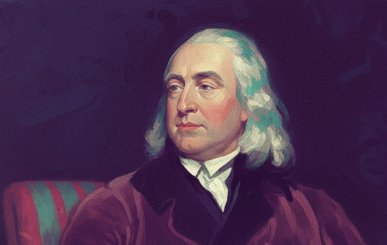
Nature has placed mankind under the governance of two sovereign masters, pain and pleasure. It is for them alone to point out what we ought to do, as well as to determine what we shall do. On the one hand the standard of right and wrong, on the other the chain of causes and effects, are fastened to their throne. They govern us in all we do, in all we say, in all we think: every effort we can make to throw off our subjection, will serve but to demonstrate and confirm it. In words a man may pretend to abjure their empire: but in reality he will remain subject to it all the while. The principle of utility recognizes this subjection, and assumes it for the foundation of that system, the object of which is to rear the fabric of felicity by the hands of reason and of law. Systems which attempt to question it, deal in sounds instead of sense, in caprice instead of reason, in darkness instead of light.
▼
Source
source
Ch. 1: Of the Principle of Utility
3 months 3 weeks ago
It would be worthy of the age to print together the collected Scriptures or Sacred Writings of the several nations, the Chinese, the Hindus, the Persians, the Hebrews, and others, as the Scripture of mankind. The New Testament is still, perhaps, too much on the lips and in the hearts of men to be called a Scripture in this sense. Such a juxtaposition and comparison might help to liberalize the faith of men. This is a work which Time will surely edit, reserved to crown the labors of the printing-press. This would be the Bible, or Book of Books, which let the missionaries carry to the uttermost parts of the earth.
2 months 3 weeks ago
The nature of the Absolute State consists herein, -that all individual powers be directed towards the Life of the Race,-in place of which Race, the State puts the aggregate of its own Citizens. It therefore becomes necessary, first, that all Individuals, without exception, should be taken into equal consideration by the State; and second, that every Individual, with all his individual powers, without exception or reserve, should be taken into equal consideration. In a State so constituted, where all, as Individuals, are dedicated to the Race, it follows at the same time, that all without exception, with all the Rights which belong to them as component parts of the Race, are dedicated to all the other individual members of the State.
▼
Source
source
p. 150-151

4 months 1 week ago
So potent was Religion in persuading to do wrong.
▼
Source
source
Book I, line 101 (tr. Alicia Stallings) H. A. J. Munro's translation: So great the evils to which religion could prompt! W. H. D. Rouse's translation: So potent was Superstition in persuading to evil deeds.

2 months 4 days ago
Doubt must be no more than vigilance, otherwise it can become dangerous.
▼
Source
source
F 53

3 months 3 weeks ago
Love is of all the passions the strongest, for it attacks simultaneously the head, the heart, and the body.
▼
Source
source
Le Dernier Volume Des Œuvres De Voltaire: Contes - Comédie - Pensées - Poésies - Lettres, 1862

4 months 2 weeks ago
Of all the means which wisdom acquires to ensure happiness throughout the whole of life, by far the most important is friendship.

4 months 3 days ago
The most disadvantageous peace is better than the most just war.
▼
Source
source
Adagia, 1508

3 months 3 weeks ago
It's not the experience that happens to you: it's what you do with the experience that happens to you.
▼
Source
source
Attributed to Russell in Slaby's Sixty Ways to Make Stress Work for You, 1987

3 months 3 weeks ago
Looking for God-or Heaven-by exploring space is like reading or seeing all Shakespeare's plays in the hope that you will find Shakespeare as one of the characters or Stratford as one of the places. Shakespeare is in one sense present at every moment in every play.
▼
Source
source
"The Seeing Eye", in Christian Reflections (1967), p. 167

3 months 3 weeks ago
Virtue is a state of war, and to live in it means one always has some battle to wage against oneself.
▼
Source
source
Julie ou la Nouvelle Héloïse (French), Sixième partie, Lettre VII Réponse (1761) Julie, or The New Heloise (English), Part Six, Letter VII Response, pg 560
2 months 2 weeks ago
Man must not only make himself: the weightiest thing he has to do is to determine what he is going to be. He is causa sui to the second power.
▼
Source
source
As quoted in Existentialism from Dostoevsky to Sartre, p. 155
2 months 4 days ago
One of the principal motifs of Nietzsche's work is that Kant had not carried out a true critique because he was not able to pose the problem of critique in terms of values.
▼
Source
source
p. 1
3 months 3 weeks ago
Every philosophical problem, when it is subjected to the necessary analysis and justification, is found either to be not really philosophical at all, or else to be, in the sense in which we are using the word, logical.
▼
Source
source
p. 33

1 month 3 weeks ago
I neither approve nor disapprove. I merely try to understand. Sexual freedom is as natural to newly tribalized youth as drugs.
3 months 2 weeks ago
May we be those who shall heal this world.
▼
Source
source
Yasna 30,9
4 weeks ago
Our principles fix what our life stands for, our aims create the light our life is bathed in, and our rationality, both individual and coordinate, defines and symbolizes the distance we have come from mere animality. It is by these means that our lives come to more than what they instrumentally yield. And by meaning more, our lives yield more.
▼
Source
source
The Nature of Rationality (1993), Ch. V : Instrumental Rationality and Its Limits; Rationality's Imagination, p. 181
1 month 3 weeks ago
In Catch-22, the figure of the black market and the ground of war merge into a monster presided over by the syndicate. When war and market merge, all money transactions begin to drip blood.
▼
Source
source
(p. 211)
1 week 3 days ago
Criticism actually says: You must free your I so completely from all limitations that it becomes a human I. I say: Free yourself as far as you can, and you have done your part; because it is not given to everyone to break through all limits, or, more eloquently: that is not a limit for everyone which is one to the others. Consequently, don't exhaust yourself on the limits of others; it's enough if you tear down your own. Who has ever been able to break down even one limit for all people? Aren't countless people today, as at all times, running around with all the "limitations of humanity"? One who overturns one of his limits may have shown others the way and the means; the overturning of their limits remains their affair.
▼
Source
source
Landstreicher 2017, p. 97
4 months 1 week ago
Christ is not valued at all unless He be valued above all.
▼
Source
source
p. 395

1 month 3 weeks ago
By words one transmits thoughts to another, by means of art, one transmits feelings.

2 weeks 5 days ago
The Left's identity politics poses a threat to free speech and to the kind of rational discourse needed to sustain a democracy... The focus on lived experience by identity groups prioritizes the emotional world of the inner self over the rational examination of issues in the outside world and privileges sincerely held opinions over a process of reasoned deliberation that may force one to abandon prior opinions.
▼
Source
source
Against Identity Politics (14 August 2018), Foreign Affairs

2 months 1 week ago
The devil is an angel too.
▼
Source
source
[Three Exemplary Novels and a Prologue] (1920); Two Mothers

4 months 3 weeks ago
It seems to be my destiny to discourse on truth, insofar as I discover it, in such a way that all possible authority is simultaneously demolished. Since I am incompetent and extremely undependable in men's eyes, I speak the truth and thereby place them in the contradiction from which they can be extricated only by appropriating the truth themselves. A man's personality is matured only when he appropriates the truth, whether it is spoken by Balaam's ass or a sniggering wag or an apostle or an angel.

3 months 3 weeks ago
Compassion for animals is intimately connected with goodness of character, and it may be confidently asserted that he, who is cruel to living creatures, cannot be a good man. Moreover, this compassion manifestly flows from the same source whence arise the virtues of justice and loving-kindness towards men.
▼
Source
source
Part III, Ch. VIII, 7, p. 223
3 months 1 week ago
Lamachus chid a captain for a fault; and when he had said he would do so no more, "Sir," said he, "in war there is no room for a second miscarriage." Said one to Iphicrates, "What are ye afraid of?" "Of all speeches," said he, "none is so dishonourable for a general as 'I should not have thought of it.'"
▼
Source
source
52 Iphicrates
3 months 2 weeks ago
I shall develop the thesis that anyone acting communicatively must, in performing any speech act, raise universal validity claims and suppose that they can be vindicated.
▼
Source
source
p. 22
3 months 1 week ago
Lysander said, "Where the lion's skin will not reach, it must be pieced with the fox's."
▼
Source
source
60 Lysander
CivilSimian.com created by AxiomaticPanic, CivilSimian, Kalokagathia