


3 months 3 weeks ago
What cannot be imagined cannot even be talked about.
▼
Source
source
Journal entry (12 October 1916), p. 84e

4 months 3 days ago
Reason is the greatest enemy that faith has: it never comes to the aid of spiritual things, but--more frequently than not--struggles against the divine Word, treating with contempt all that emanates from God.
▼
Source
source
353
3 months 4 weeks ago
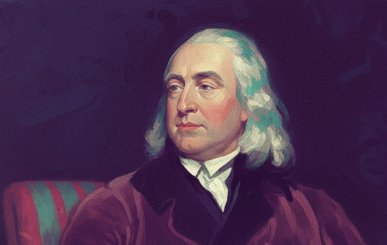
Nature has placed mankind under the governance of two sovereign masters, pain and pleasure. It is for them alone to point out what we ought to do, as well as to determine what we shall do. On the one hand the standard of right and wrong, on the other the chain of causes and effects, are fastened to their throne. They govern us in all we do, in all we say, in all we think: every effort we can make to throw off our subjection, will serve but to demonstrate and confirm it. In words a man may pretend to abjure their empire: but in reality he will remain subject to it all the while. The principle of utility recognizes this subjection, and assumes it for the foundation of that system, the object of which is to rear the fabric of felicity by the hands of reason and of law. Systems which attempt to question it, deal in sounds instead of sense, in caprice instead of reason, in darkness instead of light.
▼
Source
source
Ch. 1: Of the Principle of Utility

4 months 3 days ago
There are some defeats more triumphant than victories.
▼
Source
source
Ch. 30. Of Cannibals, tr. Cotton, rev. W. Hazlitt, 1842

4 months 4 weeks ago
I now myself live, in every detail, striving for wisdom, while I formerly merely worshipped and idolized the wise.

3 months 2 weeks ago
In its most general form, confinement was explained, or at least justified, by a will to avoid scandal. It thereby signalled an important change in the consciousness of evil. The Renaissance had let unreason in all its forms come out into the light of day, as public exposure gave evil the chance to redeem itself and to serve as an exemplum.
▼
Source
source
Part One: 5. The Insane

8 months 1 day ago
What is at stake here is precisely the problem of the fulfillment of desire: when we encounter in reality an object which has all the properties of the fantasized object of desire, we are nevertheless necessarily somewhat disappointed; we experience a certain this is not it; it becomes evident that the finally found real object is not the reference of desire even though it possesses all the required properties.

4 months 3 weeks ago
Victories over ingrained patterns of thought are not won in a day or a year.

3 months ago
The last thing abandoned by a party is its phraseology, because among political parties, as elsewhere, the vulgar make the language, and the vulgar abandon more easily the ideas that have been instilled into it than the words that it has learnt. France Before The Consulate, Chapter I: "How the Republic was ready to accept a master", in Memoir, Letters, and Remains, Vol I (1862), p. 266 Variant translation: The last thing a political party gives up is its vocabulary. This is because, in party politics as in other matters, it is the crowd who dictates the language, and the crowd relinquishes the ideas it has been given more readily than the words it has learned.
▼
Source
source
As quoted in The Viking book of Aphorisms : A Personal Selection (1962) by W. H. Auden, and Louis Kronenberger, p. 306. Variant translation: The last thing that a party abandons is its language.

2 months 3 weeks ago
You may have made a Revolution, but not a Reformation. You may have subverted Monarchy, but not recover'd freedom.
▼
Source
source
Letter to Charles-Jean-François Depont (November 1789), quoted in Alfred Cobban and Robert A. Smith (eds.), The Correspondence of Edmund Burke, Volume VI: July 1789-December 1791 (1967), p. 46

4 months 3 weeks ago
It is the mark of an educated mind to be able to entertain a thought without accepting it.
4 months 4 weeks ago
He who is punished is never he who performed the deed. He is always the scapegoat.

2 months 2 weeks ago
Suffer little children, and forbid them not, to come unto me: for of such is the kingdom of heaven. Verily I say unto you, Whosoever shall not receive the kingdom of God as a little child shall in no wise enter therein.
▼
Source
source
18:16-17 (KJV) Variant translation: Let the little children come to me, and do not hinder them, for the kingdom of God belongs to such as these. I tell you the truth, anyone who will not receive the kingdom of God like a little child will never enter it.

2 months 3 weeks ago
Old age, after all, is merely the punishment for having lived.

3 months 3 weeks ago
You can't get a cup of tea large enough or a book long enough to suit me.
▼
Source
source
As quoted in Of This and Other Worlds (1982) by Walter Hooper, Preface, p. 9
3 months 3 weeks ago
A proposition is completely logically analyzed if its grammar is made completely clear: no matter what idiom it may be written or expressed in...
▼
Source
source
Philosophical Remarks (1930), Part I (1)

3 months 2 weeks ago
Nevertheless, among all the temptations I will have to resist today. There would be the temptation of memory: to recount what was for me, and for those of my generation who shared it during a whole lifetime. The experience of Marxism. The quasi-paternal figure of Marx, the way it fought in us with other filiations, the reading of texts and the interpretation of a world in which the Marxist inheritance was-and still remains, and so it will remain-absolutely and thoroughly determinate. One need not be a Marxist or a communist in order to accept this obvious fact. We all live in a world, some would say a culture, that still bears, at an incalculable depth, the mark of this inheritance, whether in a directly visible fashion or not.
▼
Source
source
Injunctions of Marx

3 months 3 weeks ago
Modern physics... reduces matter to a set of events which proceed outward from a centre. If there is something further in the centre itself, we cannot know about it, and it is irrelevant to physics.
▼
Source
source
An Outline of Philosophy Ch.15 The Nature of our Knowledge of Physics, 1927
3 months 3 weeks ago
What should we gain by a definition, as it can only lead us to other undefined terms?
▼
Source
source
p. 26
3 months 3 weeks ago
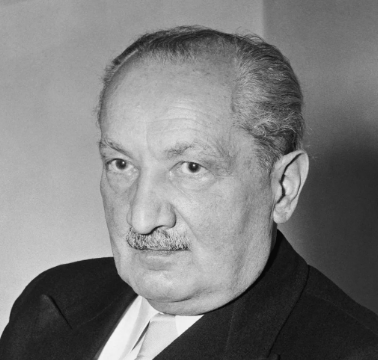
We do not "have" a body; rather, we "are" bodily.
▼
Source
source
p. 99

3 months 3 weeks ago
Define your terms, you will permit me again to say, or we shall never understand one another.
▼
Source
source
"Miracles", 1764
3 months 3 weeks ago
There are two equal and opposite errors into which our race can fall about the devils. One is to disbelieve in their existence. The other is to believe, and to feel an excessive and unhealthy interest in them. They themselves are equally pleased by both errors and hail a materialist or a magician with the same delight.
▼
Source
source
Preface

2 months ago
There is one ethical principle, either you are preserving life generally, or you aren't. Preserving life in your ends and your means determines whether you are good or evil.


3 months 3 weeks ago
Inuring children gently to suffer some degrees of pain without shrinking, is a way to gain firmness to their minds, and lay a foundation for courage and resolution in the future part of their lives.
▼
Source
source
Sec. 115
4 months 3 weeks ago
We can hope that the ways of peace will attract the Arabic nations, for their territory and opportunities are broad enough for immeasurable advance, if the energies vented in spleen, are turned instead to a modernisation of the technology, a restoration of the soil, and a renovation of the economic, social, and political structure of those great and venerable lands.

4 months 3 weeks ago
In that daily effort in which intelligence and passion mingle and delight each other, the absurd man discovers a discipline that will make up the greatest of his strengths. The required diligence and doggedness and lucidity thus resemble the conqueror's attitude. To create is likewise to give a shape to one's fate. For all these characters, their work defines them at least as much as it is defined by them. The actor taught us this: There is no frontier between being and appearing.
3 months 3 weeks ago
Whensoever therefore the legislative shall transgress this fundamental rule of society; and either by ambition, fear, folly or corruption, endeavour to grasp themselves, or put into the hands of any other, an absolute power over the lives, liberties, and estates of the people; by this breach of trust they forfeit the power the people had put into their hands for quite contrary ends, and it devolves to the people, who have a right to resume their original liberty, and, by the establishment of a new legislative, (such as they shall think fit) provide for their own safety and security, which is the end for which they are in society.
▼
Source
source
Second Treatise of Civil Government, Ch. XIX, sec. 222
3 months 3 weeks ago
A great myth is relevant as long as the predicament of humanity lasts; as long as humanity lasts. It will always work, on those who can receive it, the same catharsis.
▼
Source
source
"Haggard Rides Again", in Time and Tide, Vol. XLI, 9/3/1960

4 months 1 week ago
These two states which it is necessary to know together in order to see the whole truth, being known separately, lead necessarily to one of these two vices, pride or indolence, in which all men are invariably led before grace, since if they do not remain in their disorders through laxity, they forsake them through vanity, so true is that which you have just repeated to me from St. Augustine, and which I find to a great extent; for in fact homage is rendered to them in many ways.

1 month 5 days ago
We should always speak what would please the man of whom we expect a favour, like the hunter who sings sweetly when he desires to shoot a deer.

3 months 2 weeks ago
The right-minded man, ever inclined to righteous and lawful deeds, is joyous day and night, and strong, and free from care. But if a man take no heed of the right, and leave undone the things he ought to do, then will the recollection of no one of all his transgressions bring him any joy, but only anxiety and self-reproaching.

2 months 1 week ago
Upper middle-class upbringing has rooted out any element of what might appear to be self-assertion or egoism; good manners is to be like everyone else. So the male of the species becomes accustomed to suppress any stirring of impatience or originality. Shaw once said you can't learn to skate without making a fool of yourself; the British middle-class attitude seems to be that, in that case, you hadn't better skate at all. The result seems to be considerably more oppressive than being brought up in a Jewish ghetto or a west side slum.
▼
Source
source
p. 112, An integrity born of hope: Notes on Christopher Isherwood
1 month 3 weeks ago
All who have meant good work with their whole hearts, have done good work, although they may die before they have the time to sign it. Every heart that has beat strong and cheerfully has left a hopeful impulse behind it in the world, and bettered the tradition of mankind. And even if death catch people, like an open pitfall, and in mid-career, laying out vast projects, and planning monstrous foundations, flushed with hope, and their mouths full of boastful language, they should be at once tripped up and silenced: is there not something brave and spirited in such a termination? and does not life go down with a better grace, foaming in full body over a precipice, than miserably straggling to an end in sandy deltas?
▼
Source
source
316
2 months 2 weeks ago
True poetry is a function of awakening. It awakens us, but it must retain the memory of previous dreams.
▼
Source
source
Introduction

2 weeks 2 days ago
This poor amphibious Pope too gives loaves to the Poor; has in him more good latent than he is himself aware of. His poor Jesuits, in the late Italian Cholera, were, with a few German Doctors, the only creatures whom dastard terror had not driven mad: they descended fearless into all gulfs and bedlams; watched over the pillow of the dying, with help, with counsel and hope; shone as luminous fixed stars, when all else had gone out in chaotic night: honour to them!

3 months 3 weeks ago
I have learned to seek my happiness by limiting my desires, rather than in attempting to satisfy them.
▼
Source
source
Attributed to John Stuart Mill in The Phrenological Journal and Science of Health, Vol. LXXXV (September 1887), p. 170

1 week 3 days ago
Friendship is always helpful, but love sometimes even does harm
3 months ago
I know of no country in which there is so little independence of mind and real freedom of discussion as in America.
▼
Source
source
Chapter XV.
1 week 3 days ago
Remember, however, before all else, to strip things of all that disturbs and confuses, and to see what each is at bottom; you will then comprehend that they contain nothing fearful except the actual fear.
▼
Source
source
Line 12
3 months 3 weeks ago
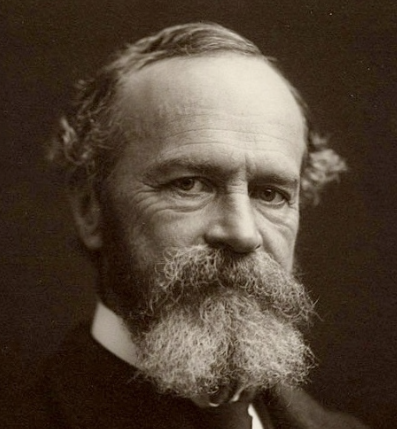
It would seem that common sense and reason ought to find a way to reach agreement in every conflict of honest interests. I myself think it our bounden duty to believe in such international rationality as possible. But, as things stand, I see how desperately hard it is to bring the peace-party and the war-party together, and I believe that the difficulty is due to certain deficiencies in the program of pacifism which set the military imagination strongly, and to a certain extent justifiably, against it. In the whole discussion both sides are on imaginative and sentimental ground. It is but one utopia against another, and everything one says must be abstract and hypothetical.
2 weeks 2 days ago
Nay, am not I also the humble James Carlyle's work? I owe him much more than existence, I owe him a noble inspiring example (now that I can read it in that rustic character). It was he exclusively that determined on educating me; that from his small hard-earned funds sent me to school and college, and made me whatever I am or may become. Let me not mourn for my father, let me do worthily of him. So shall he still live even here in me, and his worth plant itself honorably forth into new generations.

3 months 4 weeks ago
I shall need only myself to be happy.
▼
Source
source
As quoted in The prophetic voice, 1758-1778 by Lester G. Crocke, p. 148.

4 days ago
Zeal to do all that is in one's power is, in truth, a proof of piety.
▼
Source
source
Fragment of a Letter to a Priest
1 month 4 weeks ago
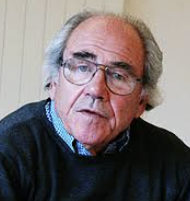
Such would be the successive phases of the image:it is the reflection of a profound reality;it masks and denatures a profound reality;it masks the absence of a profound reality;it has no relation to any reality whatsoever: it is its own pure simulacrum.In the first case, the image is a good appearance-representation is of the sacramental order. In the second, it is an evil appearance-it is of the order of maleficence. In the third, it plays at being an appearance-it is of the order of sorcery. In the fourth, it is no longer of the order of appearances, but of simulation.
3 months 3 weeks ago
We love those who hate our enemies, and if we had no enemies there would be very few people whom we should love. All this, however, is only true so long as we are concerned solely with attitudes towards other human beings. You might regard the soil as your enemy because it yields reluctantly a niggardly subsistence. You might regard Mother Nature in general as your enemy, and envisage human life as a struggle to get the better of Mother Nature. If men viewed life in this way, cooperation of the whole human race would become easy. And men could easily be brought to view life in this way if schools, newspapers, and politicians devoted themselves to this end. But schools are out to teach patriotism; newspapers are out to stir up excitement; and politicians are out to get re-elected. None of the three, therefore, can do anything towards saving the human race from reciprocal suicide.

1 month 3 weeks ago
The tribalizing power of the new electronic media, the way in which they return to us to the unified fields of the old oral cultures, to tribal cohesion and pre-individualist patterns of thought, is little understood. Tribalism is the sense of the deep bond of family, the closed society as the norm of community.
▼
Source
source
Tyuonyi, Volumes 1-2, 1985, p. 60
3 months 3 weeks ago
In my education, as in that of everyone, the moral influences, which are so much more important than all others, are also the most complicated, and the most difficult to specify with any approach to completeness.
▼
Source
source
(p. 38)

3 months 3 weeks ago
...the prisoner's dreams is the guard's spirituality.
▼
Source
source
p. 400
CivilSimian.com created by AxiomaticPanic, CivilSimian, Kalokagathia