

4 months 3 weeks ago
If one prefers to have little with blessing, to have truth with concern, to suffer instead of exulting over imagined victories, then one presumably will not be disposed to praise the knowledge, as if what it bestows were at all proportionate to the trouble it causes, although one would not therefore deny that through its pain it educates a person, if he is honest enough to want to be educated rather than to be deceived, out of the multiplicity to seek the one, out of abundance to seek the one thing needful, as this is plainly and simply offered precisely according to the need for it.

1 week 2 days ago
... the only contestant who can confidently enter the lists is the man who has seen his own blood, who has felt his teeth rattle beneath his opponent's fist, who has been tripped and felt the full force of his adversary's charge, who has been downed in body but not in spirit, one who, as often as he falls, rises again with greater defiance than ever.

2 months 2 weeks ago
The only subversive mind is the one that questions the obligation to exist; all the others, the anarchist at the top of the list, compromise with the established order.
1 month 3 weeks ago
Art is not, as the metaphysicians say, the manifestation of some mysterious Idea of beauty or God; it is not, as the aesthetical physiologists say, [play or] a game in which one releases surplus energy, ...not the production of pleasing objects, and is above all, not pleasure itself, but it is the means of union among mankind, joining them in the same feelings, and necessary for the life and progress toward the good of the individual and of humanity.


3 months 3 weeks ago
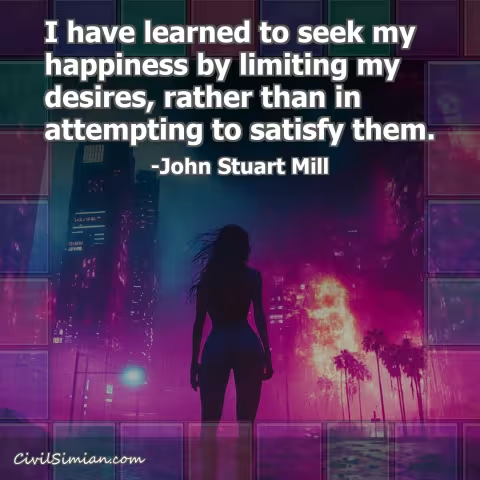
It is the character of the British people, or at least of the higher and middle classes who pass muster for the British people, that to induce them to approve of any change, it is necessary that they should look upon it as a middle course: they think every proposal extreme and violent unless they hear of some other proposal going still farther, upon which their antipathy to extreme views may discharge itself. So it proved in the present instance; my proposal was condemned, but any scheme for Irish Land reform, short of mine, came to be thought moderate by comparison.
▼
Source
source
(pp. 294-295)
1 month 2 weeks ago
For the first time in history, the human species as a whole has gone into politics. Everyone is in the act, and there is no telling what may come of it.
▼
Source
source
To Jerusalem and Back: A Personal Account (1976), p. 38

3 months 3 weeks ago
By quarrelling amongst themselves, instead of confederating, Germans and Scandinavians, both of them belonging to the same great race, only prepare the way for their hereditary enemy, the Slav.
▼
Source
source
The Eastern Question: A Reprint of Letters written 1853 -1856 dealing with the events of the Crimean War, edit., Eleanor Marx Aveling, London, Swan Sonnenschein & Co. (1897) p. 90
2 months 1 week ago
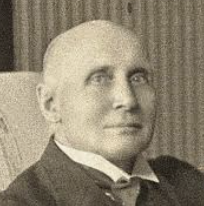
It is in literature that the concrete outlook of humanity receives its expression.
▼
Source
source
Ch. 5: "The Romantic Reaction", p. 106
3 months 1 week ago
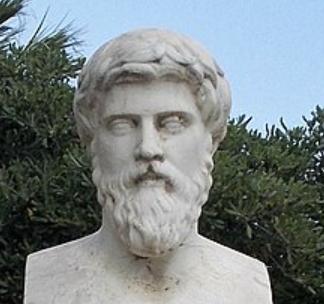
Be ruled by time, the wisest counsellor of all.
▼
Source
source
Pericles (Tr. Dryden and Clough)

2 months 1 week ago
What the sorrowful Jew of Amsterdam called the essence of a thing, the effort that it makes to persist indefinitely in its own being, self-love, the longing for immortality, is it not perhaps the primal and fundamental condition of all reflective or human knowledge? And is it not therefore the true base, the real starting-point, of all philosophy, although the philosophers, perverted by intellectualism, do not recognize it?

3 months 3 weeks ago
In all affairs - love, religion, politics, or business - it's a healthy idea, now and then, to hang a question mark on the things you have long taken for granted.
▼
Source
source
As quoted in The Reader's Digest, Vol. 37 (1940), p. 90; no specific source given.
4 months 3 weeks ago
Parmenides: If the one is not, nothing is. Then, and we may add, whether the one is or is not, the one and the others in relation to themselves and to each other all in every way are and are not and appear and do not appear.
3 months 2 weeks ago
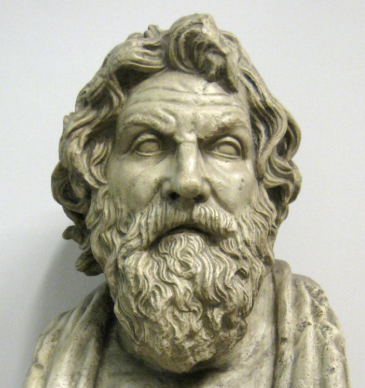
States are doomed when they are unable to distinguish good men from bad.
▼
Source
source
§ 5
2 months 2 weeks ago
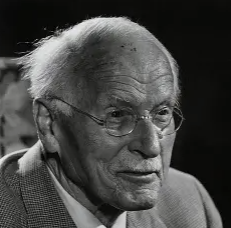
Unconscious assumptions or opinions are the worst enemy of woman; they can even grow into a positively demonic passion that exasperates and disgusts men, and does the woman herself the greatest injury by gradually smothering the charm and meaning of her femininity and driving it into the background. Such a development naturally ends in profound psychological disunion, in short, in a neurosis.
▼
Source
source
P.245
4 months 2 weeks ago
There is no mystery in humans creation. Will performs this miracle. But at least there is no true creation without a secret.
2 months 1 week ago
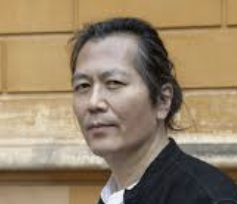
Eros, erotic desire, conquers depression. It delivers us from the inferno of the same to the utopia, indeed utopia, of the wholly other.

1 month 3 weeks ago
Relativity theory forced the abandonment, in principle, of absolute space and absolute time.
▼
Source
source
p. 43

3 months 4 weeks ago
When anyone tells me, that he saw a dead man restored to life, I immediately consider with myself, whether it be more probable, that this person should either deceive or be deceived, or that the fact, which he relates, should really have happened. I weigh the one miracle against the other; and according to the superiority, which I discover, I pronounce my decision, and always reject the greater miracle. If the falsehood of his testimony would be more miraculous, than the event which he relates; then, and not till then, can he pretend to command my belief or opinion.
▼
Source
source
Section 10 : Of Miracles Pt. 1

3 months 3 weeks ago
It is in vain to dream of a wildness distant from ourselves.
▼
Source
source
August 30, 1856
2 months 2 weeks ago
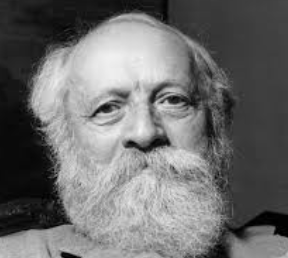
So long as a man's power, that is, his capacity to realize what he has in mind, is bound to the goal, to the work, to the calling, it is, considered in itself, neither good nor evil, it is only a suitable or unsuitable instrument. But as soon as this bond with the goal is broken off or loosened, and the man ceases to think of power as the capacity to do something, but thinks of it as a possession, that is, thinks of power in itself, then his power, being cut off and self-satisfied, is evil; it is power withdrawn from responsibility, power which betrays the spirit, power in itself.
▼
Source
source
p. 152

2 weeks 1 day ago
O reader, to what shifts is poor Society reduced, struggling to give still some account of herself, in epochs when Cash Payment has become the sole nexus of man to men!
▼
Source
source
Ch. 6, Laissez-Faire.
3 months 3 weeks ago
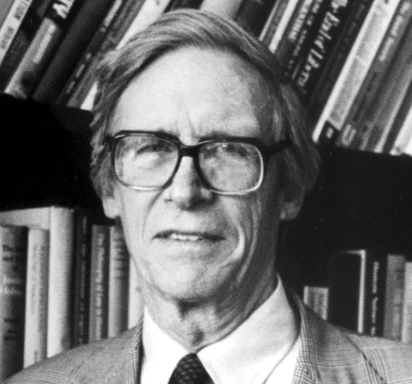
In justice as fairness society is interpreted as a cooperative venture for mutual advantage.
▼
Source
source
Chapter II, Section 14, pg. 84
2 months 2 days ago
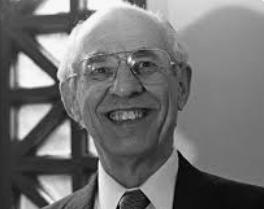
In short, analytic statements are statements which we all accept and for which we do not give reasons. This is what we mean when we say that they are true by 'implicit convention'. The problem is then to distinguish them from other statements that we accept, and do not give reasons for, in particular from the statements that we unreasonably accept. To resolve this difficulty, we have to point out some of the crucial distinguishing features of analytic statements (e.g. the fact that the subject concept is not a law-cluster concept), and we have to connect these features with what, in the preceding section, was called the 'rationale' of the analytic-synthetic distinction. Having done this, we can see that the acceptance of analytic statements is rational, even though there are no reasons (in the sense of' evidence') in connection with them.
▼
Source
source
The analytic and the synthetic

3 months 3 weeks ago
Respect the child. Be not too much his parent. Trespass not on his solitude.
▼
Source
source
Education

2 months 3 weeks ago
"War," says Machiavel, "ought to be the only study of a prince;" and by a prince he means every sort of state, however constituted. "He ought," says this great political doctor, "to consider peace only as a breathing-time, which gives him leisure to contrive, and furnishes ability to execute military plans." A meditation on the conduct of political societies made old Hobbes imagine that war was the state of nature.
3 months 3 weeks ago
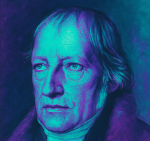
The external embodiment of an act is composed of many parts, and may be regarded as capable of being divided into an infinite number of particulars. An act may be looked on as in the first instance coming into contact with only one of these particulars. But the truth of the particular is the universal. A definite act is not confined in its content to one isolated point of the varied external world, but is universal, including these varied relations within itself. The purpose, which is the product of thought and embraces not the particular only but also the universal side, is intention.
▼
Source
source
Georg Wilhelm Friedrich Hegel, Philosophy of Right translated by SW Dyde Queen's University Canada 1896 p. 114-115
3 months 3 weeks ago
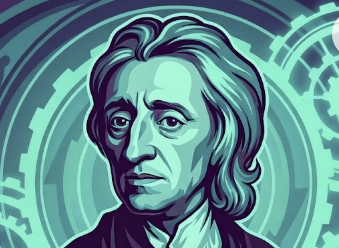
As to the having and possessing of things, teach them to part with what they have, easily and freely to their friends, and let them find by experience that the most liberal has always the most plenty, with esteem and commendation to boot, and they will quickly learn to practise it.
▼
Source
source
Sec. 110
4 months 3 weeks ago
There is but one truly serious philosophical problem and that is suicide. Judging whether life is or is not worth living amounts to answering the fundamental question of philosophy. All the rest, whether or not the world has three dimensions, whether the mind has nine or twelve categories comes afterwards. These are games; one must first answer. And if it is true, as Nietzsche claims, that a philosopher, to deserve our respect, must preach by example, you can appreciate the importance of that reply, for it will precede the definitive act. These are facts the heart can feel; yet they call for careful study before they become clear to the intellect. If I ask myself how to judge that this question is more urgent than that, I reply that one judges by the actions it entails. I have never seen anyone die for the ontological argument.
▼
Source
source
Absurdity and Suicide

2 months 4 weeks ago
Pursue Virtue virtuously.
▼
Source
source
These words also appear in Christian Morals, Part I, Section I
4 months 1 week ago
We are members of this Head, and this body cannot be decapitated. If the Head is in glory forever, so too are the members in glory forever, that Christ may be undivided forever.
▼
Source
source
p.433
2 months 3 weeks ago
When we speak of the commerce with our [American] colonies, fiction lags after truth, invention is unfruitful, and imagination cold and barren.
2 months 3 weeks ago
The pleasures of self-approbation, together with the right cultivation of all our pleasures, require individual independence. Without independence men cannot become either wise, or useful, or happy.
▼
Source
source
"Summary of Principles" 1.3
5 days ago
Running away from fear is fear; fighting pain is pain; trying to be brave is being scared. If the mind is in pain, the mind is pain. The thinker has no other form than his thought.

3 months 3 weeks ago
... the attempt to make heaven on earth invariably produces hell. It leads to intolerance. It leads to religious wars, and to the saving of souls through the inquisition. And it is, I believe, based on a complete misunderstanding of our moral duties. It is our duty to help those who need help; but it cannot be our duty to make others happy, since this does not depend on us, and since it would only too often mean intruding on the privacy of those towards whom we have such amiable intentions.
▼
Source
source
Vol. 2, Ch. 24 "Oracular Philosophy and the Revolt against Reason"
4 months 3 weeks ago
I don't believe in flying saucers... The energy requirements of interstellar travel are so great that it is inconceivable to me that any creatures piloting their ships across the vast depths of space would do so only in order to play games with us over a period of decades.
2 months 1 week ago
The first thing that we know about ourselves is our imperfection.
2 months 2 weeks ago
Every utopia about to be realized resembles a cynical dream.
1 month 1 week ago
A small beginning has led us to a great ending. If I were to put the bit of chalk with which we started into the hot but obscure flame of burning hydrogen, it would presently shine like the sun. It seems to me that this physical metamorphosis is no false image of what has been the result of our subjecting it to a jet of fervent, though nowise brilliant, thought to-night. It has become luminous, and its clear rays, penetrating the abyss of the remote past, have brought within our ken some stages of the evolution of the earth. And in the shifting "without haste, but without rest" of the land and sea, as in the endless variation of the forms assumed by living beings, we have observed nothing but the natural product of the forces originally possessed by the substance of the universe.
3 months 3 weeks ago
Of the evils most liable to attend on any sort of early proficiency, and which often fatally blights its promise, my father most anxiously guarded against. This was self-conceit. He kept me, with extreme vigilance, out of the way of hearing myself praised, or of being led to make self-flattering comparisons between myself and others. From his own intercourse with me I could derive none but a very humble opinion of myself; and the standard of comparison he always held up to me, was not what other people did, but what a man could and ought to do. He completely succeeded in preserving me from the sort of influences he so much dreaded. I was not at all aware that my attainments were anything unusual at my age.
▼
Source
source
(pp. 32-33)

3 months 5 days ago
A blow from your friend is better than a kiss from your enemy.
▼
Source
source
As quoted in Geary's Guide to the World's Great Aphorists (2007) by James Geary, p. 118

3 months 2 weeks ago
"It is necessary to be given the prop that all elementary props are given." This is not necessary because it is even impossible. There is no such prop! That all elementary props are given is SHOWN by there being none having an elementary sense which is not given.
▼
Source
source
Notes of 1919, as quoted in Ludwig Wittgenstein : The Duty of Genius (1990) by Ray Monk
3 months 3 weeks ago
The labour-power is a commodity, not capital, in the hands of the labourer, and it constitutes for him a revenue so long as he can continuously repeat its sale; it functions as capital after its sale, in the hands of the capitalist, during the process of production itself.
▼
Source
source
Vol. II, Ch. XIX, p. 384.
3 months 3 weeks ago
The world is upheld by the veracity of good men: they make the earth wholesome.
▼
Source
source
Uses of Great Men

3 months 3 weeks ago
The For-itself, in fact, is nothing but the pure nihilation of the In-itself; it is like a hole of being at the heart of Being.
4 months 3 weeks ago
I leave Sisyphus at the foot of the mountain! One always finds one's burden again. But Sisyphus teaches the higher fidelity that negates the gods and raises rocks. He too concludes that all is well. This universe henceforth without a master seems to him neither sterile nor futile. Each atom of that stone, each mineral flake of that night filled mountain, in itself forms a world. The struggle itself toward the heights is enough to fill a man's heart. One must imagine Sisyphus happy.
2 months 1 week ago
But as far as our own world is concerned, its gradual leveling-down - or, we might say, its death - appears to be proved. And how will this process affect the fate of our spirit? Will it wane with the degradation of the energy of our world and return to unconsciousness, or will it grow according as the utilizable energy diminishes and by virtue of the very efforts that it makes to retard this degradation and to dominate Nature? - for this it is that constitutes the life of the spirit. May it be that consciousness and its extended support are two powers in contraposition, the one growing at the expense of the other?
1 month 3 weeks ago
One touch of nature makes the whole world tin.
3 months 5 days ago
Educate the children and it won't be necessary to punish the men.
▼
Source
source
As quoted in Geary's Guide to the World's Great Aphorists (2007) by James Geary
3 months 3 weeks ago
The church is a sort of hospital for men's souls, and as full of quackery as the hospital for their bodies. Those who are taken into it live like pensioners in their Retreat or Sailors' Snug Harbor, where you may see a row of religious cripples sitting outside in sunny weather.
▼
Source
source
Pearls of Thought (1881) p. 43
CivilSimian.com created by AxiomaticPanic, CivilSimian, Kalokagathia