


2 months 3 weeks ago
Each new ontological theory, propounded in lieu of previous ones shown to be untenable, has been followed by a new criticism leading to a new scepticism. All possible conceptions have been one by one tried and found wanting; and so the entire field of speculation has been gradually exhausted without positive result: the only result reached being the negative one above stated, that the reality existing behind all appearances is, and must ever be, unknown.
▼
Source
source
Pt. I, The Unknowable; Ch. IV, The Relativity of All Knowledge



2 weeks ago
That, on the whole, if you have got the intrinsic qualities, you have got everything, and the preliminaries will prove attainable; but that if you have got only the preliminaries, you have yet got nothing. A man of real dignity will not find it impossible to bear himself in a dignified manner; a man of real understanding and insight will get to know, as the fruit of his very first study, what the laws of his situation are, and will conform to these.
2 months 3 weeks ago
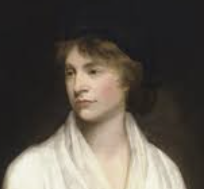
Ah! why do women condescend to receive a degree of attention and respect from strangers different from that reciprocation of civility which the dictates of humanity and the politeness of civilization authorize between man and man? And why do they not discover, when, "in the noon of beauty's power", that they are treated like queens only to be deluded by hollow respect. Confined, then, in cages like the feathered race, they have nothing to do but to plume themselves, and stalk with mock majesty from perch to perch.
▼
Source
source
Ch. 4
2 weeks 6 days ago
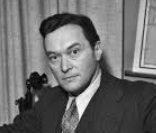
We have come to see that Huxley was right when he said that "a man's worst difficulties begin when he is able to do as he likes." The evidences of these greater difficulties lie all about us: in the brave and brilliant atheists who have defied the Methodist God, and have become very nervous; in the women who have emancipated themselves from the tyranny of fathers, husbands, and homes, and with the intermittent but expensive help of a psychoanalyst, are now enduring liberty as interior decorators; in the young men and women who are world-weary at twenty-two; in the multitudes who drug themselves with pleasure; in the crowds enfranchised by the blood of heroes who cannot be persuaded to take an interest in their destiny; in the millions, at last free to think without fear of priest or policeman, who have made the moving pictures and the popular newspapers what they are.
▼
Source
source
Preface

3 months 1 week ago
He who does wrong is more unhappy than he who suffers wrong.
4 months 1 week ago
It pertains to all men to know themselves and to learn self-control.
3 months 3 weeks ago
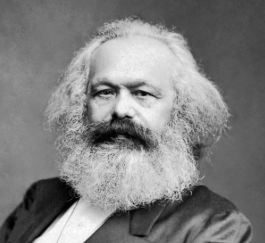
Since property here exists in the form of stock, its movement and transfer become purely a result of gambling on the stock exchange, where the little fish are swallowed by the sharks and the lambs by the stock exchange wolves.
▼
Source
source
Vol. III, Ch. XXVII, The Role of Credit, p. 440.

3 months 3 weeks ago
To travel is to discover that everyone is wrong.
▼
Source
source
Part II: Malaya,

2 weeks 4 days ago
Now the argument that I make in my book is that part of the current disaffection with liberalism is not from any of its basic principles, but... is the result of certain deformations of liberal principles that were carried to extremes that led... to bad outcomes... There's a move in this direction on the right and... on the left.
▼
Source
source
12:25 Ref: Francis Fukuyama, Liberalism and Its Discontents

2 months 2 weeks ago
The man old in days will not hesitate to ask a small child seven days old about the place of life, and he will live. For many who are first will become last, and they will become one and the same.
2 months 3 days ago
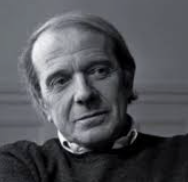
One of the principal motifs of Nietzsche's work is that Kant had not carried out a true critique because he was not able to pose the problem of critique in terms of values.
▼
Source
source
p. 1
3 months 1 week ago
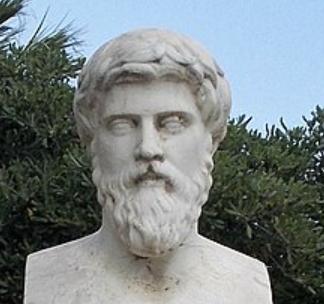
He preferred an honest man that wooed his daughter, before a rich man. "I would rather," said Themistocles, "have a man that wants money than money that wants a man."
▼
Source
source
49 Themistocles
3 months 3 weeks ago
Reason has always existed, but not always in a rational form.
▼
Source
source
Letter from Marx to Arnold Ruge, September 1843
1 week 1 day ago
My idea of heaven is, eating pâté de foie gras to the sound of trumpets.
▼
Source
source
View ascribed by Smith to his friend Henry Luttrell; reported in Hesketh Pearson, The Smith of Smiths (London: Hamish Hamilton, 1934), p. 236

3 months 3 weeks ago
Besides, we should never attempt to balance anybody's misery against somebody else's happiness.
▼
Source
source
pp. 486-487
3 months 3 weeks ago
We have just seen that, apart from money-capital, circulating capital is only another name for commodity-capital. But to the extent that labour power circulates in the market,it is not capital, no form of commodity-capital. It is not capital at all; the labourer is not a capitalist, although he brings a commodity to market, namely his own skin.
▼
Source
source
Vol. II, Ch. X, p. 211.

1 month 3 weeks ago
All forms of violence are quests for identity. When you live on the frontier, you have no identity. You're a nobody.

2 months 3 weeks ago
All those instances to be found in history, whether real or fabulous, of a doubtful public spirit, at which morality is perplexed, reason is staggered, and from which affrighted Nature recoils, are their chosen and almost sole examples for the instruction of their youth.
▼
Source
source
No. 1, volume v, p. 286

3 months 3 weeks ago
As to [General Douglas] Macarthur, I don't feel in a position to have clear opinions about anyone I know only from newspapers. You see, whenever they deal with anyone (or anything) I know myself, I find they're always a mass of lies & misunderstandings: so I conclude they're no better in the places where I don't know.
▼
Source
source
Letter to Mrs. Mary Van Deusen, April 30, 1951. Collected Letters of C. S. Lewis, vol. 3, "Narnia, Cambridge, and Joy", 1950-1963. p. 114.

4 months 1 week ago
How great is the path proper to the Sage! Like overflowing water, it sends forth and nourishes all things, and rises up to the height of heaven. All-complete is its greatness! It embraces the three hundred rules of ceremony, and the three thousand rules of demeanor. It waits for the proper man, and then it is trodden. Hence it is said, "Only by perfect virtue can the perfect path, in all its courses, be made a fact."
3 months 1 week ago
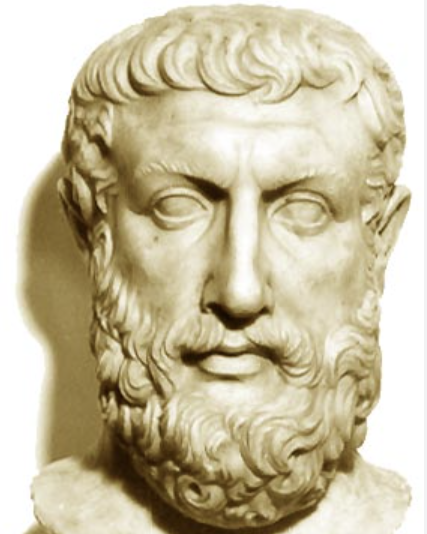
It is indifferent to me where I am to begin, for there shall I return again.
▼
Source
source
Frag. B 5, quoted by Proclus, Commentary on the Parmenides, 708
4 months 1 day ago
I know well what I am fleeing from but not what I am in search of.
▼
Source
source
Book III, Ch. 9
2 months 3 weeks ago
I veil my face before thee, and lay my finger on my lips. What thou art in thyself, or how thou appearest to thyself, I can never know. After living through a thousand lives, I shall comprehend Thee as little as I do now in this mansion of clay. What I can comprehend, becomes finite by my mere comprehension, and this can never, by perpetual ascent, be transformed into the infinite, for it does not differ from it in degree merely, but in kind. By that ascent we may find a greater and greater man, but never a God, who is capable of no measurement.
▼
Source
source
Jane Sinnett, trans 1846 p.115

3 months ago
When the end comes, you will be esteemed by the world and rewarded by God, not because you have won the love and respect of the princes of the earth, however powerful, but rather for having loved, defended and cherished one such as I ... what you receive from others is a testimony to their virtue; but all that you do for others is the sign and clear indication of your own.
▼
Source
source
Dedication

4 days ago
We have the right to conclude from this that syndicalist violence, perpetrated in the course of strikes by proletarians who desire the overthrow of the State, must not be confused with the acts of savagery which the superstition of the State suggested to the revolutionaries of 1793, when they had power in their hands and were able to oppress the conquered - following the principles which they had received from the Church and from the monarchy.
▼
Source
source
p. 108

3 months 3 weeks ago
Perhaps the best hope for the future of mankind is that ways will be found of increasing the scope and intensity of sympathy.
1 month 6 days ago
Man is a born geometer. Even when he is expressing himself in curves, as he has done in the undulating roofs of Eastern Asia and in the flowing sculptures at Borobudur, his lines follow mathematical laws that are unknown to Nature; and he is frankly defying her when he works in rectangles. Angkor is perhaps the greatest of Man's essays in rectangular architecture that has yet been brought to light... The Buddhist stupa at Borobudur in Central Java is a lyric poem in stone, flowing round the crown of a hill to the musical accompaniment of a jagged mountain range on one side and a green expanse of rice fields on the other. Angkor is not orchestral; it is monumental. It is an epic poem which makes its effect, like the Odyssey and like Paradise Lost, by the grandeur of its structure as well as by the beauty of the details. Angkor is an epic in rectangular forms imposed upon the Cambodian jungle.
▼
Source
source
27. Angkor
2 months 3 weeks ago
A great revolution is on the point of being accomplished. It is a revolution not in human affairs, but in man himself.
▼
Source
source
p. 2
2 months 3 weeks ago
It is reconciled in policy; and politics ought to be adjusted, not to human reasonings, but to human nature; of which the reason is but a part; and by no means the greatest part.
▼
Source
source
Observations on a Late Publication on the Present State of the Nation (1769), page 78

4 months 2 days ago
Seek first the virtues of the mind; and other things either will come, or will not be wanted.
▼
Source
source
Book II, xxxi
1 month 2 days ago
[B]oth natural selection and the historical record offer powerful reasons for doubting the trustworthiness of our naive moral intuitions. So the possibility that human civilisation might be founded upon some monstrous evil should be taken seriously - even if the possibility seems transparently absurd at the time.
▼
Source
source
The Antispeciesist Revolution, Institute for Ethics and Emerging Technologies, 26 Jul. 2013

2 months 1 week ago
For the truth is that our doctrines are usually only the justification a posteriori of our conduct, or else they are our way of trying to explain that conduct to ourselves.

2 months 2 weeks ago
Maybe suffering has no more justification than life.

2 months 2 weeks ago
Life creates itself in delirium and is undone in ennui.
1 month 3 weeks ago
My car and my adding machine understand nothing: they are not in that line of business.
1 month 3 weeks ago
When Fortune is on our side, popular favor bears her company.
▼
Source
source
Maxim 275
1 month 3 weeks ago
There is no connection between the elements in an electric world, which is equivalent to being surrounded by the human unconscious.
▼
Source
source
(p. 260)

3 months 3 weeks ago
Let me give two cautions. 1) The one is, that you keep them to the practice of what you would have grow into a habit with them, by kind words, and gentle admonitions, rather as minding them of what they forget, than by harsh rebukes and chiding, as if they were wilfully guilty. 2) Another thing you are to take care of, is, not to endeavour to settle too many habits at once, lest by variety you confound them, and so perfect none. When constant custom has made any one thing easy and natural to 'em, and they practice it without reflection, you may then go on to another.
▼
Source
source
Sec. 66
4 months 1 day ago
Few men have been admired by their own households.
▼
Source
source
Ch. 2
1 month 3 weeks ago
We may with advantage at times forget what we know.
▼
Source
source
Maxim 234
4 months 3 weeks ago
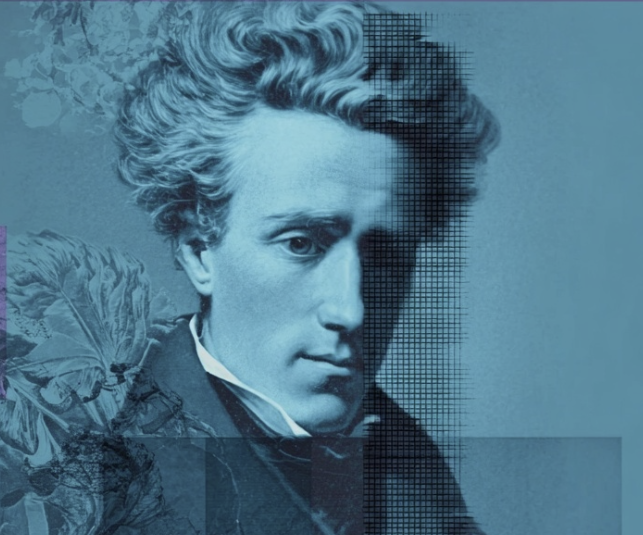
It seems to be my destiny to discourse on truth, insofar as I discover it, in such a way that all possible authority is simultaneously demolished. Since I am incompetent and extremely undependable in men's eyes, I speak the truth and thereby place them in the contradiction from which they can be extricated only by appropriating the truth themselves. A man's personality is matured only when he appropriates the truth, whether it is spoken by Balaam's ass or a sniggering wag or an apostle or an angel.
3 months 3 weeks ago
For wherever violence is used, and injury done, though by hands appointed to administer Justice, it is still violence and injury, however colour'd with the Name, Pretences, or Forms of Law, the end whereof being to protect and redress the innocent, by an unbiassed application of it, to all who are under it; wherever that is not bona fide done, War is made upon the Sufferers, who having no appeal on Earth to right them, they are left to the only remedy in such Cases, an appeal to Heaven.
▼
Source
source
Two Treatises of Government. The Second Treatise. Chapter 3: The State of War, §20 p. 281 books.google

3 months 3 weeks ago
The natural price, therefore, is, as it were, the central price, to which the prices of all commodities are continually gravitating.
▼
Source
source
Chapter VII, p. 69.
1 month 3 weeks ago
Primitivism has become the vulgar cliche of much modern art and speculation.
▼
Source
source
(p. 77)

3 months 3 weeks ago
If I could put my hand on the north star, would it be as beautiful? The sea is lovely, but when we bathe in it, the beauty forsakes all the near water. For the imagination and senses cannot be gratified at the same time.
▼
Source
source
Beauty
4 months 1 day ago
When evening comes, I return home and enter my study; on the threshold I take off my workday clothes, covered with mud and dirt, and put on the garments of court and palace. Fitted out appropriately, I step inside the venerable courts of the ancients, where, solicitously received by them, I nourish myself on that food that alone is mine and for which I was born; where I am unashamed to converse with them and to question them about the motives for their actions, and they, out of their human kindness, answer me. And for four hours at a time I feel no boredom, I forget all my troubles, I do not dread poverty, and I am not terrified by death. I absorb myself into them completely.
▼
Source
source
Letter to Francesco Vettori (10 December 1513), as translated by James Atkinson, in Prince Machiavelli (1976), p. 19
4 months 1 week ago
The man of virtue makes the difficulty to be overcome his first business, and success only a subsequent consideration.
CivilSimian.com created by AxiomaticPanic, CivilSimian, Kalokagathia