

4 months 6 days ago
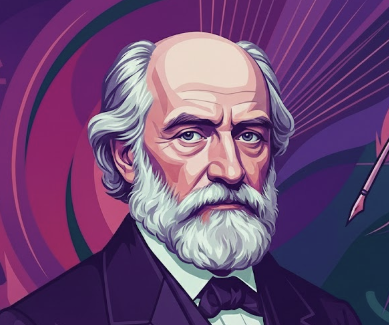
To free a man from error is to give, not to take away. Knowledge that a thing is false is a truth. Error always does harm; sooner or later it will bring mischief to the man who harbors it. Then give up deceiving people; confess ignorance of what you don't know, and leave everyone to form his own articles of faith for himself. Perhaps they won't turn out so bad, especially as they'll rub one another's corners down, and mutually rectify mistakes. The existence of many views will at any rate lay a foundation of tolerance. Those who possess knowledge and capacity may betake themselves to the study of philosophy, or even in their own persons carry the history of philosophy a step further.
▼
Source
source
"Religion: A Dialogue." Variant translation: To free a man from error does not mean to take something from him, but to give him something.

4 months ago
The human body is the best picture of the human soul.
▼
Source
source
Pt II, p. 178
1 month 3 weeks ago
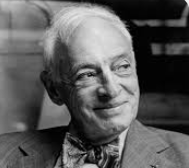
We take foreigners to be incomplete Americans - convinced that we must help and hasten their evolution.
▼
Source
source
" A Second Half Life" (1991), p. 324

4 months 4 days ago
Make yourself necessary to somebody. Do not make life hard to any.
▼
Source
source
Considerations by the Way

2 days ago
Likewise, they call it "Chaos," which is Hesiod's first generator, because Chaos gives rise to everything else, as the monad does. It is also thought to be both "mixture" and "blending," "obscurity" and "darkness" thanks to the lack of articulation and distinction of everything which ensues from it. Anatolius says that it is called "matrix" and "matter," on the grounds that without it there is no number. The mark which signifies the monad is the source of all things.
▼
Source
source
On the Monad

2 months 6 days ago
One might expect that a consideration of grievability pertains only to those who are dead, but my contention is that grievability is already operative in life, and that it is a characteristic attributed to living creatures, marking their value within a differential scheme of values and bearing directly on the question of whether or not they are treated equally and in a just way. To be grievable is to be interpellated in such a way that you know your life matters; that the loss of your life would matter; that your body is treated as one that should be able to live and thrive, whose precarity should be minimized, for which provisions for flourishing should be available. The presumption of equal grievability would be not only a conviction or attitude with which another person greets you, but a principle that organizes the social organization of health, food, shelter, employment, sexual life, and civic life.
▼
Source
source
p. 59

1 day ago
Live as on a mountain. ...Let men see, let them know a real man who lives according to nature. If they cannot endure him, let them kill him. For that is better than to live thus.
▼
Source
source
X, 15

3 months ago
Compared to the refined culture of sclerotic forms and frames, which mask everything, the lyrical mode is utterly barbarian in its expression. Its value resides precisely in its savage quality: it is only blood, sincerity, and fire.

3 weeks 4 days ago
Cannot we understand how these men worshipped Canopus; became what we call Sabeans, worshipping the stars? Such is to me the secret of all forms of Paganism. Worship is transcendent wonder; wonder for which there is now no limit or measure; that is worship.

4 days ago
But with respect to future debt; would it not be wise and just for that nation to declare in the constitution they are forming that neither the legislature, nor the nation itself can validly contract more debt, than they may pay within their own age, or within the term of 19 years.
▼
Source
source
Letter to James Madison (6 September 1789) ME 7:455, Papers 15:393

2 months 2 days ago
Pornography and obscenity...work by specialism and fragmentation. They deal with a figure without a ground -- situations in which the human factor is suppressed in favor of sensations and kicks.
▼
Source
source
Letter to Clare Westcott, November 26 1975. Letters of Marshall McLuhan, p. 514
2 months 2 days ago
The potential of any new technology is always dissipated by its users involvement in its predecessors.
▼
Source
source
(p. 210)
4 days ago
When angry, count ten before you speak; if very angry, an hundred.
2 months 2 weeks ago
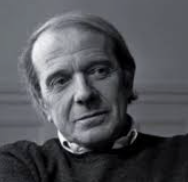
A leftist government doesn't exist because being on the left has nothing to do with governments.
▼
Source
source
from L'Abécédaire de Gilles Deleuze: G comme Gauche ("Gilles Deleuze's Alphabet Book: Left-wing Politics"), 1988-1989.
3 months 4 days ago
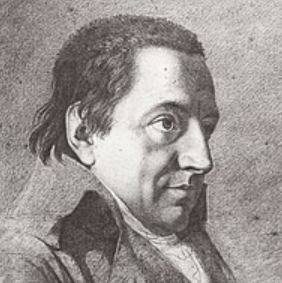
Let us apply these principles to adultery. The state can no more prohibit it or punish it by law than any other illegitimate satisfaction of the sexual impulse.
▼
Source
source
P. 431
4 months 5 days ago
The Few assume to be the deputies, but they are often only the despoilers of the Many.
▼
Source
source
Pt. IV, sec. 3, ch. 3

4 months 1 week ago
As regards the objection that possibles are independent of the decrees of God I grant it of actual decrees (although the Cartesians do not at all agree to this), but I maintain that the possible individual concepts involve certain possible free decrees; for example, if this world was only possible, the individual concept of a particular body in this world would involve certain movements as possible, it would also involve the laws of motion, which are the free decrees of God; but these, also, only as possibilities. Because, as there are an infinity of possible worlds, there are also an infinity of laws, certain ones appropriate to one; others, to another, and each possible individual of any world involves in its concept the laws of its world.
▼
Source
source
(May, 1686) as quoted in George R. Montgomery, Tr., "Correspondence between Leibniz and Arnauld," Leibniz: Discourse on metaphysics; correspondence with Arnauld, and Monadology (1916) VIII, p. 108
3 months ago
Nothing is indefensible - from the absurdest proposition to the most monstrous crime.

4 months 3 days ago
"Their own strength has betrayed them. They have [...] pulled down Deep Heaven on their heads."
▼
Source
source
Ch. 13 : They Have Pulled Down Deep Heaven on Their Heads
2 months 3 weeks ago
No one is guiltless...But no one is beyond the pale of human existence, provided he pays for his guilt.

4 months 5 days ago
Something that is merely negative creates nothing.
▼
Source
source
Notebook VI, The Chapter on Capital, p. 532.
3 months ago
Skepticism is an exercise in defascination.
4 days ago
We took the liberty to make some enquiries concerning the ground of their pretensions to make war upon nations who had done them no injury, and observed that we considered all mankind as our friends who had done us no wrong, nor had given us any provocation. The Ambassador [of Tripoli] answered us that it was founded on the Laws of their Prophet, that it was written in their Koran, that all nations who should not have acknowledged their authority were sinners, that it was their right and duty to make war upon them wherever they could be found, and to make slaves of all they could take as Prisoners, and that every Musselman who should be slain in battle was sure to go to Paradise.
▼
Source
source
Letter from the commissioners (John Adams, Thomas Jefferson) to John Jay, 28 March 1786, in Thomas Jefferson Travels: Selected Writings, 1784-1789, by Anthony Brandt, pp. 104-105
2 months 2 days ago
The new media are not bridges between man and nature - they are nature...The new media are not ways of relating us to the old world; they are the real world and they reshape what remains of the old world at will.
▼
Source
source
Media as the New Nature, 1969, p. 14


4 months 1 week ago
It is an article of faith that Mary is Mother of the Lord and still a Virgin.
▼
Source
source
Weimar edition of Martin Luther's Works, English translation edited by J. Pelikan [Concordia: St. Louis], Vol. 11, 319-320

4 months 5 days ago
We do not directly go about the execution of the purpose that thrills us, but shut our doors behind us, and ramble with prepared minds, as if the half were already done. Our resolution is taking root or hold on the earth then, as seeds first send a shoot downward, which is fed by their own albumen, ere they send one upwards to the light.
▼
Source
source
Pearls of Thought (1881) p. 61


4 months 2 weeks ago
For this too is a very pleasant strand woven into the Cynic's pattern of life; he must needs be flogged like an ass, and while he is being flogged he must love the men who flog him, as though he were the father or brother of them all.
▼
Source
source
Book III, ch. 22, 54
3 months 2 days ago
Duty is that mode of action which constitutes the best application of the capacity of the individual to the general advantage. Right is the claim of the individual to his share of the benefit arising from his neighbors' discharge of their several duties.
▼
Source
source
"Summary of Principles". 1.5
2 months ago
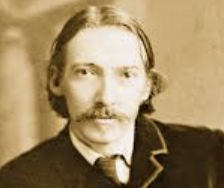
I suppose it is written that any one who sets up for a bit of a philosopher, must contradict himself to his very face. For here have I fairly talked myself into thinking that we have the whole thing before us at last; that there is no answer to the mystery, except that there are as many as you please; that there is no centre to the maze because, like the famous sphere, its centre is everywhere; and that agreeing to differ with every ceremony of politeness, is the only "one undisturbed song of pure concent" to which we are ever likely to lend our musical voices.
▼
Source
source
Crabbed Age and Youth.

4 months 5 days ago
There is a connected set of events (light-waves) travelling outward from a centre... there are some respects in which all events are alike, and others in which they differ... We must not think of a light-wave as a 'thing', but as a connected group of rhythmical events. The mathematical characteristics of such a group can be inferred by physics, but the intrinsic character of the component events cannot be inferred.
▼
Source
source
An Outline of Philosophy Ch.15 The Nature of our Knowledge of Physics, 1927

2 months 4 days ago
All our problems are caused by forgetting what lives within us, and we sell our souls for the "bowl of stew" of bodily satisfactions.
▼
Source
source
p. 17
4 months 5 days ago
He asked my religion and I replied 'agnostic'. He asked how to spell it, and remarked with a sigh: 'Well, there are many religions, but I suppose they all worship the same God. This remark kept me cheerful for about a week.
3 days ago
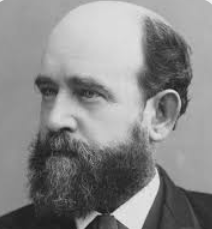
But in life, as we are cognizant of it, mental development can go but a little way. The mind hardly begins to awake ere the bodily powers decline - it but becomes dimly conscious of the vast fields before it, but begins to learn and use its strength, to recognize relations and extend its sympathies, when, with the death of the body, it passes away. Unless there is something more, there seems here a break, a failure. Whether it be a Humboldt or a Herschel, a Moses who looks from Pisgah, a Joshua who leads the host, or one of those sweet and patient souls who in narrow circles live radiant lives, there seems, if mind and character here developed can go no further, a purposelessness inconsistent with what we can see of the linked sequence of the universe.
4 months ago
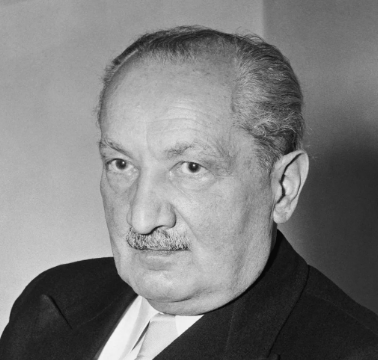
From our human experience and history, at least as far as I am informed, I know that everything essential and great has only emerged when human beings had a home and were rooted in a tradition. Today's literature is, for instance, largely destructive.
3 months ago
That fear which gives birth to thoughts, and the fear of thoughts...
4 weeks ago
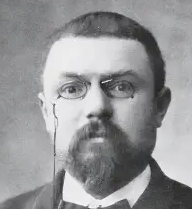
Have we really the right to speak of the cause of a phenomenon?
2 months 1 week ago
We distinguish diagrammatic from sentential paper-and-pencil representations of information by developing alternative models of information-processing systems that are informationally equivalent and that can be characterized as sentential or diagrammatic. Sentential representations are sequential, like the propositions in a text. Diagrammatic representations are indexed by location in a plane. Diagrammatic representations also typically display information that is only implicit in sentential representations and that therefore has to be computed, sometimes at great cost, to make it explicit for use. We then contrast the computational efficiency of these representations for solving several.illustrative problems in mathematics and physics.
▼
Source
source
p. 65

3 months 2 weeks ago
Many words befall men, mean and noble alike; do not be astonished by them, nor allow yourself to be constrained. If a lie is told, bear with it gently. But whatever I tell you, let it be done completely. Let no one persuade you by word or deed to do or say whatever is not best for you.
▼
Source
source
As quoted in Divine Harmony: The Life and Teachings of Pythagoras by John Strohmeier and Peter Westbrook.

2 weeks 5 days ago
Mankind is born for mutual assistance, anger for mutual ruin: the former loves society, the latter estrangement.

2 months 3 weeks ago
Touch me not; for I am not yet ascended to my Father: but go to my brethren, and say unto them, I ascend unto my Father, and your Father; and to my God, and your God.
▼
Source
source
John 20:17 (KJV)
3 months 5 days ago
In the same way as philosophy loses sight of its true object and appropriate matter, when either it passes into and merges in theology, or meddles with external politics, so also does it mar its proper form when it attempts to mimic the rigorous method of mathematics.
▼
Source
source
Philosophy of Life, Lecture 1
2 months 3 weeks ago
The primary meaning of the words "modern," "modernity," with which recent times have baptised themselves, brings out very sharply that feeling of "the height of time" which I am at present analysing. "Modern" is what is "in the fashion, "that is to say, the new fashion or modification which has arisen over against the old traditional fashions used in the past. The word "modern" then expresses a consciousness of a new life, superior to the old one, and at the same time an imperative call to be at the height of one's time. For the "modern" man, not to be "modern" means to fall below the historic level.
▼
Source
source
Chap. III: The Height Of The Times

2 months 3 weeks ago
There are only two cases in which war is just: first, in order to resist the aggression of an enemy, and second, in order to help an ally who has been attacked.
▼
Source
source
No. 95. (Usbek writing to Rhedi)

3 weeks 5 days ago
The way of learning is none other than finding the lost mind.
▼
Source
source
6A:11, as translated by Wing-tsit Chan in A Source Book in Chinese Philosophy (1963), p. 58
4 months 6 days ago
In a field of ripening corn I came to a place which had been trampled down by some ruthless foot; and as I glanced amongst the countless stalks, every one of them alike, standing there so erect and bearing the full weight of the ear, I saw a multitude of different flowers, red and blue and violet. How pretty they looked as they grew there so naturally with their little foliage! But, thought I, they are quite useless; they bear no fruit; they are mere weeds, suffered to remain only because there is no getting rid of them. And yet, but for these flowers, there would be nothing to charm the eye in that wilderness of stalks. They are emblematic of poetry and art, which, in civic life-so severe, but still useful and not without its fruit-play the same part as flowers in the corn.
▼
Source
source
"Similes, Parables and Fables" Parerga and Paralipomena, vol. 2, § 380A

3 months 4 weeks ago
All affected can accept the consequences and the side effects that [the norm's] general observance can be anticipated to have for the satisfaction of everyone's interests, and the consequences are preferred to those of known alternative possibilities for regulation.
▼
Source
source
p. 65

3 months 4 weeks ago
In the ceremonies of the public execution, the main character was the people, whose real and immediate presence was required for the performance.
▼
Source
source
Chapter One, pp. 56

4 months 1 week ago
A man must be perfectly crazy who, where there is tolerable security, does not employ all the stock which he commands…
▼
Source
source
Chapter I, p. 313 (see opportunity cost).
CivilSimian.com created by AxiomaticPanic, CivilSimian, Kalokagathia