↑ Back to the start
7 months 1 week ago
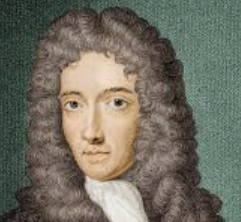
His works on natural and experimental philosophy, particularly on hydrostatics and pneumatics, and his own improvements of the air pump, have placed his name in a rank second only to that of Newton: as a chemist, he takes the lead of all his contemporaries; and in his theological writings, he has so blended philosophy with religion as to exhibit to the world the true value of scientific pursuits.
0
⚖0
▼ Source
source
James Henry Monk, The Life of Richard Bentley, D.D.: Master of Trinity College (1833) [http://books.google.com/books?id=0UoJAAAAQAAJ Vol.1]
7 months 1 week ago
After the death of Bacon, one of the most distinguished Englishmen was certainly Boyle, who, if compared with his contemporaries, may be said to rank immediately below Newton, though of course very inferior to him as an original thinker.
0
⚖0
▼ Source
source
Henry Thomas Buckle, History of Civilization in England (1887) [http://books.google.com/books?id=PsQIAQAAIAAJ Vol.1] from the second London edition
7 months 1 week ago
And of universal nature, the notion I would offer, should be something like this. Nature is the aggregate of the bodies, that make up the world, in its present state, considered as a principle, by virtue whereof, they act and suffer, according to the laws of motion, prescribed by the author of things.
0
⚖0
▼ Source
source
Sect. 2.
7 months 1 week ago
I cannot conceive, how a body, destitute of understanding and sense, truly so called, can moderate and determine its own motions; especially so as to make them conformable to laws that it has no knowledge of.
0
⚖0
▼ Source
source
Sect.1.
7 months 1 week ago
Among Latin writers, the acceptations of the word nature are so many, that I remember, one author reckons up no less than fourteen or fifteen. Hence we see how easy 'tis for the generality of men, without excepting those who write of natural things, to impose upon others and themselves, in the use of a word so apt to be mis-employ'd. ..the very great ambiguity of this term, and the promiscuous use made of it, without sufficiently attending to its different significations, render many of the expressions wherein 'tis employ'd either unintelligible, improper, or false.
0
⚖0
▼ Source
source
Sect. 1
7 months 1 week ago
Doubtless, it shews the wisdom of God, to have so fram'd things at first, that there can seldom or never need any extraordinary interposition of his power; or the employing from, time to time, an intelligent overseer, to regulate, assist, and control the motions of matter.
0
⚖0
▼ Source
source
Sect.1.
7 months 1 week ago
But I will not... trouble you with what I have largely discoursed in the Sceptical Chymist, to call in question the grounds on which Chymists assert, that all mixt bodies are compounded of Salt, Sulphur, and Mercury. For it may suffice me now to tell you that, whatsoever they may be able to obtain from other bodies, it does not appear by Experience, which is the grand, if not the onely, Argument they rely on, that all mixt bodies that have Qualities consist of their tria prima, since they have not been able, that we know, truly, and without new Compositions, to resolve into those three, either Gold, or Silver, or Crystal, or Venetian Talck, or some other bodies, that I elsewhere name; & yet these bodies are endowed with divers Qualities, as the two former with Fusibleness and Malleability, and all of them with Weight and Fixity; so that in these and the like bodies, whence Chymisats have not made it yet appear, that their Salt, Sulphur and Mercury, can be truly and adequately separated, 'twill scarce be other than precarious to derive the malleableness, colour, and other Qualities of such bodies from those Principles.

0
⚖0
7 months 1 week ago
It is somewhat strange to me, that neither the Spagyrists themselves, nor yet their Adversaries, should have taken notice that Chymists have rather supposed than evinced, that the Analysis of bodies by fire, or even that at least some Analysis is the onely instrument of investigating what Ingredients mixt bodies are made up of, since in divers cases That may be discovered by Composition as well as by Resolution; as it may appear, that consists of metalline parts (whether Martial, or Venereal, or both) associated by Coagulation with ones, one may, I say, discover this as well by making true Vitriol with Spirit (improperly called Oil) of Sulphur, or that of Salt, as by distilling or Resolving Vitriol by the fire.
0
⚖0
7 months 1 week ago
And first the Doctrine that all their Theory is grounded on, seems to me Inevident and undemonstrated, not to say precarious.
0
⚖0
7 months 1 week ago
Now a man need not be very conversant in the writings of Chymists to observe, in how Laxe, Indefinite, and almost Arbitrary Senses they employ the Terms of Salt, Sulphur and Mercury; of which I could never find that they were agreed upon any certain Definitions or setled Notions; not onely differing Authors, but not unfrequently one and the same, and perhaps in the same Book, employing them in very differing senses.
0
⚖0

CivilSimian.com created by AxiomaticPanic, CivilSimian, Kalokagathia