
3 months 3 weeks ago
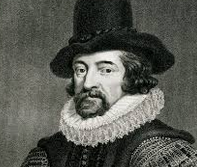
We are much beholden to Machiavel and others, that write what men do, and not what they ought to do.
▼
Source
Book II, xxi, 9
3 months 3 weeks ago
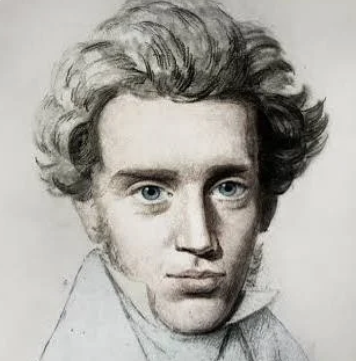
When God chooses to let himself be born in lowliness, when he who holds all possibilities in his hand takes upon himself the form of a lowly servant, when he goes about defenseless and lets people do with him what they will, he surely must know well enough what he is doing and why he wills it; but for all that it is he who has people in his power and not they who have power over him-so history ought not play by this wanting to make manifest who he was.
▼
Source
p. 34
3 months 3 weeks ago
There is no governor anywhere; you are all absolutely free. There is no restraint that cannot be escaped. We are all absolutely free. If everybody could go into dhyana at will, nobody could be controlled — by fear of prison, by fear of whips or electroshock, by fear of death, even. All existing society is based on keeping those fears alive, to control the masses. Ten people who know would be more dangerous than a million armed anarchists.
▼
Source
Hugh Crane a.k.a. Cagliostro the Great, in Schrödinger's Cat Trilogy : The Trick Top Hat (1979)

3 months 3 weeks ago
this Jewish doctrine of the primacy of economic values has found the widest acceptance and been most whole-heartedly acted upon. From America it has begun to infect the rest of the worldWe may be pardoned for wishing that the Jews had remained not forty, but four thousand years in their repulsive wilderness.
▼
Source
"One and Many," pp. 18
3 months 3 weeks ago
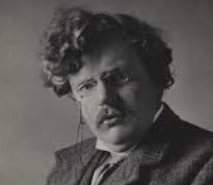
A puritan is a person who pours righteous indignation into the wrong things.
▼
Source
Interview, quoted in The New York Times (21 November 1930)
3 months 3 weeks ago
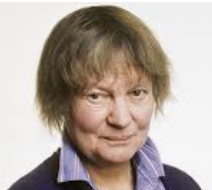
Perhaps misguided moral passion is better than confused indifference.
▼
Source
The Book and the Brotherhood (1987) p. 248.
3 months 3 weeks ago
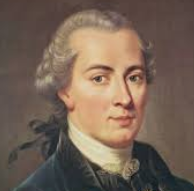
Through failures one becomes intelligent; but the one who has trained himself in this subject so that he can make others wise through their own failures, has used his intelligence. Ignorance is not stupidity.
▼
Source
Kant, Immanuel (1996), page 100
3 months 3 weeks ago
The human understanding is moved by those things most which strike and enter the mind simultaneously and suddenly, and so fill the imagination; and then it feigns and supposes all other things to be somehow, though it cannot see how, similar to those few things by which it is surrounded.
▼
Source
Aphorism 47
3 months 3 weeks ago
The Spirit brings faith, the faith.
▼
Source
Soren Kierkegaard, For Self-Examination, Hong p. 81
3 months 3 weeks ago
Why does the sexual appetite cause so much unspeakable joy and irrational misery, so much suicidal and homicidal madness, and so much absurd theological ranting? Because every sexual choice is going to play a role in determining the temperament and talents of the next generation, and of all future generations who will inherit the earth from us. To be simple about it for once, a single friendly fuck can fill a continent with morons or geniuses in only a few thousand years.
▼
Source
The Historical Illuminatus as spoken by Sigismundo Celine
3 months 3 weeks ago
For myself as, no doubt, for most of my contemporaries, the philosophy of meaninglessness was essentially an instrument of liberation. The liberation we desired was simultaneously liberation from a certain political and economic system and liberation from a certain system of morality. We objected to the morality because it interfered with our sexual freedom; we objected to the political and economic system because it was unjust. The supporters of these systems claimed that in some way they embodied the meaning (a Christian meaning, they insisted) of the world. There was an admirably simple method of confuting these people and at the same time justifying ourselves in our political and erotic revolt: we could deny that the world had any meaning whatsoever. Similar tactics had been adopted during the eighteenth century and for the same reasons... The men of the new Enlightenment, which occurred in the middle years of the nineteenth century, once again used meaninglessness as a weapon against the reactionaries. The Victorian passion for respectability was, however, so great that, during the period when they were formulated, neither Positivism nor Darwinism was used as a justification for sexual indulgence.
▼
Source
Ch. 14, p. 316 [2012 reprint]
3 months 3 weeks ago
Don't you believe people when they tell you that people sought for a sign, and believed in miracles because they were ignorant. They did it because they were wise, filthily, vilely wise—too wise to eat or sleep or put on their boots with patience.
▼
Source
Book III, Chapter III: "The Experiment of Mr. Buck"
3 months 3 weeks ago
The innocent sounding First Thesis, taken seriously, forces us to move our attention away from the individual toward humanity. Since there are no limits to the application of reason, and reason does not work instinctively, but requires "trial, practice, and instruction in order to gradually progress from one level of insight to another," individual human beings do not live long enough to learn the full use of reason. However, we find nature setting a short period for individual lives, but producing a series of generations in which each passes its own accomplishments onto its successor. The only way to make the capability of reasoning consistent with the First Thesis is to assume that rationality is to be fully developed only in the race, not in the individual.
▼
Source
Sidney Axinn, on the First Thesis of Kant's [http://www.marxists.org/reference/subject/ethics/kant/universal-history.htm Idea for a Universal History from a Cosmopolitan Point of View (1784)], in The Logic of Hope : Extensions of Kant's View of Religion (
3 months 3 weeks ago
One of the simplest and broadest aspects under which to view the physical world, is that of a system of final causes, or, on the other hand, of initial or effective causes. Bacon, having it in view to extend our power over nature, adopted the latter. He took firm hold of the idea of causation (in the common sense of the word) as contrasted with that of design, refusing to mix up the two ideas in one inquiry, and denouncing such traditional interpretations of facts, as did but obscure the simplicity of the aspect necessary for his purpose. He saw what others before him might have seen in what they saw, but who did not see as he saw it. In this achievement of intellect, which has been so fruitful in results, lie his genius and his fame.
▼
Source
John Henry Newman, A Grammar of Assent (London: Burns, Oates, & Co., 1870), p. 366
3 months 3 weeks ago
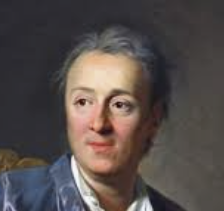
As to all the outward signs that awaken within us feelings of sympathy and compassion, the blind are only affected by crying; I suspect them in general of lacking humanity. What difference is there for a blind man, between a man who is urinating, and man who, without crying out, is bleeding? And we ourselves, do we not cease to commiserate, when the distance or the smallness of the objects in question produce the same effect on us as the lack of sight produces in the blind man? All our virtues depend on the faculty of the senses, and on the degree to which external things affect us. Thus I do not doubt that, except for the fear of punishment, many people would not feel any remorse for killing a man from a distance at which he appeared no larger than a swallow. No more, at any rate, than they would for slaughtering a cow up close. If we feel compassion for a horse that suffers, but if we squash an ant without any scruple, isn’t the same principle at work?
▼
Source
Lettre sur les aveugles [Letter on the Blind] (1749)
3 months 3 weeks ago
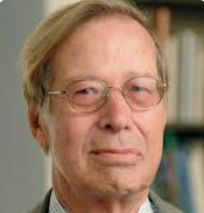
Perhaps MacKinnon should reflect on these suggestions that the censorship issue is not so simple-minded, so transparently gender-against-gender, as she insists. She should stop calling names long enough to ask whether personal sensationalism, hyperbole, and bad arguments are really what the cause of sexual equality now needs.
▼
Source
"Pornography: An Exchange", response to Catharine MacKinnon, New York Review of Books 41(5), March 3, 1994.
3 months 3 weeks ago
I strongly suspect that most of the great knowers of Suchness paid very little attention to art.... (To a person whose transfigured and transfiguring mind can see the All in every this, the first-rateness or tenth-rateness of even a religious painting will be a matter of the most sovereign indifference.) Art, I suppose, is only for beginners, or else for those resolute dead-enders, who have made up their minds to be content with the ersatz of Suchness, with symbols rather than with what they signify, with the elegantly composed recipe in lieu of actual dinner.
3 months 3 weeks ago
For my part, I should be inclined to suggest that the chief object of education should be to restore simplicity. If you like to put it so, the chief object of education is not to learn things; nay, the chief object of education is to unlearn things.
▼
Source
"An Essay on Two Cities"
3 months 3 weeks ago
To prove the Gospels by a miracle is to prove an absurdity by something contrary to nature.
▼
Source
As quoted in The Anchor Book of French Quotations with English Translations (1963) by Norbert Gutermam

3 months 3 weeks ago
A critique is not a matter of saying that things are not right as they are. It is a matter of pointing out on what kinds of assumptions, what kinds of familiar, unchallenged, unconsidered modes of thought the practices that we accept rest.
▼
Source
“Practicing criticism, or, is it really important to think?”, interview by Didier Eribon, May 30-31, 1981, in Politics, Philosophy, Culture, ed. L. Kriztman (1988), p. 155
3 months 3 weeks ago
Conservatives respect the wisdom of their ancestors; they are dubious of wholesale alteration. They think society is a spiritual reality, possessing an eternal life but a delicate constitution: it cannot be scrapped and recast as if it were a machine.
3 months 3 weeks ago
“If a nation expects to be ignorant and free,” said Jefferson, “it expects what never was and never will be.”
▼
Source
Chapter 4 (p. 34)
3 months 3 weeks ago
The central idea of poetry is the idea of guessing right, like a child.
▼
Source
Ch I: The Victorian Compromise and Its Enemies (p. 24)
3 months 3 weeks ago
Patriotism is an ephemeral motive that scarcely ever outlasts the particular threat to society that aroused it.
3 months 3 weeks ago
The disappearance of public executions marks therefore the decline of the spectacle; but it also marks a slackening of the hold on the body.
▼
Source
Chapter One, The Spectacle of the Scaffold

3 months 3 weeks ago
The Communists, following Hegel, speak of humanity and its future as of some monolithic individuality. I was attacking this illusion.
▼
Source
On her work All Men are Mortal in Force of Circumstances (1963), p. 73
3 months 3 weeks ago
European soldiers, traders, missionaries - later on ably assisted by its colonial ideologies and scholars - opened up the East to the influences of the West. But Huxley belonged to that small group of European thinkers and seekers who opened up the West to the influence of the East - a more arduous task and in the long run perhaps more important too. He did not seek this role, it was merely a bye-product of his search for truth. Huxley was one of the finest products of Europe - of a new Europe seeking its old roots, of a Europe no longer satisfied with mere technology and science and rationality but seeking a new dimension of the spirit, a Europe self-critical and in search. He was also a profound student of Europe's various traditions, religious, literary and artistic, and he discusses them with great knowledge, insights, authority and intimacy. In his hands, cultural Europe becomes alive. A critical discussion of Europe by such a sympathetic insider is meant to help, to fecundate; it can do no harm but will only help Europe in its spiritual rediscovery. In opening up to India and China, it would merely be opening up to an ancient tradition which was lost by her but preserved and developed in India and China.
▼
Source
Ram Swarup, in On Hinduism: Reviews and Reflections (2000), Ch. 5
3 months 3 weeks ago
The cold queen of England is looking in the glass; The shadow of the Valois is yawning at the Mass.
▼
Source
Lepanto
3 months 3 weeks ago
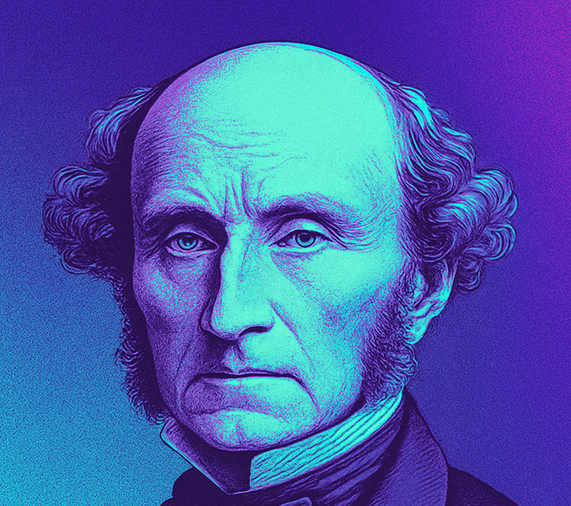
Whatever is known to us by consciousness, is known beyond possibility of question. What one sees or feels, whether bodily or mentally, one cannot but be sure that one sees or feels. No science is required for the purpose of establishing such truths; no rules of art can render our knowledge of them more certain than it is in itself. There is no logic for this portion of our knowledge.
▼
Source
p. 4
3 months 3 weeks ago
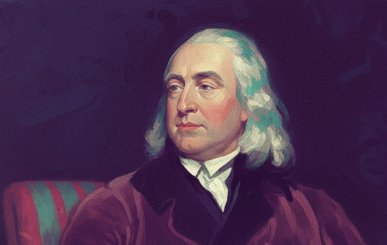
Prose is when all the lines except the last go on to the end. Poetry is when some of them fall short of it.
▼
Source
As quoted in Life of John Stuart Mill (1954) by M. St.J. Packe, Bk. I, Ch. II
3 months 3 weeks ago
Discipline 'makes' individuals; it is the specific technique of a power that regards individuals both as objects and as instruments of its exercise. It is not a triumphant power...it is a modest, suspicious power, which functions as a calculated, but permanent economy.
3 months 3 weeks ago
If you live long enough, you'll see that every victory turns into a defeat.
3 months 3 weeks ago
An artist will betray himself by some sort of sincerity.
3 months 3 weeks ago
We are told that a utilitarian will be apt to make his own particular case an exception to moral rules, and, when under temptation, will see a utility in the breach of a rule, greater than he will see in its observance. But is utility the only creed which is able to furnish us with excuses for evil doing, and means of cheating our own conscience? They are afforded in abundance by all doctrines which recognise as a fact in morals the existence of conflicting considerations; which all doctrines do, that have been believed by sane persons. It is not the fault of any creed, but of the complicated nature of human affairs, that rules of conduct cannot be so framed as to require no exceptions, and that hardly any kind of action can safely be laid down as either always obligatory or always condemnable.
▼
Source
Ch. 2
3 months 3 weeks ago
When a philosopher criticizes a ... a citizen criticizes the majority... a pupil criticizes his teacher... such speakers may be using parrhesia.
3 months 3 weeks ago
Each of us is responsible for everything and to every human being.
▼
Source
Fyodor Dostoevsky in The Brothers Karamazov; this was used as an epigraph in The Blood of Others, and is sometimes attributed to de Beauvoir
3 months 3 weeks ago
Being is - or should be - necessary.
3 months 3 weeks ago
In the course of instruction which I have partially retraced, the point most superficially apparent is the great effort to give, during the years of childhood an amount of knowledge in what are considered the higher branches of education, which is seldom acquired (if acquired at all) until the age of manhood.
▼
Source
([https://archive.org/details/autobiography01mill/page/30/mode/1up p. 30])
3 months 3 weeks ago
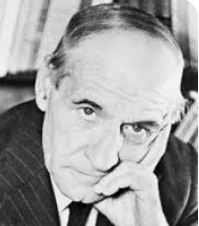
Strictly speaking, the mass, as a psychological fact, can be defined without waiting for individuals to appear in mass formation. In the presence of one individual we can decide whether he is "mass" or not. The mass is all that which sets no value on itself — good or ill — based on specific grounds, but which feels itself "just like everybody," and nevertheless is not concerned about it; is, in fact, quite happy to feel itself as one with everybody else.
▼
Source
Chap.I: The Coming Of The Masses
3 months 3 weeks ago
Sequestered in the usual sectarianism of the academic world, no stimulating reading had existed that took into consideration the arguments of Friedrich Hayek, Gary Becker, or Milton Friedman. On this point, one can only agree with Lagasnerie: Foucault allowed us to read and understand these authors, to discover in them a complex and stimulating body of thought. On that point I totally agree with him. It's undeniable that Foucault always took pains to inquire into theoretical corpuses of widely differing horizons and to constantly question his own ideas.
▼
Source
Daniel Zamora, "[https://www.jacobinmag.com/2014/12/foucault-interview/ Can We Criticize Foucault?]" (2014)
3 months 3 weeks ago
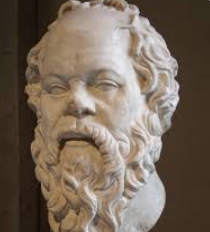
If the knowledge which we acquired before birth was lost to us at birth, and afterwords by the use of the senses we recovered that which we previously knew, will not that which we call learning be a process of recovering our knowledge, and may not this be rightly termed recollection by us? ...Then, Simmias, our souls must have existed before they were in the form of man—without bodies, and must have had intelligence.

3 months 3 weeks ago
Tragedy is all about losing. And humor is all about gaining perspective. Humour returns our gladness. And with gladness comes generosity. Humor returns us to the light and makes us light—it kills grudges, buries bodies–buries revenge—buries blame and guilt—fear and dread. Laughter, like hiccups and sneezes and farts and burps, relieves us of severity.
▼
Source
On the power of humor.[https://monkeybicycle.net/category/interviews/page/16/] (Monkey Bicycle, August 23, 2013)
3 months 3 weeks ago
I have never known any man who could do such ample justice to his best thoughts in colloquial discussion. His perfect command over his great mental resources, the terseness and expressiveness of his language and the moral earnestness as well as intellectual force of his delivery, made him one of the most striking of all argumentative conversers: and he was full of anecdote, a hearty laugher, and, when with people whom he liked, a most lively and amusing companion. It was not solely, or even chiefly, in diffusing his merely intellectual convictions that his power showed itself: it was still more through the influence of a quality, of which I have only since learnt to appreciate the extreme rarity: that exalted public spirit, and regard above all things to the good of the whole, which warmed into life and activity every germ of similar virtue that existed in the minds he came in contact with: the desire he made them feel for his approbation, the shame at his disapproval; the moral support which his conversation and his very existence gave to those who were aiming to the same objects, and the encouragement he afforded to the fainthearted or desponding among them, by the firm confidence which (though the reverse of sanguine as to the results to be expected in any one particular case) he always felt in the power of reason, the general progress of improvement, and the good which individuals could do by judicious effort.
▼
Source
([https://archive.org/details/autobiography01mill/page/101/mode/1up pp. 101-102])
3 months 3 weeks ago
Greeks and Latins appear in history lodged, like bees in their hives, within cities, poleis. … The polis is not primarily a collection of habitable dwellings, but a meeting-place for citizens, a space set apart for public functions. The city is not built, as is the cottage or the domus, to shelter from the weather and to propagate the species — these are personal, family concerns — but in order to discuss public affairs. … The man of the fields is still a sort of vegetable. His existence, all that he feels, thinks, wishes for, preserves the listless drowsiness in which the plant lives. The great civilisations of Asia and Africa were, from this point of view, huge anthropomorphic vegetations. …Socrates, the great townsman, quintessence of the spirit of the polis, can say: "I have nothing to do with the trees of the field, I have to do only with the man of the city." What has ever been known of this by the Hindu, the Persian, the Chinese, or the Egyptian?
▼
Source
Chapter XIV: Who Rules The World?
3 months 3 weeks ago
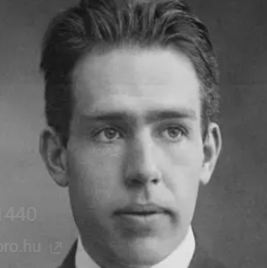
The grand discoveries which scientific experiment yielded at and about the turn of the century, in which investigators in many countries took an eminent part and which were destined all unexpectedly to give us a fresh insight into the structure of atoms, were due in the first instance, as all are aware, to the work of the great investigators of the English school, Sir Joseph Thomson and Sir Ernest Rutherford, who have inscribed their names on the tablets of the history of scientific research as distinguished witnesses to the truth that imagination and acumen are capable of penetrating the crowded mass of registered experience and of revealing Nature's simplicity to our gaze.
▼
Source
Niels Bohr's speech at the Nobel Banquet in Stockholm (December 10, 1922)
3 months 3 weeks ago
If the immortal is also imperishable, the soul when attacked by death cannot perish; for the preceding argument shows that the soul will not admit of death, or even be dead, any more than three or the odd number will admit of the even...
3 months 3 weeks ago
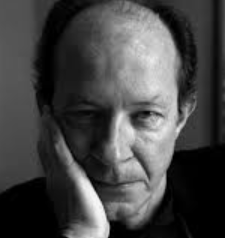
Antoine Meillet also noted that imperatives in European languages are typically the morphological root of the verb, and hypothesised that the imperative was the primitive form of a verb: “walk!” precedes “to walk” or “he walks”. This opens up the possibility of an alternative ontology, or pre-ontology, based on commandment rather than assertion, on “be!” rather than “is”. While philosophical or scientific statements would fall under the ordinary “is”-based ontology, fields like law, religion or magic would operate in the imperative mode: “let there be…”
▼
Source
Giorgio Agamben, [http://bat020.com/2011/03/30/giorgio-agamben-what-is-a-commandment/ "What is a commandment?"] March 28, 2011
3 months 3 weeks ago
I soon perceived that she possessed in combination, the qualities which in all other persons whom I had known I had been only too happy to find singly. In her, complete emancipation from every kind of superstition (including that which attributes a pretended perfection to the order of nature and the universe), and an earnest protest against many things which are still part of the established constitution of society, resulted not from the hard intellect, but from strength of noble and elevated feeling, and co-existed with a highly reverential nature.
▼
Source
([https://archive.org/details/autobiography01mill/page/186/mode/1up p. 186])
3 months 3 weeks ago
I think that the philosopher must, for his own purposes, carry methodological strictness to an extreme when he is investigating and pursuing his truths, but when he is ready to enunciate them and give them out, he ought to avoid the cynical skill with which some scientists, like a Hercules at the fair, amuse themselves by displaying to the public the biceps of their technique.
▼
Source
pp. 19-20

3 months 3 weeks ago
The lot assigned to every man is suited to him, and suits him to itself.
▼
Source
III, 4
CivilSimian.com created by AxiomaticPanic, CivilSimian, Kalokagathia