
3 months 3 weeks ago
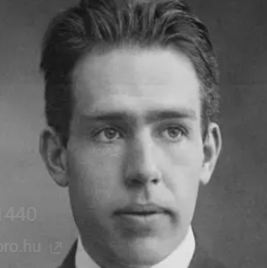
One of the favorite maxims of my father was the distinction between the two sorts of truths, profound truths recognized by the fact that the opposite is also a profound truth, in contrast to trivialities where opposites are obviously absurd.
▼
Source
Hans Henrik Bohr, writing about his father in "My father" in Niels Bohr - His Life and Work As Seen By His Friends and Colleagues (1967), S. Rozental, ed.

3 months 3 weeks ago
Becoming a vegetarian is not merely a symbolic gesture. Nor is it an attempt to isolate oneself from the ugly realities of the world, to keep oneself pure and so without responsibility for the cruelty and carnage all around. Becoming a vegetarian is a highly practical and effective step one can take toward ending both the killing of nonhuman animals and the infliction of suffering upon them.
▼
Source
Ch. 4: Becoming a Vegetarian
3 months 3 weeks ago
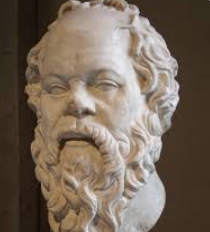
If we are to use women for the same things as the men, we must also teach them the same things.
▼
Source
Socrates, as quoted by Bettany Hughes: [http://www.telegraph.co.uk/women/womens-life/11785181/Feminism-started-with-the-Buddha-and-Confucius-25-centuries-ago.html "Feminism started with the Buddha and Confucius 25 centuries ago"].
3 months 3 weeks ago
Since governmental activity may be deemed a service which is useful to society, society should consent to pay for this service.
3 months 3 weeks ago
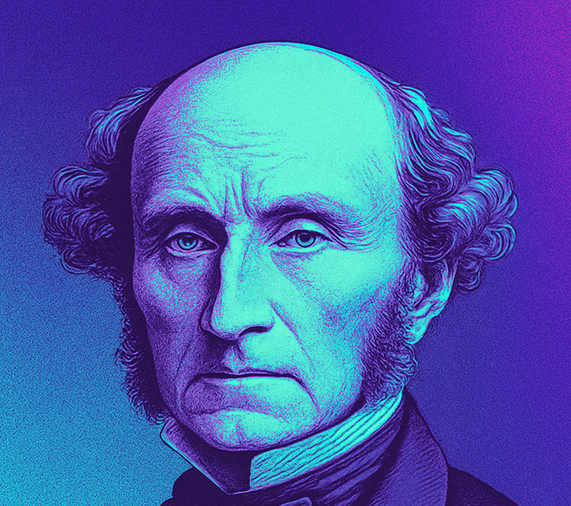
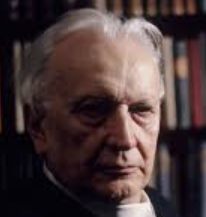
The growing feeling that private life should be distanced from public life, and was in some sense opposed to it, wrecked the philosophic attempt to reconcile the two. Specifically it destroyed John Stuart Mill's attempt to combine social and moral philosophy under the unifying principle of utility. In one sense, Mill was successful. Setting out to provide a 'unifying social doctrine' by incorporating the 'major positive views' of his Intuitionist critics, he succeeded in giving Utilitarian justifications for many current social practices. Where Mill was much less successful was in linking his social doctrine with his morals.Mill's Autobiography is a brilliant dissection of Victorianism's mid-life crisis. It raised two problems which are vital for understanding the Cambridge civilisation of Keynes's day. First, how is one to reconcile the claims of personal happiness and social duty when the two diverge? And is happiness or pleasure an adequate aim for human conduct? Are there not some things worth doing some dispositions worth cultivating, which are valuable in themselves, irrespective of any Utilitarian justifications they might have? Is it not better to be Socrates dissatisfied than a fool satisfied?What Mill succeeded in doing was to make Cambridge Benthamite in that aspect of its thought which related to social policy. Mill's Utilitarianism, Cambridge mathematics and Cambridge's Nonconformist conscience were the chief constituents in what became the Cambridge School of Economics, whose founder was Alfred Marshall. What Mill failed to do was to make Cambridge moral philosophy Benthamite.
▼
Source
Robert Skidelsky, John Maynard Keynes: 1883-1946: Economist, Philosopher, Statesman (2003), Ch. 2. Cambridge Civilisation: Sidgwick and Marshall
3 months 3 weeks ago
The interlacedness of the two heterogeneous origins [Remark: This refers to the origins of governance: (1) necessity to work cooperatively, (2) the fight between man and man] prevails as the fundamental characteristic of governance. Therefore even any true community, being successful somewhere between boundaries for a common purpose, elsewhere becomes in theory a means for misleading, used to interpret and cover-up actually existing power. Again and again things are named by their contrary and are hidden. In that manner, under the pretense of communication - the open discussion - people are interrogated and commands are given, under the pretense of freedom and voluntariness behavior is enforced, in the coat of pure ethics the evil is carried out, under the pretense of truth lies and fraud are committed, and all values valid at any one time are, depending on the situation, either applied or ignored. [Remarks: "Herrschaft" = "governance" or "leadership", "Gewalt" = "power" or "violence"]
▼
Source
On Truth (1948), Pt 2, Ch. 3, II, B, 3, b)

3 months 3 weeks ago
You have a mind? —Yes. Well, why not use it?
▼
Source
(Hays translation)
3 months 3 weeks ago
Animals no doubt have different interests from humans, and may experience different pleasures and pains, but the principle of equal consideration for similar interests still holds, and pleasures and pains of similar intensity and duration should be given equal weight, whether they are experienced by humans or by animals.
▼
Source
p. 342

3 months 3 weeks ago
Engage people with what they expect; it is what they are able to discern and confirms their projections. It settles them into predictable patterns of response, occupying their minds while you wait for the extraordinary moment — that which they cannot anticipate.
3 months 3 weeks ago
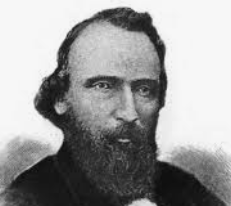
Whenever conscience speaks with a divided, uncertain, and disputed voice, it is not yet the voice of God. Descend still deeper into yourself, until you hear nothing but a clear and undivided voice, a voice which does away with doubt and brings with it persuasion, light and serenity.
▼
Source
6 April 1851
3 months 3 weeks ago
At dawn, when you have trouble getting out of bed, tell yourself: ‘I have to go to work – as a human being. What do I have to complain of, if I’m going to do what I was born for – the things I was brought into the world to do? Or is this what I was created for? To huddle under the blankets and stay warm?’
▼
Source
At dawn of day, when you dislike being called, have this thought ready: "I am called to man's labour; why then do I make a difficulty if I am going out to do what I was born to do and what I was brought into the world for?(Farquharson translation) | Ὄρθρο
3 months 3 weeks ago
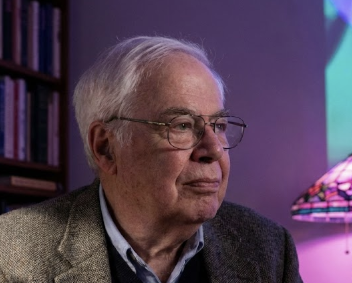
Philosophy makes progress not by becoming more rigorous but by becoming more imaginative.
▼
Source
Introduction to Truth and Progress: Philosophical Papers, Volume 3 (1998).

3 months 3 weeks ago
Dear brothers and sisters, St Teresa of Jesus is a true teacher of Christian life for the faithful of every time. In our society, which all too often lacks spiritual values, St Teresa teaches us to be unflagging witnesses of God, of his presence and of his action. She teaches us truly to feel this thirst for God that exists in the depths of our hearts, this desire to see God, to seek God, to be in conversation with him and to be his friends.This is the friendship we all need that we must seek anew, day after day. May the example of this Saint, profoundly contemplative and effectively active, spur us too every day to dedicate the right time to prayer, to this openness to God, to this journey, in order to seek God, to see him, to discover his friendship and so to find true life; indeed many of us should truly say: “I am not alive, I am not truly alive because I do not live the essence of my life”.Therefore time devoted to prayer is not time wasted, it is time in which the path of life unfolds, the path unfolds to learning from God an ardent love for him, for his Church, and practical charity for our brothers and sisters.
▼
Source
Benedict XVI, General Audience Address, 2 February 2011.
3 months 3 weeks ago
The shortest and surest way of arriving at real knowledge is to unlearn the lessons we have been taught, to mount the first principles, and take nobody's word about them.
▼
Source
As quoted in Treasury of Wisdom, Wit and Humor, Odd Comparisons and Proverbs (1891) by Adam Woolever
3 months 3 weeks ago
What is not good for the swarm is not good for the bee.
▼
Source
VI, 54

3 months 3 weeks ago
A poet without love were a physical and metaphysical impossibility.
▼
Source
Burns (1828).

3 months 3 weeks ago
If no law of God had prohibited idols to be made by us; if no voice of the Holy Spirit uttered general menace no less against the makers than the worshippers of idols; from our sacrament itself we would draw our interpretation that arts of that kind are opposed to the faith. For how have we renounced the devil and his angels, if we make them? What divorce have we declared from them, I say not with whom, but dependent on whom, we live? What discord have we entered into with those to whom we are under obligation for the sake of our maintenance? Can you have denied with the tongue what with the hand you confess? unmake by word what by deed you make? preach one God, you who make so many? preach the true God, you who make false ones? "I make," says one, "but I worship not;" as if there were some cause for which he dare not worship, besides that for which he ought not also to make,--the offence done to God, namely, in either case. Nay, you who make, that they may be able to be worshipped, do worship; and you worship, not with the spirit of some worthless perfume, but with your own; nor at the expense of a beast's soul, but of your own. To them you immolate your ingenuity; to them you make your sweat a libation; to them you kindle the torch of your forethought. More are you to them than a priest, since it is by your means they have a priest; your diligence is their divinity. Do you affirm that you worship not what you make? Ah! but they affirm not so, to whom you slay this fatter, more precious and greater victim, your salvation.
▼
Source
Chapter VI, translated by , '.

3 months 3 weeks ago
I have not been able to discover the cause of those properties of gravity from phenomena, and I frame no hypotheses; for whatever is not deduced from the phenomena is to be called a hypothesis, and hypotheses, whether metaphysical or physical, whether of occult qualities or mechanical, have no place in experimental philosophy.
▼
Source
Letter to Robert Hooke (15 February 1676) [5 February 1676 (O.S.)]
3 months 3 weeks ago
Who now reads Bolingbroke? Who ever read him through? ... I do not often quote Bolingbroke, nor have his works in general, left any permanent impression on my mind. He is a presumptuousness and a superficial writer. But he has one observation, which in my opinion, is not without depth and solidity. He says, that he prefers a monarchy to other governments; because you can better ingraft any description of republic on a monarchy than any thing of monarchy upon the republican forms. I think him perfectly in the right.
▼
Source
Edmund Burke, Reflections on the Revolution in France (1790), pp. 133, 187
3 months 3 weeks ago
Theology recognizes the contingency of human existence only to derive it from a necessary being, that is, to remove it. Theology makes use of philosophical wonder only for the purpose of motivating an affirmation which ends it. Philosophy, on the other hand, arouses us to what is problematic in our own existence and in that of the world, to such a point that we shall never be cured of searching for a solution.
▼
Source
p. 44
3 months 3 weeks ago
Another may be more expert in casting [throwing] his opponent; but he is not more social, nor more modest, nor better disciplined to meet all that happens, nor more considerate with respect to the faults of his neighbors.
▼
Source
VII, 52
3 months 3 weeks ago
Man is not the creature and product of Mechanism; but, in a far truer sense, its creator and producer: it is the noble People that makes the noble Government; rather than conversely.

3 months 3 weeks ago
Accepting the absurdity of everything around us is one step, a necessary experience: it should not become a dead end. It arouses a revolt that can become fruitful.
▼
Source
"Three Interviews" in Lyrical and Critical Essays (1970)

3 months 3 weeks ago
See me safe up: for in my coming down, I can shift for myself.
▼
Source
On ascending the platform to his execution, as quoted in History of England (1856-1870) by James Anthony Froude
3 months 3 weeks ago
The Ellipse is the most simple of the Conic Sections, most known, and nearest of Kin to a Circle, and easiest describ'd by the Hand in plano. Though many prefer the Parabola before it, for the Simplicity of the Æquation by which it is express'd. But by this Reason the Parabola ought to be preferr'd before the Circle it self, which it never is. Therefore the reasoning from the Simplicity of the Æquation will not hold. The modern Geometers are too fond of the Speculation of Æquations.
3 months 3 weeks ago
To be free is of the essence of every intellectual being.
▼
Source
p. 6.
3 months 3 weeks ago
In the constitution of that rational animal I see no virtue which is opposed to justice, but I see a virtue which is opposed to love of pleasure, and that is temperance.
▼
Source
VIII, 39

3 months 3 weeks ago
I cannot contribute anything to this world because I only have one method: agony.
3 months 3 weeks ago
Great men are the inspired (speaking and acting) texts of that divine Book of Revelations, wherof a chapter is completed from epoch to epoch, and by some named History.
▼
Source
Bk. II, ch. 8.
3 months 3 weeks ago
With the exception of professional rationalists, today people despair of true knowledge. If the only significant history of human thought were to be written, it would have to be history of its successive regrets and impotences.
▼
Source
Absurd Walls

3 months 3 weeks ago
The earth which is the visible, natural basis of it represents the gross, carnal parts. The element of water answers to the blood, for in it the pulse of the Great World beats: this most men call the flux and reflux, but they know not the true cause of it. The air is the outward refreshing spirit, where this vast creature breathes though invisibly, yet not altogether insensibly.
3 months 3 weeks ago
We are now in a period of social transition, a period characterized, that is, by an unusually rapid rate of change of the most important economic, social, political, and cultural institutions of society. This transition is from the type of society which we have called capitalist or bourgeois to a type of society which we shall call managerial.
▼
Source
p. 71; cited in: Robert Manley (ed) (1962) [http://archive.org/stream/ageofmanager00manl#page/n15/mode/2up Age of the manager]. p. xiii
3 months 3 weeks ago
If man reflects on the changes and transformations which follow one another like wave after wave and their rapidity, he will despise everything which is perishable.
▼
Source
IX, 28
3 months 3 weeks ago
To detach yourself elegantly from the world; to give contour and grace to sadness; a solitude in style; a walk that gives cadence to memories; stepping towards the intangible; with the breath in the trembling margins of things; the past reborn in the overflow of fragrances; the smell, through which we conquer time; the contour of the invisible things; the forms of the immaterial; to deepen yourself in the intangible; to touch the world airborne by smell; aerial dialogue and gliding dissolution; to bathe in your own reflecting fragmentation...
3 months 3 weeks ago
It can be said of him [Scott], when he departed he took a man's life along with him. No sounder piece of British manhood was put together in that eighteenth century of time.
3 months 3 weeks ago
Of all the schools of patience and lucidity, creation is the most effective. It is also the staggering evidence of man's sole dignity: the dogged revolt against his condition, perseverance in an effort considered sterile. It calls for a daily effort, self-mastery, a precise estimate of the limits of truth, measure, and strength. It constitutes an ascesis. All that "for nothing," in order to repeat and mark time. But perhaps the great work of art has less importance in itself than in the ordeal it demands of a man and the opportunity it provides him of overcoming his phantoms and approaching a little closer to his naked reality.
3 months 3 weeks ago
Magicians were the first attendants our Saviour met withal in this world, and the only philosophers who acknowledged Him in the flesh before that He Himself discovered it. I find God conversant with them, as He was formerly with the patriarchs. He directs them in their travels with a star, as He did the Israelites with a pillar of fire. He informs them of future dangers in their dreams.
▼
Source
(129)

3 months 3 weeks ago
A man in health questions whether there is a God, and he also doubts whether it be a sin to have intercourse with a woman, who is at liberty to refuse; but when he falls ill, or when his mistress is with child, she is discarded, and he believes in God.
▼
Source
Of Freethinkers (6)
3 months 3 weeks ago
Reason has never really directed social reality, but now reason has been so thoroughly purged of any specific trend or preference that it has finally renounced even the task of passing judgment on man’s actions and way of life. Reason has turned them over for ultimate sanction to the conflicting interests to which our world actually seems abandoned.
▼
Source
p. 9.
3 months 3 weeks ago
When thou art offended at any man's fault, forthwith turn to thyself and reflect in what manner thou doest error thyself... For by attending to this thou wilt quickly forget thy anger, if this consideration is also added, that the man is compelled; for what else could he do? or, if thou art able, take away from him the compulsion.
▼
Source
X, 30
3 months 3 weeks ago
A testimony is sufficient when it rests on: 1st. A great number of very sensible witnesses who agree in having seen well. 2d. Who are sane, bodily and mentally. 3d. Who are impartial and disinterested. 4th. Who unanimously agree. 5th. Who solemnly certify to the fact.
▼
Source
As quoted by H. P. Blavatsky in Isis Unveiled, Vol. I, p. 108, (1877)
3 months 3 weeks ago
As long as I live I shall not allow myself to forget that I shall die; I am waiting for death so that I can forget about it.
3 months 3 weeks ago
I called it a small light shining and shaping in the huge vortex of Norse darkness. Yet the darkness itself was alive; consider that. It was the eager inarticulate uninstructed Mind of the whole Norse People, longing only to become articulate, to go on articulating ever farther!
3 months 3 weeks ago
The evil that is in the world always comes of ignorance, and good intentions may do as much harm as malevolence, if they lack understanding. On the whole men are more good than bad; that, however, isn't the real point. But they are more or less ignorant, and it is this that we call vice or virtue; the most incorrigible vice being that of an ignorance which fancies it knows everything and therefore claims for itself the right to kill. There can be no true goodness, nor true love, without the utmost clear-sightedness.

3 months 3 weeks ago
Disdain is the privilege of those who, like us, have been assured by reflection of their superiority to their adversary. And where the chances are the same, knowledge fortifies courage by the contempt which is its consequence, its trust being placed, not in hope, which is the prop of the desperate, but in a judgment grounded upon existing resources, whose anticipations are more to be depended upon.
▼
Source
Book II, 2.62-[4]-[5]
3 months 3 weeks ago
Soon, many European elites insinuated that the jihadist attacks had some moral justification. These anti-American views began to circulate well before the campaign to dislodge the Taliban kicked off on October 7. The bombing which became the most frequently invoked reason to take sides against the U.S. had not yet even begun.
3 months 3 weeks ago
Everything harmonizes with me, which is harmonious to thee, O Universe. Nothing for me is too early or too late, which is in due time for thee. There is one light of the sun, though it is interrupted by walls, mountains and infinite other things. There is one common substance, though it is distributed among countless bodies which have their several qualities. There is one soul, though it is distributed among several natures and individual limitations. There is one intelligent soul, though it seems to be divided.
▼
Source
XII, 30
3 months 3 weeks ago
If there were no God, it would be necessary to invent one.
▼
Source
p. 96
3 months 3 weeks ago
In a single second we do away with all seconds; God himself could not do as much.
3 months 3 weeks ago
By awakening the Heroic that slumbers in every heart, can any Religion gain followers.
CivilSimian.com created by AxiomaticPanic, CivilSimian, Kalokagathia