

3 months 3 weeks ago
Alyosha can, in fact, treat Ivan with compassion as a "real simpleton." The latter only made an attempt at self-control and failed. Others will appear, with more serious intentions, who, on the basis of the same despairing nihilism, will insist on ruling the world. These are the Grand Inquisitors who imprison Christ and come to tell Him that His method is not correct, that universal happiness cannot be achieved by the immediate freedom of choosing between good and evil, but by the domination and unification of the world. The first step is to conquer and rule. The kingdom of heaven will, in fact, appear on earth, but it will be ruled over by men — a mere handful to begin with, who will be the Caesars, because they were the first to understand — and later, with time, by all men. The unity of all creation will be achieved by every possible means, since everything is permitted. The Grand Inquisitor is old and tired, for the knowledge he possesses is bitter. He knows that men are lazy rather than cowardly and that they prefer peace and death to the liberty of discerning between good and evil. He has pity, a cold pity, for the silent prisoner whom history endlessly deceives. He urges him to speak, to recognize his misdeeds, and, in one sense, to approve the actions of the Inquisitors and of the Caesars. But the prisoner does not speak.
▼
Source
Part 2: Metaphysical Rebellion

3 months 3 weeks ago
Whoever imposes severe punishment becomes repulsive to the people; while he who awards mild punishment becomes contemptible. But whoever imposes punishment as deserved becomes respectable. For punishment when awarded with due consideration, makes the people devoted to righteousness and to works productive of wealth and enjoyment; while punishment, when ill-awarded under the influence of greed and anger or owing to ignorance, excites fury even among hermits and ascetics dwelling in forests, not to speak of householders.
▼
Source
Book I : "Concerning Discipline" Chapter 4 "Determination of the Place of Varta and of Dandaniti"

3 months 3 weeks ago
They have discovered that the length of time we have now been in commission has rotted our ships and wasted our crews, and that with the completeness of our crews and the soundness of the pristine efficiency of our navy has departed. For it is impossible for us to haul our ships ashore and dry them out because the enemy's vessels being as many or more than our own, we are constantly anticipating an attack.
▼
Source
Book VII, 7.12-[3]-[4]
3 months 3 weeks ago
Where questions of style and exposition are concerned I try to follow a simple maxim: if you can’t say it clearly you don’t understand it yourself.
▼
Source
P. x.
3 months 3 weeks ago
He who makes too much or too little of himself has a false measure for everything.
▼
Source
No. 188

3 months 3 weeks ago
All things are interwoven with one another; a sacred bond unites them; there is scarcely one thing that is isolated from another. Everything is coordinated, everything works together in giving form to one universe. The world-order is a unity made up of multiplicity: God is one, pervading all things; all being is one, all law is one (namely, the common reason which all thinking persons possess) and all truth is one– if, as we believe, there can be but one path to perfection for beings that are alike in kind and reason.
▼
Source
VII. 9, trans. Maxwell Staniforth
3 months 3 weeks ago
Jest with life: for that only is it good.
▼
Source
p. 239

3 months 3 weeks ago
When we cannot be delivered from ourselves, we delight in devouring ourselves.

3 months 3 weeks ago
Alas, the Hero from of old has had to cramp himself into strange shapes: the world knows not well at any time what to do with him, so foreign is his aspect in the world!
3 months 3 weeks ago
Great novelists are philosopher-novelists who write in images instead of arguments.
▼
Source
This may have arisen as a paraphrase of statements found in The Myth of Sisyphus (1942), "An Absurd Reasoning", or one found in The Novelist as Philosopher: Studies in French Fiction 1935-1960 (1962) edited by John Cruikshank, p. 218

3 months 3 weeks ago
The animal needing something knows how much it needs, the man does not.
▼
Source
Freeman (1948), p. 162 | Variant: The needy animal knows how much it needs, but the needy man does not.

3 months 3 weeks ago
If You return to earth, come armed Lord,because enemies are preparing other crosses—not Turks, not Jews—but those of Your own kingdom
▼
Source
"To Jesus Christ", as cited in Roush, Sherry, 2011, Selected Philosophical Poems of Tommaso Campanella, University of Chicago Press, p. 18.
3 months 3 weeks ago
Within a few years of his death it was clear that his work had established the study of jurisprudence in England.
▼
Source
, "Introduction to John Austin", in: The Province of Jurisprudence Determined, Weidenfeld & Nicolson, 1955, pp. xvi.
3 months 3 weeks ago
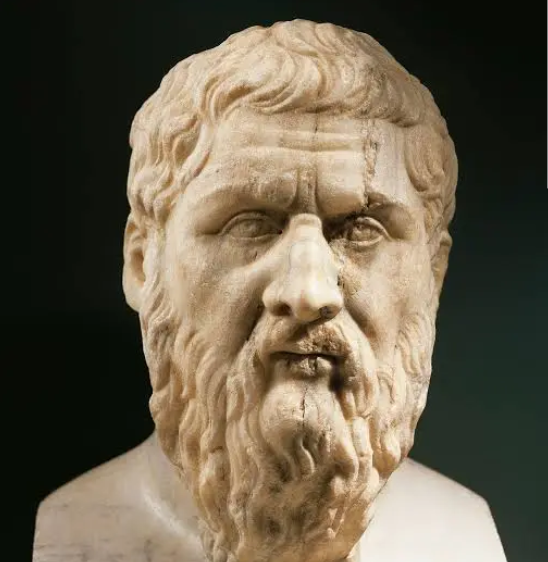
Wonder is the feeling of a philosopher, and philosophy begins in wonder.
▼
Source
155d, The Dialogues of Plato, Volume 3, 1871, p. [http://books.google.com/books?id=4kQNAAAAIAAJ&pg=PA377 377]
3 months 3 weeks ago
There's a Bible on that shelf there. But I keep it next to Voltaire – poison and antidote.
▼
Source
Bertrand Russell, Kenneth Harris Talking To: Bertrand Russell (1971)
3 months 3 weeks ago
Sooner or later, each desire must encounter its lassitude: its truth . . .

3 months 3 weeks ago
And as in other things, so in men, not the seller, but the buyer determines the Price.
▼
Source
The First Part, Chapter 10, p. 42
3 months 3 weeks ago
Fire is the best of servents; but what a master!
▼
Source
Bk. II, ch. 9.
3 months 3 weeks ago
It is better to correct your own faults than those of another.

3 months 3 weeks ago
Treatises may be didactic in tone, but essentially they lack the conclusiveness of an instruction which could be asserted, like doctrine, by virtue of its own authority. ... Tirelessly the process of thinking makes new beginnings, returning in a roundabout way to its original object. This continual pausing for breath is the mode most proper to the process of contemplation. For by pursuing different levels of meaning in its examination of one single object it receives both the incentive to begin again and the justification for its irregular rhythm.
▼
Source
p. 28
3 months 3 weeks ago
The Spanish Inquisition sought to avoid direct responsibility for the burning of heretics by handing them over to the secular arm; to burn them itself, it piously explained, would be wholly inconsistent with its Christian principles. Few of us would allow the Inquisition thus easily to wipe its hands clean of bloodshed; it knew quite well what would happen. Equally, where the technological application of scientific discoveries is clear and obvious — as when a scientist works on nerve gases — he cannot properly claim that such applications are "none of his business," merely on the ground that it is the military forces, not scientists, who use the gases to disable or kill. This is even more obvious when the scientist deliberately offers help to governments, in exchange for funds.If a scientist, or a philosopher, accepts funds from some such body as an office of naval research, then he is cheating if he knows his work will be useless to them and must take some responsibility for the outcome if he knows that it will be useful. He is subject, properly subject, to praise or blame in relation to any innovations which flow from his work.
▼
Source
As quoted in The Demon-Haunted World: Science as a Candle in the Dark (1995) by Carl Sagan.
3 months 3 weeks ago
Rhetoric, it seems, is a producer of persuasion for belief, not for instruction in the matter of right and wrong … And so the rhetorician's business is not to instruct a law court or a public meeting in matters of right and wrong, but only to make them believe.
3 months 3 weeks ago
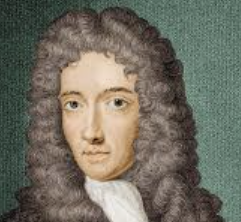
Those hypotheses do not a little hinder the progress of Humane knowledge, that introduce Morals and Politicks into the Explications of Corporeal Nature, where all things are indeed transacted according to Laws Mechanical.
▼
Source
[https://archive.org/details/experimentsnotes00boyl/page/n266/mode/1up Reflections upon the Hypothesis of Alcali and Acidum] (1675) [https://archive.org/details/experimentsnotes00boyl/page/n298/mode/1up p. 33.]
3 months 3 weeks ago
A minimum of unconsciousness is necessary if one wants to stay inside history. To act is one thing; to know one is acting is another. When lucidity invests the action, insinuates itself into it, action is undone, and with it, prejudice, whose function consists, precisely, in subordinating, in enslaving consciousness to action. The man who unmasks his fictions renounces his own resources and, in a sense, himself. Consequently, he will accept other fictions which will deny him, since they will not have cropped up from his own depths. No man concerned with his equilibrium may exceed a certain degree of lucidity and analysis.
3 months 3 weeks ago
So that every Crime is a sinne; but not every sinne a Crime.
▼
Source
The Second Part, Chapter 27, p. 151
3 months 3 weeks ago
Properly speaking, the Land belongs to these two: To the Almighty God; and to all His Children of Men that have ever worked well on it, or that shall ever work well on it. No generation of men can or could, with never such solemnity and effort, sell Land on any other principle: it is not the property of any generation, we say, but that of all the past generations that have worked on it, and of all the future ones that shall work on it.
3 months 3 weeks ago
It's not that there are no differences between human and non-human animals, any more than there are no differences between black people and white people, freeborn citizens and slaves, men and women, Jews and gentiles, gays or heterosexuals. The question is rather: are they morally relevant differences? This matters because morally catastrophic consequences can ensue when we latch on to a real but morally irrelevant difference between sentient beings.
▼
Source
"[https://www.abolitionist.com/ The Abolitionist Project]", Talks given at the FHI (Oxford University) and the Charity International Happiness Conference, 2007

3 months 3 weeks ago
The instincts of man are so earth-bound that they shrewdly sense it whenever the approach of logic threatens them.
▼
Source
Chapter Five, Christian sources, p. 87
3 months 3 weeks ago
Knowledge and progress are the fruits of action.
3 months 3 weeks ago
Time then has come into being along with the universe, that being generated together, together they may be dissolved, should a dissolution of them ever come to pass; and it was made after the pattern of the eternal nature, that it might be as like to it as was possible. For the pattern is existent for all eternity; but the copy has been and is and shall be throughout all time continually. So then this was the plan and intent of God for the generation of time; the sun and the moon and five other stars which have the name of planets have been created for defining and preserving the numbers of time. ...and a month is fulfilled when the moon, after completing her own orbit, overtakes the sun; a year, when the sun has completed his own course. But the courses of the others men have not taken into account, save a few out of many... they do not know that time arises from the wanderings of these, which are incalculable in multitude and marvellously intricate. None the less however can we observe that the perfect number of time fulfils the perfect year at the moment when the relative swiftnesses of all the eight revolutions accomplish their course together and reach their starting-point, being measured by the circle of the same and uniformly moving. In this way then and for these causes were created all such of the stars as wander through the heavens and turn about therein, in order that this universe may be most like to the perfect and ideal animal by its assimilation to the eternal being.
▼
Source
38d–40a, as quoted by R. D. Archer-Hind, [https://books.google.com/books?id=q2YMAAAAIAAJ The Timaeus of Plato] (1888)
3 months 3 weeks ago
Now a man need not be very conversant in the writings of Chymists to observe, in how Laxe, Indefinite, and almost Arbitrary Senses they employ the Terms of Salt, Sulphur and Mercury; of which I could never find that they were agreed upon any certain Definitions or setled Notions; not onely differing Authors, but not unfrequently one and the same, and perhaps in the same Book, employing them in very differing senses.
3 months 3 weeks ago
To venture upon an undertaking of any kind, even the most insignificant, is to sacrifice to envy.
3 months 3 weeks ago
The Noble in the high place, the Ignoble in the low; that is, in all times and in all countries, the Almighty Maker's Law.
3 months 3 weeks ago
Like nonhuman animals in human factory farms, free-living nonhumans who are starving - or being disembowelled, asphyxiated or eaten alive - cannot console themselves by chanting the Four Noble Truths of Buddhism. The moral case for helping other sentient beings, regardless or race or species, does not rest on the distress their plight does (or doesn't) cause spectators.
▼
Source
Reply to [https://www.treehugger.com/natural-sciences/meet-the-people-who-want-to-turn-predators-into-vegans.html#comment-1941979247 Meet the people who want to turn predators into herbivores], TreeHugger, 2 Apr. 2015

3 months 3 weeks ago
The socialist has always believed that the necessary knowledge is at hand, so there is no need for competition in the marketplace. The economy needs only to be directed by a rational planner who will dictate the transactions that are to proceed for everyone’s benefit. The capitalist, on the other hand, has understood this proposal to be nothing but a conceit, a product of human arrogance and folly—because in reality there is no human being, and no group of human beings, that possesses the necessary powers of reason and the necessary knowledge to correctly dictate how an entire economy should proceed for everyone’s benefit. Instead, the capitalist argues, from a skeptical and empirical point of view, that we should permit many independent economic actors and allow them freely to compete in developing and providing economic products and services. It is understood that because each of these competing business enterprises pursues a different set of aims, and is organized in a manner that is different from the others, some will succeed and some will fail. But those that succeed will do so in ways that no rational planner could have predicted in advance, and their discoveries will then be available for the imitation and refinement of others. In this way, the economy as a whole flourishes from this competition.
3 months 3 weeks ago
Leisure stands in a perpendicular position with respect to the working process — in just the same way as the "simple gaze" of intellectus does not consist in the "duration" (so to speak) of ratios working-out process, but instead cuts through it at the perpendicular (the ancients compared the ratio with time, the intellectus with the "always now" of eternity).
▼
Source
p. 34
3 months 3 weeks ago
The light dove cleaving in free flight the thin air, whose resistance it feels, might imagine that her movements would be far more free and rapid in airless space. Just in the same way did Plato, abandoning the world of sense because of the narrow limits it sets to the understanding, venture upon the wings of ideas beyond it, into the void space of pure intellect. He did not reflect that he made no real progress by all his efforts; for he met with no resistance which might serve him for a support, as it were, whereon to rest, and on which he might apply his powers, in order to let the intellect acquire momentum for its progress. It is, indeed, the common fate of human reason in speculation, to finish the imposing edifice of thought as rapidly as possible, and then, for the first time to begin to examine whether the foundation is a solid one or no.
▼
Source
Immanuel Kant, Critique of Pure Reason (1781); [http://books.google.com/books?id=E74IAAAAQAAJ tr. J. M. D. Meiklejohn] (1855)
3 months 3 weeks ago
It is difficult, it is impossible to believe that the Good Lord — "Our Father" — had a hand in the scandal of creation. Everything suggests that He took no part in it, that it proceeds from a god without scruples, a feculent god. Goodness does not create, lacking imagination; it takes imagination to put together a world, however botched. At the very least, there must be a mixture of good and evil in order to produce an action or a work.
3 months 3 weeks ago
To make more plans than an explorer or a crook, yet to be infected at the will's very root.
3 months 3 weeks ago
The Age that admires talk so much can have little discernment for inarticulate work, or for anything that is deep and genuine. Nobody, or hardly anybody, having in himself an earnest sense for truth, how can anybody recognize an inarticulate Veracity, or Nature-fact of any kind; a Human Doer especially, who is the most complex, profound, and inarticulate of all Nature's Facts? Nobody can recognize him: till once he is patented, get some public stamp of authenticity, and has been articulately proclaimed, and asserted to be a Doer. To the worshipper of talk, such a one is a sealed book. An excellent human soul, direct from Heaven,—how shall any excellence of man become recognizable to this unfortunate? Not except by announcing and placarding itself as excellent,—which, I reckon, it above other things will probably be in no great haste to do.
3 months 3 weeks ago
Language steps in where the angels of experience fear to tread.
▼
Source
Chapter 1, The Faces of Silence, p. 5
3 months 3 weeks ago
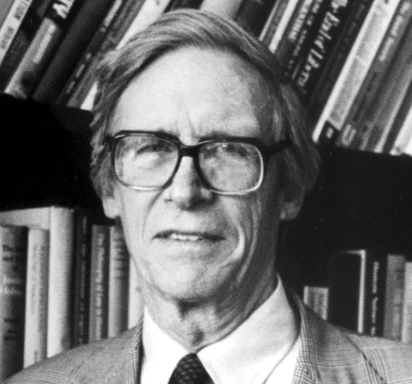
A scheme is unjust when the higher expectations, one or more of them, are excessive. If these expectations were decreased, the situation of the less favored would be improved.
▼
Source
Chapter II, Section 13, pg. 79
3 months 3 weeks ago
The interposition of the air very much modifies the effects of the heat upon the surface of the globe. The solar rays traversing the atmospheric strata, which are condensed by their own weight [at decreasing altitudes], heat them very unequally; those which are rarest are likewise coldest, because they... absorb a smaller part of the rays. The heat of the sun... in the form of light, possesses the property of penetrating transparent solids or liquids, and loses this property... when by... terrestrial bodies, it is turned into heat radiating without light.
3 months 3 weeks ago
Public control is indispensably necessary. Otherwise the exchange of experiences remains only with the closed circle of the officials of the new regime. Corruption becomes inevitable. (Lenin’s words, Bulletin No.29) Socialism in life demands a complete spiritual transformation in the masses degraded by centuries of bourgeois rule. Social instincts in place of egotistical ones, mass initiative in place of inertia, idealism which conquers all suffering, etc., etc. No one knows this better, describes it more penetratingly; repeats it more stubbornly than Lenin. But he is completely mistaken in the means he employs. Decree, dictatorial force of the factory overseer, draconian penalties, rule by terror – all these things are but palliatives. The only way to a rebirth is the school of public life itself, the most unlimited, the broadest democracy and public opinion. It is rule by terror which demoralizes.
▼
Source
[http://www.marxists.org/archive/luxemburg/1918/russian-revolution/ch06.htm "The Problem with Dictatorship" in The Russian Revolution] as translated by Bertram Wolfe (1918)

3 months 3 weeks ago
The New Testament … must be in some way traceable to an Indian source: its ethical system, its ascetic view of morality, its pessimism, and its Avatar, are all thoroughly Indian. It is its morality which places it in a position of such emphatic and essential antagonism to the Old Testament, so that the story of the Fall is the only possible point of connection between the two.
▼
Source
quoted in The Circle of Memory_ An Autobiography - Subhash Kak
3 months 3 weeks ago
I react like everyone else, even like those I most despise; but I make up for it by deploring every action I commit, good or bad.
3 months 3 weeks ago
This worthy man, whose nephew is still minister of Eskdalemuir (and author of a book on the Jews), proved the greatest blessing to that household. My father would, in any case, have saved himself. Of the other brothers, it may be doubted whether William Brown was not the primary preserver. They all learned to he masons from him, or from one another; instead of miscellaneous laborers and hunters, became regular tradesmen, the best in all their district, the skilfullest and faithfullest, and the best-rewarded every way. Except my father, none of them attained a decisive religiousness. But they all had prudence and earnestness, love of truth, industry, and the blessings it brings.
3 months 3 weeks ago
There is a divergence between private and social accounting that the market fails to register. One essential task of law and government is to institute the necessary conditions.
▼
Source
Chapter V, Section 42, p. 268
3 months 3 weeks ago
In his Opus Majus he demonstrates, that if a transparent body, interposed between the eye and an object, be convex towards the eye, the object will appear magnified. This observation our author certainly had from Alhazen... this writer [Bacon] gives us figures, representing the progress of rays of light through his spherical segment, as well as endeavours to give reasons why objects are magnified... From the writings of Alhazen and these observations and experiments of Bacon together, it is not improbable that some monks gradually hit upon the construction of spectacles, to which Bacon's lesser segment, not withstanding his mistake concerning it, was a nearer approach than Alhazen's... Whoever they were that pursued the discoveries of Bacon, they probably observed, that a very small convex glass, when held at a greater distance from a book, would magnify the letters more than when it was placed close to them, in which position only Bacon seemed to have used it. In the next place, they might try whether two of these small segments of a sphere placed together, or a glass convex on both sides, would not magnify more than one of them. They would then find, that two of these glasses, one for each eye, would answer the purpose of reading better than one; and lastly they might find, that different degrees of convexity, suited different persons. It is certain that spectacles were well known in the 13th century, and not long before. ...It would certainly have been a great satisfaction to us to have been able to trace the actual steps in the progress of this most useful invention, without which most persons who have a taste for reading must have had the melancholy prospect of passing a very dull and joyless old age; and must have been deprived of the pleasure of entertaining themselves by conversing with the absent and the dead, when they were no longer capable of acting their part among the living. Telescopes and microscopes are to be numbered among the superfluities of life when compared to spectacles, which may now be ranked almost among the necessities of it; since the arts of reading and writing are almost universal.
▼
Source
Period I To the Revival of Letters in Erope
3 months 3 weeks ago
Lenin's thesis is that the party Central Committee should have the privilege of naming all the local committees of the party. It should have the right to appoint the effective organs of all local bodies from Geneva to Liege, from Tomsk to Irkutsk. It should also have the right to impose on all of them its own ready-made rules of party conduct. It should have the right to rule without appeal on such questions as the dissolution and reconstitution of local organizations. This way, the Central Committee could determine, to suit itself, the composition of the highest party organs. The Central Committee would be the only thinking element in the party. All other groupings would be its executive limbs.
CivilSimian.com created by AxiomaticPanic, CivilSimian, Kalokagathia