

3 months 3 weeks ago
What is there in 'Paradise Lost' to elevate and astonish like Herschel or Somerville?
▼
Source
Quoted in Robert D. Richardson, Jr., Emerson, the Mind On Fire (Univ. of Calif Press 1995), p. 124
3 months 3 weeks ago
We must progress to the stage of doing all the right things for all the right reasons instead of doing all the right things for all the wrong reasons.
3 months 3 weeks ago
Happiness is the only sanction of life; where happiness fails, existence remains a mad and lamentable experiment.
3 months 3 weeks ago
A wise man's kingdom is his own breast: or, if he ever looks farther, it will only be to the judgment of a select few, who are free from prejudices, and capable of examining his work. Nothing indeed can be a stronger presumption of falsehood than the approbation of the multitude; and Phocion, you know, always suspected himself of some blunder when he was attended with the applauses of the populace.
▼
Source
Playfully ironic letter to Adam Smith regarding the positive reception of "The Theory of Moral Sentiments"
3 months 3 weeks ago
Two principles we should always have ready — that there is nothing good or evil save in the will; and that we are not to lead events, but to follow them.
▼
Source
Book III, ch. 10, § 18.
3 months 3 weeks ago
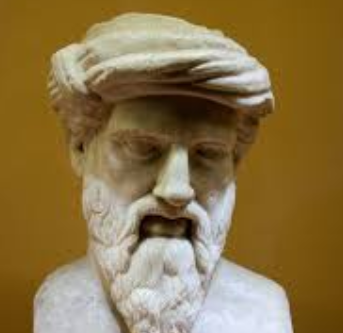
Pythagoras conceived that the first attention that should be given to men should be addressed to the senses, as when one perceives beautiful figures and forms, or hears beautiful rhythms and melodies. Consequently he laid down that the first erudition was that which subsists through music's melodies and rhythms, and from these he obtained remedies of human manners and passions, and restored the pristine harmony of the faculties of the soul.
▼
Source
Iamblichus of Chalcis in Life of Pythagoras

3 months 3 weeks ago
A good guide will take you through the more important streets more often than he takes you down side streets; a bad guide will do the opposite. In philosophy I'm a rather bad guide.
▼
Source
As quoted in Wittgenstein and the Philosophy of Information (2008) edited by Alois Pichler and Herbert Hrachovec, p. 140

3 months 3 weeks ago
Poetry is a sort of truancy, a dream within the dream of life, a wild flower planted among our wheat.
3 months 3 weeks ago
The activity of to-day and the assurance of to-morrow.
▼
Source
p. 215
3 months 3 weeks ago
The comprehensiveness of OR’s aim is an example of a ‘systems’ approach, since ‘system’ implies an interconnected complex of functionally related components.
▼
Source
p. 7; cited in (2004, p. 210)
3 months 3 weeks ago
To understand oneself is the classic form of consolation; to elude oneself is the romantic.
▼
Source
p. 51
3 months 3 weeks ago
Morality is a subject that interests us above all others: We fancy the peace of society to be at stake in every decision concerning it; and 'tis evident, that this concern must make our speculations appear more real and solid, than where the subject is, in a great measure, indifferent to us. What affects us, we conclude can never be a chimera; and as our passion is engag'd on the one side or the other, we naturally think that the question lies within human comprehension; which, in other cases of this nature, we are apt to entertain some doubt of. Without this advantage I never should have ventur'd upon a third volume of such abstruse philosophy, in an age, wherein the greatest part of men seem agreed to convert reading into an amusement, and to reject every thing that requires any considerable degree of attention to be comprehended.
▼
Source
Part 1, Section 1
3 months 3 weeks ago
Other people’s views and troubles can be contagious. Don’t sabotage yourself by unwittingly adopting negative, unproductive attitudes through your associations with others.
▼
Source
This quote is frequently attributed to Epictetus, e.g. by Brigid Delaney, [https://www.theguardian.com/lifeandstyle/2023/nov/22/stoicism-book-news-brigid-delaney Six ways to make your life easier and more peaceful – by using stoic principles], The Guardia
3 months 3 weeks ago
To inculcate a pure and a simple mode of subsistence was also an express object of pursuit to Pythagoras. He taught a total abstinence from every thing having had the property of animal life. … He taught temperance in all its branches, and a resolute subjection of the appetites of the body to contemplation and the exercises of the mind; and, by the unremitted discipline and authority he exerted over his followers, he caused his lessons to be constantly observed. There was therefore an edifying and an exemplary simplicity that prevailed as far as the influence of Pythagoras extended, that won golden opinions to his adherents at all times that they appeared, and in all places.

3 months 3 weeks ago
The true Semitic society is that of the tent and of the tribe.
▼
Source
quoted in Arvidsson, Stefan (2006), Aryan Idols: Indo-European Mythology as Ideology and Science, translated by Sonia Wichmann, Chicago and London: The University of Chicago Press."(96) **Renan
3 months 3 weeks ago
206. If someone asked us 'but is that true?' we might say "yes" to him; and if he demanded grounds we might say "I can't give you any grounds, but if you learn more you too will think the same."

3 months 3 weeks ago
In our techniques we enter completely into, blend totally with, and control firmly an attack. Strength resides where one's ki is concentrated and stable; confusion and maliciousness arise when ki stagnates.
3 months 3 weeks ago
He is the most original mind America has hitherto produced.
▼
Source
George Gilfillan, A Gallery of Literary Portraits (1845), p. 301
3 months 3 weeks ago
To conceive of knowledge as a collection of information seems to rob the concept of all of its life. Knowledge resides in the user and not in the collection. It is how the user reacts to a collection of information that matters.
▼
Source
p. 10; cited in Daniel J. Power (2004) Decision Support Systems: Frequently Asked Questions, p. 23
3 months 3 weeks ago
American life is a powerful solvent. As it stamps the immigrant, almost before he can speak English, with an unmistakable muscular tension, cheery self-confidence and habitual challenge in the voice and eyes, so it seems to neutralize every intellectual element, however tough and alien it may be, and to fuse it in the native good-will, complacency, thoughtlessness, and optimism.
▼
Source
"The Academic Environment" p. 47 ([http://hdl.handle.net/2027/uc1.b3923968?urlappend=%3Bseq=63 Hathi Trust])
3 months 3 weeks ago
To oppose the torrent of scholastic religion by such feeble maxims as these, that it is impossible for the same thing to be and not to be, that the whole is greater than a part, that two and three make five; is pretending to stop the ocean with a bullrush. Will you set up profane reason against sacred mystery? No punishment is great enough for your impiety. And the same fires, which were kindled for heretics, will serve also for the destruction of philosophers.
▼
Source
Part XI - With regard to reason or absurdity
3 months 3 weeks ago
Why was the Tetraktys so revered? Because to the eyes of the sixth century BC Pythagoreans, it seemed to outline the entire nature of the universe. In geometry — the springboard to the Greeks' epochal revolution in thought — the number 1 represented a point... 2 represented a line... 3 represented a surface... and 4 represented a three-dimensional tetrahedral solid... The Tetraktys, therefore appeared to encompass all the perceived dimensions of space.
▼
Source
Mario Livio, Is God a Mathematician? (2009)
3 months 3 weeks ago
Courage, not cleverness; not even inspiration, is the grain of mustard that grows up to be a great tree.
▼
Source
p. 44e
3 months 3 weeks ago
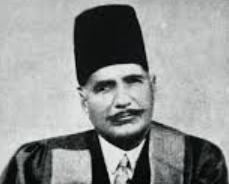
The tyranny of imperialism struts abroad, covering its face under the masks of Democracy, Nationalism, Communism, Fascism and heaven knows what else besides. Under these masks, in every corner of the earth, the spirit of freedom and the dignity of man are being trampled underfoot in a way to which not even the darkest period of human history presents a parallel. The so-called statesmen to whom government and leadership of men was entrusted have proved demons of bloodshed, tyranny and oppression. ... After subjugating and establishing their dominion over weaker peoples, they have robbed them of their possessions, of their religions, their morals, of their cultural traditions and their literatures.
▼
Source
New Year's message broadcast on All-India Radio, 1938. Quoted in [https://www.google.com/books/edition/The_Political_Philosophy_of_Muhammad_Iqb/VrItm_F6wncC?hl=en The Political Philosophy of Muhammad Iqbal], p. 199.
3 months 3 weeks ago
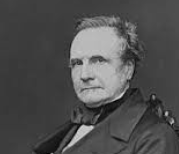
The errors which arise from the absence of facts are far more numerous and more durable than those which result from unsound reasoning respecting true data.
▼
Source
p. 156. Ch. 17 "Of Price as Measured by Money"
3 months 3 weeks ago
The wiser nations are, the more public spirit they possess, the more perfect their political constitution, the fewer constitutional laws they have, for these laws are only props, and a building only needs props when it has become out of plumb or when it has been violently shaken by an external force. The most perfect constitution of antiquity was without contradiction that of Sparta, and Sparta has not left us a single line of its public law. It justly boasted of having written its laws only in the hearts of its children.
▼
Source
p. 84
3 months 3 weeks ago
No government, at that time, appeared in the world, nor is perhaps to be found in the records of any history, which subsisted without the mixture of some arbitrary authority, committed to some magistrate; and it might reasonably, beforehand, appear doubtful, whether human society could ever arrive at that state of perfection, as to support itself with no other control, than the general and rigid maxims of law and equity. But the parliament justly thought, that the King was too eminent a magistrate to be trusted with discretionary power, which he might so easily turn to the destruction of liberty. And in the event it has been found, that, though some inconveniencies arise from the maxim of adhering strictly to law, yet the advantages so much overbalance them, as should render the English forever grateful to the memory of their ancestors, who, after repeated contests, at last established that noble principle.
▼
Source
Volume V, Chapter LIV (Indianapolis: Liberty Fund, 1983), pp. 329-30; referring to the abolition of the Star Chamber
3 months 3 weeks ago
One age misunderstands another; and a petty age misunderstands all the others in its own ugly way.
▼
Source
p. 98e

3 months 3 weeks ago
Overcoming magic often takes the form of theology. From animals and ancestors the path leads to all kinds of spirits. The hypothesis (which already appeared in the magical age) of the little man alongside man, the “soul', and of the special being, 'God', more and more often seeks a parallel process 'behind' processes. Whereas in the magical age, empirically given facts were linked with each other on the basis of primitive theories without the introduction of uncontrollable elements, now their introduction becomes essential.
▼
Source
p. 322
3 months 3 weeks ago
We may say most aptly that the Analytical Engine weaves algebraical patterns just as the Jacquard-loom weaves flowers and leaves.
▼
Source
Ada Lovelace, Notes on the Analytical Engine invented by Charles Babbage
3 months 3 weeks ago
The vices are very justly man's executioners.
▼
Source
Chapter X, p. 85
3 months 3 weeks ago
The great sceptic, with his profound conviction of the imperfection of all human reason and knowledge, did not expect much positive good from political organisation. He knew that the greatest political goods, peace, liberty, and justice, were in their essence negative, a protection against injury rather than positive gifts. No man strove more ardently for peace, liberty and justice. But Hume clearly saw that the further ambitions which wanted to establish some other positive justice on earth were a threat to those values... It was not from the goodness of men but from institutions which "made it the interest even of bad men, to act for the public good" that he expected peace, liberty, and justice. He knew that "every man must be supposed a knave"; though, as he adds, "it appears somewhat strange, that a maxim should be true in politics which is false in fact."
▼
Source
Friedrich Hayek, 'The Legal and Political Philosophy of David Hume' (18 July 1963), in Studies in Philosophy, Politics and Economics (1967), pp. 120-121

3 months 3 weeks ago
How is it that men who only yesterday were complaining quietly of their lot as they smoked their pipes, and the next moment were humbly saluting the local guard and gendarme whom they had just been abusing, — how is it that these same men a few days later were capable of seizing their scythes and their iron-shod pikes and attacking in his castle the lord who only yesterday was so formidable? By what miracle were these men, whose wives justly called them cowards, transformed in a day into heroes, marching through bullets and cannon balls to the conquest of their rights? How was it that words, so often spoken and lost in the air like the empty chiming of bells, were changed into actions? The answer is easy. Action, the continuous action, ceaselessly renewed, of minorities brings about this transformation. Courage, devotion, the spirit of sacrifice, are as contagious as cowardice, submission, and panic. What forms will this action take? All forms, — indeed, the most varied forms, dictated by circumstances, temperament, and the means at disposal. Sometimes tragic, sometimes humorous, but always daring; sometimes collective, sometimes purely individual, this policy of action will neglect none of the means at hand, no event of public life, in order to keep the spirit alive, to propagate and find expression for dissatisfaction, to excite hatred against exploiters, to ridicule the government and expose its weakness, and above all and always, by actual example, to awaken courage and fan the spirit of revolt.
3 months 3 weeks ago
Let us never forget, as all conventional history of philosophy conspires to make us forget, what the ‘great thinkers’ really are: proper objects, indeed, of pity, but even more, of horror.
▼
Source
[https://https://web.maths.unsw.edu.au/~jim/wrongthoughts.html The Plato Cult and Other Philosophical Follies], 1991. Page 185.
3 months 3 weeks ago
Religious beauty is superior to ideal beauty, since it is the ideal of the ideal.
▼
Source
p. 287

3 months 3 weeks ago
God is surrounded with people full of love who demand of him the benefits of love which are in his power: thus he is properly the king of love.
3 months 3 weeks ago
It seems to me that it was well said by Madama Serenissima, and insisted on by your reverence, that the Holy Scripture cannot err, and that the decrees therein contained are absolutely true and inviolable. But I should have in your place added that, though Scripture cannot err, its expounders and interpreters are liable to err in many ways; and one error in particular would be most grave and most frequent, if we always stopped short at the literal signification of the words.
3 months 3 weeks ago
If every Socialist will carry his thoughts back to an earlier date, he will no doubt remember the host of prejudices aroused in him when, for the first time, he came to the idea that abolishing the capitalist system and private appropriation of land and capital had become an historical necessity.The same feelings are today produced in the man who for the first time hears that the abolition of the State, its laws, its entire system of management, governmentalism and centralization, also becomes an historical necessity: that the abolition of the one without the abolition of the other is materially impossible. Our whole education — made, be it noted, by Church and State, in the interests of both — revolts at this conception.Is it less true for that? And shall we allow our belief in the State to survive the host of prejudices we have already sacrificed for our emancipation?
3 months 3 weeks ago
He said that there was one only good, namely, knowledge; and one only evil, namely, ignorance.
▼
Source
Socrates, 14.
3 months 3 weeks ago
Rules necessary for definitions. Not to leave any terms at all obscure or ambiguous without definition; Not to employ in definitions any but terms perfectly known or already explained.
3 months 3 weeks ago
Proposition I. Theorem I: When a projectile is carried in motion compounded from equable horizontal and from naturally accelerated downward [motions], it describes a semiparabolic line in its movement.
▼
Source
Author, Day Four, Stillman Drake translation (1974) p. 269
3 months 3 weeks ago
Everyone is the other, and no one is himself. The they, which supplies the answer to the who of everyday Da-sein, is the nobody to whom every Da-sein has always already surrendered itself, in its being-among-one-another.
▼
Source
Stambaugh translation
3 months 3 weeks ago
Education still remains the privilege of a small minority, for it is idle to talk of education when the workman’s child is forced at the age of thirteen, to go down in to the mine or to help his father on the farm. It is idle to talk of studies to the worker, who comes home in the evening crushed by excessive toil with its brutalizing atmosphere. Society is thus bound to remain divided into two hostile camps, and in such conditions, freedom is a vain word. The Radical begins by demanding a greater extension of political rights, but he soon sees the at breath of liberty leads to the uplifting of the proletariat, and then he turns round, changes his opinions, and reverts to repressive legislation and government by the sword.
▼
Source
Ch. 1 : Our Riches, p. 60
3 months 3 weeks ago
It was a saying of his that education was an ornament in prosperity and a refuge in adversity.
▼
Source
Aristotle, 9.
3 months 3 weeks ago
When I have asked thinking men what reason they had to believe that every fact in the universe is precisely determined by law, the first answer has usually been that the proposition is a "presupposition " or postulate of scientific reasoning. Well, if that is the best that can be said for it, the belief is doomed. Suppose it be " postulated " : that does not make it true, nor so much as afford the slightest rational motive for yielding it any credence. It is as if a man should come to borrow money, and when asked for his security, should reply he "postulated " the loan. To "postulate" a proposition is no more than to hope it is true. There are, indeed, practical emergencies in which we act upon assumptions of certain propositions as true, because if they are not so, it can make no difference how we act. But all such propositions I take to be hypotheses of individual facts. For it is manifest that no universal principle can in its universality be compromised in a special case or can be requisite for the validity of any ordinary inference.
3 months 3 weeks ago
The word “art” does not designate the concept of a mere eventuality; it is a concept of rank.
▼
Source
p. 125
3 months 3 weeks ago
All we can say now is, that, even now, 600 persons could easily live on a square mile; and that... 1,000 human beings—not idlers—living on 1,000 acres could easily, without... overwork, obtain... a luxurious vegetable and animal food, as well as the , wool, silk and hides necessary for their clothing. As to what may be obtained under still more perfect methods—also known but not yet tested on a large scale—is better to abstain from any forecast: so unexpected are the recent achievements of intensive culture.
3 months 3 weeks ago
One of the sophisms of Chrysippus was, "If you have not lost a thing, you have it."
▼
Source
Chrysippus, 11.
3 months 3 weeks ago
Understanding finds nothing but itself when it seeks the essence behind the appearance of things. ‘It is manifest that behind the so-called curtain, which is to hide the inner world, there is nothing to be seen unless we ourselves go behind there, as much in order that we may thereby see, as that there may be something behind there which can be seen.’ P. 111

3 months 3 weeks ago
As a violin string or a harpsichord key vibrates and gives forth sound, so the cerebral fibres, struck by waves of sound, are stimulated to render or repeat the words that strike them.
CivilSimian.com created by AxiomaticPanic, CivilSimian, Kalokagathia