
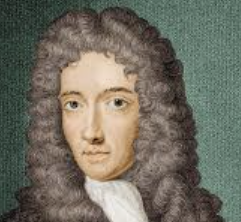
3 months 3 weeks ago
He was... the first to define the relation of an element to a compound, and to draw the distinction we still make between compounds and s.

3 months 3 weeks ago
Suicide is a sudden accomplishment, a lightning-like deliverance: it is nirvana by violence.

3 months 3 weeks ago
All the gifted souls, of every rank, who are born to you in this generation. These are appointed, by the true eternal "divine right" which will never become obsolete, to be your governors and administrators; and precisely as you employ them, or neglect to employ them, will your State be favored of Heaven or disfavored. This noble young soul, you can have him on either of two conditions; and on one of them, since he is here in the world, you must have him. As your ally and coadjutor; or failing that, as your natural enemy: which shall it be? I consider that every Government convicts itself of infatuation and futility, or absolves and justifies itself before God and man, according as it answers this question.

3 months 3 weeks ago
Negative-utilitarianism is only one particular denomination of a broad church to which the reader may well in any case not subscribe. Fortunately, the program can be defended on grounds that utilitarians of all stripes can agree on. So a defence will be mounted against critics of the theory and application of a utilitarian ethic in general. For in practice the most potent and effective means of curing unpleasantness is to ensure that a defining aspect of future states of mind is their permeation with the molecular chemistry of ecstasy: both genetically precoded and pharmacologically fine-tuned. Orthodox utilitarians will doubtless find the cornucopian abundance of bliss this strategy delivers is itself an extra source of moral value. Future generations of native ecstatics are unlikely to disagree.
▼
Source
2.7 [https://www.hedweb.com/hedethic/hedon2.htm#negative Why Be Negative?]

3 months 3 weeks ago
The art of reasoning is nothing more than a language well arranged.
▼
Source
As quoted in Antoine Lavoisier, Elements of Chemistry (trans. Robert Kerr, 1790), Preface, p. xiv.
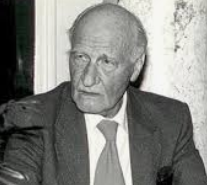
3 months 3 weeks ago
“The essence of happiness consists in an act of the intellect.” (Thomas Aquinas, Summa Theologica) … What is implicit in this sentence? This is implicit: the fulfillment of existence takes place in the manner in which we become aware of reality; the whole energy of our being is ultimately directed toward attainment of insight. The perfectly happy person, the one whose thirst has been finally quenched, who has attained beatitude—this person is the one who sees. The happiness, the quenching, the perfection, consists in this seeing.
▼
Source
p. 58
3 months 3 weeks ago
What place do we occupy in the "universe"? A point, if that! Why reproach ourselves when we are evidently so insignificant? Once we make this observation, we grow calm at once: henceforth, no more bother, no more frenzy, metaphysical or otherwise. And then that point dilates, swells, substitutes itself for space. And everything begins all over again.
3 months 3 weeks ago
I warmly second the advice of the wisest of men—"Don't be ambitious; don't be at all too desirous to success; be loyal and modest." Cut down the proud towering thoughts that you get into you, or see they be pure as well as high. There is a nobler ambition than the gaining of all California would be, or the getting of all the suffrages that are on the planet just now.
3 months 3 weeks ago
We are passengers, comprehended and displaced by metaphor.
▼
Source
Chapter 8, Performative Reflexivity, p. 137
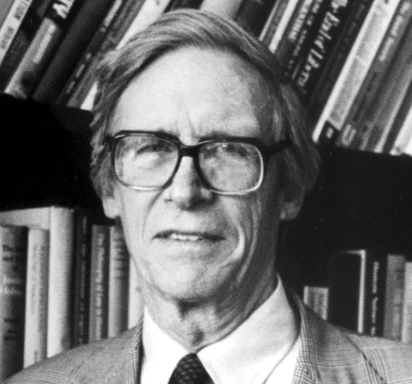
3 months 3 weeks ago
The claims of existing social arrangements and of self interest have been duly allowed for. We cannot at the end count them a second time because we do not like the result.
▼
Source
Chapter III, Section 23, pg. 135
3 months 3 weeks ago
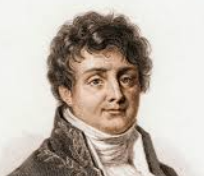
Galileo and Hooke demonstrated that every sound is characterized by a precise number of vibrations per second, but the full understanding of even the simplest... vibrators requires... calculus. ...Leonard Euler, Daniel Bernoulli, Jean le Rond d'Alembert, and Joseph Louis Lagrange all studied the vibrating string.... In 1747 d'Alembert found... the wave equation and in 1753 Bernoulli stated the... decomposition of every motion of a string as a sum of elementary sinusoidal motions. Then at the beginning of the following century Fourier developed "harmonic analysis."

3 months 3 weeks ago
Without the collapse of capitalism the expropriation of the capitalist class is impossible.
▼
Source
Ch. 9

3 months 3 weeks ago
The philosophy of Kant, then, is the only philosophy with which a thorough acquaintance is directly presupposed in what we have to say here. But if, besides this, the reader has lingered in the school of the divine Plato, he will be so much the better prepared to hear me, and susceptible to what I say. And if, indeed, in addition to this he is a partaker of the benefit conferred by the Vedas, the access to which, opened to us through the Upanishads, is in my eyes the greatest advantage which this still young century enjoys over previous ones, because I believe that the influence of the Sanscrit literature will penetrate not less deeply than did the revival of Greek literature in the fifteenth century: if, I say, the reader has also already received and assimilated the sacred, ancient Indian wisdom, then is he best of all prepared to hear what I have to say to him. My work will not speak to him, as to many others, in a strange and even hostile tongue; for, if it does not sound too vain, I might express the opinion that each one of the individual and disconnected aphorisms which make up the Upanishads may be deduced as a consequence from the thought I am going to impart, though the converse, that my thought is to be found in the Upanishads, is by no means the case.
▼
Source
:s:The World as Will and Representation/Preface to the First Edition | Kants Philosophie also ist die einzige, mit welcher eine gründliche Bekanntschaft bei dem hier Vorzutragenden gradezu vorausgesetzt wird. — Wenn aber überdies noch der Leser in der Sch
3 months 3 weeks ago
He detested objective truths, the burden of argument, sustained reasoning. He disliked demonstrating, he wanted to convince no one. Others are a dialectician's invention.
3 months 3 weeks ago
These are damned times—everything is against one—the height to which knowledge is come, the spread of luxury, our physical enervation, the absence of great natures, the unavoidable contact with millions of small ones, newspapers, cities, light profligate friends, moral desperadoes like Carlyle.
▼
Source
Matthew Arnold to Arthur Hugh Clough (23 September 1849), quoted in The Letters of Matthew Arnold to Arthur Hugh Clough, ed. Howard Foster Lowry (1932), p. 111
3 months 3 weeks ago
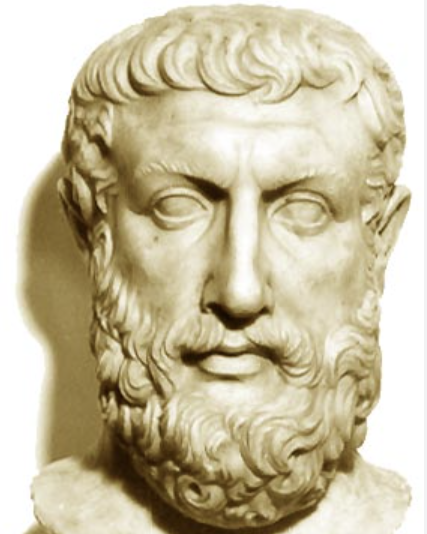
The purest example of the Greek desire to comprehend, a desire which in him would have nothing to do with what was not strictly knowable. If later philosophers appear softer by comparison, it is perhaps because of a revivifying compromise they made, one more acceptable and more tolerant of the discourse we perhaps need; but, by the same token, one can perhaps be forgiven for sometimes thinking them dwarfed by the inhuman shadow of the master.
▼
Source
Scott Austin, in Parmenides : Being, Bounds, and Logic (1986), p. 154
3 months 3 weeks ago
Social and economic inequalities are to satisfy two conditions: first, they are to be attached to positions and offices open to all under conditions of fair equality of opportunity; and second, they are to be to the greatest benefit to the least-advantaged members of society.
▼
Source
p. 6
3 months 3 weeks ago
It is sufficiently evident from many circumstances, that the doctrine of the divinity of Christ did not establish itself without much opposition, especially from the unlearned among the Christians, who thought that it savoured of Polytheism, that it was introduced by those who had had a philosophical education, and was by degrees adopted by others, on account of its covering the great offence of the cross, by exalting the personal dignity of our Saviour.
▼
Source
Part I : The History of Opinions Relating to Jesus Christ, § IV : Of the Difficulty with which the Doctrine of the Divinity of Christ was Established.
3 months 3 weeks ago
With a will, determination, selflessness and devotion for which words are too weak, she consecrated her whole life and her whole being to Socialism. She gave herself completely to the cause of Socialism, not only in her tragic death, but throughout her whole life, daily and hourly, through the struggles of many years ... She was the sharp sword, the living flame of revolution.
▼
Source
Clara Zetkin, her closest friend, as quoted in Rosa Luxemburg, Ideas in Action (1972) by Paul Frölich, p. x
3 months 3 weeks ago
My basis is supported by the authority of the greatest moralist of modern times; for such, undoubtedly, J. J. Rousseau is,—that profound reader of the human heart, who drew his wisdom not from books, but from life, and intended his doctrine not for the professorial chair, but for humanity; he, the foe of all prejudice, the foster-child of nature, whom alone she endowed with the gift of being able to moralise without tediousness, because he hit the truth and stirred the heart.
▼
Source
Part III, Ch. VIII, 9, [https://archive.org/stream/basisofmorality00schoiala#page/230/mode/2up p. 230]
3 months 3 weeks ago
We had nothing to say to one another, and while I was manufacturing my phrases I felt that earth was falling through space and that I was falling with it at a speed that made me dizzy.
3 months 3 weeks ago
In the first place that appalling style, with its repetitiveness, its overemphasis, its perpetual note of adjuration, its shrillness and exaggeration, with no soft tones at all, the trumpets always braying and that rather discordantly: it makes him almost impossible to read... Yet for all his defects Carlyle was unmistakably a man of genius. He was that very unattractive kind of genius, a prophet. All prophets are misfits; and that throws a flood of light on the source and conditioning of their "message".
▼
Source
A. L. Rowse, ‘Carlyle's Past and Present’, The English Spirit: Essays in History and Literature (1944), p. 223
3 months 3 weeks ago
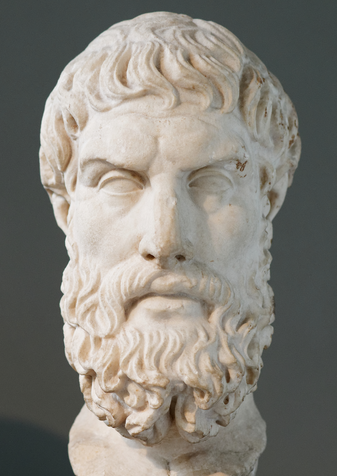
Against the diseases of the mind, philosophy provides sufficient antidotes. The instruments which it employs for this purpose are the virtues; the root of which, whence all the rest proceed, is prudence. This virtue comprehends the whole art of living discreetly, justly, and honorably, and is, in fact, the same thing with wisdom. It instructs men to free their understandings from the clouds of prejudice; to exercise temperance and fortitude in the government of themselves: and to practice justice towards others. Although pleasure, or happiness, which is the end of living, be superior to virtue, which is only the means, it is every one's interest to practice all the virtues; for in a happy life, pleasure can never be separated from virtue.
3 months 3 weeks ago
That which is, is ...it cannot be more or less. There is... as much of it in one place as in another... a continuous, indivisible plenum. From this it follows... that it must be immovable... [for] it must move into an empty space, and there is no empty space. ...For the same reason, it must be finite, and can have nothing beyond it. It is complete in itself, and has no need to stretch out indefinitely into an empty space that does not exist. ...It is equally real in every direction ...the ...the only form ...Any other would ...[have distinguishable] direction... [T]his sphere cannot ...move round its ...axis; for there is nothing outside ...[to] reference...
3 months 3 weeks ago
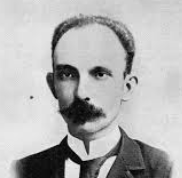
Mankind is composed of two sorts of men — those who love and create, and those who hate and destroy.
▼
Source
"Letter to a Cuban Farmer" (1893)
3 months 3 weeks ago
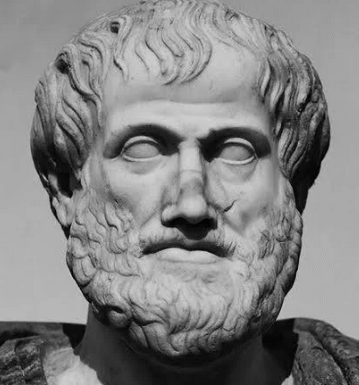
Of things said without any combination, each signifies either substance or quantity or qualification or a relative or where or when or being-in-a-position or having or doing or being affected. To give a rough idea, examples of substance are man, horse; of quantity: four-foot, five-foot; of qualification: white, grammatical; of a relative: double, half, larger; of where: in the Lyceum, in the market-place; of when: yesterday, last-year; of being-in-a-position: is-lying, is sitting; of having: has-shoes-on, has-armour-on; of doing: cutting, burning; of being-affected: being-cut, being-burned.
▼
Source
1b25-2a10; (tr.), 1984-1995

3 months 3 weeks ago
We find ourselves on the brink of a decision, a decision to break with the arcana of the one and the multiple in which philosophy is born and buried, phoenix of its own sophistic consumption.
▼
Source
Meditation One: The One and the Multiple: a priori conditions of any possible ontology
3 months 3 weeks ago
It is difficult, if not impossible, to define the limit of our reasonable desires in respect of possessions.
▼
Source
E. Payne, trans. (1974) Vol. 1, p. 346
3 months 3 weeks ago
Say what we will, death is the best thing nature has found to please everyone. With each of us, everything vanishes, everything stops forever. What an advantage, what an abuse! Without the least effort on our part, we own the universe, we drag it into our own disappearance. No doubt about it, dying is immoral...
3 months 3 weeks ago
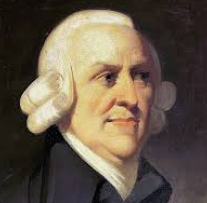
Poor David Hume is dying very fast, but with great cheerfulness and good humour and with more real resignation to the necessary course of things then any whining Christian ever dyed with pretended resignation to the will of God.
▼
Source
Letter to Alexander Wedderburn 14 August 1776. The Correspondence of Adam Smith edited by E.C. Mossner and Ian Simpson Ross, 2nd edition, Oxford University Press 1986. [https://www.ac.edu.au/custom-utils/download-count/target_address=http://apps.acu.edu.a

3 months 3 weeks ago
Good habits, imperceptibly fixed, are far preferable to the precepts of reason; but, as this task requires more judgment than generally falls to the lot of parents, substitutes must be sought for, and medicines given, when regimen would have answered the purpose much better. I believe those who examine their own minds, will readily agree with me, that reason, with difficulty, conquers settled habits, even when it is arrived at some degree of maturity: why then do we suffer children to be bound with fetters, which their half-formed faculties cannot break. In writing the following work, I aim at perspicuity and simplicity of style; and try to avoid those unmeaning compliments, which slip from the tongue, but have not the least connexion with the affections that should warm the heart, and animate the conduct. By this false politeness, sincerity is sacrificed, and truth violated; and thus artificial manners are necessarily taught. For true politeness is a polish, not a varnish; and should rather be acquired by observation than admonition.
▼
Source
Original Stories from Real Life; with Conversations Calculated to Regulate the Affections, and Form the Mind to Truth and Goodness (1788; 1791)
3 months 3 weeks ago
Everything that divides men, everything that specified, separates or pens them, is a sin against humanity.
3 months 3 weeks ago
Sound is the motion of that which is able to be moved, after the manner in which those things are moved, that rebound from smooth bodies, when any one strikes them. Not every thing... sounds... but it is necessary, that the body which is struck should be equable, that the air may collectively rebound, and be shaken. The differences, however, of bodies which sound, are manifested in the sound, which is in energy; for, as colours are not perceived without light, so neither are the sharp and the flat perceived without sound. But these things are asserted metaphorically, from those which pertain to the touch; for the sharp moves the sense much in a short time, but the flat a little in a long time. The sharp, therefore, is not rapid, and the flat slow; but such a motion is produced of the one, on account of celerity, and of the other on account of slowness, that, also, which is perceived in the touch, appears to be analogous to the acute and obtuse, for the acute, as it were, stings; but the obtuse, as it were, impels: because the one moves in a short, but the other in a long time. Hence it happens that the one is swift but the other slow. Let it therefore be thus determined concerning sound.
▼
Source
Book II: On the soul; In: Aristotle (1808). Works, Vol. 4. p. 62 (412a-424b)

3 months 3 weeks ago
The very idea of a Christian political theology is problematic. If human beings are only transitorily on earth, and earth is but a vale of tears through which we must pass on our way to paradise, earthly politics loses almost all value. Life in the polis cannot be the good life for man, since fulfillment lies in the hereafter; here below, we must prepare for eternity. Earthly happiness for rational persons consists in whatever confidence they may entertain about the life hereafter. This “abstentionist” vision is in some ways at odds with the involvement of Christ in the everyday life of the community in which he spent his short life.
3 months 3 weeks ago
The animals are much more content with mere existence than we are; the plants are wholly so; and man is so according to how dull and insensitive he is. The animal’s life consequently contains less suffering but also less pleasure than the human’s, the direct reason being that on the one hand it is free from care and anxiety and the torments that attend them, but on the other is without hope and therefore has no share in that anticipation of a happy future which, together with the enchanting products of the imagination which accompany it, is the source of most of our greatest joys and pleasures. The animal lacks both anxiety and hope because its consciousness is restricted to what is clearly evident and thus to the present moment: the animal is the present incarnate.
▼
Source
Vol. 2 "On the Suffering of the World" as translated in Essays and Aphorisms (1970), as translated by R. J. Hollingdale
3 months 3 weeks ago
"Neither this world, nor the next, nor happiness are for the being abandoned to doubt." — This point in the Gita is my death sentence.
3 months 3 weeks ago
To take an example, therefore, from a very trifling manufacture, but one in which the division of labour has been very often taken notice of, the trade of a pin-maker: a workman not educated to this business (which the division of labour has rendered a distinct trade, nor acquainted with the use of the machinery employed in it (to the invention of which the same division of labour has probably given occasion), could scarce, perhaps, with his utmost industry, make one pin in a day, and certainly could not make twenty. But in the way in which this business is now carried on, not only the whole work is a peculiar trade, but it is divided into a number of branches, of which the greater part are likewise peculiar trades. One man draws out the wire; another straights it; a third cuts it; a fourth points it; a fifth grinds it at the top for receiving the head; to make the head requires two or three distinct operations; to put it on is a peculiar business; to whiten the pins is another; it is even a trade by itself to put them into the paper; and the important business of making a pin is, in this manner, divided into about eighteen distinct operations, which, in some manufactories, are all performed by distinct hands, though in others the same man will sometimes perform two or three of them. I have seen a small manufactory of this kind, where ten men only were employed, and where some of them consequently performed two or three distinct operations. But though they were very poor, and therefore but indifferently accommodated with the necessary machinery, they could, when they exerted themselves, make among them about twelve pounds of pins in a day. There are in a pound upwards of four thousand pins of a middling size. Those ten persons, therefore, could make among them upwards of forty-eight thousand pins in a day. Each person, therefore, making a tenth part of forty-eight thousand pins, might be considered as making four thousand eight hundred pins in a day. But if they had all wrought separately and independently, and without any of them having been educated to this peculiar business, they certainly could not each of them have made twenty, perhaps not one pin in a day; that is, certainly, not the two hundred and fortieth, perhaps not the four thousand eight hundredth, part of what they are at present capable of performing, in consequence of a proper division and combination of their different operations.
▼
Source
Chapter I, p. 8-9.
3 months 3 weeks ago
Till society is very differently constituted, parents, I fear, will still insist on being obeyed, because they will be obeyed, and constantly endeavour to settle that power on a Divine right, which will not bear the investigation of reason.
▼
Source
Ch. 11

3 months 3 weeks ago
Philosophers do not claim that God does not know particulars; they rather claim that He does not know them the way humans do. God knows particulars as their Creator whereas humans know them as a privileged creations of God might know them.
▼
Source
Attributed to Averroes in Voices of Islam: Voices of change (2007) by Vincent J. Cornell, p. 35
3 months 3 weeks ago
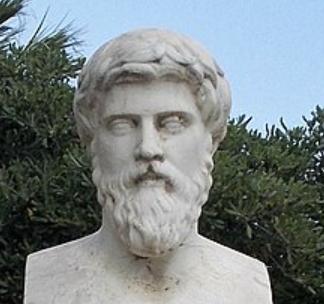
Perseverance is more prevailing than violence; and many things which cannot be overcome when they are together, yield themselves up when taken little by little.
▼
Source
Sertorius 16 (Tr. Dryden and Clough)

3 months 3 weeks ago
While it is much preferable to anarchy, government cannot abolish the evils of the human condition. At any time the state is only one of the forces that shape human behaviour, and its power is never absolute. At present, fundamentalist religion and organized crime, ethnic-national allegiances and market forces all have the ability to elude the control of government, sometimes to overthrow or capture it. States are at the mercy of events as much as any other human institution, and over the longer course of history all of them fail. As Spinoza recognized, there is no reason to think the cycle of order and anarchy will ever end. Secular thinkers find this view of human affairs dispiriting, and most have retreated to some version of the Christian view in which history is a narrative of redemption. The most common of these narratives are theories of progress, in which the growth of knowledge enables humanity to advance and improve its condition. Actually, humanity cannot advance or retreat, for humanity cannot act: there is no collective entity with intentions or purposes, only ephemeral struggling animals each with its own passions and illusions. The growth of scientific knowledge cannot alter this fact. Believers in progress – whether social democrats or neo-conservatives, Marxists, anarchists or technocratic Positivists – think of ethics and politics as being like science, with each step forward enabling further advances in future. Improvement in society is cumulative, they believe, so that the elimination of one evil can be followed by the removal of others in an open-ended process. But human affairs show no sign of being additive in this way: what is gained can always be lost, sometimes –as with the return of torture as an accepted technique in war and government – in the blink of an eye. Human knowledge tends to increase, but humans do not become any more civilized as a result. They remain prone to every kind of barbarism, and while the growth of knowledge allows them to improve their material conditions, it also increases the savagery of their conflicts.
▼
Source
Post-Apocalypse: After Secularism (pp. 264-5)

3 months 3 weeks ago
Appealing to his [Einstein's] way of expressing himself in theological terms, I said: If God had wanted to put everything into the universe from the beginning, He would have created a universe without change, without organisms and evolution, and without man and man's experience of change. But he seems to have thought that a live universe with events unexpected even by Himself would be more interesting than a dead one.
▼
Source
As quoted in Omnipotence and Other Theological Mistakes by Charles Hartshorne (1984)

3 months 3 weeks ago
There can be only one permanent revolution — a moral one; the regeneration of the inner man. How is this revolution to take place? Nobody knows how it will take place in humanity, but every man feels it clearly in himself. And yet in our world everybody thinks of changing humanity, and nobody thinks of changing himself.
▼
Source
"Three Methods Of Reform" in Pamphlets : Translated from the Russian (1900) as translated by Aylmer Maude, p. 29 | Variant: Everyone thinks of changing the world, but no one thinks of changing himself. | As quoted in The Artist's Way at Work : Riding the
3 months 3 weeks ago
There is happiness in duty, although it may not seem so. To fulfill one's duty elevates the soul to a state of constant sweetness. Love is the bond between men, the way to teach and the center of the world.
3 months 3 weeks ago
If there is some end of the things we do, which we desire for its own sake, clearly this must be the good. Will not knowledge of it, then, have a great influence on life? Shall we not, like archers who have a mark to aim at, be more likely to hit upon what we should? If so, we must try, in outline at least, to determine what it is.
▼
Source
Book I§2 1094a.18

3 months 3 weeks ago
It is both humiliating and humbling to discover that a single generation after the events that constructed me as a public personality, I am remembered as a hairdo.
▼
Source
"Afro Images: Politics, Fashion, and Nostalgia" Critical Inquiry. Vol. 21, No. 1 (Autumn, 1994), pp. 37-39, 41-43 and 45.
3 months 3 weeks ago
Men of learning are those who have read the contents of books. Thinkers, geniuses, and those who have enlightened the world and furthered the race of men, are those who have made direct use of the book of the world.
▼
Source
[http://ebooks.adelaide.edu.au/s/schopenhauer/arthur/essays/chapter8.html "Thinking for Oneself"]
3 months 3 weeks ago
We live in the false as long as we have not suffered. But when we begin to suffer, we enter the truth only to regret the false.
3 months 3 weeks ago
People of the same trade seldom meet together, even for merriment and diversion, but the conversation ends in a conspiracy against the public, or in some contrivance to raise prices. It is impossible indeed to prevent such meetings, by any law which either could be executed, or would be consistent with liberty or justice. But though the law cannot hinder people of the same trade from sometimes assembling together, it ought to do nothing to facilitate such assemblies; much less to render them necessary.
▼
Source
Chapter X, Part II, p. 152.
3 months 3 weeks ago
To one that promised to give him hardy cocks that would die fighting, "Prithee," said Cleomenes, "give me cocks that will kill fighting."
▼
Source
61 Cleomenes
CivilSimian.com created by AxiomaticPanic, CivilSimian, Kalokagathia