
3 months 3 weeks ago
What happens when our eye sees a rose? What do we do when that happens? Our mind does something, to be sure, in the mere fact of taking in the object, grasping its color, its shape, and so on. We have to be awake and active. But all the same, it is a "relaxed" looking, so long as we are merely looking at it and not observing or studying it, counting or measuring its various features. Such observation would not be a "relaxed" action; it would be what Ernst Jünger termed an "act of aggression." But simply looking at something, gazing at it, "taking it in," is merely to open our eyes to receive the things that present themselves to us, that come to us without any need for "effort" on our part to "possess" them.
▼
Source
p. 9 | The Ernst Jünger quote is from Blätter und Steine (Hamburg, 1934), p. 202.
3 months 3 weeks ago
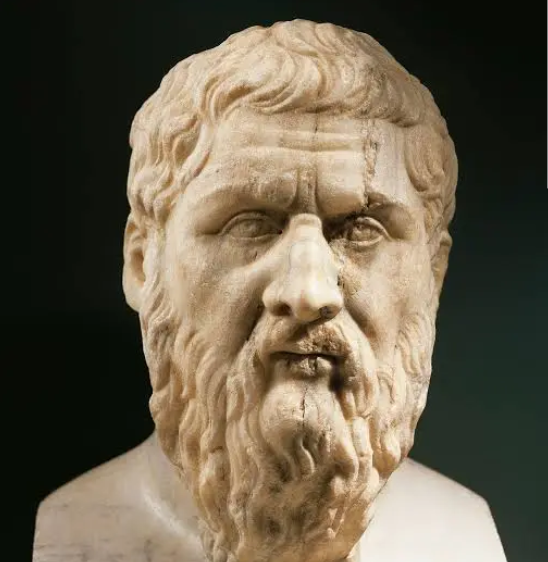
Xenophon, too, does not appear to have been very friendlily disposed towards him: and accordingly they have, as if in rivalry of one another, both written books with the same title, the Banquet, the Defence of Socrates, Moral Reminiscences. Then, too, the one wrote the Cyropaedia and the other a book on Politics ; and Plato in his Laws says, that the Cyropaedia is a mere romance, for that Cyrus was not such a person as he is described in that book. And though they both speak so much of Socrates, neither of them ever mentions the other, except that Xenophon once speaks of Plato in the third book of his Reminiscences.
▼
Source
{{cite web
3 months 3 weeks ago
He was... the first to define the relation of an element to a compound, and to draw the distinction we still make between compounds and s.

3 months 3 weeks ago
Suicide is a sudden accomplishment, a lightning-like deliverance: it is nirvana by violence.

3 months 3 weeks ago
All the gifted souls, of every rank, who are born to you in this generation. These are appointed, by the true eternal "divine right" which will never become obsolete, to be your governors and administrators; and precisely as you employ them, or neglect to employ them, will your State be favored of Heaven or disfavored. This noble young soul, you can have him on either of two conditions; and on one of them, since he is here in the world, you must have him. As your ally and coadjutor; or failing that, as your natural enemy: which shall it be? I consider that every Government convicts itself of infatuation and futility, or absolves and justifies itself before God and man, according as it answers this question.
3 months 3 weeks ago
A man does not kill himself, as is commonly supposed, in a fit of madness but rather in a fit of unendurable lucidity, in a paroxysm which may, if so desired, be identified with madness; for an excessive perspicacity, carried to the limit and of which one longs to be rid at all costs, exceeds the context of reason.
3 months 3 weeks ago
Probably some ninety-nine out of every hundred of our gifted souls, who have to seek a career for themselves, go this beaver road. Whereby the first half-result, national wealth namely, is plentifully realized; and only the second half, or wisdom to guide it, is dreadfully behindhand.
3 months 3 weeks ago
An individual who finds that he enjoys seeing others in positions of lesser liberty understands that he has no claim whatever to this enjoyment.
▼
Source
Chapter I, Section 6, pg. 31
3 months 3 weeks ago
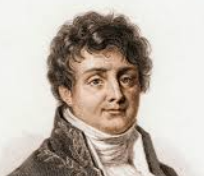
If we consider further the manifold relations of this mathematical theory to civil uses and the technical arts, we shall recognize completely the extent of its applications. It is evident that it includes an entire series of distinct phenomena, and that the study of it cannot be omitted without losing a notable part of the science of nature. The principles of the theory are derived, as are those of rational mechanics, from a very small number of primary facts, the causes of which are not considered by geometers, but which they admit as the results of common observations confirmed by all experiment.
▼
Source
Ch. 1, p. 6
3 months 3 weeks ago
Each time I fail to think about death, I have the impression of cheating, of deceiving someone in me.
3 months 3 weeks ago
But greatly his most important culture he had gathered — and this, too, by his own endeavors — from the better part of the district, the religious men; to whom, as to the most excellent, his own nature gradually attached and attracted him. He was religious with the consent of his whole faculties. Without religion he would have been nothing.
3 months 3 weeks ago
Let us now consider whether justice requires the toleration of the intolerant, and if so under what conditions. There are a variety of situations in which this question arises. Some political parties in democratic states hold doctrines that commit them to suppress the constitutional liberties whenever they have the power. Again, there are those who reject intellectual freedom but who nevertheless hold positions in the university. It may appear that toleration in these cases is inconsistent with the principles of justice, or at any rate not required by them.
▼
Source
p. 216
3 months 3 weeks ago
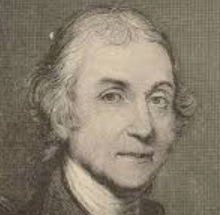
Man derives two capital advantages from the superiority of his intellectual powers. The first is, that, as an individual, he possesses a certain comprehension of mind, whereby he contemplates and enjoys the past and the future, as well as the present. This comprehension is enlarged with the experience of every day; and by this means the happiness of man, as he advances in intellect, is continually less dependent on temporary circumstances and sensations.The next advantage resulting from the same principle, and which is, in many respects, both the cause and effect of the former, is, that the human species itself is capable of a similar and unbounded improvement; whereby mankind in a later age are greatly superior to mankind in a former age, the individuals being taken at the same time of life.
▼
Source
Section I, "Of the First Principles of Government, and the different kinds of Liberty"
3 months 3 weeks ago
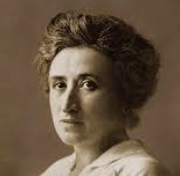
Every right of suffrage, like any political right in general, is not to be measured by some sort of abstract scheme of “justice,” or in terms of any other bourgeois-democratic phrases, but by the social and economic relationships for which it is designed. The right of suffrage worked out by the Soviet government is calculated for the transition period from the bourgeois-capitalist to the socialist form of society, that is, it is calculated for the period of the proletarian dictatorship. But, according to the interpretation of this dictatorship which Lenin and Trotsky represent, the right to vote is granted only to those who live by their own labor and is denied to everyone else.
▼
Source
Chapter Five, "The Question of Suffrage"

3 months 3 weeks ago
My body and my will are one.
▼
Source
Book 1
3 months 3 weeks ago
I think of so many people who are no more, and I pity them. Yet they are not so much to be pitied, for they have solved every problem, beginning with the problem of death.
3 months 3 weeks ago
They (the Nazis) would put it to our young people that our best writers were Nazis at heart, and so try to warp their minds. It is interesting, in this connextion, to read what Nazi critics have been saying lately about Shakespeare and Carlyle. They have not got a bad case over Carlyle - he had something of the Nazi about him: he despised individualism and liberty and worshipped the dictator-hero. However, Carlyle also said "Thought is stronger than artillery-parks", and this side of him the Nazis don't mention.
▼
Source
E. M. Forster, "Three Anti-Nazi Broadcasts", in Two Cheers For Democracy, Edward Arnold, 1951.
3 months 3 weeks ago
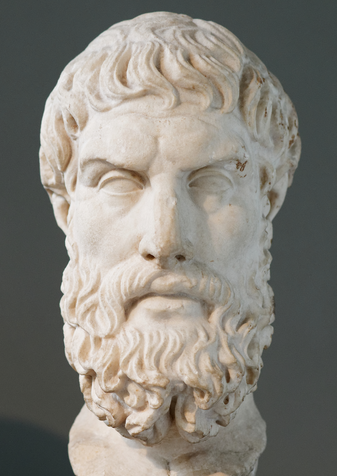
Chance seldom interferes with the wise man; his greatest and highest interests have been, are, and will be, directed by reason throughout his whole life.
3 months 3 weeks ago
It was, for all I know, the first deductive theory of the world, the first deductive cosmology: One further step led to theoretical physics, and to the atomic theory.
▼
Source
Karl Popper, in The World of Parmenides : Essays on the Presocratic Enlightenment (1998)
3 months 3 weeks ago
Few men have had to struggle for so many years with circumstances more straitened and precarious than my father; few men have ventured to attack so many or such inveterate prejudices respecting the prevalent religion of his country, or have advanced bolder or more important opinions in opposition to the courtly politics of the powers that be; few have had to encounter more able opponents in his literary career, or have been exposed to such incessant and vindictive obloquy, from men of every description, in return for his unremitting exertions in the cause of truth; yet none have more uniformly proceeded with a single eye, regardless of consequences, to act as his conviction impelled him, and his conscience dictated. His conduct brought with it its own reward, reputation, and respect, from the most eminent of his contemporaries, the affectionate attachment of most valuable friends, and a cheerfulness of disposition arising in part from conscious rectitude which no misfortunes could long repress. But to me it seems, that conscious rectitude alone would hardly of itself have been able to support him under some of the afflictions he was doomed to bear. He had a farther resource, to him never failing and invaluable, a firm persuasion of the benevolence of the Almighty towards all his creatures, and the conviction that every part of his own life, like every part of the whole system, was preordained for the best upon the whole of existence. Had he entertained the gloomy notions of Calvinism, in which he was brought up, this cheering source of contentment and resignation would probably have failed him, and irritation and despondency would have gained an unhappy ascendancy. But by him the deity was not regarded as an avenging tyrant, punishing, for the sake of punishing his weak and imperfect creatures, but as a wise and kind parent, inflicting those corrections only that are necessary to bring our dispositions to the proper temper, and to fit us for the highest state of happiness of which our natures are ultimately capable.
▼
Source
His son, Joseph Priestley, in the Preface (1 May 1805) to Memoirs of the Rev. Dr. Joseph Priestly (1809), p. 41.

3 months 3 weeks ago
We laugh, but inept is our laughter; We should weep and weep sore, Who are shattered like glass, and thereafter Re-moulded no more!
▼
Source
As quoted in Three Great Abbasid Poets: Abu Nuwas, Al-Mutanabbi & Al-Ma'arri, Lives & Poems (2015) by Paul Smith
3 months 3 weeks ago
The auspices for philosophy are bad if, when proceeding ostensibly on the investigation of truth, we start saying farewell to all uprightness, honesty and sincerity, and are intent only on passing ourselves off for what we are not. We then assume, like those three sophists [Fichte, Schelling and Hegel], first a false pathos, then an affected and lofty earnestness, then an air of infinite superiority, in order to impose where we despair of ever being able to convince.
▼
Source
E. Payne, trans. (1974) Vol. 1, p. 22
3 months 3 weeks ago
Imaginary pains are by far the most real we suffer, since we feel a constant need for them and invent them because there is no way of doing without them.
3 months 3 weeks ago
"December, 1846.—Accustomed to the infinite wit and exuberant richness of his writings, his talk is still an amazement and a splendour scarcely to be faced with steady eyes. He does not converse;—only harangues. It is the usual misfortune of such marked men,—happily not one invariable or inevitable,—that they cannot allow other minds room to breathe, and show themselves in their atmosphere, and thus miss the refreshment and instruction which the greatest never cease to need from the experience of the humblest. "Carlyle allows no one a chance, but bears down all opposition, not only by his wit and onset of words, resistless in their sharpness as so many bayonets, but by actual physical superiority,—raising his voice, and rushing on his opponent with a torrent of sound. This is not in the least from unwillingness to allow freedom to others. On the contrary, no man would more enjoy a manly resistance to his thought. But it is the impulse of a mind accustomed to follow out its own impulse, as the hawk its prey, and which knows not how to stop in the chase. Carlyle, indeed, is arrogant and overbearing; but in his arrogance there is no littleness,—no self-love. It is the heroic arrogance of some old Scandinavian conqueror;—it is his nature, and the untameable impulse that has given him power to crush the dragons.
▼
Source
With White, Andrew Dickson. [https://ia600302.us.archive.org/33/items/cu31924029541640/cu31924029541640.pdf On the Choice of Books: The Inaugural Address of Thomas Carlyle, Lord Rector of the University of Edinburgh, Reprinted From the Times, With Additio
3 months 3 weeks ago
Is God willing to prevent evil, but not able? Then he is not omnipotent. Is he able, but not willing? Then he is malevolent. Is he both able and willing? Then whence cometh evil? Is he neither able nor willing? Then why call him God?
▼
Source
This attribution [http://books.google.com/books?id=rs47AAAAcAAJ&pg=PA494 occurs in chapter 13 (Ioan. Graphei, 1532, p. 494)] of the Christian church father's Lactantius's De Ira Dei (c. 318):
3 months 3 weeks ago
According to one mode... nature is thus denominated, viz. the first subject matter to every thing which contains in itself the principle of motion and mutation. But after another mode it is denominated form, which subsists according to definition: for as art is called that which subsists according to art, and that which is artificial; so likewise nature is both called that which is according to nature, and that which is natural. ...that which is composed from these is not nature, but consists from nature; as, for instance, man. And this is nature in a greater degree than matter: for every thing is then said to be, when it is form in energy... entelecheia, rather than when it is incapacity.
▼
Source
Book II, Ch. I, pp. 93-94.
3 months 3 weeks ago
Knowing is what counts. To know one's country and govern it with that knowledge is the only way to free it from tyranny.

3 months 3 weeks ago
I am surprised to see that today everything that does not amount to surrender pure and simple to generalized capitalism, let us call it thus, is considered to be archaic or old-fashioned, as though in a way there existed no other definition of what it means to be modern than, quite simply, to be at all times caught in the dominant forms of the moment.
▼
Source
From Can Change Be Thought? A Dialogue with Alain Badiou by Bruno Bosteels, in Alain Badiou: Philosophy And Its Conditions, edited by Gabriel Riera. Albany: State University of New York Press, 2005. .
3 months 3 weeks ago
Suicide may also be regarded as an experiment — a question which man puts to Nature, trying to force her to answer. The question is this: What change will death produce in a man’s existence and in his insight into the nature of things? It is a clumsy experiment to make; for it involves the destruction of the very consciousness which puts the question and awaits the answer.
▼
Source
Vol. 2, Ch. 13, § 160
3 months 3 weeks ago
Existence would be a quite impracticable enterprise if we stopped granting importance to what has none.
3 months 3 weeks ago
When I endeavour to examine my own conduct, when I endeavour to pass sentence upon it, and either to approve or condemn it, it is evident that, in all such cases, I divide myself, as it were, into two persons; and that I, the examiner and judge, represent a different character from that other I, the person whose conduct is examined into and judged of.
▼
Source
Chap. I.
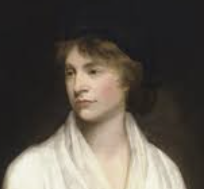
3 months 3 weeks ago
It is of great importance to observe that the character of every man is, in some degree, formed by his profession. A man of sense may only have a cast of countenance that wears off as you trace his individuality, whist the weak, common man has scarcely ever any character, but what belongs to the body; at least, all his opinions have been so steeped in the vat consecrated by authority, that the faint spirit which the grape of his own vine yields, cannot be distinguished.
▼
Source
Ch. 1
3 months 3 weeks ago
Normal science, the activity in which most scientists inevitably spend almost all their time, is predicated on the assumption that the scientific community knows what the world is like. Normal science often suppresses fundamental novelties because they are necessarily subversive of its basic commitments.
▼
Source
p. 5

3 months 3 weeks ago
The core of the belief in progress is that human values and goals converge in parallel with our increasing knowledge. The twentieth century shows the contrary. Human beings use the power of scientific knowledge to assert and defend the values and goals they already have. New technologies can be used to alleviate suffering and enhance freedom. They can, and will, also be used to wage war and strengthen tyranny. Science made possible the technologies that powered the industrial revolution. In the twentieth century, these technologies were used to implement state terror and genocide on an unprecedented scale. Ethics and politics do not advance in line with the growth of knowledge — not even in the long run.
▼
Source
"Joseph Conrad, Our Contemporary," from Heresies: Against Progress and Other Illusions (2004)
3 months 3 weeks ago
That which is desirable on its own account and for the sake of knowing it is more of the nature of wisdom than that which is desirable on account of its results.
▼
Source
982a16, Complete Works, vol. 2, p. 1554

3 months 3 weeks ago
...никогда Христос ... ни одним словом не утверждал личное воскресение и бессмертие личности за гробом...
▼
Source
Never did Christ utter a single word attesting to a personal resurrection and a life beyond the grave. | My Religion (1884), Ch. 8 [http://books.google.com/books?id=D-UOAQAAIAAJ&q=%22%D0%BD%D0%B8%D0%BA%D0%BE%D0%B3%D0%B4%D0%B0+%D0%A5%D1%80%D0%B8%D1%81%D1%8
3 months 3 weeks ago
Fortunately, there is a sane equilibrium in the character of nations, as there is in that of men. The force of passion is balanced by the force of interest. An insatiable appetite for glory leads to sacrifice and death, but innate instinct leads to self-preservation and life. A nation that neglects either of these forces perishes. They must be steered together, like a pair of carriage horses.

3 months 3 weeks ago
Modernity is one of the most delicate and vital issues confronting us, the people of non-European countries and Islamic societies. A more important issue is the relationship between an imposed modernization and genuine civilization. We must discover if modernity as is claimed is a synonym for being civilised, or if it is an altogether different issue and social phenomenon having no relation to civilisation at all. Unfortunately modernity has been imposed on us, the non-European nations, in the guise of civilization.
▼
Source
p. 17: Second paragraph.
3 months 3 weeks ago
There are two things which make it impossible to believe that this world is the successful work of an all-wise, all-good, and, at the same time, all-powerful Being; firstly, the misery which abounds in it everywhere; and secondly, the obvious imperfection of its highest product, man, who is a burlesque of what he should be.
▼
Source
"On the Sufferings of the World"
3 months 3 weeks ago
In the hours without sleep, each moment is so full and so vacant that it suggests itself as a rival of Time.
3 months 3 weeks ago
A very poor man may be said in some sense to have a demand for a coach and six; he might like to have it; but his demand is not an effectual demand, as the commodity can never be brought to market in order to satisfy it.
▼
Source
Chapter VII, p. 67.
3 months 3 weeks ago
If ever there was a book calculated to make a man in love with its author, this appears to me to be the book. She speaks of her sorrows, in a way that fills us with melancholy, and dissolves us in tenderness, at the same time that she displays a genius which commands all our admiration. Affliction had tempered her heart to a softness, almost more than human; and the gentleness of her spirit seems precisely to accord with all the romance of unbounded attachment.
▼
Source
William Godwin, on her book, Letters Written during a Short Residence in Sweden, Norway and Denmark (1796), in his own Memoirs of the Author of a Vindication of the Rights of Woman (1798), p. 95
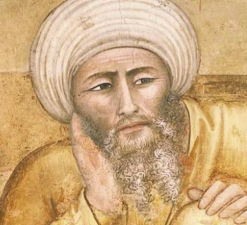
3 months 3 weeks ago
The texts about the future life fall into, since demonstrative scholars do not agree whether to take them in their apparent meaning or interpret them allegorically. Either is permissible. But it is inexcusable to deny the fact of a future life altogether.
▼
Source
Ch 2. 44
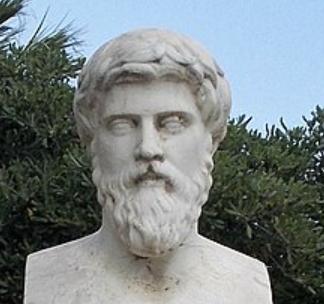
3 months 3 weeks ago
He made one of Antipater's recommendation a judge; and perceiving afterwards that his hair and beard were coloured, he removed him, saying, "I could not think one that was faithless in his hair could be trusty in his deeds."
▼
Source
40 Philip
3 months 3 weeks ago
There is no more consensus on what justice means than there is on the character of the good. If anything, there is less. Among the virtues, justice is one of the most shaped by convention. For that reason it is among the most changeable.
▼
Source
'Modus Vivendi' (p.34)
3 months 3 weeks ago
It is well said, then, that it is by doing just acts that the just man is produced, and by doing temperate acts the temperate man; without doing these no one would have even a prospect of becoming good. But most people do not do these, but take refuge in theory and think they are being philosophers and will become good in this way, behaving somewhat like patients who listen attentively to their doctors, but do none of the things they are ordered to do.
▼
Source
Book II, 1105b.9

3 months 3 weeks ago
The game of science is, in principle, without end. He who decides one day that scientific statements do not call for any further test, and that they can be regarded as finally verified, retires from the game.
▼
Source
Ch. 2 "On the Problem of a Theory of Scientific Method", Section 11: Methodological Rules as Conventions, p. 32.
3 months 3 weeks ago
There is only one enduring happiness in life—to live for others.
▼
Source
[http://books.google.com/books?id=eWU4AAAAYAAJ&q=%22there+is+only+one+enduring+happiness+in+life+to+live+for+others%22&pg=PA22#v=onepage Part 1, chapter 2]

3 months 3 weeks ago
What in all the world has courage to do with hope?
▼
Source
Quoted by Harry Slochower in "Julius Bahnsen, Philosopher of Heroic Despair, 1830-1881" (1932), The Philosophical Review, 41(4), p. 381

3 months 3 weeks ago
Self-reliance, the height and perfection of man, is reliance on God.
▼
Source
The Fugitive Slave Law, a lecture in NYC (March 7, 1854)
CivilSimian.com created by AxiomaticPanic, CivilSimian, Kalokagathia