

3 months 3 weeks ago
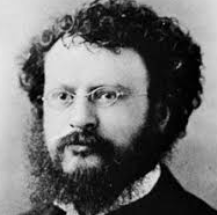
Reminiscences, even extensive ones, do not always amount to an autobiography. … For even if months and years appear here, it is in the form they have in the moment of recollection. This strange form — it may be called fleeting or eternal — is in neither case the stuff that life is made of.
▼
Source
A Berlin Chronicle (1932–, unfinished), in Walter Benjamin: Selected Writings – vol. 2, pt. 2: 1931-1934, ed. Michael William Jennings, Harvard University Press, 2005, p. 612
3 months 3 weeks ago
In a very deep sense all human science is but the increment of the power of the eye, and all human art is the increment of the power of the hand.
▼
Source
Ch. 7, p. 60
3 months 3 weeks ago
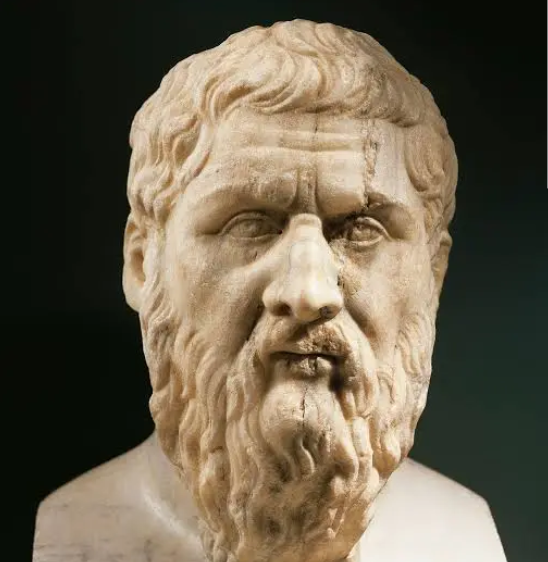
Socrates: I think the most likely view is, that these ideas exist in nature as patterns, and the other things resemble them and are imitations of them; their participation in ideas is assimilation to them, that and nothing else.Parmenides: It is impossible that anything be like the idea, or the idea like anything; for if they are alike, some further idea, in addition to the first, will always appear, and if that is like anything, still another, and a new idea will always be arising, if the idea is like that which partakes of it.
▼
Source
132d-133a

3 months 3 weeks ago
The moment we believe we've understood everything grants us the look of a murderer.

3 months 3 weeks ago
No man is bound by the words themselves, either to kill himselfe, or any other man.
▼
Source
The Second Part, Chapter 21, p. 112

3 months 3 weeks ago
Consider how, even in the meanest sorts of Labour, the whole soul of a man is composed into a kind of real harmony, the instant he sets himself to work! Doubt, Desire, Sorrow, Remorse, Indignation, Despair itself, all these like helldogs lie beleaguering the soul of the poor dayworker, as of every man: but he bends himself with free valour against his task, and all these are stilled, all these shrink murmuring far off into their caves. The man is now a man. The blessed glow of Labour in him, is it not as purifying fire, wherein all poison is burnt up, and of sour smoke itself there is made bright blessed flame!

3 months 3 weeks ago
Men in their prayers beg the gods for health, not knowing that this is a thing they have in their own power. Through their incontinence undermining it, they themselves become, because of their passions, the betrayers of their own health.
3 months 3 weeks ago
I argue that what breathes fire into the QM equations is field-theoretic what-it's-likeness: "microqualia" to use a philosopher's term of art. The different values of the solutions to the ultimate physical equations exhaustively yield the abundance of different values of subjectivity. There is no room for dualism; "nomological danglers"; causally inert epiphenomena; classical, porridge-like lumps of otherwise insentient but magically mind-secreting matter, etc. There is no "explanatory gap" because there aren't any material objects - not even brains or nerve cells as commonly (mis)perceived. Instead, over millions of years, non-equilibrium thermodynamics and universal, (neo-)Darwinian principles of natural selection have contrived to organise a minimal and self-intimating subjective sludge of microqualia into complex functional living units. Initially, these units have taken the form of self-replicating, information-bearing biomolecular patterns. Eventually, selection-pressure has given rise to complex minds as well, albeit as just one part of the throwaway host vehicles by which our genes leave copies of themselves. Conscious mind, on this proposal, is a triumph of organisation: our egocentric virtual worlds are warm and gappy QM-coherent states of consciousness. Contra materialist metaphysics, sentience of any kind is not the daily re-enactment of an ontological miracle. Moreover the idea that what-it's-like-ness is the fire in the equations is (at least) consistent with orthodox relativistic quantum field theory - because the theorists' key notions (e.g. that of a field, string, brane, etc) are defined purely mathematically. In other cases, they readily lend themselves to such a reconstruction. Using the word "physical" doesn't add anything of substance.
▼
Source
"Why Does Anything Exist?", [https://www.hedweb.com/nihilism/nihilf08.htm "Section Eight"], BLTC Research, 1998

3 months 3 weeks ago
Where feudalism is concrete and organic, with man dominated by the image of the land, capitalism is abstract and calculating in spirit, and severs man from the earth.
▼
Source
Chapter Two, The Encounter With Nothingness, p. 26
3 months 3 weeks ago
I leave it to you to compare this Christian hero [Paul] with some of the 'freethinkers' of our own day, who, 'more intolerant than the intolerance they deprecate,' flaunt in public their cheap and trumpery theories of the great Apostle and the Master whom he served.
3 months 3 weeks ago
The inexperienced in wisdom and virtue, ever occupied with feasting and such, are carried downward, and there, as is fitting, they wander their whole life long, neither ever looking upward to the truth above them nor rising toward it, nor tasting pure and lasting pleasures. Like cattle, always looking downward with their heads bent toward the ground and the banquet tables, they feed, fatten, and fornicate. In order to increase their possessions they kick and butt with horns and hoofs of steel and kill each other, insatiable as they are.
▼
Source
586a–b

3 months 3 weeks ago
And if the matter of the Philosophers Stone, and the manner of preparing it, be such Mysteries as they would have the World believe them, they may Write Intelligibly and Clearly of the Principles of mixt Bodies in General, without Discovering what they call the Great Work.
3 months 3 weeks ago
Ambition is a drug that makes its addicts potential madmen.
3 months 3 weeks ago
Hobbes himself had experienced this truth in the terrible times of civil war, because then all legitimate and normative illusions with which men like to deceive themselves regarding political realities in periods of untroubled security vanish. If within the state there are organized parties capable of according their members more protection than the state, then the latter becomes at best an annex of such parties, and the individual citizen knows whom he has to obey.
▼
Source
Carl Schmitt, The Concept of the Political
3 months 3 weeks ago
A Parliament speaking through reporters to Buncombe and the twenty-seven millions, mostly fools.
▼
Source
Latter Day Pamphlets, No. 6.
3 months 3 weeks ago
The biology of suffering in intelligent agents is a deep underlying source of existential risk – and one that can potentially be overcome.
▼
Source
"[https://www.hedweb.com/social-media/pre2014.html Unsorted Postings]", pre-2014

3 months 3 weeks ago
Either you support, in principle, the ideal of an international government or regime that imposes its will on subject nations when its officials regard this as necessary; or you believe that nations should be free to set their own course in the absence of such an international government or regime.
3 months 3 weeks ago
What happens when our eye sees a rose? What do we do when that happens? Our mind does something, to be sure, in the mere fact of taking in the object, grasping its color, its shape, and so on. We have to be awake and active. But all the same, it is a "relaxed" looking, so long as we are merely looking at it and not observing or studying it, counting or measuring its various features. Such observation would not be a "relaxed" action; it would be what Ernst Jünger termed an "act of aggression." But simply looking at something, gazing at it, "taking it in," is merely to open our eyes to receive the things that present themselves to us, that come to us without any need for "effort" on our part to "possess" them.
▼
Source
p. 9 | The Ernst Jünger quote is from Blätter und Steine (Hamburg, 1934), p. 202.
3 months 3 weeks ago
Xenophon, too, does not appear to have been very friendlily disposed towards him: and accordingly they have, as if in rivalry of one another, both written books with the same title, the Banquet, the Defence of Socrates, Moral Reminiscences. Then, too, the one wrote the Cyropaedia and the other a book on Politics ; and Plato in his Laws says, that the Cyropaedia is a mere romance, for that Cyrus was not such a person as he is described in that book. And though they both speak so much of Socrates, neither of them ever mentions the other, except that Xenophon once speaks of Plato in the third book of his Reminiscences.
▼
Source
{{cite web
3 months 3 weeks ago
He was... the first to define the relation of an element to a compound, and to draw the distinction we still make between compounds and s.
3 months 3 weeks ago
Suicide is a sudden accomplishment, a lightning-like deliverance: it is nirvana by violence.
3 months 3 weeks ago
All the gifted souls, of every rank, who are born to you in this generation. These are appointed, by the true eternal "divine right" which will never become obsolete, to be your governors and administrators; and precisely as you employ them, or neglect to employ them, will your State be favored of Heaven or disfavored. This noble young soul, you can have him on either of two conditions; and on one of them, since he is here in the world, you must have him. As your ally and coadjutor; or failing that, as your natural enemy: which shall it be? I consider that every Government convicts itself of infatuation and futility, or absolves and justifies itself before God and man, according as it answers this question.
3 months 3 weeks ago
Negative-utilitarianism is only one particular denomination of a broad church to which the reader may well in any case not subscribe. Fortunately, the program can be defended on grounds that utilitarians of all stripes can agree on. So a defence will be mounted against critics of the theory and application of a utilitarian ethic in general. For in practice the most potent and effective means of curing unpleasantness is to ensure that a defining aspect of future states of mind is their permeation with the molecular chemistry of ecstasy: both genetically precoded and pharmacologically fine-tuned. Orthodox utilitarians will doubtless find the cornucopian abundance of bliss this strategy delivers is itself an extra source of moral value. Future generations of native ecstatics are unlikely to disagree.
▼
Source
2.7 [https://www.hedweb.com/hedethic/hedon2.htm#negative Why Be Negative?]

3 months 3 weeks ago
The art of reasoning is nothing more than a language well arranged.
▼
Source
As quoted in Antoine Lavoisier, Elements of Chemistry (trans. Robert Kerr, 1790), Preface, p. xiv.
3 months 3 weeks ago
“The essence of happiness consists in an act of the intellect.” (Thomas Aquinas, Summa Theologica) … What is implicit in this sentence? This is implicit: the fulfillment of existence takes place in the manner in which we become aware of reality; the whole energy of our being is ultimately directed toward attainment of insight. The perfectly happy person, the one whose thirst has been finally quenched, who has attained beatitude—this person is the one who sees. The happiness, the quenching, the perfection, consists in this seeing.
▼
Source
p. 58
3 months 3 weeks ago
What place do we occupy in the "universe"? A point, if that! Why reproach ourselves when we are evidently so insignificant? Once we make this observation, we grow calm at once: henceforth, no more bother, no more frenzy, metaphysical or otherwise. And then that point dilates, swells, substitutes itself for space. And everything begins all over again.
3 months 3 weeks ago
I warmly second the advice of the wisest of men—"Don't be ambitious; don't be at all too desirous to success; be loyal and modest." Cut down the proud towering thoughts that you get into you, or see they be pure as well as high. There is a nobler ambition than the gaining of all California would be, or the getting of all the suffrages that are on the planet just now.
3 months 3 weeks ago
We are passengers, comprehended and displaced by metaphor.
▼
Source
Chapter 8, Performative Reflexivity, p. 137
3 months 3 weeks ago
The claims of existing social arrangements and of self interest have been duly allowed for. We cannot at the end count them a second time because we do not like the result.
▼
Source
Chapter III, Section 23, pg. 135
3 months 3 weeks ago
Galileo and Hooke demonstrated that every sound is characterized by a precise number of vibrations per second, but the full understanding of even the simplest... vibrators requires... calculus. ...Leonard Euler, Daniel Bernoulli, Jean le Rond d'Alembert, and Joseph Louis Lagrange all studied the vibrating string.... In 1747 d'Alembert found... the wave equation and in 1753 Bernoulli stated the... decomposition of every motion of a string as a sum of elementary sinusoidal motions. Then at the beginning of the following century Fourier developed "harmonic analysis."
3 months 3 weeks ago
Without the collapse of capitalism the expropriation of the capitalist class is impossible.
▼
Source
Ch. 9

3 months 3 weeks ago
The philosophy of Kant, then, is the only philosophy with which a thorough acquaintance is directly presupposed in what we have to say here. But if, besides this, the reader has lingered in the school of the divine Plato, he will be so much the better prepared to hear me, and susceptible to what I say. And if, indeed, in addition to this he is a partaker of the benefit conferred by the Vedas, the access to which, opened to us through the Upanishads, is in my eyes the greatest advantage which this still young century enjoys over previous ones, because I believe that the influence of the Sanscrit literature will penetrate not less deeply than did the revival of Greek literature in the fifteenth century: if, I say, the reader has also already received and assimilated the sacred, ancient Indian wisdom, then is he best of all prepared to hear what I have to say to him. My work will not speak to him, as to many others, in a strange and even hostile tongue; for, if it does not sound too vain, I might express the opinion that each one of the individual and disconnected aphorisms which make up the Upanishads may be deduced as a consequence from the thought I am going to impart, though the converse, that my thought is to be found in the Upanishads, is by no means the case.
▼
Source
:s:The World as Will and Representation/Preface to the First Edition | Kants Philosophie also ist die einzige, mit welcher eine gründliche Bekanntschaft bei dem hier Vorzutragenden gradezu vorausgesetzt wird. — Wenn aber überdies noch der Leser in der Sch
3 months 3 weeks ago
He detested objective truths, the burden of argument, sustained reasoning. He disliked demonstrating, he wanted to convince no one. Others are a dialectician's invention.
3 months 3 weeks ago
These are damned times—everything is against one—the height to which knowledge is come, the spread of luxury, our physical enervation, the absence of great natures, the unavoidable contact with millions of small ones, newspapers, cities, light profligate friends, moral desperadoes like Carlyle.
▼
Source
Matthew Arnold to Arthur Hugh Clough (23 September 1849), quoted in The Letters of Matthew Arnold to Arthur Hugh Clough, ed. Howard Foster Lowry (1932), p. 111
3 months 3 weeks ago
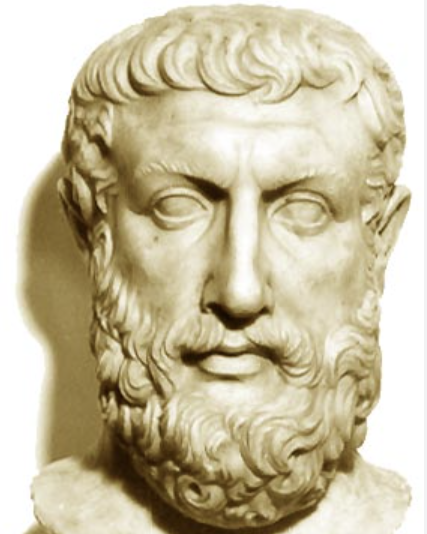
The purest example of the Greek desire to comprehend, a desire which in him would have nothing to do with what was not strictly knowable. If later philosophers appear softer by comparison, it is perhaps because of a revivifying compromise they made, one more acceptable and more tolerant of the discourse we perhaps need; but, by the same token, one can perhaps be forgiven for sometimes thinking them dwarfed by the inhuman shadow of the master.
▼
Source
Scott Austin, in Parmenides : Being, Bounds, and Logic (1986), p. 154
3 months 3 weeks ago
Social and economic inequalities are to satisfy two conditions: first, they are to be attached to positions and offices open to all under conditions of fair equality of opportunity; and second, they are to be to the greatest benefit to the least-advantaged members of society.
▼
Source
p. 6
3 months 3 weeks ago
It is sufficiently evident from many circumstances, that the doctrine of the divinity of Christ did not establish itself without much opposition, especially from the unlearned among the Christians, who thought that it savoured of Polytheism, that it was introduced by those who had had a philosophical education, and was by degrees adopted by others, on account of its covering the great offence of the cross, by exalting the personal dignity of our Saviour.
▼
Source
Part I : The History of Opinions Relating to Jesus Christ, § IV : Of the Difficulty with which the Doctrine of the Divinity of Christ was Established.
3 months 3 weeks ago
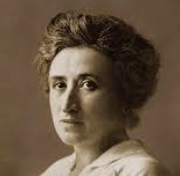
With a will, determination, selflessness and devotion for which words are too weak, she consecrated her whole life and her whole being to Socialism. She gave herself completely to the cause of Socialism, not only in her tragic death, but throughout her whole life, daily and hourly, through the struggles of many years ... She was the sharp sword, the living flame of revolution.
▼
Source
Clara Zetkin, her closest friend, as quoted in Rosa Luxemburg, Ideas in Action (1972) by Paul Frölich, p. x
3 months 3 weeks ago
My basis is supported by the authority of the greatest moralist of modern times; for such, undoubtedly, J. J. Rousseau is,—that profound reader of the human heart, who drew his wisdom not from books, but from life, and intended his doctrine not for the professorial chair, but for humanity; he, the foe of all prejudice, the foster-child of nature, whom alone she endowed with the gift of being able to moralise without tediousness, because he hit the truth and stirred the heart.
▼
Source
Part III, Ch. VIII, 9, [https://archive.org/stream/basisofmorality00schoiala#page/230/mode/2up p. 230]
3 months 3 weeks ago
We had nothing to say to one another, and while I was manufacturing my phrases I felt that earth was falling through space and that I was falling with it at a speed that made me dizzy.
3 months 3 weeks ago
In the first place that appalling style, with its repetitiveness, its overemphasis, its perpetual note of adjuration, its shrillness and exaggeration, with no soft tones at all, the trumpets always braying and that rather discordantly: it makes him almost impossible to read... Yet for all his defects Carlyle was unmistakably a man of genius. He was that very unattractive kind of genius, a prophet. All prophets are misfits; and that throws a flood of light on the source and conditioning of their "message".
▼
Source
A. L. Rowse, ‘Carlyle's Past and Present’, The English Spirit: Essays in History and Literature (1944), p. 223
3 months 3 weeks ago
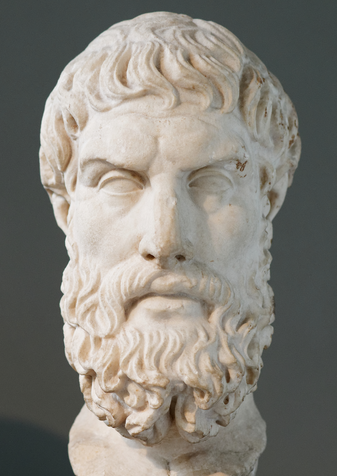
Against the diseases of the mind, philosophy provides sufficient antidotes. The instruments which it employs for this purpose are the virtues; the root of which, whence all the rest proceed, is prudence. This virtue comprehends the whole art of living discreetly, justly, and honorably, and is, in fact, the same thing with wisdom. It instructs men to free their understandings from the clouds of prejudice; to exercise temperance and fortitude in the government of themselves: and to practice justice towards others. Although pleasure, or happiness, which is the end of living, be superior to virtue, which is only the means, it is every one's interest to practice all the virtues; for in a happy life, pleasure can never be separated from virtue.
3 months 3 weeks ago
That which is, is ...it cannot be more or less. There is... as much of it in one place as in another... a continuous, indivisible plenum. From this it follows... that it must be immovable... [for] it must move into an empty space, and there is no empty space. ...For the same reason, it must be finite, and can have nothing beyond it. It is complete in itself, and has no need to stretch out indefinitely into an empty space that does not exist. ...It is equally real in every direction ...the ...the only form ...Any other would ...[have distinguishable] direction... [T]his sphere cannot ...move round its ...axis; for there is nothing outside ...[to] reference...
3 months 3 weeks ago
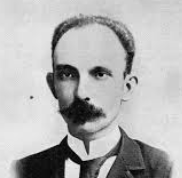
Mankind is composed of two sorts of men — those who love and create, and those who hate and destroy.
▼
Source
"Letter to a Cuban Farmer" (1893)
3 months 3 weeks ago
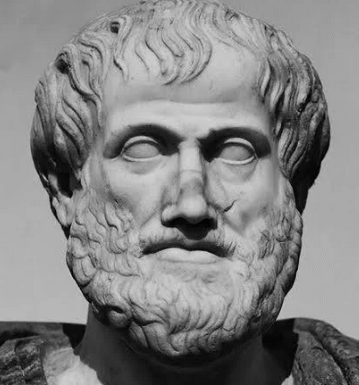
Of things said without any combination, each signifies either substance or quantity or qualification or a relative or where or when or being-in-a-position or having or doing or being affected. To give a rough idea, examples of substance are man, horse; of quantity: four-foot, five-foot; of qualification: white, grammatical; of a relative: double, half, larger; of where: in the Lyceum, in the market-place; of when: yesterday, last-year; of being-in-a-position: is-lying, is sitting; of having: has-shoes-on, has-armour-on; of doing: cutting, burning; of being-affected: being-cut, being-burned.
▼
Source
1b25-2a10; (tr.), 1984-1995

3 months 3 weeks ago
We find ourselves on the brink of a decision, a decision to break with the arcana of the one and the multiple in which philosophy is born and buried, phoenix of its own sophistic consumption.
▼
Source
Meditation One: The One and the Multiple: a priori conditions of any possible ontology
3 months 3 weeks ago
It is difficult, if not impossible, to define the limit of our reasonable desires in respect of possessions.
▼
Source
E. Payne, trans. (1974) Vol. 1, p. 346
3 months 3 weeks ago
Say what we will, death is the best thing nature has found to please everyone. With each of us, everything vanishes, everything stops forever. What an advantage, what an abuse! Without the least effort on our part, we own the universe, we drag it into our own disappearance. No doubt about it, dying is immoral...
3 months 3 weeks ago
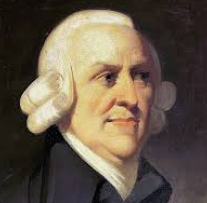
Poor David Hume is dying very fast, but with great cheerfulness and good humour and with more real resignation to the necessary course of things then any whining Christian ever dyed with pretended resignation to the will of God.
▼
Source
Letter to Alexander Wedderburn 14 August 1776. The Correspondence of Adam Smith edited by E.C. Mossner and Ian Simpson Ross, 2nd edition, Oxford University Press 1986. [https://www.ac.edu.au/custom-utils/download-count/target_address=http://apps.acu.edu.a
3 months 3 weeks ago
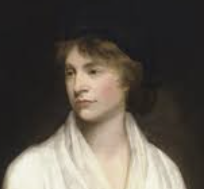
Good habits, imperceptibly fixed, are far preferable to the precepts of reason; but, as this task requires more judgment than generally falls to the lot of parents, substitutes must be sought for, and medicines given, when regimen would have answered the purpose much better. I believe those who examine their own minds, will readily agree with me, that reason, with difficulty, conquers settled habits, even when it is arrived at some degree of maturity: why then do we suffer children to be bound with fetters, which their half-formed faculties cannot break. In writing the following work, I aim at perspicuity and simplicity of style; and try to avoid those unmeaning compliments, which slip from the tongue, but have not the least connexion with the affections that should warm the heart, and animate the conduct. By this false politeness, sincerity is sacrificed, and truth violated; and thus artificial manners are necessarily taught. For true politeness is a polish, not a varnish; and should rather be acquired by observation than admonition.
▼
Source
Original Stories from Real Life; with Conversations Calculated to Regulate the Affections, and Form the Mind to Truth and Goodness (1788; 1791)
CivilSimian.com created by AxiomaticPanic, CivilSimian, Kalokagathia