

3 months 3 weeks ago
In general, the form and the structure of the brains of quadrupeds are almost the same as those of the brain of man...
3 months 3 weeks ago
Third, consider the insistency of an idea. The insistency of a past idea with reference to the present is a quantity which is less, the further back that past idea is, and rises to infinity as the past idea is brought up into coincidence with the present.

3 months 3 weeks ago
Despair is like forward children, who, when you take away one of their playthings, throw the rest into the fire for madness. It grows angry with itself, turns its own executioner, and revenges its misfortunes on its own head.
▼
Source
p. 123 (Despair)
3 months 3 weeks ago
There are three basic problems: how a mind can know the world of nature, how it is possible for one mind to know another, and how it is possible to know the contents of our own minds without resort to observation or evidence. It is a mistake, I shall urge, to suppose that these questions can be collapsed into two, or taken into isolation.
▼
Source
Davidson. Subjective, Intersubjective, Objective, (2001) p. 208, as cited in: Dermot Moran (ed). The Routledge Companion to Twentieth Century Philosophy, (2008), p. 681

3 months 3 weeks ago
Hegel’s philosophy was an integral part of the culture which authoritarianism had to overcome. It is therefore no accident that the National Socialist assault on Hegel begins with the repudiation of his political theory. P. 411
3 months 3 weeks ago
An "Argument" is any process of thought reasonably tending to produce a definite belief. An "Argumentation" is an Argument proceeding upon definitely formulated premisses. If God Really be, and be benign, then, in view of the generally conceded truth that religion, were it but proved, would be a good outweighing all others, we should naturally expect that there would be some Argument for His Reality that should be obvious to all minds, high and low alike, that should earnestly strive to find the truth of the matter; and further, that this Argument should present its conclusion, not as a proposition of metaphysical theology, but in a form directly applicable to the conduct of life, and full of nutrition for man's highest growth. What I shall refer to as the N.A. — the Neglected Argument — seems to me best to fulfil this condition, and I should not wonder if the majority of those whose own reflections have harvested belief in God must bless the radiance of the N.A. for that wealth. Its persuasiveness is no less than extraordinary; while it is not unknown to anybody. Nevertheless, of all those theologians (within my little range of reading) who, with commendable assiduity, scrape together all the sound reasons they can find or concoct to prove the first proposition of theology, few mention this one, and they most briefly. They probably share those current notions of logic which recognise no other Arguments than Argumentations.
3 months 3 weeks ago
There is no science apart from the general. It may even be said that the very object of the exact sciences is to spare us these direct verifications.
▼
Source
Ch. I. (1905) Tr. George Bruce Halstead
3 months 3 weeks ago
Oh, can I really believe the poet's tales, that when one first sees the object of one's love, one imagines one has seen her long ago, that all love like all knowledge is remembrance, that love too has its prophecies in the individual. ... it seems to me that I should have to possess the beauty of all girls in order to draw out a beauty equal to yours; that I should have to circumnavigate the world in order to find the place I lack and which the deepest mystery of my whole being points towards, and at the next moment you are so near to me, filling my spirit so powerfully that I am transfigured for myself, and feel that it's good to be here.
▼
Source
On Regine Olsen (2 February 1839)

3 months 3 weeks ago
One should not be deceived by philosophical works that pretend to be mathematical, but are merely dubious and murky metaphysics. Just because a philosopher can recite the words lemma, theorem and corollary doesn't mean that his work has the certainty of mathematics. That certainty does not derive from big words, or even from the method used by geometers, but rather from the utter simplicity of the objects considered by mathematics.
3 months 3 weeks ago
The sad thing about the optimist is his state of mind concerning himself.
3 months 3 weeks ago
As the great words of freedom and fulfillment are pronounced by campaigning leaders and politicians, on the screens and radios and stages, they turn into meaningless sounds which obtain meaning only in the context of propaganda, business, discipline, and relaxation. This assimilation of the ideal with reality testifies to the extent to which the ideal has been surpassed. It is brought down from the sublimated realm of the soul or the spirit or the inner man, and translated into operational terms and problems. Here are the progressive elements of mass culture. The perversion is indicative of the fact that advanced industrial society is confronted with the possibility of a materialization of ideals. The capabilities of this society are progressively reducing the sublimated realm in which the condition of man was represented, idealized, and indicted. Higher culture becomes part of the material culture. In this transformation, it loses the greater part of its truth.
▼
Source
pp. 57-58
3 months 3 weeks ago
At this point in history when all things which concern man and the structure and elements of history itself are suddenly revealed to us in a new light, it behooves us in our scientific thinking to become masters of the situation, for it is not inconceivable that sooner than we suspect, as has often been the case before in history, this vision may disappear, the opportunity may be lost, and the world will once again present a static, uniform, and inflexible countenance.

3 months 3 weeks ago
The body is a temple.
▼
Source
A lecture at Königsberg (1775), as quoted in A New Dictionary of Quotations on Historical Principles from Ancient and Modern Sources (1946) by H. L. Mencken, p. 1043
3 months 3 weeks ago
We have not a direct intuition of simultaneity, nor of the equality of two durations. If we think we have this intuition, this is an illusion. We replace it by the aid of certain rules which we apply almost always without taking count of them....We ...choose these rules, not because they are true, but because they are the most convenient, and we may recapitulate them as follows: "The simultaneity of two events, or the order of their succession, the equality of two durations, are to be so defined that the enunciation of the natural laws may be as simple as possible. In other words, all these rules, all these definitions, are only the fruit of an unconscious opportunism."
3 months 3 weeks ago
The Sophist demonstrates that everything is true and nothing is true.
▼
Source
p. 205

3 months 3 weeks ago
Monsters cannot be announced. One cannot say: 'here are our monsters', without immediately turning the monsters into pets.
▼
Source
Some Statements and Truisms about Neologisms, Newisms, Postisms, Parasitisms, and other small Seismisms, The States of Theory, ed. David Carroll, New York: Columbia University Press, 1989.
3 months 3 weeks ago
To connect the two energies, of the body and the soul, in a coherent manner: science has provisionally decided to ignore the question... caught up as we are here in the logic of a system where the within of things has just as much or... more value than their without... we must advance.
3 months 3 weeks ago
I am not sure just what the unpardonable sin is, but I believe it is a disposition to evade the payment of small bills.
▼
Source
p. 146
3 months 3 weeks ago
This language controls by reducing the linguistic forms and symbols of reflection, abstraction, development, contradiction; by substituting images for concepts. It denies or absorbs the transcendent vocabulary; it does not search for but establishes and imposes truth and falsehood.
▼
Source
p. 103
3 months 3 weeks ago
Nature, therefore, is subject with absolute precision to all the precepts of geometry as to all the properties of space there demonstrated, this being the subjective condition, not hypothetically but intuitively given, of every phenomenon in which nature can ever be revealed to the senses.
3 months 3 weeks ago
Therefore create me! You, the most esteemed, cultured public, are in possession of nervus rerum gerendarum [the moving force to accomplish something]. Just a word from you, a promise to purchase what I write, or, if it is possible, so that everything can be in order immediately, a little advance payment – and I am an author; I shall remain one as long as this favor lasts.
▼
Source
Søren Kierkegaard, Writing Sampler, Nichol P. 75
3 months 3 weeks ago
No one can deny the suffering, fear, or panic, the terror or fright that can seize certain animals and that we humans can witness. … No doubt either, then, of there being within us the possibility of giving vent to a surge of compassion, even if it is then misunderstood, repressed, or denied, held at bay. … The two centuries I have been referring to somewhat casually in order to situate the present in terms of this tradition have been those of an unequal struggle, a war (whose inequality could one day be reversed) being waged between, on the one hand, those who violate not only animal life but even and also this sentiment of compassion, and, on the other hand, those who appeal for an irrefutable testimony to this pity. War is waged over the matter of pity. This war is probably ageless but, and here is my hypothesis, it is passing through a critical phase. We are passing through that phase, and it passes through us. To think the war we find ourselves waging is not only a duty, a responsibility, an obligation, it is also a necessity, a constraint that, like it or not, directly or indirectly, no one can escape. Henceforth more than ever. And I say “to think” this war, because I believe it concerns what we call “thinking.” The animal looks at us, and we are naked before it. Thinking perhaps begins there.
3 months 3 weeks ago
Joy is the most infallible sign of the presence of God.
▼
Source
Though often attributed to Chardin, it is found in Letters to His Fiancée (1937), by Léon Bloy, p. 57. "For the people who know the Bible and Tradition and the complete history of humanity, Joy is the most infallible sign of the presence of God and that i
3 months 3 weeks ago
No radiant pearl which crested Fortune wears,No gem that twinkling hangs from Beauty's ears,Not the bright stars which Night's blue arch adorn,Nor rising suns that gild the vernal morn,Shine with such lustre as the tear that flowsDown Virtue's manly cheek for others' woes.
▼
Source
The Botanic Garden (1791), Part ii, Canto iii, l. 459.
3 months 3 weeks ago
It is the most advanced industrial society which feels most directly threatened by the rebellion, because it is here that the social necessity of repression and alienation, of servitude and heteronomy is most transparently unnecessary, and unproductive in terms of human progress. Therefore the cruelty and violence mobilized in the struggle against the threat, therefore the monotonous regularity with which the people are made familiar with, and accustomed to inhuman attitudes and behavior-to wholesale killing as patriotic act.
3 months 3 weeks ago
This problem is the most difficult and the last to be solved by mankind.
▼
Source
Sixth Thesis
3 months 3 weeks ago
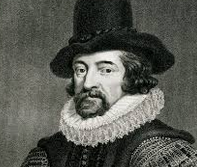
The monuments of wit survive the monuments of power.
▼
Source
Essex's Device (1595)
3 months 3 weeks ago
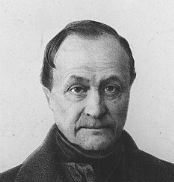
The principal means of realizing it will be the formation of an alliance between philosophers and the working classes, for which both are alike prepared by the negative and positive progress of the last five centuries. The direct object of their combined action will be to set in motion the force of Public Opinion.
▼
Source
p. 153
3 months 3 weeks ago
If you listen carefully, in what most definitely must be called Gospel you yourself will hear also rigorousness. For example, what Jesus says to the centurion from Capernaum, “If we will apply these words to ourselves, we are obliged to say, “Be it done for you as you believe; if you have faith unto salvation, then you will be saved.” (Matthew 8:13) How lenient, how merciful! But is it also certain, then, that I have faith-I surely cannot summarily transfer to myself the fact that the centurion believed, as if I had faith because the centurion had it. Let us suppose that someone asked Christianity, “Is it also certain, then, that I have faith?” Christianity would answer, “Be it done for you as you believe.”
▼
Source
p. 378
3 months 3 weeks ago
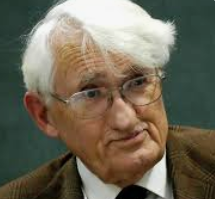
The bourgeois public sphere may be conceived above all as the sphere of private people come together as a public; they soon claimed the public sphere regulated from above against the public authorities themselves, to engage them in a debate over the general rules governing relations in the basically privatized but publicly relevant sphere of commodity exchange and social labor.
▼
Source
p. 27
3 months 3 weeks ago
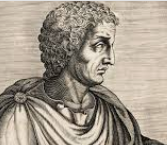
It was a custom with Apelles, to which he most tenaciously adhered, never to let any day pass, however busy he might be, without exercising himself by tracing some outline or other,—a practice which has now passed into a proverb. It was also a practice with him, when he had completed a work, to exhibit it to the view of the passers-by in his studio, while he himself, concealed behind the picture, would listen to the criticisms…. Under these circumstances, they say that he was censured by a shoemaker for having represented the shoes with one latchet too few. The next day, the shoemaker, quite proud at seeing the former error corrected, thanks to his advice, began to criticise the leg; upon which Apelles, full of indignation, popped his head out and reminded him that a shoemaker should give no opinion beyond the shoes, —a piece of advice which has equally passed into a proverbial saying.
▼
Source
Book XXXV, sec. 84.

3 months 3 weeks ago
Other curious and rather ominous consequences of war are the increased anti-Semitism which one meets in all classes, particularly the common people, and the strong recrudescence of anti-negro passions in the South. The first is due to the age-old dislike of a monied, influential and pushing minority, coupled with a special grudge against the Jews as being chiefly instrumental, in public opinion, in getting America into the war
▼
Source
Letter to Julian Huxley (1943), published in [https://books.google.ca/books?id=zcIZAAAAMAAJ Letters of Aldous Huxley (1970), p. 486], also in [https://books.google.ca/books?id=CiMxDwAAQBAJ&pg=PT200 Aldous Huxley: A Quest for Values (2017)]
3 months 3 weeks ago
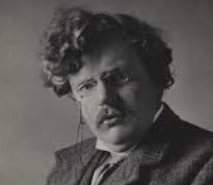
The Christ-child stood at Mary's knee, His hair was like a crown,And all the flowers looked up at him, And all the stars looked down.
▼
Source
A Christmas Carol, st. 4. The Wild Knight, &c., 2nd ed. (1906)
3 months 3 weeks ago
I have no knowledge of myself as I am, but merely as I appear to myself.
▼
Source
B 158
3 months 3 weeks ago
The sun, which passeth through pollutions and itself remains as pure as before.
▼
Source
Book II
3 months 3 weeks ago
Confession should be only in secret before God, who knows everything anyway, and thus it could remain hidden in one's innermost being. But at a dinner – and a woman! A dinner-it is not some hidden, remote place, nor is the lighting dim, nor is the mood like that among graves, nor are the listeners silent or invisibly present.
▼
Source
Three Discourses at Friday Communion November 14, 1849 Hong translation 1997 P. 139

3 months 3 weeks ago
I shall maintain that there simply is no such thing as philosophical knowledge, nor any philosophical way of knowing anything, and defend the humble point that philosophy is indeed the love of wisdom.
▼
Source
The Review of Metaphysics (June, 1968) [https://www.jstor.org/stable/20124689] p. 615
3 months 3 weeks ago
Our psychological experiences are all equally facts. There is nothing to choose between them. No psychological experience is "truer," so far as we are concerned, than any other. For even if one should correspond more closely to things in themselves as perceived by some hypothetical non-human being, it would be impossible for us to discover which it was. Science is no "truer" than common sense, or lunacy, or art, or religion. It permits us to organize our experience profitably; but tells us nothing about the real nature of the world to which our experiences are supposed to refer. From the internal reality, by which I mean the totality of psychological experiences, it actually separates us. Art, for example, deals with many more aspects of this internal reality than does science, which confines itself deliberately and by convention to the study of one very limited class of experiences — the experiences of sense.
▼
Source
“One and Many,” p. 5–6
3 months 3 weeks ago
The whole modern world has divided itself into Conservatives and Progressives. The business of Progressives is to go on making mistakes. The business of Conservatives is to prevent mistakes from being corrected. Even when the revolutionist might himself repent of his revolution, the traditionalist is already defending it as part of his tradition. Thus we have two great types — the advanced person who rushes us into ruin, and the retrospective person who admires the ruins. He admires them especially by moonlight, not to say moonshine. Each new blunder of the progressive or prig becomes instantly a legend of immemorial antiquity for the snob. This is called the balance, or mutual check, in our Constitution.
▼
Source
In The Illustrated London News (1924)
3 months 3 weeks ago
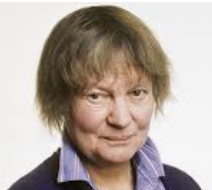
All art is the struggle to be, in a particular sort of way, virtuous.
▼
Source
The Black Prince (1973); 2003, p. 181.
3 months 3 weeks ago
What vexations there are in the external customs which are thought to belong to religion, but which in reality are related to ecclesiastical form! The merits of piety have been set up in such away that the ritual is of no use at all except for the simple submission of the believers to ceremonies and observances, expiations and mortifications (the more the better). But such compulsory services, which are mechanically easy (because no vicious inclination is thus sacrificed), must be found morally very difficult and burdensome to the rational man. When, therefore, the great moral teacher said, 'My commandments are not difficult,' he did not mean that they require only limited exercise of strength in order to be fulfilled. As a matter of fact, as commandments which require pure dispositions of the heart, they are the hardest that can be given. Yet, for a rational man, they are nevertheless infinitely easier to keep than the commandments involving activity which accomplishes nothing... [since] the mechanically easy feels like lifting hundredweights to the rational man when he sees that all the energy spent is wasted.
▼
Source
Kant, Immanuel (1996). [https://books.google.com/books?id=TbkVBMKz418C Anthropology from a Pragmatic Point of View]. Translated by Victor Lyle Dowdell. Southern Illinois University Press. ISBN 9780809320608. Page 33.
3 months 3 weeks ago
The Idols of Tribe have their foundation in human nature itself, and in the tribe or race of men. For it is a false assertion that the sense of man is the measure of things. On the contrary, all perceptions as well of the sense as of the mind are according to the measure of the individual and not according to the measure of the universe. And the human understanding is like a false mirror, which, receiving rays irregularly, distorts and discolors the nature of things by mingling its own nature with it.
▼
Source
Aphorism 41
3 months 3 weeks ago
When you read God's Word, in everything you read, continually to say to yourself: It is I to whom it is speaking - this is earnestness, precisely this is earnestness. Not a single one of those to whom the cause of Christianity in the higher sense has been entrusted forgot to urge this again and again as most crucial, as unconditionally the condition if you are to come to see yourself in the mirror.
▼
Source
Soren Kierkegaard, For Self-Examination, Hong p. 36-37
3 months 3 weeks ago
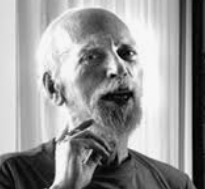
Existence is larger than any model that is not itself the exact size of existence (which has no size...)
▼
Source
Nature's God
3 months 3 weeks ago
It often happens that reforms merely have the effect of transferring the undesirable tendencies of individuals from one channel to another channel. An old outlet for some particular wickedness is closed; but a new outlet is opened. The wickedness is not abolished; it is merely provided with a different set of opportunities for self-expression.
▼
Source
Ch. 3, p. 20 [2012 reprint]
3 months 3 weeks ago
When we reverence anything in the mature, it is their virtues or their wisdom, and this is an easy matter. But we reverence the faults and follies of children. We should probably come considerably nearer to the true conception of things if we treated all grown-up persons, of all titles and types, with precisely that dark affection and dazed respect with which we treat the infantile limitations.
▼
Source
A Defence of Baby-Worship
3 months 3 weeks ago
The more we devote ourselves to observing animals and their behaviour, the more we love them, on seeing how gready they care for their young; in such a context, we cannot even contemplate cruelty to a wolf. Leibnitz put the grub he had been observing back on the tree with its leaf, lest he should be guilty of doing any harm to it. It upsets a man to destroy such a creature for no reason, and this tenderness is subsequently transferred to man.
▼
Source
Part II, pp. 212-213
3 months 3 weeks ago
Pyrrhus, when his friends congratulated to him his victory over the Romans under Fabricius, but with great slaughter of his own side, said to them, "Yes; but if we have such another victory, we are undone".
▼
Source
No. 193

3 months 3 weeks ago
It was capitalism that allowed the body itself to go from being understood as a dynamic organism to being a working or broken machine. And it was not just the fact that new machines were increasingly part of daily life, making it seem natural to use machines as metaphors for the sciences of the age. It was also that the mode of production itself favored a reduction of people to living machines, since they were seen as working or broken in relation to their productive potential.
▼
Source
p. 30
3 months 3 weeks ago
To be shaken out of the ruts of ordinary perception, to be shown for a few timeless hours the outer and inner world, not as they appear to an animal obsessed with survival or to a human being obsessed with words and notions, but as they are apprehended, directly and unconditionally, by Mind at Large — this is an experience of inestimable value to everyone and especially to the intellectual.
CivilSimian.com created by AxiomaticPanic, CivilSimian, Kalokagathia