
3 months 3 weeks ago
A sober man may become a drunkard through being a coward. A brave man may become a coward through being a drunkard.
▼
Source
Ch. 8 "The Time of Transition"
3 months 3 weeks ago
When superstition is allowed to perform the task of old age in dulling the human temperament, we can say goodbye to all excellence in poetry, in painting, and in music.
▼
Source
Ch. 3, as quoted in Selected Writings (1966) edited by Lester G. Crocker

3 months 3 weeks ago
When I was a student in the 1950s, I read Husserl, Sartre, Merleau-Ponty. When you feel an overwhelming influence, you try to open a window. Paradoxically enough, Heidegger is not very difficult for a Frenchman to understand. When every word is an enigma, you are in a not-too-bad position to understand Heidegger. Being and Time is difficult, but the more recent works are clearer. Nietzsche was a revelation to me. I felt that there was someone quite different from what I had been taught. I read him with a great passion and broke with my life, left my job in the asylum, left France: I had the feeling I had been trapped. Through Nietzsche, I had become a stranger to all that.
▼
Source
Truth, Power, Self : An Interview with Michel Foucault (25 October 1982)
3 months 3 weeks ago
Rousseau and his disciples were resolved to force men to be free; in most of the world, they triumphed; men are set free from family, church, town, class, guild; yet they wear, instead, the chains of the state, and they expire of ennui or stifling lonelines.

3 months 3 weeks ago
Never have so many been manipulated so much by so few.
▼
Source
Chapter 3 (pp. 19-20)
3 months 3 weeks ago
Atheism is indeed the most daring of all dogmas ... for it is the assertion of a universal negative
▼
Source
"Charles II", p. 59
3 months 3 weeks ago
What a hell of an economic system! Some are replete with everything while others, whose stomachs are no less demanding, whose hunger is just as recurrent, have nothing to bite on. The worst of it is the constrained posture need puts you in. The needy man does not walk like the rest; he skips, slithers, twists, crawls.
3 months 3 weeks ago
The painter is turning his eyes towards us only in so far as we happen to occupy the same position as his subject. We, the spectators, are an additional factor. Though greeted by that gaze, we are also dismissed by it, replaced by that which was always there before we were: the model itself. But, inversely, the painter's gaze, addressed to the void confronting him outside the picture, accepts as many models as there are spectators; in this precise but neutral place, the observer and the observed take part in a ceaseless exchange.
▼
Source
Las Menias
3 months 3 weeks ago
To see a man as beautiful – means to make him really beautiful. There is no cunning, no deceit; this happens every time, everyone knows that.
▼
Source
Book 2 part 3, ch. 10
3 months 3 weeks ago
We cannot deny its brilliance, its learning, its honest attempt to answer the big human question.
▼
Source
Anthony Burgess, Review of Huxley's Island, Yorkshire Post(1964)
3 months 3 weeks ago
Prince, Prince-Elective on the modern plan, Fulfilling such a lot of People’s Wills, You take the Chiltern Hundreds while you can— A storm is coming on the Chiltern Hills.
▼
Source
A Ballade of the First Rain, envoi
3 months 3 weeks ago
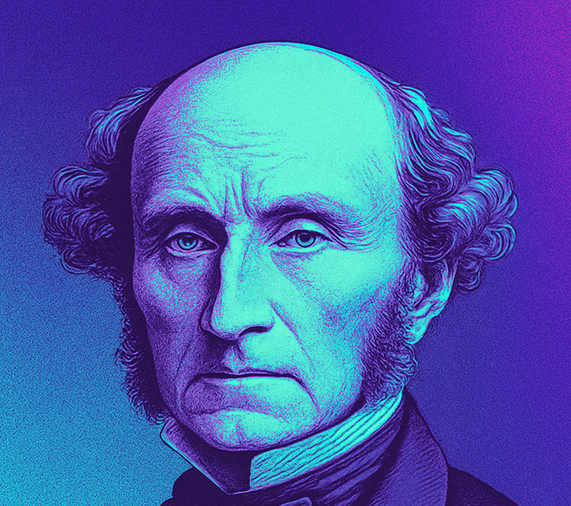
What I stated was, that the Conservative party was, by the law of its constitution, necessarily the stupidest party. Now, I do not retract this assertion; but I did not mean that Conservatives are generally stupid; I meant, that stupid persons are generally Conservative. I believe that to be so obvious and undeniable a fact that I hardly think any hon. Gentleman will question it. Now, if any party, in addition to whatever share it may possess of the ability of the community, has nearly the whole of its stupidity, that party, I apprehend, must by the law of its constitution be the stupidest party. And I do not see why hon. Gentlemen should feel that position at all offensive to them; for it ensures their being always an extremely powerful party.
▼
Source
In a Parliamentary debate with the Conservative MP, John Pakington (May 31, 1866). [https://api.parliament.uk/historic-hansard/commons/1866/may/31/committee-adjourned-debate#column_1592 Hansard, vol 183, col 1592]]. Pakington was referring to Footnote 3 t
3 months 3 weeks ago
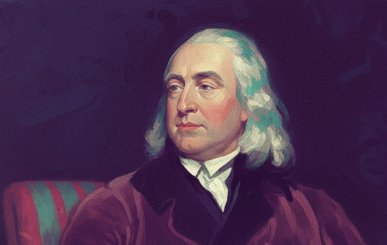
Ah! when will the yoke of Custom—Custom, the blind tyrant, of which all other tyrants make their slave—ah! when will that misery-perpetuating yoke be shaken off?—when, when will Reason be seated on her throne?
▼
Source
Plan of Parliamentary Reform, in the Form of a Catechism, with Reasons for Each Article: With an Introduction, Showing the Necessity of Radical, and the Inadequacy of Moderate, Reform (1817), quoted in The Works of Jeremy Bentham, Part X (1839), p. 495
3 months 3 weeks ago
Generally speaking, all the authorities exercising individual control function according to a double mode; that of binary division and branding (mad/sane; dangerous/harmless; normal/abnormal); and that of coercive assignment, of differential distribution (who he is; where he must be; how he is to be characterized' how he is to be recognized' how a constant surveillance is to be exercised over him in a individual way, etc.).
▼
Source
Part Four, Complete and austere institutions

3 months 3 weeks ago
For the first time in my life, I took part in a real battle between men. The dead did not come to life again, the vanquished fled in disorder; every thrust of my lance helped save Carmona. That day, I would have died with a smile on my lips, certain of having contributed to a triumphant future for my city.
▼
Source
p. 73
3 months 3 weeks ago
The thing that really is trying to tyrannize through government is Science. The thing that really does use the secular arm is Science. And the creed that really is levying tithes and capturing schools, the creed that really is enforced by fine and imprisonment, the creed that really is proclaimed not in sermons but in statutes, and spread not by pilgrims but by policemen – that creed is the great but disputed system of thought which began with Evolution and has ended in Eugenics. Materialism is really our established Church; for the Government will really help it to persecute its heretics.
▼
Source
Ch. VII: "The Established Church of Doubt" (pp. 76-77). [https://books.google.com/books?id=m2xaAAAAMAAJ&pg=PA76&dq=%22the+thing+that+really+is+trying+to+tyrannise+through+government+is+science%22&hl=en&sa=X&ved=0ahUKEwj9uKmM_6jMAhUHgj4KHZr3DW0Q6AEILzAD#v=
3 months 3 weeks ago
I shall, without further discussion of the other theories, attempt to contribute something towards the understanding and appreciation of the Utilitarian or Happiness theory, and towards such proof as it is susceptible of. It is evident that this cannot be proof in the ordinary and popular meaning of the term. Questions of ultimate ends are not amenable to direct proof. Whatever can be proved to be good, must be so by being shown to be a means to something admitted to be good without proof.
▼
Source
Ch. 1
3 months 3 weeks ago
If there is a kind of "proof" of the sincerity of the parrhesiastes, it is his courage... Saying something dangerous—different from what the majority believes—is a strong indication that he is a parrhesiastes.
3 months 3 weeks ago
It is old age, rather than death, that is to be contrasted with life. Old age is life's parody, whereas death transforms life into a destiny: in a way it preserves it by giving it the absolute dimension. Death does away with time.
▼
Source
Conclusion, p. 539
3 months 3 weeks ago
Moral issues are always terribly complex for someone without principles.
▼
Source
A popular internet misattribution, also attributed (without source) to Chesterton in several books.
3 months 3 weeks ago
I have no remembrance of the time when I began to learn Greek. I have been told that it was when I was three years old. My earliest recollection on the subject, is that of committing to memory what my father termed Vocables, being lists of common Greek words, with their signification in English, which he wrote out for me on cards. Of grammar, until some years later, I learnt no more than the inflexions of the nouns and verbs, but, after a course of vocables, proceeded at once to translation; and I faintly remember going through AEsop's Fables, the first Greek book which I read. The Anabasis, which I remember better, was the second. I learnt no Latin until my eighth year. At that time I had read, under my father's tuition, a number of Greek prose authors, among whom I remember the whole of Herodotus, and of Xenophon's Cyropaedia and Memorials of Socrates; some of the lives of the philosophers by Diogenes Laertius; part of Lucian, and Isocrates' ad Demonicum and ad Nicoclem. I also read, in 1813, the first six dialogues (in the common arrangement) of Plato, from the Euthyphron to the Theaetetus inclusive: which last dialogue, I venture to think, would have been better omitted, as it was totally impossible I should understand it. But my father, in all his teaching, demanded of me not only the utmost that I could do, but much that I could by no possibility have done. What he was himself willing to undergo for the sake of my instruction, may be judged from the fact, that I went through the whole process of preparing my Greek lessons in the same room and at the same table at which he was writing: and as in those days Greek and English lexicons were not, and I could make no more use of a Greek and Latin lexicon than could be made without having yet begun to learn Latin, I was forced to have recourse to him for the meaning of every word which I did not know. This incessant interruption, he, one of the most impatient of men, submitted to, and wrote under that interruption several volumes of his History and all else that he had to write during those years.
▼
Source
([https://archive.org/details/autobiography01mill/page/5/mode/1up pp. 5–6])
3 months 3 weeks ago
It must be emphasized that the warrior spirit is one thing and the military spirit quite another. Militarism was unknown in the Middle Ages. The soldier signifies the degeneration of the warrior, corrupted by the industrialist. The soldier is an armed industrialist, a bourgeois who has invented gunpowder. He was organized by the state to make war on the castles. With his coming, long-distance warfare appeared, the abstract war waged by cannon and machine gun.
3 months 3 weeks ago
The most serious flaw of Foucault's system is in the area of sex. I view his hurried, compulsive writing as a massive rationalist defense-formation to avoid thinking about (a) woman, (b) nature, (c) emotion, and (d) the sexual body. His attempt to make the body passive property of male society is an evasion of the universal fact so intolerable to him: that we are all born of human mothers. By turning women into ciphers, he miniaturizes and contains them.
▼
Source
Camille Paglia, "Junk Bonds and Corporate Raiders: Academe in the Hour of the Wolf," reprinted in Sex, Art and American Culture: New Essays (1992), p. 210
3 months 3 weeks ago
There is a virtue, Simmias, which is named courage. Is not that a special attribute of the philosopher? ...Again, there is temperance. Is not the calm, and control, and disdain of the passions which even the many call temperance, a quality belonging only to those who despise the body and live in philosophy?

3 months 3 weeks ago
If you look for an identity you find inequality. If you look for similarities you separate one truth from another.
▼
Source
Giannina Braschi, United States of Banana, 2011
3 months 3 weeks ago
I did not know the way in which, among the ordinary English, the absence of interest in things of an unselfish kind, except occasionally in a special thing here and there, and the habit of not speaking to others, nor much even to themselves, about the things in which they do feel interest, causes both their feelings and their intellectual faculties to remain undeveloped, or to develope themselves only in some single and very limited direction; reducing them, considered as spiritual beings, to a kind of negative existence.
▼
Source
([https://archive.org/details/autobiography01mill/page/59/mode/1up p. 59])
3 months 3 weeks ago
The specialist serves as a striking concrete example of the species, making clear to us the radical nature of the novelty. For, previously, men could be divided simply into the learned and the ignorant, those more or less the one, and those more or less the other. But your specialist cannot be brought in under either of these two categories. He is not learned , for he is formally ignorant of all that does not enter into his speciality; but neither is he ignorant, because he is "a scientist," and "knows" very well his own tiny portion of the universe. We shall have to say that he is a learned ignoramus, which is a very serious matter, as it implies that he is a person who is ignorant, not in the fashion of the ignorant man, but with an the petulance of one who is learned in his own special line.
▼
Source
Chapter XII: The Barbarism Of "Specialisation"
3 months 3 weeks ago
This was the method which I adopted: I first assumed some principle which I judged to be the strongest, and then I affirmed as true whatever seemed to agree with this, whether relating to the cause or to anything else; and that which disagreed I regarded as untrue. ...I want to show you the nature of that cause which has occupied my thoughts, and I shall have to go back to those familiar words which are in the mouth of everyone, and first of all assume that there is an absolute beauty and goodness and greatness, and the like; grant me this, and I hope to be able to show you the nature of the cause, and to prove the immortality of the soul.
3 months 3 weeks ago
It is at work everywhere, functioning smoothly at times, at other times in firs and starts . It breathes, it heats, it eats. It shits and fucks. What a mistake to have ever said the id. Everywhere it is machines- real ones, not figurative ones: machines driving other machines, machines being driven by other machines, with all the necessary couplings and connections. An organ-machine is plugged into an energy-source-machine: the one produces a flow that the other interrupts The breast is a machine that produces milk, and the mouth a machine coupled to it.
▼
Source
The Desiring Machine
3 months 3 weeks ago
It’s the end of the world. I was excited by the whole situation. Well, if everybody is going to die, die hard, shit, but what do I know? Is this an atomic bomb--the end of the world--the end of the millennium? No more fear of being fired--for typos or tardiness--digressions or recessions--and what a way of being fired--bursting into flames--without two weeks notice--and without six months of unemployment--and without sick leave, vacation, or comp time--without a word of what was to come--on a glorious morning--when nature ran indifferent to the course of man--there came a point when that sunny sky turned into a hellhole of a night—with papers, computers, windows, bricks, bodies falling, and people running and screaming. (On September 11th terrorist attacks.)
3 months 3 weeks ago
That the human mind has a certain order of possible progress, in which some things must precede others, an order which governments and public instructors can modify to some, but not to an unlimited extent: that all questions of political institutions are relative, not absolute, and that different stages of human progress not only will have, but ought to have, different institutions: That government is always either in the hands, or passing into the hands, of whatever is the strongest power in society, and that what this power is, does not depend on institutions, but institutions on it: That any general theory or philosophy of politics supposes a previous theory of human progress, and that this is the same thing with a philosophy of history.
▼
Source
([https://archive.org/details/autobiography01mill/page/162/mode/1up p. 162])
3 months 3 weeks ago
The demagogues, impresarios of alteracion, who have already caused the death of several civilizations, harass men so that they shall not reflect, see to it that they are kept herded together in crowds so that they cannot reconstruct their individuality in the one place where it can be reconstructed, which is in solitude.
▼
Source
p. 33

3 months 3 weeks ago
Though thou be destined to live three thousand years and as many myriads besides, yet remember that no man loseth other life than that which he liveth, nor liveth other than that which he loseth.
▼
Source
II, 14
3 months 3 weeks ago
I consider those developments in physics during the last decades which have shown how problematical such concepts as "objective" and "subjective" are, a great liberation of thought. The whole thing started with the theory of relativity. In the past, the statement that two events are simultaneous was considered an objective assertion, one that could be communicated quite simply and that was open to verification by any observer. Today we know that 'simultaneity' contains a subjective element, inasmuch as two events that appear simultaneous to an observer at rest are not necessarily simultaneous to an observer in motion. However, the relativistic description is also objective inasmuch as every observer can deduce by calculation what the other observer will perceive or has perceived. For all that, we have come a long way from the classical ideal of objective descriptions. In quantum mechanics the departure from this ideal has been even more radical. We can still use the objectifying language of classical physics to make statements about observable facts. For instance, we can say that a photographic plate has been blackened, or that cloud droplets have formed. But we can say nothing about the atoms themselves. And what predictions we base on such findings depend on the way we pose our experimental question, and here the observer has freedom of choice. Naturally, it still makes no difference whether the observer is a man, an animal, or a piece of apparatus, but it is no longer possible to make predictions without reference to the observer or the means of observation. To that extent, every physical process may be said to have objective and subjective features. The objective world of nineteenth-century science was, as we know today, an ideal, limiting case, but not the whole reality. Admittedly, even in our future encounters with reality we shall have to distinguish between the objective and the subjective side, to make a division between the two. But the location of the separation may depend on the way things are looked at; to a certain extent it can be chosen at will. Hence I can quite understand why we cannot speak about the content of religion in an objectifying language. The fact that different religions try to express this content in quite distinct spiritual forms is no real objection. Perhaps we ought to look upon these different forms as complementary descriptions which, though they exclude one another, are needed to convey the rich possibilities flowing from man's relationship with the central order.

3 months 3 weeks ago
if it is in our power to prevent something bad from happening, without thereby sacrificing anything of comparable moral importance, we ought, morally, to do it.
3 months 3 weeks ago
Ηe knew nothing except just the fact of his ignorance.
▼
Source
Alternate translation: I know nothing except the fact of my ignorance. | II.32. Original Greek: εἰδέναι μὲν μηδὲν πλὴν αὐτὸ τοῦτο [εἰδέναι].
3 months 3 weeks ago
On the side of physics, there were a few key figures in Oxford who realized, in all probability unlike the majority of their colleagues in the physics department, that physics without interpretation is only part of the story, and that theories like quantum mechanics need careful foundational reflection.
▼
Source
Physics and Philosophy in Oxford: a prosperous example of interdisciplinarity, in
3 months 3 weeks ago
Neither Hayek nor Mill accurately or consistently stated the libertarian standard for appropriate coercive involvement in the lives of others. This standard is exclusively to prevent harm to others.
▼
Source
Alan Ebenstein, Hayek's Journey: The Mind of Friedrich Hayek (2003), Ch. 12. Marx, Mill and Freud
3 months 3 weeks ago
The world is nothing but change. Our life is only perception.
▼
Source
IV, 4 (Hays translation)
3 months 3 weeks ago
when we make ethical judgments, we must go beyond a personal or sectional point of view and take into account the interests of all those affected, unless we have sound ethical grounds for doing otherwise. (...) The essence of the principle of equal consideration of interests is that we give equal weight in our moral deliberations to the like interests of all those affected by our actions. (...) an interest is an interest, whoever's interest it may be.
▼
Source
Ch. 2: Equality and Its Implications
3 months 3 weeks ago
He says that the sun is stone, and the moon earth.
▼
Source
Meletus' accusation against Socrates. Plato’s Apology. [https://classics.mit.edu/Plato/apology.html]
3 months 3 weeks ago
Heroism is the brilliant triumph of the soul over the flesh — that is to say, over fear: fear of poverty, of suffering, of calumny, of sickness, of isolation, and of death. There is no serious piety without heroism. Heroism is the dazzling and glorious concentration of courage.
▼
Source
1 October 1849
3 months 3 weeks ago
No one is guiltless...But no one is beyond the pale of human existence, provided he pays for his guilt.
3 months 3 weeks ago
Mark how fleeting and paltry is the estate of man - yesterday in embryo, tomorrow a mummy or ashes. So for the hairsbreadth of time assigned to thee, live rationally, and part with life cheerfully, as drops the ripe olive, extolling the season that bore it and the tree that matured it.
▼
Source
IV, 48

3 months 3 weeks ago
Never exaggerate, but express your feelings with moderation.
▼
Source
Maxim 13, p. 256

3 months 3 weeks ago
I have read somewhere or other, — in Dionysius of Halicarnassus, I think, — that history is philosophy teaching by examples.
▼
Source
On the Study and Use of History, letter 2; in fact this relates to a third-century AD treatise on rhetoric, wrongly attributed to Dionysius of Halicarnassus, which says (xi. 2): "The contact with manners then is education; and this Thucydides appears to a
3 months 3 weeks ago
I do what is mine to do; the rest doesn't disturb me. (Hays translation)
▼
Source
VI, 22

3 months 3 weeks ago
He who would write heroic poems should make his whole life a heroic poem.
▼
Source
Life of Schiller.

3 months 3 weeks ago
We renounce all your spectacles, as strongly as we renounce the matters originating them, which we know were conceived of superstition, when we give up the very things which are the basis of their representations. Among us nothing is ever said, or seen, or heard, which has anything in common with the madness of the circus, the immodesty of the theatre, the atrocities of the arena, the useless exercises of the wrestling-ground.
▼
Source
Chapter 38
3 months 3 weeks ago
The situation of Great Britain, the character of her people, and the nature of her government fit her for trade and commerce. Her climate and her soil make them necessary to her well being. By trade and commerce we grew a rich and powerful nation, and by their decay we are growing poor and impotent. As trade and commerce enrich, so they fortify our country. The sea is our barrier, ships are our fortresses, and the mariners, that trade and commerce alone can furnish, are the garrisons to defend them.
▼
Source
pp. 184-185
CivilSimian.com created by AxiomaticPanic, CivilSimian, Kalokagathia