

3 months 3 weeks ago
The silence of a wise man is always meaningful.
▼
Source
p. 30

3 months 3 weeks ago
You can take better care of your secret than another can.
▼
Source
1863

3 months 3 weeks ago
The prison industrial complex is much more than the sum of all the jails and prisons in this country. It is a set of symbiotic relationships among correctional communities, transnational corporations, media conglomerates, guards' unions, and legislative and court agendas.
▼
Source
Chapter Six

3 months 3 weeks ago
Boredom is connected naturally with time, with the horror of time, with the experience and the consciousness of time. Those who are not aware of time do not become bored. Basically life is only possible if one is not aware of time. If one should happen to want to experience consciously one of those moments that pass, one would be lost; life would become unbearable.
3 months 3 weeks ago
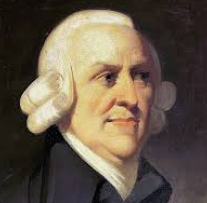
Every system which endeavours, either, by extraordinary encouragements, to draw towards a particular species of industry a greater share of the capital of the society than what would naturally go to it; or, by extraordinary restraints, to force from a particular species of industry some share of the capital which would otherwise be employed in it; is in reality subversive of the great purpose which it means to promote. It retards, instead of accelerating, the progress of the society towards real wealth and greatness; and diminishes, instead of increasing, the real value of the annual produce of its land and labour. All systems either of preference or of restraint, therefore, being thus completely taken away, the obvious and simple system of natural liberty establishes itself of its own accord. Every man, as long as he does not violate the laws of justice, is left perfectly free to pursue his own interest his own way, and to bring both his industry and capital into competition with those of any other man, or order of men. The sovereign is completely discharged from a duty, in the attempting to perform which he must always be exposed to innumerable delusions, and for the proper performance of which no human wisdom or knowledge could ever be sufficient; the duty of superintending the industry of private people, and of directing it towards the employments most suitable to the interest of the society. According to the system of natural liberty, the sovereign has only three duties to attend to; three duties of great importance, indeed, but plain and intelligible to common understandings: first, the duty of protecting the society from the violence and invasion of other independent societies; secondly, the duty of protecting, as far as possible, every member of the society from the injustice or oppression of every other member of it, or the duty of establishing an exact administration of justice; and, thirdly, the duty of erecting and maintaining certain public works and certain public institutions, which it can never be for the interest of any individual, or small number of individuals, to erect and maintain; because the profit could never repay the expence to any individual, or small number of individuals, though it may frequently do much more than repay it to a great society. The proper performance of those several duties of the sovereign necessarily supposes a certain expence; and this expence again necessarily requires a certain revenue to support it.
▼
Source
Chapter IX, p. 749.
3 months 3 weeks ago
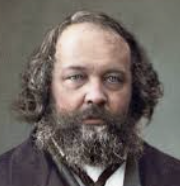
We … have humanity divided into an indefinite number of foreign states, all hostile and threatened by each other. There is no common right, no social contract of any kind between them; otherwise they would cease to be independent states and become the federated members of one great state. But unless this great state were to embrace all of humanity, it would be confronted with other great states, each federated within, each maintaining the same posture of inevitable hostility. War would still remain the supreme law, an unavoidable condition of human survival. Every state, federated or not, would therefore seek to become the most powerful. It must devour lest it be devoured, conquer lest it be conquered, enslave lest it be enslaved, since two powers, similar and yet alien to each other, could not coexist without mutual destruction. The State, therefore, is the most flagrant, the most cynical, and the most complete negation of humanity. It shatters the universal solidarity of all men on the earth, and brings some of them into association only for the purpose of destroying, conquering, and enslaving all the rest. It protects its own citizens only; it recognises human rights, humanity, civilisation within its own confines alone. Since it recognises no rights outside itself, it logically arrogates to itself the right to exercise the most ferocious inhumanity toward all foreign populations, which it can plunder, exterminate, or enslave at will. If it does show itself generous and humane toward them, it is never through a sense of duty, for it has no duties except to itself in the first place, and then to those of its members who have freely formed it, who freely continue to constitute it or even, as always happens in the long run, those who have become its subjects. As there is no international law in existence, and as it could never exist in a meaningful and realistic way without undermining to its foundations the very principle of the absolute sovereignty of the State, the State can have no duties toward foreign populations. Hence, if it treats a conquered people in a humane fashion, if it plunders or exterminates it halfway only, if it does not reduce it to the lowest degree of slavery, this may be a political act inspired by prudence, or even by pure magnanimity, but it is never done from a sense of duty, for the State has an absolute right to dispose of a conquered people at will. This flagrant negation of humanity which constitutes the very essence of the State is, from the standpoint of the State, its supreme duty and its greatest virtue. It bears the name patriotism, and it constitutes the entire transcendent morality of the State. We call it transcendent morality because it usually goes beyond the level of human morality and justice, either of the community or of the private individual, and by that same token often finds itself in contradiction with these. Thus, to offend, to oppress, to despoil, to plunder, to assassinate or enslave one's fellowman is ordinarily regarded as a crime. In public life, on the other hand, from the standpoint of patriotism, when these things are done for the greater glory of the State, for the preservation or the extension of its power, it is all transformed into duty and virtue. And this virtue, this duty, are obligatory for each patriotic citizen; everyone is supposed to exercise them not against foreigners only but against one's own fellow citizens, members or subjects of the State like himself, whenever the welfare of the State demands it.This explains why, since the birth of the State, the world of politics has always been and continues to be the stage for unlimited rascality and brigandage, brigandage and rascality which, by the way, are held in high esteem, since they are sanctified by patriotism, by the transcendent morality and the supreme interest of the State. This explains why the entire history of ancient and modern states is merely a series of revolting crimes; why kings and ministers, past and present, of all times and all countries — statesmen, diplomats, bureaucrats, and warriors — if judged from the standpoint of simple morality and human justice, have a hundred, a thousand times over earned their sentence to hard labour or to the gallows. There is no horror, no cruelty, sacrilege, or perjury, no imposture, no infamous transaction, no cynical robbery, no bold plunder or shabby betrayal that has not been or is not daily being perpetrated by the representatives of the states, under no other pretext than those elastic words, so convenient and yet so terrible: "for reasons of state."
3 months 3 weeks ago
Life is that which is discontent, which struggles and seeks, which suffers and creates.
▼
Source
Ch. 1 : Our life begins
3 months 3 weeks ago
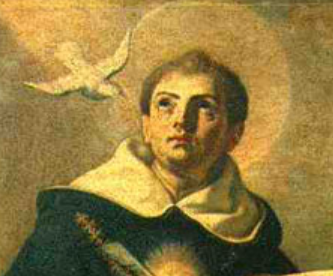
We can open our hearts to God, but only with Divine help.
▼
Source
q. 24, art. 15, ad 2

3 months 3 weeks ago
The leading critic of the positivists in their heyday was of course Popper. There has been a tendency for philosophers of science to regard Popper as something of an embarrassment. However, naturalistic philosophers should take it as an interesting fact about science that Popper has long been the favourite philosopher of science among scientists; and it would be condescending to attribute this entirely to the fact that Popper's philosophy is relatively non-complex, self-contained, and flattering to scientists.
▼
Source
James Ladyman and Don Ross, "The World in the Data" in Scientific Metaphysics (2013) edited by Don Ross, James Ladyman, and Harold Kincaid

3 months 3 weeks ago
There is a scale of virtues, and it is necessary, if one would mount the higher steps, to begin with the lowest; and the first virtue a man must acquire if he wishes to acquire the others, is that which the ancients called ἐγκράτεια or σωφροσύνη — i.e., self-control or moderation.
▼
Source
Ch. VIII
3 months 3 weeks ago
Political philosophy was concerned with the best or just order of society which is by nature best or just everywhere or always, while politics is concerned with the being and well-being of this or that particular society (a polis, a nation, an empire) that is in being at a given place for some time.
3 months 3 weeks ago
Wherever a man comes, there comes revolution. The old is for slaves.
▼
Source
p. 25
3 months 3 weeks ago
There are many versions of nationalism. And I've always preferred to identify with the pan-Africanism of W. E. B. Du Bois, who argued that Black people, say Black people in the new world, do have a special responsibility to Africa and other parts of the world, Asia...not by virtue of any biological connection, not by virtue of any racial link, but by virtue of a political identification that is forged. So that it is not about Africa because Africa happens to be populated by Black people. It is about Africa because Africa has been the target of colonialism and imperialism. And what I also like about Du Bois's pan-Africanism is that it is open to notions of Afro-Asian struggles as well, and this is something, I think, that has been concealed in the conventional tellings of history at many historical gatherings that were designated as Afro-Asian solidarity. So I prefer to think about the kind of political approach that is open, that is not racially defined but that is poised against racism.
3 months 3 weeks ago
But bounty and hospitality very seldom lead to extravagance; though vanity almost always does.
▼
Source
Chapter III, Part V, p. 987.
3 months 3 weeks ago
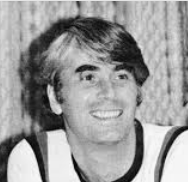
Robert Nozick, the Arthur Kingsley Porter Professor of Philosophy at Harvard University, always attacks his problems in a disconcertingly original way. … in The Examined Life, he took on nothing less than the meaning of life, a subject that academic philosophers tended to steer clear of — and still do, despite his best efforts. From Mr. Nozick you always expect fireworks, even if some of them go off in their box. His questions, hints, counterarguments and suggestions come so thick and fast that it is next to impossible to appreciate all of them. Start pondering a sentence and you will find yourself led away prematurely by a parenthetical question; think about the question and you will be dragged into a discursive footnote; from the bowels of the footnote, another parenthetical query will leap out at you. If you escape back to the main argument with your concentration intact (unlikely, after a while), the whole wearing business just starts over again. Yet it is worth the effort — certainly for regular readers of philosophy, and often for others.
▼
Source
Anthony Gottlieb, in a review of The Nature of Rationality, [http://www.nytimes.com/1993/08/22/books/why-do-you-do-the-things-you-do.html "Why Do You Do the Things You Do?" in The New York Times (22 August 1993)]
3 months 3 weeks ago
We cannot pretend that we do not see the armed policeman who marches up and down beneath our window to guarantee our security while we eat our luxurious dinner, or look at the new piece at the theater, or that we are unaware of the existence of the soldiers who will make their appearance with guns and cartridges directly our property is attacked.
▼
Source
Chapter XII, Conclusion—Repent Ye, for the Kingdom of Heaven is at Hand

3 months 3 weeks ago
All ideology hails or interpellates concrete individuals as concrete subjects, by the functioning of the category of the subject. ... ideology ‘acts’ or ‘functions’ in such a way that it ‘recruits’ subjects among the individuals (it recruits them all), or ‘transforms’ the individuals into subjects (it transforms them all) by that very precise operation which I have called interpellation or hailing, and which can be imagined along the lines of the most commonplace everyday police (or other) hailing: ‘Hey, you there!’
▼
Source
p. 117
3 months 3 weeks ago
Go where he will, the wise man is at home, His hearth the earth, his hall the azure dome.
▼
Source
Wood-notes, st. 3
3 months 3 weeks ago
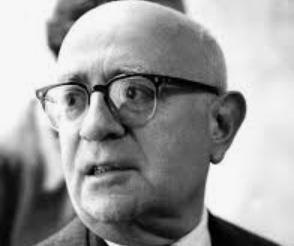
The phrase, the world wants to be deceived, has become truer than had ever been intended. People are not only, as the saying goes, falling for the swindle; if it guarantees them even the most fleeting gratification they desire a deception which is nonetheless transparent to them. They force their eyes shut and voice approval, in a kind of self-loathing, for what is meted out to them, knowing fully the purpose for which it is manufactured. Without admitting it they sense that their lives would be completely intolerable as soon as they no longer clung to satisfactions which are none at all.
▼
Source
Section 10

3 months 3 weeks ago
'Tis not Wit merely, but a Temper which must form the Well-Bred Man. In the same manner, 'tis not a Head merely, but a Heart and Resolution which must compleat the real Philosopher.
▼
Source
Vol. 2, p. 206; "Miscellany III".
3 months 3 weeks ago
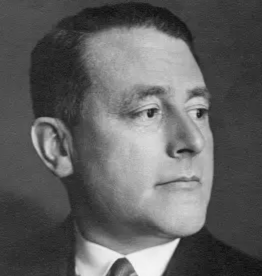
What remains is the remarkable and, for many, certainly disquieting diagnosis that all genuine political theories presuppose man to be evil, i.e., by no means an unproblematic but a dangerous and dynamic being.
3 months 3 weeks ago
Partisans of the free market invoke Adam Smith in order to lend the authority of his name to the case they themselves want to make: for the complete removal of the state from economic enterprise; for the economic sovereignty of the market; and for leaving all questions of production and distribution to the magic of the invisible hand... But...the reason Adam Smith wanted an end to government intervention in the market was that in his time (in contrast to today) it was only thanks to state intervention that what he called "the mean rapacity, the monopolising spirit of merchants and manufacturers" was able to dominate the economy, to the great detriment of the society as a whole.
▼
Source
Heinz Lubasz, 'Adam Smith and the ‘free market’', in Stephen Copley and Kathryn Sutherland (eds.), Adam Smith's Wealth of Nations: New Interdisciplinary Essays (1995), p. 49
3 months 3 weeks ago
Such ... was the theory (an outgrowth of Malthusian) of the selection and struggle for existence as the basis of human progress. Such again, is Marx's theory, with regard to the gradual destruction of small private production by large capitalistic production... as an inevitable decree of fate. However unfounded such theories are, however contrary to all that is known and confessed by humanity, and however obviously immoral these may be, they are accepted with credulity, pass uncriticized, and are preached ... To this class belongs this astonishing theory of the Baungarten trinity — Goodness, Beauty and Truth — according to which it appears that the very best that can be done by the art of nations after 1900 years of Christian teaching is to choose as the ideal of their life that which was held by a small, semi-savage, slaveholding people who lived 2000 years ago, who imitated the nude human body extremely well, and erected buildings pleasing to the eye. Educated people write long, nebulous treatises on beauty as a member of the aesthetic trinity of beauty, truth, and goodness... and they all think that by pronouncing these sacrosanct words, they speak of something quite definite and solid... on which they can base their opinions. ... only for the purpose of justifying the false importance we attribute to an art that conveys every feeling, provided those feelings give us pleasure.

3 months 3 weeks ago
Certainly no man can rightfully be required to join, or support, an association whose protection he does not desire.
▼
Source
Section III, p. 7
3 months 3 weeks ago
Act, if you like,—but you do it at your peril. Men's actions are too strong for them. Show me a man who has acted, and who has not been the victim and slave of his action. What they have done commits and enforces them to do the same again. The first act, which was to be an experiment, becomes a sacrament. The fiery reformer embodies his aspiration in some rite or covenant, and he and his friends cleave to the form, and lose the aspiration. The Quaker has established Quakerism, the Shaker has established his monastery and his dance; and, although each prates of spirit, there is no spirit, but repetition, which is anti-spiritual.
▼
Source
Goethe; or, the Writer

3 months 3 weeks ago
Whatever good fortune befalls you, attribute it to the gods.
3 months 3 weeks ago
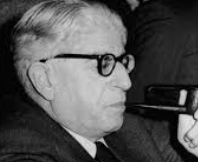
Now to get back to our given Church: it lives almost entirely for modesty and moneyed piety. It zealously inveighs against the harm done to Joseph and the sheep, but it has made its arrangements with the upper classes and serves as their spiritual defender. It bristles at see-through blouses, but not at slums in which half-naked children starve, and not, above all, at the conditions that keep three quarters of mankind in misery. It condemns desperate girls who abort a foetus, but it consecrates war, which aborts millions. It has nationalized its God, nationalized him into ecclesiastic organization, and has inherited the Roman empire under the mask of the Crucified. It preserves misery and injustice, having first tolerated and then approved the class power that causes them; it prevents any seriousness about deliverance by postponing it to St. Never-Ever's Day or shifting it to the beyond.
▼
Source
p. 144
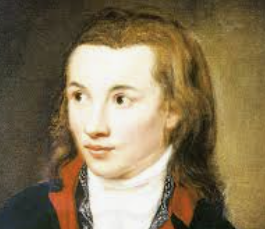
3 months 3 weeks ago
Blood will stream over Europe until the nations become aware of the frightful madness which drives them in circles. And then, struck by celestial music and made gentle, they approach their former altars all together, hear about the works of peace, and hold a great celebration of peace with fervent tears before the smoking altars.
▼
Source
As quoted in the Fourth Leaflet of the White Rose (1942)
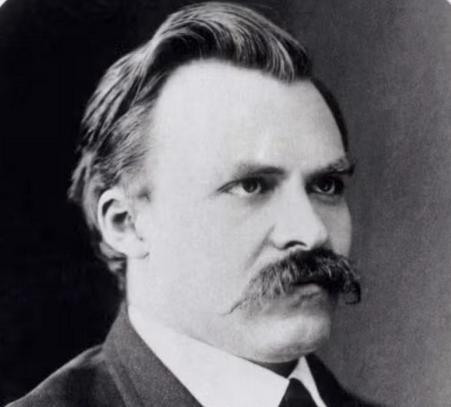
3 months 3 weeks ago
Here the ways of men part: if you wish to strive for peace of soul and pleasure, then believe; if you wish to be a devotee of truth, then inquire.
▼
Source
Letter to Elisabeth Nietzsche, Bonn, 1865-06-11, quoted as epigraph in Walter Kaufmann, The Faith of a Heretic (1961)
3 months 3 weeks ago
Unfortunately not only were the rulers, who were considered supernatural beings, benefited by having the peoples in subjection, but as a result of the belief in, and during the rule of, these pseudodivine beings, ever larger and larger circles of people grouped and established themselves around them, and under an appearance of governing took advantage of the people. And when the old deception of a supernatural and God-appointed authority had dwindled away these men were only concerned to devise a new one which like its predecessor should make it possible to hold the people in bondage to a limited number of rulers.
▼
Source
III

3 months 3 weeks ago
A scholar ... should turn his ears from the talk of the illiterate and not take it to heart.
▼
Source
Treatise 3: “The Study of the Torah,” H. Russell, trans. (1983), p. 69
3 months 3 weeks ago
We are born believing. A man bears beliefs as a tree bears apples.
▼
Source
Worship
3 months 3 weeks ago
Technology paces industry, but there's a long lag in the process. Industry paces economics. It changes the tools, a great ecological change. And in that manner we come finally to everyday life. The politician is someone who deals in man's problems of adjustment. To ask a politician to lead us is to ask the tail of a dog to lead the dog.
▼
Source
"The Designers and the Politicians" (1962), later published in Beyond Left & Right : Radical Thought for Our Times (1968) by Richard Kostelanetz, p. 368
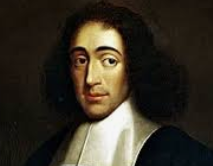
3 months 3 weeks ago
When you say that if I deny, that the operations of seeing, hearing, attending, wishing, &c., can be ascribed to God, or that they exist in him in any eminent fashion, you do not know what sort of God mine is ; I suspect that you believe there is no greater perfection than such as can be explained by the aforesaid attributes. I am not astonished ; for I believe that, if a triangle could speak, it would say, in like manner, that God is eminently triangular, while a circle would say that the divine nature is eminently circular. Thus each would ascribe to God its own attributes, would assume itself to be like God, and look on everything else as ill-shaped. The briefness of a letter and want of time do not allow me to enter into my opinion on the divine nature, or the questions you have propounded. Besides, suggesting difficulties is not the same as producing reasons. That we do many things in the world from conjecture is true, but that our redactions are based on conjecture is false. In practical life we are compelled to follow what is most probable ; in speculative thought we are compelled to follow truth. A man would perish of hunger and thirst, if he refused to eat or drink, till he had obtained positive proof that food and drink would be good for him. But in philosophic reflection this is not so. On the contrary, we must take care not to admit as true anything, which is only probable. For when one falsity has been let in, infinite others follow. Again, we cannot infer that because sciences of things divine and human are full of controversies and quarrels, therefore their whole subject-matter is uncertain ; for there have been many persons so enamoured of contradiction, as to turn into ridicule geometrical axioms.
▼
Source
[http://oll.libertyfund.org/?option=com_staticxt&staticfile=show.php%3Ftitle=1711&chapter=144218&layout=html&Itemid=27 Letter 56 (60), to Hugo Boxel (1674)]
3 months 3 weeks ago
No explanation is required for Holy Writing. Whoso speaks truly is full of eternal life, and wonderfully related to genuine mysteries does his Writing appear to us, for it is a Concord from the Symphony of the Universe.
3 months 3 weeks ago
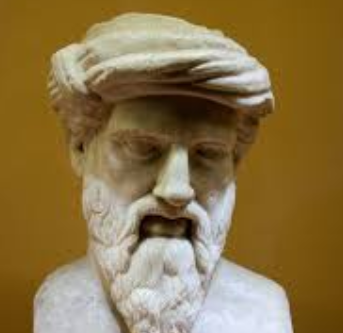
Number is the ruler of forms and ideas, and the cause of gods and daemons.
▼
Source
As quoted in Life of Pythagoras (c. 300) by Iamblichus of Chalcis, as translated by Thomas Taylor (1818) | Variants: | Number rules the universe. | As quoted in The Story of a Number (1905) by E. Maor; also in Comic Sections (1993) by Desmond MacHale
3 months 3 weeks ago
This is the antinomy: Insofar as we believe in morality we pass sentence on existence.
▼
Source
Sec. 6 (Notebook W II 2. Autumn 1887, KGW VIII, 2.237, KSA 12.571 [citations are to Nietzsche's manuscripts by archival code, and the page numbers in which the entire section can be found transcribed therefrom, in the hardcover and softcover historical-cr
3 months 3 weeks ago
In life, in true life, there can be nothing better than what is. Wanting something different than what is, is blasphemy.
▼
Source
p. 209
3 months 3 weeks ago
God cannot be compared to anything. Note this.
▼
Source
Ch.7
3 months 3 weeks ago
United States! the ages plead, — Present and Past in under-song, — Go put your creed into your deed, Nor speak with double tongue.
▼
Source
Ode, st. 5
3 months 3 weeks ago
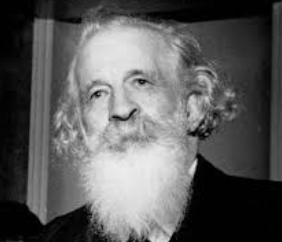
I live on Earth at present, and I don't know what I am. I know that I am not a category. I am not a thing — a noun. I seem to be a verb, an evolutionary process — an integral function of the universe.
▼
Source
I Seem to Be a Verb (1970)
3 months 3 weeks ago
The repose of sleep refreshes only the body. It rarely sets the soul at rest. The repose of the night does not belong to us. It is not the possession of our being. Sleep opens within us an inn for phantoms. In the morning we must sweep out the shadows.
▼
Source
Ch. 2, sect. 3
3 months 3 weeks ago
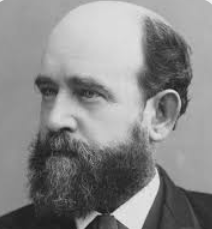
Those who are most to be considered, those for whose help the struggle must be made, if labor is to be enfranchised, and social justice won, are those least able to help or struggle for themselves, those who have no advantage of property or skill or intelligence, — the men and women who are at the very bottom of the social scale. In securing the equal rights of these we shall secure the equal rights of all. Hence it is, as Mazzini said, that it is around the standard of duty rather than around the standard of self-interest that men must rally to win the rights of man. And herein may we see the deep philosophy of Him who bade men love their neighbors as themselves. In that spirit, and in no other, is the power to solve social problems and carry civilization onward.
▼
Source
Ch. 21 : Conclusion
3 months 3 weeks ago
There is, properly speaking, no Misfortune in the world. Happiness and Misfortune stand in continual balance. Every Misfortune is, as it were, the obstruction of a stream, which, after overcoming this obstruction, but bursts through with the greater force.
3 months 3 weeks ago
Eat not the heart.
▼
Source
Symbol 30; explained in the edition used here: "This Symbol signifies that it is not proper to divulse the union and consent of the universe. And still further it signifies this, Be not envious, but philanthropic and communicative; and from this it exhort
3 months 3 weeks ago
Merchant and pirate were for a long period one and the same person. Even today mercantile morality is really nothing but a refinement of piratical morality.
3 months 3 weeks ago
If I could kill him and create a new person exactly the same as he is now, I would do so happily.
▼
Source
Sophia Tolstaya, The Diaries of Sophia Tolstoy, trans. Cathy Porter (Random House, 1985), 16 December 1862.
3 months 3 weeks ago
The error of the ignorant goes so far as to say that God's power is insufficient, because he has given to this Universe the properties which they imagine cause these great evils, and which do not help all evil-disposed persons to obtain the evil which they seek, and to bring their evil souls to the aim of their desires, though these, as we have shown, are really without limit.
▼
Source
Ch.12
3 months 3 weeks ago
The ornament of a house is the friends who frequent it.
▼
Source
Domestic Life
3 months 3 weeks ago
Truth is cosmically total: synergetic. Verities are generalized principles stated in semimetaphorical terms. Verities are differentiable. But love is omniembracing, omnicoherent, and omni-inclusive, with no exceptions. Love, like synergetics, is nondifferentiable, i.e., is integral.
▼
Source
[http://www.rwgrayprojects.com/synergetics/s10/p0520.html#1005.50 1005.54]
CivilSimian.com created by AxiomaticPanic, CivilSimian, Kalokagathia