
3 months 3 weeks ago
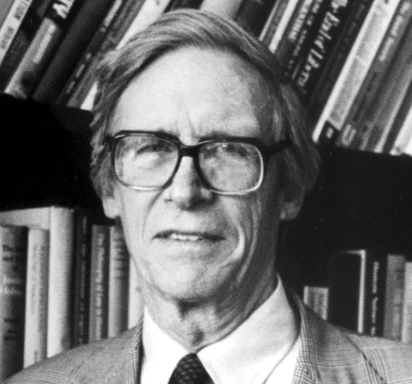
Justice is the first virtue of social institutions, as truth is of systems of thought. A theory however elegant and economical must be rejected or revised if it is untrue; likewise laws and institutions no matter how efficient and well-arranged must be reformed or abolished if they are unjust. Each person possesses an inviolability founded on justice that even the welfare of society as a whole cannot override. For this reason justice denies that the loss of freedom for some is made right by a greater good shared by others. It does not allow that the sacrifices imposed on a few are outweighed by the larger sum of advantages enjoyed by many. Therefore in a just society the liberties of equal citizenship are taken as settled; the rights secured by justice are not subject to political bargaining or to the calculus of social interests.
▼
Source
Chapter I, Section 1, pg. 3-4
3 months 3 weeks ago
Justice is a habit (habitus), whereby a man renders to each one his due with constant and perpetual will.

3 months 3 weeks ago
My faculty for disappointment surpasses understanding. It is what lets me comprehend Buddha, but also what keeps me from following him.

3 months 3 weeks ago
This great maxim of philosophy he had gathered by the teaching of nature alone — that man was created to work, not to speculate or feel or dream. Accordingly, he set his whole heart thitherwards. He did work wisely and unweariedly, and perhaps performed more with the tools he had than any man I now know.
3 months 3 weeks ago
When the basic structure of society is publicly known to satisfy its principles for an extended period of time, those subject to these arrangements tend to develop a desire to act in accordance with these principles and to do their part in institutions which exemplify them
▼
Source
Chapter III, Section 29, pg.177
3 months 3 weeks ago
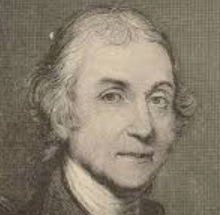
Having thought it right to leave behind me some account of my friends and benefactors, it is in a manner necessary that I also give some account of myself; and as the like has been done by many persons, and for reasons which posterity has approved, I make no further apology for following their example. If my writings in general have been useful to my contemporaries, I hope that this account of myself will not be without its use to those who may come after me, and especially in promoting virtue and piety, which, I hope I may say, it has been my care to practise myself, as it has been my business to inculcate them upon others.
▼
Source
Memoirs of the Rev. Dr. Joseph Priestly (1809). p. 1

3 months 3 weeks ago
Militarism in both its forms — as war and as armed peace — is a legitimate child, a logical result of capitalism, which can only be overcome with the destruction of capitalism, and that hence whoever honestly desires world peace and liberation from the tremendous burden of armaments must also desire Socialism. Only in this way can real Social Democratic enlightenment and recruiting be carried on in connection with the armaments debate.

3 months 3 weeks ago
For what is modesty but hypocritical humility, by means of which, in a world swelling with vile envy, a man seeks to beg pardon for his excellences and merits from those who have none? For whoever attributes no merit to himself because he really has none is not modest, but merely honest.
▼
Source
Vol. I, Ch. III, The World As Representation: Second Aspect
3 months 3 weeks ago
I was walking late one night along a tree-lined path; a chestnut fell at my feet. The noise it made as it burst, the resonance it provoked in me, and an upheaval out of all proportion to this insignificant event thrust me into miracle, into the rapture of the definitive, as if there were no more questions — only answers. I was drunk on a thousand unexpected discoveries, none of which I could make use of. This is how I nearly reached the Supreme. But instead I went on with my walk.
3 months 3 weeks ago
The next group of reactionaries or romantics or whatever we elect to call them, gathers roughly around one great name. Scotland, from which had come so many of those harsh economists who made the first Radical philosophies of the Victorian Age, was destined also to fling forth (I had almost said to spit forth) their fiercest and most extraordinary enemy. The two primary things in Thomas Carlyle were his early Scotch education and his later German culture. The first was in almost all respects his strength; the latter in some respects his weakness. As an ordinary lowland peasant, he inherited the really valuable historic property of the Scots, their independence, their fighting spirit, and their instinctive philosophic consideration of men merely as men. But he was not an ordinary peasant. If he had laboured obscurely in his village till death, he would have been yet locally a marked man; a man with a wild eye, a man with an air of silent anger; perhaps a man at whom stones were sometimes thrown. A strain of disease and suffering ran athwart both his body and his soul. In spite of his praise of silence, it was only through his gift of utterance that he escaped madness. But while his fellow-peasants would have seen this in him and perhaps mocked it, they would also have seen something which they always expect in such men, and they would have got it: vision, a power in the mind akin to second sight.' Like many ungainly or otherwise unattractive Scotchmen, he was a seer. By which I do not mean to refer so much to his transcendental rhapsodies about the World-soul or the Nature-garment or the Mysteries and Eternities generally, these seem to me to belong more to his German side and to be less sincere and vital. I mean a real power of seeing things suddenly, not apparently reached by any process; a grand power of guessing. He saw the crowd of the new States General, Danton with his "rude flattened face," Robespierre peering mistily through his spectacles. He saw the English charge at Dunbar. He guessed that Mirabeau, however dissipated and diseased, had something sturdy inside him. He guessed that Lafayette, however brave and victorious, had nothing inside him. He supported the lawlessness of Cromwell, because across two centuries he almost physically felt the feebleness and hopelessness of the moderate Parliamentarians. He said a word of sympathy for the universally vituperated Jacobins of the Mountain, because through thick veils of national prejudice and misrepresentation, he felt the impossibility of the Gironde. He was wrong in denying to Scott the power of being inside his characters: but he really had a good deal of that power himself. It was one of his innumerable and rather provincial crotchets to encourage prose as against poetry. But, as a matter of fact, he himself was much greater considered as a kind of poet than considered as anything else; and the central idea of poetry is the idea of guessing right, like a child.
▼
Source
G. K. Chesterton in The Victorian Age in Literature.
3 months 3 weeks ago
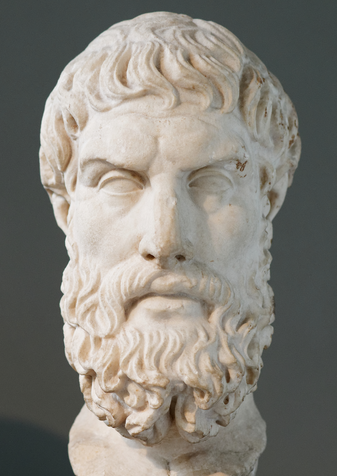
Let no one be slow to seek wisdom when he is young nor weary in the search of it when he has grown old. For no age is too early or too late for the health of the soul. And to say that the season for studying philosophy has not yet come, or that it is past and gone, is like saying that the season for happiness is not yet or that it is now no more. Therefore, both old and young alike ought to seek wisdom, the former in order that, as age comes over him, he may be young in good things because of the grace of what has been, and the latter in order that, while he is young, he may at the same time be old, because he has no fear of the things which are to come. So we must exercise ourselves in the things which bring happiness, since, if that be present, we have everything, and, if that be absent, all our actions are directed towards attaining it.
▼
Source
[http://www.epicurus.net/en/menoeceus.html "Letter to Menoeceus"], as translated in Stoic and Epicurean (1910) by Robert Drew Hicks, p. 167 | Variant translation: Let no one delay to study philosophy while he is young, and when he is old let him not becom
3 months 3 weeks ago
Greek philosophy returned for some time to the concept of the One in the teachings of Parmenides... His most important contribution... was, perhaps, that he introduced a purely logical argument into metaphysics. "One cannot know what is not—that is impossible—nor utter it; for it is the same thing that can be thought and that can be." Therefore, only the One is, and there is no becoming or passing away. Parmenides denied the existence of empty space for logical reasons. Since all change requires empty space... he dismissed change as an illusion.
▼
Source
Werner Heisenberg, Physics and Philosophy (1958) [https://archive.org/details/physicsphilosoph0000heis_n9m9/page/63/mode/1up?view=theater pp. 63-64.]
3 months 3 weeks ago
Indeed, if any man can say, that it is not an interesting question, whether his existence terminate at death, or is to be resumed at a future period, and then to continue for ever, he must be of a low and abject mind. To a rational being, capable of contemplating the wonders of nature, and of investigating the laws of it, and to a being of a social disposition, his existence, and the continuance of his rational faculties, must be an object of unspeakable value to him; and consequently he must ardently wish that christianity... may be true. For to a philosopher, who forms his judgment by what he actually observes, the doctrine of soul, capable of subsisting and acting when the body is in the grave, will never give any satisfaction. To every person, therefore, who is capable of enjoying his existence, the christian doctrine of a resurrection opens a glorious and transporting prospect.
▼
Source
General Conclusions, Part I : Containing Considerations addressed to Unbelievers and especially to Mr. Gibbon

3 months 3 weeks ago
Natural science does not consist in ratifying what others have said, but in seeking the causes of phenomena.
▼
Source
Attributed to Albertus Magnus in: Albertus Magnus; cited in: Morris Bishop (1968) The Middle Ages. p. 252.
3 months 3 weeks ago
A mother gave her children Aesop’s fables to read, in the hope of educating and improving their minds; but they very soon brought the book back, and the eldest, wise beyond his years, delivered himself as follows: This is no book for us; it’s much too childish and stupid. You can’t make us believe that foxes and wolves and ravens are able to talk; we’ve got beyond stories of that kind! In these young hopefuls you have the enlightened Rationalists of the future.
▼
Source
“Similes, Parables and Fables” Parerga and Paralipomena
3 months 3 weeks ago
One cannot live without motives. I have no motives left, and I am living.
3 months 3 weeks ago
Never had beauty been so forgotten; style was poisoned at the fount of thought by Carlyle, whose sentences were confused disasters like railway accidents, and by Herbert Spencer, who wrote as though he were the offspring of two Times leaders; among novelists only Robert Louis Stevenson loved words...
▼
Source
Rebecca West, "Transition", in Henry James. London, 1916.
3 months 3 weeks ago
No doubt, when modesty was made a virtue, it was a very advantageous thing for the fools, for everybody is expected to speak of himself as if he were one.
▼
Source
Vol. 1, Ch. 3, Section 2: Pride
3 months 3 weeks ago
This very second has vanished forever, lost in the anonymous mass of the irrevocable. It will never return. I suffer from this and I do not. Everything is unique — and insignificant.
3 months 3 weeks ago
There is... something which is in energy only; and there is something which is both in energy and capacity. ...of relatives, one is predicated as according to excess and defect: another according to the effective and passive, and, in short, the motive, and that which may be moved... Motion, however, has not a substance separate from things... But each of the categories subsists in a twofold manner in all things. Thus... one thing pertaining to it is form, and another privation. ...So the species of motion and mutation are as many as those of being. But since in every genus of things, there is that which is in entelecheia, and that which is in capacity; motion is the entelecheia of that which is in capacity... That there is energy, therefore, and that a thing then happens to be moved, when this energy exists, and neither prior nor posterior to it, is manifest. ... Neither motion nor mutation can be placed in any other genus; nor have those who have advanced a different opinion concerning it spoken rightly. ...for by some motion is said to be difference, inequality, and non-being; though it is not necessary that any of these should be moved... Neither is mutation into these, nor from these, rather than from their opposites. ...The cause, however, why motion appears to be indefinite, is because it can neither be simply referred to the capacity, nor to the energy of beings. ...It is difficult to apprehend what motion is: for it is necessary to refer it either to privation, or to capacity, or to simple energy; but it does not appear that it can be any of these. The above-mentioned mode, therfore remains, viz. that it is a certain energy; but... difficult to be perceived, but which may have a subsistence.
▼
Source
Book III, Ch. I, pp. 137-147.
3 months 3 weeks ago
Politics and strategy are one. Nations should live in an atmosphere of self-criticism because it is healthy, but always with one heart and one mind. Stoop to the unhappy, and lift them up in your arms! Thaw out frozen America with the fire of your hearts! Make the natural blood of the nations´ course vigorously through their veins! The new American are on their feet, saluting each other from nation to nation, the eyes of the laborers shining with joy. The natural statesman arises, schooled in the direct study of Nature. He reads to apply his knowledge, not to imitate.

3 months 3 weeks ago
Justice is peculiarly stringent. Its demands may not be modified. Judges and rulers must 'do justice though the heavens fall', not allow family connections, friendship, or even personal worth to turn them aside.
3 months 3 weeks ago
Reading is merely a surrogate for thinking for yourself; it means letting someone else direct your thoughts. Many books, moreover, serve merely to show how many ways there are of being wrong, and how far astray you yourself would go if you followed their guidance. You should read only when your own thoughts dry up, which will of course happen frequently enough even to the best heads; but to banish your own thoughts so as to take up a book is a sin against the holy ghost; it is like deserting untrammeled nature to look at a herbarium or engravings of landscapes.
▼
Source
Vol. 2, Ch. 22, § 261 | Variant translations: | Reading is thinking with some one else's head instead of one's own. | As translated by T. Bailey Saunders | Reading is equivalent to thinking with someone else’s head instead of with one’s own.
3 months 3 weeks ago
If instead of expanding you, putting you in a state of energetic euphoria, your ordeals depress and embitter you, you can be sure you have no spiritual vocation.
3 months 3 weeks ago
In the languor of disease and the weariness of old age, the pleasures of the vain and empty distinctions of greatness disappear. To one, in this situation, they are no longer capable of recommending those toilsome pursuits in which they had formerly engaged him. In his heart he curses ambition, and vainly regrets the ease and the indolence of youth, pleasures which are fled for ever, and which he has foolishly sacrificed for what, when he has got it, can afford him no real satisfaction. In this miserable aspect does greatness appear to every man when reduced either by spleen or disease to observe with attention his own situation, and to consider what it is that is really wanting to his happiness. Power and riches appear then to be, what they are, enormous and operose machines contrived to produce a few trifling conveniencies to the body, consisting of springs the most nice and delicate, which must be kept in order with the most anxious attention, and which, in spite of all our care, are ready every moment to burst into pieces, and to crush in their ruins their unfortunate possessor. ...But though this splenetic philosophy, which in time of sickness or low spirits is familiar to every man, thus entirely depreciates those great objects of human desire, when in better health and in better humour, we never fail to regard them under a more agreeable aspect. Our imagination, which in pain and sorrow seems to be confined and cooped up within our own persons, in times of ease and prosperity expands itself to every thing around us. We are then charmed with the beauty of that accommodation which reigns in the palaces and economy of the great; and admire how every thing is adapted to promote their ease, to prevent their wants, to gratify their wishes, and to amuse and entertain their most frivolous desires. If we consider the real satisfaction which all these things are capable of affording, by itself and separated from the beauty of that arrangement which is fitted to promote it, it will always appear in the highest degree contemptible and trifling. But we rarely view it in this abstract and philosophical light. We naturally confound it, in our imagination with the order, the regular and harmonious movement of the system, the machine or economy by means of which it is produced. The pleasures of wealth and greatness, when considered in this complex view, strike the imagination as something grand, and beautiful, and noble, of which the attainment is well worth all the toil and anxiety which we are so apt to bestow upon it.And it is well that nature imposes upon us in this manner. It is this deception which rouses and keeps in continual motion the industry of mankind.
▼
Source
Chap. I.
3 months 3 weeks ago
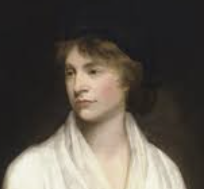
Ah! why do women condescend to receive a degree of attention and respect from strangers different from that reciprocation of civility which the dictates of humanity and the politeness of civilization authorize between man and man? And why do they not discover, when, "in the noon of beauty's power", that they are treated like queens only to be deluded by hollow respect. Confined, then, in cages like the feathered race, they have nothing to do but to plume themselves, and stalk with mock majesty from perch to perch.
▼
Source
Ch. 4

3 months 3 weeks ago
Scientists work from models acquired through education and through subsequent exposure to the literature often without quite knowing or needing to know what characteristics have given these models the status of community paradigms
▼
Source
p. 46

3 months 3 weeks ago
While the Marxist faith in central planning is now confined to a few dingy sects, a quasi-religious belief in free markets continues to shape the policies of governments.Many writers have pointed to the havoc and ruin that have accompanied the imposition of free markets across the world. Whether in Africa, Asia, Latin America or post-communist Europe, policies of wholesale privatisation and structural adjustment have led to declining economic activity and social dislocation on a massive scale.
▼
Source
[http://www.guardian.co.uk/books/2007/sep/15/politics "The end of the world as we know it,"] The Guardian (2007-09-15)
3 months 3 weeks ago
Perhaps then we must begin with such facts as are known to us from individual experience. It is necessary therefore that the person who is to study, with any tolerable chance of profit, the principles of nobleness and justice and politics generally, should have received a good moral training.
▼
Source
(Bk I, Ch II)

3 months 3 weeks ago
Six feet of land was all that he needed.
▼
Source
How Much Land Does a Man Need? (1886)
3 months 3 weeks ago
Happiness exists on earth, and it is won through prudent exercise of reason, knowledge of the harmony of the universe, and constant practice of generosity. He who seeks it elsewhere will not find it for, having drunk from all the glasses of life, he will find satisfaction only in those.
3 months 3 weeks ago
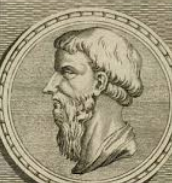
These decrees of yours are no different from spiders' webs. They'll restrain anyone weak and insignificant who gets caught in them, but they'll be torn to shreds by people with power and wealth.
▼
Source
Discussing Solon's laws with him, as quoted by Plutarch, in Solon ch. 5; translation by Robin Waterfield from Plutarch Greek Lives (1998) p. 50. | Variants: | Written laws are like spiders’ webs; they will catch, it is true, the weak and poor, but would b
3 months 3 weeks ago
Every parting gives a foretaste of death; every coming together again a foretaste of the resurrection.
▼
Source
"Psychological Observations"
3 months 3 weeks ago
After all, why should ordinary people want to contemplate the End, especially when we see the condition of those who do?
3 months 3 weeks ago
China has been long one of the richest, that is, one of the most fertile, best cultivated, most industrious, and most populous countries in the world. It seems, however, to have been long stationary. Marco Polo, who visited it more than five hundred years ago, describes its cultivation, industry, and populousness, almost in the same terms in which they are described by travellers in the present times.
▼
Source
Chapter VIII, p. 86.
3 months 3 weeks ago
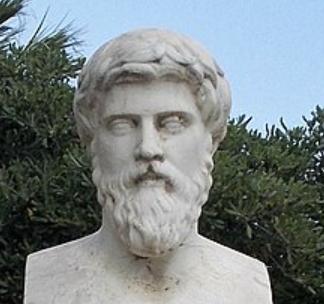
Antagoras the poet was boiling a conger, and Antigonus, coming behind him as he was stirring his skillet, said, "Do you think, Antagoras, that Homer boiled congers when he wrote the deeds of Agamemnon?" Antagoras replied, "Do you think, O king, that Agamemnon, when he did such exploits, was a peeping in his army to see who boiled congers?"
▼
Source
46 Antigonus I
3 months 3 weeks ago
The evil of totalitarianism is not only that it fails to protect specific liberties but that it extinguishes the very possibility of freedom.
▼
Source
'Isaiah Berlin: The Value of Decency' (p.104)
3 months 3 weeks ago
When people are friends, they have no need of justice, but when they are just, they need friendship in addition.
▼
Source
Book VIII, 1155a.26

3 months 3 weeks ago
If in this book harsh words are spoken about some of the greatest among the intellectual leaders of mankind, my motive is not, I hope, the wish to belittle them. It springs rather from my conviction that, if our civilization is to survive, we must break with the habit of deference to great men. Great men may make great mistakes; and as the book tries to show, some of the greatest leaders of the past supported the perennial attack on freedom and reason. Their influence, too rarely challenged, continues to mislead those on whose defence civilization depends, and to divide them. The responsibility of this tragic and possibly fatal division becomes ours if we hesitate to be outspoken in our criticism of what admittedly is a part of our intellectual heritage. By reluctance to criticize some of it, we may help to destroy it all.
▼
Source
Preface to the First Edition
3 months 3 weeks ago
Anna Pávlovna's reception was in full swing. The spindles hummed steadily and ceaselessly on all sides. With the exception of the aunt, beside whom sat only one elderly lady, who with her thin careworn face was rather out of place in this brilliant society, the whole company had settled into three groups. One, chiefly masculine, had formed round the abbé. Another, of young people, was grouped round the beautiful Princess Hélène, Prince Vasíli's daughter, and the little Princess Bolkónskaya, very pretty and rosy, though rather too plump for her age. The third group was gathered round Mortemart and Anna Pávlovna.
▼
Source
Bk. I, Ch. III

3 months 3 weeks ago
The demons have always effected that all those who ever so little strived to live by logos and shun vice be hated.
▼
Source
Second Apology, in Readings in World Christian History (2013), p. 40

3 months 3 weeks ago
Only the great generalizations survive. The sharp words of the Declaration of Independence, lampooned then and since as 'glittering generalities,' have turned out blazing ubiquities that will burn forever and ever.
▼
Source
From a lecture on Books given in the Fraternity Course in Boston in 1864; the quoted phrase 'glittering generalities' had been used by Rufus Choate to describe the declaration of the rights of man in the Preamble to the Constitution

3 months 3 weeks ago
Racist oppression invades the lives of Black people on an infinite variety of levels. Blacks are imprisoned in a world where our labor and toil hardly allow us to eke out a decent existence, if we are able to find jobs at all. When the economy begins to falter, we are forever the first victims, always the most deeply wounded. When the economy is on its feet, we continue to live in a depressed state. Unemployment is generally twice as high in the ghettos as it is in the country as a whole and even higher among Black women and youth. The unemployment rate among Black youth has presently skyrocketed to 30 per cent. If one-third of America’s white youth were without a means of livelihood, we would either be in the thick of revolution or else under the iron rule of fascism. Substandard schools, medical care hardly fit for animals, overpriced, dilapidated housing, a welfare system based on a policy of skimpy concessions, designed to degrade and divide (and even this may soon be cancelled)—this is only the beginning of the list of props in the overall scenery of oppression which, for the mass of Blacks, is the universe.
3 months 3 weeks ago
We are struck by the psychological force and even fierceness with which he reveals the deepest recesses of the human heart.
▼
Source
[http://www.lib.uiowa.edu/spec-coll/MSC/ToMsc500/MsC488/MsC488.htm Eric F. J. Payne], in his introduction to his 1958 translation of [http://books.google.com/books?id=pvnAL_fReokC&pg=PR7&lpg=PR7&dq=%22are+struck+by+the+psychological+force+and+even+fiercen
3 months 3 weeks ago
I anticipated witnessing in my lifetime the disappearance of our species. But the Gods have been against me.
3 months 3 weeks ago
The ancient Egyptians had a superstitious antipathy to the sea; a superstition nearly of the same kind prevails among the Indians; and the Chinese have never excelled in foreign commerce.
▼
Source
Chapter V, p. 402.
3 months 3 weeks ago
"I will show," said Agesilaus, "that it is not the places that grace men, but men the places."
▼
Source
Of Agesilaus the Great
3 months 3 weeks ago
Human knowledge increases, while human irrationality stays the same. Scientific inquiry may be an embodiment of reason, but what such inquiry demonstrates is that humans are not rational animals. The fact that humanists refuse to accept the demonstration only confirms its truth.
▼
Source
An Old Chaos: Humanism and Flying Saucers (p. 81)
3 months 3 weeks ago
We live in deeds, not years; in thoughts not breaths; // In feelings, not in figures on a dial. // We should count time by heart throbs. He most lives // Who thinks most, feels the noblest, acts the best.
▼
Source
This is actually from the poem "We live in deeds..." by Philip James Bailey. This explains the strange pattern of capitalization.
3 months 3 weeks ago
Do not allow your dreams of a beautiful world to lure you away from the claims of men who suffer here and now.
▼
Source
p. 485
CivilSimian.com created by AxiomaticPanic, CivilSimian, Kalokagathia