

3 months 3 weeks ago
In periods of frenzied haste toward wealth, of feverish speculation and of crisis, of the sudden downfall of great industries and the ephemeral expansion of other branches of production, of scandalous fortunes amassed in a few years and dissipated as quickly, it becomes evident that the economic institutions which control production and exchange are far from giving to society the prosperity which they are supposed to guarantee; they produce precisely the opposite result. … Human society is seen to be splitting more and more into two hostile camps, and at the same time to be subdividing into thousands of small groups waging merciless war against each other. Weary of these wars, weary of the miseries which they cause, society rushes to seek a new organization; it clamors loudly for a complete remodeling of the system of property ownership, of production, of exchange and all economic relations which spring from it.
3 months 3 weeks ago
From an Enlightenment or Positivist point of view, which is Hume's point of view, and mine, there is simply no avoiding the conclusion that the human race is mad. There are scarcely any human beings who do not have some lunatic beliefs or other to which they attach great importance. People are mostly sane enough, of course, in the affairs of common life: the getting of food, shelter, and so on. But the moment they attempt any depth or generality of thought, they go mad almost infallibly. The vast majority, of course, adopt the local religious madness, as naturally as they adopt the local dress. But the more powerful minds will, equally infallibly, fall into the worship of some intelligent and dangerous lunatic, such as Plato, or Augustine, or Comte, or Hegel, or Marx.
▼
Source
[https://https://web.maths.unsw.edu.au/~jim/wrongthoughts.html The Plato Cult and Other Philosophical Follies], 1991. Page 184.
3 months 3 weeks ago
I remember that in a widely distributed French newspaper they asked the famous author of the Génie du Christianisme, if a nymph was not a bit more beautiful than a nun. In supposing them represented by the same talent or by equal talents (a condition without which the question would make no sense), there is no doubt that the nun would be more beautiful. The error best suited to extinguishing the true sentiment of beauty is that of confusing that which pleases with that which is beautiful, or in other words, that which pleases the senses with that which pleases the intelligence.

3 months 3 weeks ago
What is it, in your opinion, to be a great nobleman? It is to be master of several objects that men covet, and thus to be able to satisfy the wants and the desires of many. It is these wants and these desires that attract them towards you, and that make them submit to you: were it not for these, they would not even look at you; but they hope, by these services... to obtain from you some part of the good which they desire, and of which they see that you have the disposal.
3 months 3 weeks ago
Surely it is a great thing to increase the numerous host of fixed stars previously visible to the unaided vision, adding countless more which have never before been seen, exposing these plainly to the eye in numbers ten times exceeding the old and familiar stars.
▼
Source
Translation by Stillman Drake in Discoveries and Opinions of Galileo (1957)
3 months 3 weeks ago
It is only by the abolition of the State, by the conquest of perfect liberty by the individual, by free agreement, association, and absolute free federation that we can reach Communism — the possession in common of our social inheritance, and the production in common of all riches.
3 months 3 weeks ago
Socrates said, "Those who want fewest things are nearest to the gods."
▼
Source
Socrates, 11.
3 months 3 weeks ago
Five [of the above] rules are of absolute necessity, and cannot be dispensed with without essential defect and often without error.
3 months 3 weeks ago
I mentally conceive of some moveable [sphere] projected on a horizontal plane, all impediments being put aside. Now it is evident... that equable motion on this plane would be perpetual if the plane were of infinite extent, but if we assume it to be ended, and [situated] on high, the movable, driven to the end of this plane and going on further, adds on to its previous equable and indelible motion, that downward tendency which it has from its heaviness. Thus, there emerges a certain motion, compounded...
▼
Source
Author, Day Four, On the Motion of Projectiles, Stillman Drake translation (1974) p. 268
3 months 3 weeks ago
We ourselves are the entities to be analyzed
▼
Source
Macquarrie & Robinson translation
3 months 3 weeks ago
In virtue of this monstrous system, the son of the worker, on entering life, finds no field which he may till, no machine which he may tend, no mine in which he may dog, without accepting to leave a great part of what he will produce to a master.
▼
Source
Ch. 1 : Our Riches, p. 59
3 months 3 weeks ago
He used to say that personal beauty was a better introduction than any letter; but others say that it was Diogenes who gave this description of it, while Aristotle called beauty "the gift of God"; that Socrates called it "a short-lived tyranny"; Theophrastus, "a silent deceit"; Theocritus, "an ivory mischief"; Carneades, "a sovereignty which stood in need of no guards".
▼
Source
Aristotle, 9.
3 months 3 weeks ago
May some future student go over this ground again, and have the leisure to give his results to the world.
3 months 3 weeks ago
We think of beauty as being most worthy of reverence. But what is most worthy of reverence lights up only where the magnificent strength to revere is alive. To revere is not a thing for the petty and lowly, the incapacitated and underdeveloped. It is a matter of tremendous passion; only what flows from such passion is in the grand style.
▼
Source
p. 125
3 months 3 weeks ago
If we take all into consideration; if we realise the progress made in the gardening culture, and the tendency towards spreading its methods... if we watch the cultural experiments which are being made now—experiments today and realities tomorrow—and ponder over the resources kept in store by science, we are bound to say that it is utterly impossible to foresee at the present moment the limits as to the maximum number of human beings who could draw their means of subsistence from a given area of land, or as to what a variety of produce they could advantageously grow in any latitude.
3 months 3 weeks ago
Apollodorus says, "If any one were to take away from the books of Chrysippus all the passages which he quotes from other authors, his paper would be left empty."
▼
Source
Chrysippus, 3.
3 months 3 weeks ago
The Preface to the Phenomenology is one of the greatest philosophical undertakings of all times, constituting no less an attempts than to reinstate philosophy as the highest form of human knowledge, as ‘the Science.’ P. 97

3 months 3 weeks ago
A geometrician has learned to perform the most difficult demonstrations and calculations, as a monkey has learned to take his little hat off and on...
3 months 3 weeks ago
Let me now try to gather up all these odds and ends of commentary and restate the law of mind, in a unitary way.

3 months 3 weeks ago
It is certainly much easier wholly to decline a passion than to keep it within just bounds and measures; and that which few can moderate almost anybody may prevent.
▼
Source
p. 463 (Self-denial)
3 months 3 weeks ago
There is something that is much more scarce, something finer far, something rarer than ability. It is the ability to recognize ability. The sternest comment that can be made against employers as a class lies in the fact that men of Ability usually succeed in showing their worth in spite of their employer, and not with his assistance and encouragement.
▼
Source
The Philistine magazine, [http://books.google.com/books?id=xxI8AQAAMAAJ&q=%22There+is+something+that+is+much+more+scarce+something+finer+far+something+rarer+than+ability+It+is+the+ability+to+recognize+ability+The+sternest+comment+that+can+be+made+against+
3 months 3 weeks ago
The intellectual is called on the carpet. ... Don't you conceal something? You talk a language which is suspect. You don't talk like the rest of us, like the man in the street, but rather like a foreigner who does not belong here. We have to cut you down to size, expose your tricks, purge you.
▼
Source
p. 192
3 months 3 weeks ago
If we endeavor to form our conceptions upon history and life, we remark three classes of men. The first consists of those for whom the chief thing is the qualities of feelings. These men create art. The second consists of the practical men, who carry on the business of the world. They respect nothing but power, and respect power only so far as it [is] exercized. The third class consists of men to whom nothing seems great but reason. If force interests them, it is not in its exertion, but in that it has a reason and a law. For men of the first class, nature is a picture; for men of the second class, it is an opportunity; for men of the third class, it is a cosmos, so admirable, that to penetrate to its ways seems to them the only thing that makes life worth living.
▼
Source
Vol. I, par. 43
3 months 3 weeks ago
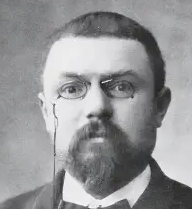
What is mass? According to Newton, it is the product of the volume by the density. According to Thomson and Tait, it would be better to say that density is the quotient of the mass by the volume. What is force? It, is replies Lagrange, that which moves or tends to move a body. It is, Kirchhoff will say, the product of the mass by the acceleration. But then, why not say the mass is the quotient of the force by the acceleration?These difficulties are inextricable.When we say force is the cause of motion, we talk metaphysics, and this definition, if one were content with it, would be absolutely sterile. For a definition to be of any use, it must teach us to measure force; moreover that suffices; it is not at all necessary that it teach us what force is in itself, nor whether it is the cause or the effect of motion.We must therefore first define the equality of two forces. When shall we say two forces are equal? It is, we are told, when, applied to the same mass, they impress upon it the same acceleration, or when, opposed directly one to the other, they produce equilibrium. This definition is only a sham. A force applied to a body can not be uncoupled to hook it up to another body, as one uncouples a locomotive to attach it to another train. It is therefore impossible to know what acceleration such a force, applied to such a body, would impress upon such an other body, if it were applied to it. It is impossible to know how two forces which are not directly opposed would act, if they were directly opposed.We are... obliged in the definition of the equality of the two forces to bring in the principle of the equality of action and reaction; on this account, this principle must no longer be regarded as an experimental law, but as a definition.
▼
Source
Ch. VI: The Classical Mechanics (1905) [https://books.google.com/books?id=5nQSAAAAYAAJ Tr.] George Bruce Halstead
3 months 3 weeks ago
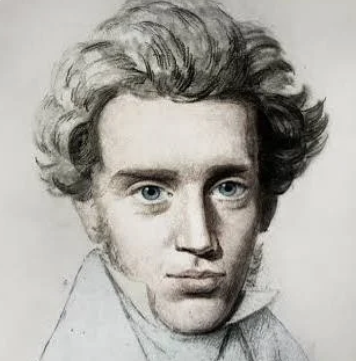
I have never fought in such a way as to say: I am the true Christian, others are not Christians. No, my contention has been this: I know what Christianity is, my imperfection as a Christian I myself fully recognize — but I know what Christianity is. And to get this properly recognized must be, I should think, to every man's interest, whether he be a Christian or not, whether his intention is to accept Christianity or to reject it. But I have attacked no one as not being a Christian, I have condemned no one. Indeed, the pseudonym Johannes Climacus, who sets the problem ‘about becoming a Christian’, does exactly the opposite: he denies that he is a Christian and concedes this claim to the others — the remotest possible remove, surely, from condemning others! And I myself have from the first clearly asserted, again and again repeated, that I am ‘without authority’. My tactics were, by God's aid, to employ every means to make it clear what the requirement of Christianity truly is — even though not one single person should be induced to enter into it, and though I myself might have to give up being a Christian (in which case I should have felt obliged to make open admission of the fact). On the other hand, my tactics were these: instead of giving the impression, in however small a degree, that there are such difficulties about Christianity that an apology for it is needed if men are to be persuaded to enter into it, rather to represent it as a thing so infinitely lofty, as in truth it is, that the apology belongs in another place, is required, that is to say, of us for the fact that we venture to call ourselves Christians, or it transforms itself into a contrite confession that we have God to thank if we merely assume to regard ourselves as a Christian. But neither must this ever be forgotten: Christianity is just as lenient as it is austere, just as lenient, that is to say, infinitely lenient. When the infinite requirement is heard and upheld, heard and upheld in all its infinitude, then grace is offered, or rather grace offers itself, and to it the individual, each for himself, as I also do, can flee for refuge.
▼
Source
The Point of View of My Work as an Author (1848, 1851, 1859) p. 153-155

3 months 3 weeks ago
The elements that make up all other bodies, these must be bodies that are perfectly inelastic, undeformable and unchangeable.
3 months 3 weeks ago
If we ever damned it will not be because we have loved too much, but because we have loved too little.
▼
Source
p. 16
3 months 3 weeks ago
In the form of the oeuvre, the actual circumstances are placed in another dimension where the given reality shows itself as that which it is. Thus it tells the truth about itself; its language ceases to be that of deception, ignorance, and submission. Fiction calls the facts by their name and their reign collapses; fiction subverts everyday experience and shows it to be mutilated and false.
▼
Source
p. 62
3 months 3 weeks ago
We are faced with the curiously appalling trend of modern thought, in which the absolute which was once a means of entering into communion with the divine, has now become an instrument used by those who profit from it, to distort, pervert, and conceal the meaning of the present.
3 months 3 weeks ago
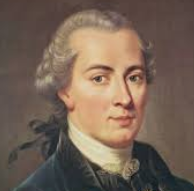
Beneficence is a duty. He who often practices this, and sees his beneficent purpose succeed, comes at last really to love him whom he has benefited. When, therefore, it is said, "Thou shalt love thy neighbor as thyself," this does not mean, "Thou shalt first of all love, and by means of love (in the next place) do him good"; but: "Do good to thy neighbour, and this beneficence will produce in thee the love of men (as a settled habit of inclination to beneficence)."
▼
Source
Metaphysical Elements of Ethics (1780). Translated by Thomas Kingsmill Abbott, translation available at [http://philosophy.eserver.org/kant/metaphys-elements-of-ethics.txt Philosophy.eserver.org]. From section "Preliminary Notions of the Susceptibility of
3 months 3 weeks ago
All that is not thought is pure nothingness; since we can think only thought and all the words we use to speak of things can express only thoughts, to say there is something other than thought, is therefore an affirmation which can have no meaning.And yet—strange contradiction for those who believe in time—geologic history shows us that life is only a short episode between two eternities of death, and that, even in this episode, conscious thought has lasted and will last only a moment. Thought is only a gleam in the midst of a long night. But it is this gleam which is everything.
3 months 3 weeks ago
How absurd men are! They never use the liberties they have, they demand those they do not have. They have freedom of thought, they demand freedom of speech.
▼
Source
Either/Or Part I, Swenson Translation p. 19 | Variations include: | People demand freedom of speech to make up for the freedom of thought, which they avoid. | People demand freedom of speech as a compensation for the freedom of thought which they seldom u
3 months 3 weeks ago
If it recedes one day, leaving behind its works and signs on the shores of our civilization, the structuralist invasion might become a question or the historian of ideas, or perhaps even an object. But the historian would be deceived if he came to this pass: by the very act of considering the structuralist invasion as an object he would forget its meaning and would forget that what is at stake, first of all, is an adventure of vision, a conversion of the way of putting questions to any object posed before us, to historical objects-his own- in particular. And, unexpectedly among these, the literary objects.
▼
Source
Force and Signification
3 months 3 weeks ago
Discontinuity in continuity: that is how... the birth of thought, like that of life, presents... and defines itself.
3 months 3 weeks ago
The weaknesses of the many make the leader possible—and the man who craves disciples and wants followers is always more or less of a charlatan. The man of genuine worth and insight wants to be himself; and he wants others to be themselves, also. Discipleship is a degenerating process to all parties concerned. People who are able to do their own thinking should not allow others to do it for them.
▼
Source
p. 197
3 months 3 weeks ago
The world of immediate experience—the world in which we find ourselves living—must be comprehended, transformed, even subverted in order to become that which it really is.
▼
Source
p. 123
3 months 3 weeks ago
If it were right to overstep a little the limits of apodictic certainty befitting metaphysics, it would seem worth while to trace out some things pertaining not merely to the laws but even to the causes of sensuous intuition, which are only intellectually knowable. Of course the human mind is not affected by external things, and the world does not lie open to its insight infinitely, except as far as itself together with all other things is sustained by the same infinite power of one. Hence it does not perceive external things but by the presence of the same common sustaining cause; and hence space, which is the universal and necessary condition of the joint presence of everything known sensuously, may be called the phenomenal omnipresence, for the cause of the universe is not present to all things and everything, as being in their places, but their places, that is the relations of the substances, are possible, because it is intimately present to all. Furthermore, since the possibility of the changes and successions of all things whose principle as far as sensuously known resides in the concept of time, supposes the continuous existence of the subject whose opposite states succeed; that whose states are in flux, lasting not, however, unless sustained by another; the concept of time as one infinite and immutable in which all things are and last, is the phenomenal eternity of the general cause} But it seems more cautious to hug the shore of the cognitions granted to us by the mediocrity of our intellect than to be carried out upon the high seas of such mystic investigations, like Malebranche, whose opinion that we see all things in God is pretty nearly what has here been expounded.
3 months 3 weeks ago
Man is a synthesis of psyche and body, but he is also a synthesis of the temporal and the eternal. In the former, the two factors are psyche and body, and spirit is the third, yet in such a way that one can speak of a synthesis only when the spirit is posited. The latter synthesis has only two factors, the temporal and the eternal. Where is the third factor? And if there is no third factor, there really is no synthesis, for a synthesis that is a contradiction cannot be completed as a synthesis without a third factor, because the fact that the synthesis is a contradiction asserts that it is not. What, then, is the temporal?
▼
Source
p. 85
3 months 3 weeks ago
Yet the greater part of it, I shall show, is nonsense, tricked out with a variety of metaphysical conceits, and its author can be excused of dishonesty only on the grounds that before deceiving others he has taken great pains to deceive himself.
▼
Source
Peter Medawar, "Review of Teilhard de Chardin’s The Phenomenon of Man". In: Mind Vol.70 (1961)
3 months 3 weeks ago
He too renounces his Creator,And forms all sense from senseless matter.Great wizard he! by magic spellsCan all things raise from cockle shells...O Doctor, change thy foolish motto,Or keep it for some lady’s .Else thy poor patients well may quake,If thou no more canst mend than make.
▼
Source
, from a Grangerized copy of Stebbing Shaw’s History of Staffordshire in William Salt Library, Stafford, and from the published version in Gent. Mag. 54, 87 (1784) as cited by Desmond King-Hele, "[https://royalsocietypublishing.org/doi/pdf/10.1098/rsnr.19
3 months 3 weeks ago
I think that the influence of philosophy is a question of formulating, asking the kinds of questions that would otherwise be foreclosed. I suppose I can say that I learned a great deal from Herbert Marcuse about the relation between philosophy and ideology critique, political critique. His work, for example, Counterrevolution and Revolt, engages directly with the material conditions of the period, the late 1960s. But, at the same time, the framework is philosophical. The kinds of questions that are posed are those questions that otherwise would not be capable of formulation, and I think that is what I try to do. Because really it's not so much about the answers you discover, it's about the reach of the questions.
▼
Source
2003 interview in Conversations with Angela Davis Edited by Sharon Lynette Jones (2021)
3 months 3 weeks ago
To a high degree we are, through art and science, cultured. We are civilized — perhaps too much for our own good — in all sorts of social grace and decorum. But to consider ourselves as having reached morality — for that, much is lacking. The ideal of morality belongs to culture; its use for some simulacrum of morality in the love of honor and outward decorum constitutes mere civilization. So long as states waste their forces in vain and violent self-expansion, and thereby constantly thwart the slow efforts to improve the minds of their citizens by even withdrawing all support from them, nothing in the way of a moral order is to be expected. For such an end, a long internal working of each political body toward the education of its citizens is required. Everything good that is not based on a morally good disposition, however, is nothing but pretense and glittering misery. In such a condition the human species will no doubt remain until, in the way I have described, it works its way out of the chaotic conditions of its international relations.
▼
Source
Seventh Thesis
3 months 3 weeks ago
Riches are a good handmaid, but the worst mistress.
▼
Source
De Augmentis Scientiarum, Book II, "Antitheta" (1623)
3 months 3 weeks ago
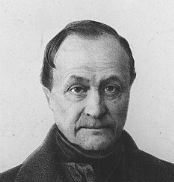
Every attempt to refer chemical questions to mathematical doctrines must be considered, now and always, profoundly irrational, as being contrary to the nature of the phenomena. . . . but if the employment of mathematical analysis should ever become so preponderant in chemistry (an aberration which is happily almost impossible) it would occasion vast and rapid retrogradation....
3 months 3 weeks ago
Every earthly or worldly good is in itself selfish, begrudging; its possession is begrudging or is envy and in one way or another must make others poorer – what I have someone else cannot have; the more I have, the less someone else must have. The unrighteous mammon (with this term we perhaps may indeed designate every earthly good, also worldly honor, power, etc.) is in itself unjust and makes for injustice (quite apart here from the question of acquiring it or possessing it in an unlawful manner) and in itself cannot be acquired or possessed equally. If one person is to have much of it, there must be someone else who necessarily gets only a little, and what the one has the other cannot possibly have. Furthermore, all the time and energy, all the mental solicitude and concern that is applied to acquiring or possessing earthly good is selfish, begrudging, or the person who is occupied in this way is selfish, at every such moment has no thought for others; at every such moment he is selfishly working for himself or selfishly for a few others, but not equally for himself and for everyone else. Even if a person is willing to share his earthly goods, at every moment in which he is occupied with acquiring them or is engrossed in possessing them, he is selfish, just as that is which he possesses or acquires.
▼
Source
Soren Kierkegaard, Christian Discourses 1848, Hong 1997 p. 115-116
3 months 3 weeks ago
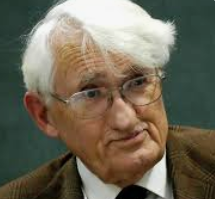
The only knowledge that can truly orient action is knowledge that frees itself from mere human interests and is based in Ideas—in other words knowledge that has taken a theoretical attitude.
▼
Source
p. 301
3 months 3 weeks ago
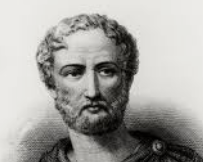
By then day had broken everywhere, but here it was still night—no, more than night.
▼
Source
Letter 16.

3 months 3 weeks ago
At least two thirds of our miseries spring from human stupidity, human malice, and those great motivators and justifiers of malice and stupidity, idealism, dogmatism and proselytizing zeal on behalf of religious or political idols.
▼
Source
Tomorrow and Tomorrow and Tomorrow (1952)
3 months 3 weeks ago
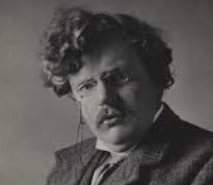
The riddle of life is simply this: For some mad reason in this mad world of ours, the things which men differ about most are exactly the things about which they must be got to agree. Men can agree on the fact that the earth goes round the sun. But then it does not matter a dump whether the earth goes around the sun or the Pleiades. But men cannot agree about morals: sex, property, individual rights, fixity and contracts, patriotism, suicide, public habits of health – these are exactly the things that men tend to fight about. And these are exactly the things that must be settled somehow on strict principles. Study each of them, and you will find each of them works back certainly to a philosophy, probably to a religion.
▼
Source
"Our Notebook", in The Illustrated London Times (2 March 1907) p. 324, col. 3
3 months 3 weeks ago
This proof can at most, therefore, demonstrate the existence of an architect of the world, whose efforts are limited by the capabilities of the material with which he works, but not of a creator of the world, to whom all things are subject.
▼
Source
A 627, B 655 (Physico-Theological Proof Impossible)
CivilSimian.com created by AxiomaticPanic, CivilSimian, Kalokagathia