
3 months 3 weeks ago
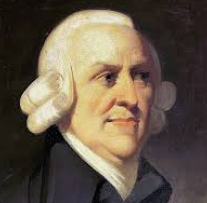
Adam Smith, who has strong claim to being both the Adam and the Smith of systematic economics, was a professor of moral philosophy and it was at that forge that economics was made.
▼
Source
Kenneth Boulding (1969) Economics As A Moral Science, p. 12
3 months 3 weeks ago
No one, not even a philosopher, is morally obligated to live as if the world were the way he wishes it were. Robert Nozick pays taxes and is entitled to enjoy the government benefits they finance --even benefits he thinks should not exist. Perhaps the libertarian philosopher should not be expected to opt out of rent control voluntarily. But should he be pursuing his landlord through the maze of rent control regulations like a man possessed? And should he be using his ability to make a nuisance of himself under these regulations for simple, if lawful, cash extortion?They say that policeman make the best burglars. After a few years on the job, they know all the tricks. The same thing seems to be true of philosophers. If you're looking for someone to manipulate a rent control ordinance, find an advocate of the free market.
▼
Source
William Tucker, "Anarchy, State, and Rent Control", The New Republic (Dec. 22, 1986)

3 months 3 weeks ago
One is ashamed to say how little is needed for all men to be delivered from those calamities which now oppress them; it is only needful not to lie.
▼
Source
Ch. 17

3 months 3 weeks ago
Father, mother, child, which express both the union of the sexes and de production of the being, can only be considered dependently on one another, and relatively to one another. A woman could exist without the existence of a man; but there is no mother if there is no father, nor a child without both of them. Each one of these ways of being presumes and recalls the other two; that is to say, they are relative. Considered thus, they are called relationships, in Latin, ratio; father, mother, child are persons, and their union forms the family. The union of the sexes, which is the foundation of all these relationships, is called marriage.

3 months 3 weeks ago
Give all to love; Obey thy heart; Friends, kindred, days, Estate, good fame, Plans, credit, and the muse; Nothing refuse.
▼
Source
Give All to Love, st. 1
3 months 3 weeks ago
Philosophy ... must not bargain away anything of the emphatic concept of truth.
▼
Source
p. 7

3 months 3 weeks ago
The predicate of a sentence may tell you what kind of a thing something is, or how big it is, or where it is, or what is happening to it, and so on. We may say, for instance, of St Thomas Aquinas that he was a human being, and that he was fat, clever, and holier than Abelard; that he lived in Paris in the thirteenth century, that he sat when lecturing, wore the Dominican habit, wrote eight million words, and was eventuarlly poisoned by Charles of Anjou. The predicats we use in saying these things belong, Aristotle would say, in different categories: they belong in the categories of, respectively, substance, quantity, quality, relation, place, time, posture, vesture, action, and passion.
▼
Source
[https://www.google.com/books?id=B4xQTK_vUa4C&pg=PA2 Aquinas on Being] (2002), pp. 2–3
3 months 3 weeks ago
In a community, the constitution of which provides for a legislator and a law, it is the concern of the legislator and of the laws given by him to ascertain the mediation through calculable and attainable rules and to prevent the terror of the direct and automatic enactment of values. That is a very complicated problem, indeed. One may understand why law-givers all along world history, from Lycurgus to Solon and Napoleon have been turned into mythical figures. In the highly industrialized nations of our times, with their provisions for the organization of the lives of the masses, the mediation would give rise to a new problem. Under the circumstances, there is no room for the law-giver, and so there is no substitute for him. At best, there is only a makeshift which sooner or later is turned into a scapegoat, due to the unthankful role it was given to play.A jurist who interferes, and wants to become the direct executor of values should know what he is doing. He must recall the origins and the structure of values and dare not treat lightly the problem of the tyranny of values and of the unmediated enactment of values. He must attain a clear understanding of the modern philosophy of values before he decides to become valuator, revaluator, upgrader of values. As a value-carrier and value-sensitive person, he must do that before he goes on to proclaim the positings of a subjective, as well as objective, rank-order of values in the form of pronouncements with the force of law.
3 months 3 weeks ago
Economic theory as derived from Adam Smith assumes first that homo economicus acts with perfect optimality on complete information, and second that when many of the species homo economicus do that, their actions add up to the best possible outcome for everybody. Neither of these assumptions stands up long against the evidence.
▼
Source
Donella Meadows, Thinking in Systems: A Primer, Chelsea Green Publishing, 2008, page 107 (ISBN 9781603580557).
3 months 3 weeks ago
Three years ago he was an honest, self-denying youth, ready to devote himself to every good cause; now he was a corrupt and refined egotist, given over to personal enjoyment. ... And all this terrible transformation took place in him only because he ceased to have faith in himself, and began to believe in others.
▼
Source
Ch. 13

3 months 3 weeks ago
If there be no such principle as justice, there can be no such acts as crimes; and all the professions of governments, so called, that they exist, either in whole or in part, for the punishment or prevention of crimes, are professions that they exist for the punishment or prevention of what never existed, nor ever can exist.
▼
Source
Section V, p. 13
3 months 3 weeks ago
The hearing ear is always found close to the speaking tongue.
▼
Source
Race

3 months 3 weeks ago
When he was asked by an impious man what piety was, he made no reply; and when his questioner demanded the reason of his silence, he said, "I am silent because you are putting questions about things with which you have no concern."
3 months 3 weeks ago
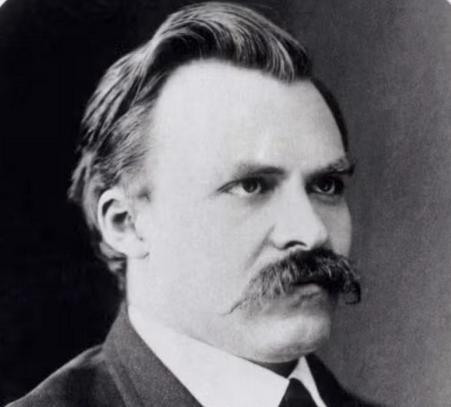
Only the most perfect human being can design the most perfect philosophy.
▼
Source
Fichte Studies § 651
3 months 3 weeks ago
You have committed one of the greatest stupidities — for yourself and for me! Your association with an anti-Semitic chief expresses a foreignness to my whole way of life which fills me again and again with ire or melancholy. ... It is a matter of honor with me to be absolutely clean and unequivocal in relation to anti-Semitism, namely, opposed to it, as I am in my writings. I have recently been persecuted with letters and Anti-Semitic Correspondence Sheets. My disgust with this party (which would like the benefit of my name only too well!) is as pronounced as possible, but the relation to Förster, as well as the aftereffects of my former publisher, the anti-Semitic Schmeitzner, always brings the adherents of this disagreeable party back to the idea that I must belong to them after all. ... It arouses mistrust against my character, as if publicly I condemned something which I have favored secretly — and that I am unable to do anything against it, that the name of Zarathustra is used in every Anti-Semitic Correspondence Sheet, has almost made me sick several times.
▼
Source
Objecting to his sister Elisabeth, about her marriage to the anti-semite Bernhard Förster, in a [http://www.geocities.com/thenietzschechannel/nlett1887.htm Christmas letter (1887)] in Friedrich Nietzsche's Collected Letters, Vol. V, #479
3 months 3 weeks ago
What is now happening to the people of the East as of the West is like what happens to every individual when he passes from childhood to adolescence and from youth to manhood. He loses what had hitherto guided his life and lives without direction, not having found a new standard suitable to his age, and so he invents all sorts of occupations, cares, distractions, and stupefactions to divert his attention from the misery and senselessness of his life. Such a condition may last a long time.
▼
Source
VI

3 months 3 weeks ago
A sensible man should not demand of me, or hope that when we mention a subject, we shall make a complete exposition of it.
3 months 3 weeks ago
Our chief want in life is somebody who shall make us do what we can.
▼
Source
Considerations by the Way
3 months 3 weeks ago
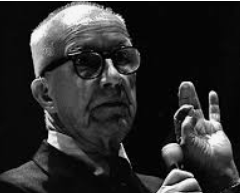
Nature never "fails." Nature complies with its own laws. Nature is the law. When Man lacks understanding of Nature's laws and a Man-contrived structure buckles unexpectedly, it does not fail. It only demonstrates that Man did not understand Nature's laws and behaviors. Nothing failed. Man's knowledge or estimating was inadequate.
▼
Source
In "How Little I Know", in Saturday Review (12 Nov 1966), 152. Excerpted in Buckminster Fuller and Answar Dil, Humans in Universe (1983), 31.
3 months 3 weeks ago
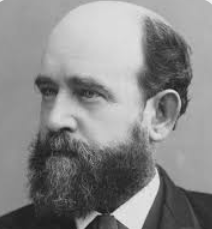
It is true that wealth has been greatly increased, and that the average of comfort, leisure, and refinement has been raised; but these gains are not general. In them the lowest class do not share. I do not mean that the condition of the lowest class has nowhere nor in anything been improved; but that there is nowhere any improvement which can be credited to increased productive power. I mean that the tendency of what we call material progress is in nowise to improve the condition of the lowest class in the essentials of healthy, happy human life. Nay, more, that it is still further to depress the condition of the lowest class. The new forces, elevating in their nature though they be, do not act upon the social fabric from underneath, as was for a long time hoped and believed, but strike it at a point intermediate between top and bottom. It is as though an immense wedge were being forced, not underneath society, but through society. Those who are above the point of separation are elevated, but those who are below are crushed down.
▼
Source
Introductory : The Problem
3 months 3 weeks ago
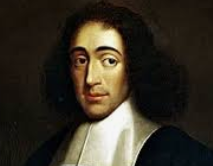
My opinion concerning God differs widely from that which is ordinarily defended by modern Christians. For I hold that God is of all things the cause immanent, as the phrase is, not transient. I say that all things are in God and move in God, thus agreeing with Paul, and, perhaps, with all the ancient philosophers, though the phraseology may be different ; I will even venture to affirm that I agree with all the ancient Hebrews, in so far as one may judge from their traditions, though these are in many ways corrupted. The supposition of some, that I endeavour to prove in the Tractatus Theologico-Politicus the unity of God and Nature (meaning by the latter a certain mass or corporeal matter), is wholly erroneous. As regards miracles, I am of opinion that the revelation of God can only be established by the wisdom of the doctrine, not by miracles, or in other words by ignorance.
▼
Source
[http://oll.libertyfund.org/?option=com_staticxt&staticfile=show.php%3Ftitle=1711&chapter=144137&layout=html&Itemid=27 Letter 21 (73) to Henry Oldenburg , November (1675)]
3 months 3 weeks ago
Not wise does it seem to attempt comprehending and understanding a Human World without full perfected Humanity. No talent must sleep; and if all are not alike active, all must be alert, and not oppressed and enervated. As we see a future Painter in the boy who fills every wall with sketches and variedly adds colour to figure; so we see a future Philosopher in him who restlessly traces and questions all natural things, pays heed to all, brings together whatever is remarkable, and rejoices when he has become master and possessor of a new phenomenon, of a new power and piece of knowledge.
3 months 3 weeks ago
As soon as laws are necessary for men, they are no longer fit for freedom.
▼
Source
As quoted in Short Sayings of Great Men: With Historical and Explanatory Notes (1882) by Samuel Arthur Bent, p. 454
3 months 3 weeks ago
Morality is: the mediocre are worth more than the exceptions ... I abhore Christianity with a deadly hatred.
▼
Source
Sec. 685 (Notebook W II 5. Spring 1888, KGW VIII, 3.95-7, KSA 13.303-5)
3 months 3 weeks ago
The slow progress towards juster international relations may be traced to the distinguished jurist of the Netherlands, Grotius; to the great German, Immanuel Kant, who lifted the subject of “Eternal Peace’ high above controversy; to Count Tolstoy of Russia, who so trenchantly set it forth in our own day, and so on throughout the nations.
▼
Source
Jane Addams, [https://speakingwhilefemale.co/war-addams1/ "This Totally Unnecessary Conflict"] (May 1, 1915)
3 months 3 weeks ago
It was necessary that the very noble form of man, which is the image and likeness of God... should be joined to the substance of dust and darkness, the source of all defect and loss. For these reasons the Creator gave to the form of man power, rule, and dominion over the substance;—the form can subdue the substance, refuse the fulfillment of its desires, and reduce them, as far as possible, to a just and proper measure.
▼
Source
Ch.8
3 months 3 weeks ago
Born for success he seemed, With grace to win, with heart to hold, With shining gifts that took all eyes.
▼
Source
In Memoriam E. B. E.
3 months 3 weeks ago
Ideas are invented only as correctives to the past. Through repeated rectifications of this kind one may hope to disengage an idea that is valid.
▼
Source
A Retrospective Glance at the Lifework of a Master of Books
3 months 3 weeks ago
My primary object is to defend and advance a principle in which I see the only possible relief from much that enthralls and degrades and distorts, turning light to darkness and good to evil, rather than to gage a philosopher or weigh a philosophy. Yet the examination I propose must lead to a decisive judgment upon both.
▼
Source
Introduction : The Reason for the Examination
3 months 3 weeks ago
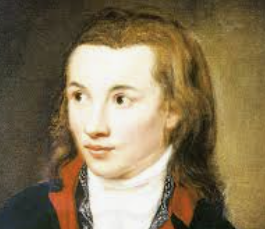
Wilhelm Meister's Apprenticeship may be called throughout prosaic and modern. The Romantic sinks to ruin, the Poesy of Nature, the Wonderful. The Book treats merely of common worldly things: Nature and Mysticism are altogether forgotten. It is a poetised civic and household History; the Marvellous is expressly treated therein as imagination and enthusiasm. Artistic Atheism is the spirit of the Book. ... It is properly a Candide, directed against Poetry: the Book is highly unpoetical in respect of spirit, poetical as the dress and body of it are.
▼
Source
Ralph Waldo Emerson in "Goethe; or, the Writer" writes of this passage, and quotes a slightly different translation: The ardent and holy Novalis characterized the book as "thoroughly modern and prosaic; the romantic is completely levelled in it; so is the
3 months 3 weeks ago
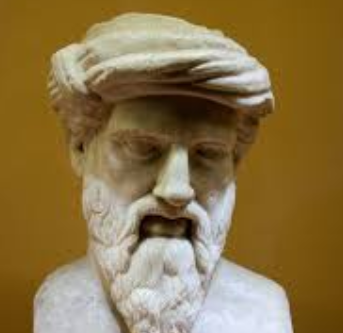
Practice justice in word and deed, and do not get in the habit of acting thoughtlessly about anything.
▼
Source
As quoted in Divine Harmony: The Life and Teachings of Pythagoras by John Strohmeier and Peter Westbrook. (1999)
3 months 3 weeks ago
All things are subject to interpretation; whichever interpretation prevails at a given time is a function of power and not the truth.
▼
Source
Often attributed to Nietzsche especially on social media, but no citation is ever given. Dr Zuleyka Zevallos explains there is a similar quote on "Notes" (1888), translated in The Portable Nietzsche (edited by Walter Kaufmann) but it doesn't mentions powe
3 months 3 weeks ago
A Calendar of Wisdom
3 months 3 weeks ago
You will see the mercy of God toward His creatures, how He has provided that which is required, in proper proportions, and treated all individual beings of the same species with perfect equality. ...for it is an act of great and perfect goodness that He gave us existence; and the creation of the controlling faculty in animals is a proof of His mercy towards them, as has been shown by us.
▼
Source
Ch.12
3 months 3 weeks ago
A third illusion haunts us, that a long duration, as a year, a decade, a century, is valuable. But an old French sentence says, "God works in moments," — "En peu d'heure Dieu labeure." We ask for long life, but 't is deep life, or grand moments, that signify. Let the measure of time be spiritual, not mechanical. Life is unnecessarily long. Moments of insight, of fine personal relation, a smile, a glance, — what ample borrowers of eternity they are! Life culminates and concentrates; and Homer said, "The Gods ever give to mortals their appointed share of reason only on one day."
▼
Source
Works and Days
3 months 3 weeks ago
Realistic thinking accrues only after mistake making, which is the cosmic wisdom's most cogent way of teaching each of us how to carry on.
▼
Source
In Buckminster Fuller and Answar Dil, Humans in Universe (1983), 218.

3 months 3 weeks ago
Fortunately science, like that nature to which it belongs, is neither limited by time nor by space. It belongs to the world, and is of no country and of no age. The more we know, the more we feel our ignorance; the more we feel how much remains unknown; and in philosophy, the sentiment of the Macedonian hero can never apply, — there are always new worlds to conquer.
▼
Source
Discourse Delivered at the Royal Society (30 November 1825), published in Six Discourses delivered before the Royal Society, at their Anniversary Meetings, on the Award of the Royal and Copley Medals, preceded by an Address to the Society on the Progress
3 months 3 weeks ago
Tell not abroad what thou intendest to do; for if thou speed not, thou shalt be mocked!
3 months 3 weeks ago
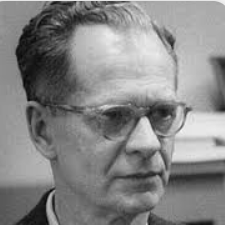
I have heard the lies before, but seeing them in black and white in a respected Sunday newspaper felt as if somebody had punched me hard in the stomach. Admittedly, the facts of my unusual upbringing sound dodgy: esteemed psychologist BF Skinner, who puts rats and pigeons in experimental boxes to study their behaviour, also puts his baby daughter in a box. This is good fodder for any newspaper. ... The early rumours were simple, unembellished: I had gone crazy, sued my father, committed suicide. My father would come home from lecture tours to report that three people had asked him how his poor daughter was getting on. I remember family friends returning from Europe to relate that somebody they had met there had told them I had died the year before. The tale, I later learned, did the rounds of psychology classes across America. One shy schoolmate told me years later that she had shocked her college psychology professor, who was retelling the rumour about me, by banging her fist on her desk, standing up and shouting, "She's not crazy!" Slater's sensationalist book rehashes some of the old stuff, but offers some rumours that are entirely new to me. ... My early childhood, it's true, was certainly unusual — but I was far from unloved. I was a much cuddled baby. Call it what you will, the "aircrib" ,"baby box", "heir conditioner" (not my father's term) was a wonderful alternative to the cage-like cot. My father's intentions were simple, and based on removing what he and my mother saw as the worst aspects of a baby's typical sleeping arrangements: clothes, sheets and blankets. These not only have to be washed, but they restrict arm and leg movement and are a highly imperfect method of keeping a baby comfortable.
▼
Source
Deborah Skinner Buzan, Skinner's daughter, in [http://books.guardian.co.uk/departments/healthmindandbody/story/0,6000,1168052,00.html "I was not a lab rat" in The Guardian (12 March 2004)]

3 months 3 weeks ago
It is true: Man is the microcosm: I am my world.
▼
Source
Journal entry (12 October 1916), p. 84e
3 months 3 weeks ago
Consider in how many ways His knowledge is distinguished from ours according to all the teaching of every revealed religion. First, His knowledge is one, and yet embraces many different kinds of objects. Secondly, it is applied to things not in existence. Thirdly, it comprehends the infinite. Fourthly, it remains unchanged, though it comprises the knowledge of changeable things; whilst it seems that the knowledge of a thing that is to come into existence is different from the knowledge of the thing when it has come into existence; because there is the additional knowledge of its transition from a state of potentiality into that of reality. Fifthly, according to the teaching of our Law, God's knowledge of one of two eventualities does not determine it, however certain that knowledge may be concerning the future occurrence of the one eventuality.
▼
Source
Ch.20
3 months 3 weeks ago
Wit makes its own welcome, and levels all distinctions. No dignity, no learning, and no force of character can make any stand against good wit.
▼
Source
The Comic
3 months 3 weeks ago
Politics is policy. What policy should you follow in view of the idea that there isn't enough to go around — the power of the few, or the needs of the many? Political economy is based on misassumptions...
3 months 3 weeks ago
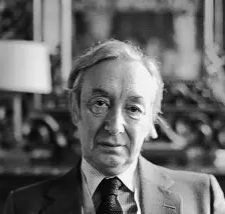
It seems that I have spent my entire time trying to make life more rational and that it was all wasted effort.
▼
Source
As quoted in The Observer (17 August 1986).
3 months 3 weeks ago
Who are those people by whom you wish to be admired? Are they not these about whom you are in the habit of saying that they are mad? What then? Do you wish to be admired by the mad?
▼
Source
Book I, ch. 21, § 4.
3 months 3 weeks ago
Pythagoras... assumed as first principles the numbers and symmetries existing among them, which he calls harmonies, and the elements compounded of both, that are called geometrical. ...he says that the nature of Number is the Decad.
▼
Source
Aëtius of Antioch Aëtius (I. 3.8) as quoted by in the Forward to The Theology of Arithmetic by Iamblichus (1988) Tr. Robin Waterfield, p. 9.
3 months 3 weeks ago
(About Jesus) If He did not rise again, then He rotted in the grave like any other human being. He died and his body rotted.
3 months 3 weeks ago
What prevented Him from making His primary object a direct commandment to us, and to give us the capacity of obeying it? ...As it is the chief object and purpose of God that we should believe in the Law, and act according to that which is written therein, why has He not given us the capacity of continually believing in it, and following its guidance, instead of holding out to us reward for obedience, and punishment for disobedience, or of actually giving all the predicted reward and punishment? For [the promises and the threats] are but the means of leading to this chief object. What prevented Him from giving us, as part of our nature, the will to do that which He desires us to do, and to abandon the kind of worship which He rejects? There is one general answer to these three questions, and all questions of the character; it is this: Although in every one of the signs [related in Scripture] the natural property of some individual being is changed, the nature of man is never changed by God by way of miracle. ...it is in His power, according to the principles taught in Scripture, but it has never been His will to do it, and it never will be. If it were part of His will to change [at His desire] the nature of any person, the mission of prophets and the giving of the Law would have been altogether superfluous.
▼
Source
Ch.32
3 months 3 weeks ago
I regard it as the irresistible effect of the Copernican astronomy to have made the theological scheme of redemption absolutely incredible
▼
Source
Quoted in Robert D. Richardson, Jr., Emerson, the Mind On Fire (Univ. of Calif Press 1995), p. 124
CivilSimian.com created by AxiomaticPanic, CivilSimian, Kalokagathia