

8 months 2 weeks ago
The doctrine that there is as much science in a subject as... mathematics in it, or as much... measurement or 'precision' in it, rests upon... misunderstanding.
8 months 2 weeks ago
...no matter how many instances of white swans we may have observed, this does not justify the conclusion that all swans are white.
▼
Source
Ch. 1 "A Survey of Some Fundamental Problems", Section 1: The Problem of Induction, p. 4.
8 months 2 weeks ago
In brief, it is my thesis that human misery is the most urgent problem of a rational public policy and that happiness is not such a problem.
▼
Source
p. 485
8 months 2 weeks ago
I do not overlook the fact that there are irrationalists who love mankind, and that not all forms of irrationalism engender criminality. But I hold that he who teaches that not reason but love should rule opens up the way for those who rule by hate. (Socrates, I believe, saw something of this when he suggested that mistrust or hatred of argument is related to mistrust or hatred of man).
▼
Source
Vol. 2, Ch. 24 "Oracular Philosophy and the Revolt against Reason"
8 months 2 weeks ago
I am a rationalist. ...I mean ...[I] wish... to understand the world, and to learn by arguing with others. (...I do not say a rationalist holds the mistaken theory that men are... rational.)
8 months 2 weeks ago
I think so badly of philosophy that I don't like to talk about it. ... I do not want to say anything bad about my dear colleagues, but the profession of teacher of philosophy is a ridiculous one. We don't need a thousand of trained, and badly trained, philosophers - it is very silly. Actually most of them have nothing to say.
▼
Source
As quoted in "At 90, and Still Dynamic : Revisiting Sir Karl Popper and Attending His Birthday Party" by Eugene Yue-Ching Ho, in Intellectus 23
8 months 2 weeks ago
The history of science, like the history of all human ideas, is a history of irresponsible dreams, of obstinacy, and of error. But science is one of the very few human activities - perhaps the only one - in which errors are systematically criticized and fairly often, in time, corrected. This is why we can say that, in science, we often learn from our mistakes, and why we can speak clearly and sensibly about making progress there.
▼
Source
Ch. 1 "Science : Conjectures and Refutations"
8 months 2 weeks ago
We may become the makers of our fate when we have ceased to pose as its prophets.
▼
Source
Introduction
8 months 2 weeks ago
I have changed my mind about the testability and logical status of the theory of natural selection; and I am glad to have an opportunity to make a recantation.
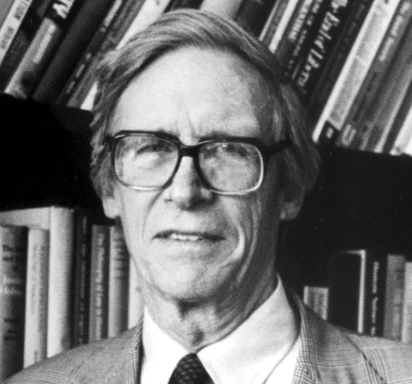
8 months 2 weeks ago
The concept of justice I take to be defined, then, by the role of its principles in assigning rights and duties and in defining the appropriate division of social advantages. A conception of justice is an interpretation of this role.
▼
Source
Chapter I, Section 2, pg. 10
8 months 2 weeks ago
The fault of the utilitarian doctrine is that it mistakes impersonality for impartiality.
▼
Source
Chapter III, Section 30, pg. 190
8 months 2 weeks ago
A scheme is unjust when the higher expectations, one or more of them, are excessive. If these expectations were decreased, the situation of the less favored would be improved.
▼
Source
Chapter II, Section 13, pg. 79
8 months 2 weeks ago
Ideal legislators do not vote their interests.
▼
Source
Chapter V, Section 43, p. 284
8 months 2 weeks ago
I have assumed throughout that the persons in the original position are rational.
▼
Source
Chapter III, Section 25, pg. 142
8 months 2 weeks ago
An intuitionist conception of justice is, one might say, but half a conception.
▼
Source
Chapter I, Section 8, pg. 41
8 months 2 weeks ago
Justice does not require that men must stand idly by while others destroy the basis of their existence.
▼
Source
Chapter IV, Section 35, p. 218
8 months 2 weeks ago
First of all, no one knows his place in society, his class position or social status; nor does he know his fortune in the distribution of natural assets and abilities, his intelligence and strength, and the like. Nor, again, does anyone know his conception of the good, the particulars of his rational plan of life, or even the special features of psychology such as his aversion to risk or liability to optimism or pessimism. More than this, I assume that the parties do not know the particular circumstances of their own society. That is, they do not know its particular economic or political situation, or the level of civilization and culture it has been able to achieve. The persons in the original position have no information as to which generation they belong.
▼
Source
p. 117
8 months 2 weeks ago
The extreme nature of dominant-end views is often concealed by the vagueness and ambiguity of the end proposed.
▼
Source
Chapter IX, Section 83, p. 554
8 months 2 weeks ago
The principles of justice are chosen behind a veil of ignorance.
▼
Source
Chapter I, Section 3, pg. 12
8 months 2 weeks ago
Ideally a just constitution would be a just procedure arranged to insure a just outcome.
▼
Source
Chapter IV, Section 31, pg. 197
8 months 2 weeks ago
The even larger difference between rich and poor makes the latter even worse off, and this violates the principle of mutual advantage.
▼
Source
Chapter II, Section 13, pg. 79
8 months 2 weeks ago
Justice is happiness according to virtue.
▼
Source
Chapter V, Section 48, p. 310
8 months 2 weeks ago
Inequalities are permissible when they maximize, or at least all contribute to, the long term expectations of the least fortunate group in society.
▼
Source
Chapter III, Section 26, pg. 151
8 months 2 weeks ago
We may suppose that everyone has in himself the whole form of a moral conception.
▼
Source
Chapter I, Section 9, pg. 50
8 months 2 weeks ago
Essentially the fault lies in the fact that the democratic political process is at best regulated rivalry; it does not even in theory have the desirable properties that price theory ascribes to truly competitive markets.
▼
Source
Chapter IV, Section 36, p. 226
8 months 2 weeks ago
There are infinitely many variations of the initial situation and therefore no doubt indefinitely many theorems of moral geometry.
▼
Source
Chapter III, Section 21, pg. 126
8 months 2 weeks ago
At best the principles that economists have supposed the choices of rational individuals to satisfy can be presented as guidelines for us to consider when we make our decisions.
▼
Source
Chapter IX, Section 84, p. 558
8 months 2 weeks ago
Social and economic inequalities, for example inequalities of wealth and authority, are just only if they result in compensating benefits for everyone, and in particular for the least advantaged members of society.
▼
Source
p. 14.
8 months 2 weeks ago
Clearly when the liberties are left unrestricted they collide with one another.
▼
Source
Chapter IV, Section 32, p. 203
8 months 2 weeks ago
In justice as fairness society is interpreted as a cooperative venture for mutual advantage.
▼
Source
Chapter II, Section 14, pg. 84
8 months 2 weeks ago
The intolerant can be viewed as free-riders, as persons who seek the advantages of just institutions while not doing their share to uphold them.
▼
Source
Chapter VI, Section 59, pg. 388
8 months 2 weeks ago
Yet it seems extraordinary that the justice of increasing the expectations of the better placed by a billion dollars, say, should turn on whether the prospects of the least favored increase or decrease by a penny.
▼
Source
Chapter III, Section 26, pg. 157
8 months 2 weeks ago
Intuitionism is not constructive, perfectionism is unacceptable.
▼
Source
Chapter I, Section 9, pg. 52
8 months 2 weeks ago
The fundamental criterion for judging any procedure is the justice of its likely results.
▼
Source
Chapter IV, Section 37, p. 230
8 months 2 weeks ago
The circumstances of justice may be described as the normal conditions under which human cooperation is both possible and necessary.
▼
Source
Chapter III, Section 22, pg. 126
8 months 2 weeks ago
The hazards of the generalized prisoner's dilemma are removed by the match between the right and the good.
▼
Source
Chapter IX, Section 86, p. 577
8 months 2 weeks ago
It may be expedient but it is not just that some should have less in order that others may prosper.
▼
Source
Chapter I, Section 3, pg. 15
8 months 2 weeks ago
We must choose for others as we have reason to believe they would choose for themselves if they were at the age of reason and deciding rationally.
▼
Source
Chapter IV, Section 33, p. 209
8 months 2 weeks ago
Greater intelligence, wealth and opportunity, for example, allow a person to achieve ends he could not rationally contemplate otherwise.
▼
Source
Chapter II, Section 15, pg. 93
8 months 2 weeks ago
Many conservative writers have contended that the tendency to equality in modern social movements is the expression of envy. In this way they seek to discredit this trend, attributing it to collectively harmful impulses.
▼
Source
Chapter IX, Section 82, p. 538
8 months 2 weeks ago
This is a long book, not only in pages.
▼
Source
Preface, pg. viii
8 months 2 weeks ago
We must not be enticed by mathematically attractive assumptions into pretending that the contingencies of men's social positions and the asymmetries of their situations somehow even out in the end. Rather we must choose our conception of justice fully recognizing that this is not and cannot be the case.
▼
Source
Chapter III, Section 28, pg. 171
8 months 2 weeks ago
Our concern is solely with the basic structure of society and its major institutions and therefore with the standard cases of social justice.
▼
Source
Chapter II, Section 10, pg. 58
8 months 2 weeks ago
Properly understood, then, the desire to act justly derives in part from the desire to express most fully what we are or can be, namely free and equal rational beings with the liberty to choose.
▼
Source
Chapter IV, Section 40, p. 256
8 months 2 weeks ago
First of all, principles should be general. That is, it must be possible to formulate them without use of what would be intuitively recognized as proper names, or rigged definite descriptions.
▼
Source
Chapter III, Section 23, pg. 131
8 months 2 weeks ago
I have tried to set forth a theory that enables us to understand and to assess these feelings about the primacy of justice. Justice as fairness is the outcome: it articulates these opinions and supports their general tendency.
▼
Source
Chapter IX, Section 87, p. 586
8 months 2 weeks ago
A conception of justice cannot be deduced from self evident premises or conditions on principles; instead, its justification is a matter of the mutual support of many considerations, of everything fitted together into one coherent view.
▼
Source
Chapter I, Section 4, p. 21
8 months 2 weeks ago
The suppression of liberty is always likely to be irrational.
▼
Source
Chapter IV, Section 33, p. 210
8 months 2 weeks ago
The difference principle, for example, requires that the higher expectations of the more advantaged contribute to the prospects of the least advantaged.
▼
Source
Chapter II, Section 16, pg. 95
8 months 2 weeks ago
That persons have opposing interests and seek to advance their own conception of the good is not at all the same thing as their being moved by envy and jealousy.
▼
Source
Chapter IX, Section 81, p. 540
CivilSimian.com created by AxiomaticPanic, CivilSimian, Kalokagathia