
8 months ago
Citizens of a Jeffersonian democracy can be as religious or irreligious as they please as long as they are not "fanatical." That is, they must abandon or modify opinion on matters of ultimate importance, the opinions that may hitherto have given sense and point to their lives, if these opinions entail public actions that cannot be justified to most of their fellow citizens.
8 months ago
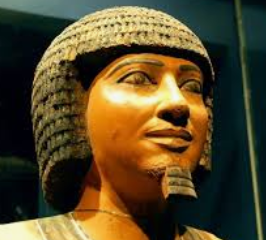
The pleasure is only for a little moment, and it [passes] like a dream, and a man at the end thereof finds death through knowing it.
▼
Source
Maxim no. 18. Translated by Sir E. A. Wallis Budge, Teaching Of Amenem Apt Son Of Kanekht (London: Martin Hopkinson and Company Ltd, 1924) p. 58
8 months ago
Be a craftsman in speech that thou mayest be strong, for the strength of one is the tongue, and speech is mightier than all fighting.
▼
Source
Translated by J. H. Breasted, The Dawn of Conscience (New York: Charles Scribner's Sons, 1933) p. 131
8 months ago
Beware an act of avarice; it is bad and incurable disease.
▼
Source
Maxim no. 19.
8 months ago
If you are well-to-do and can maintain your household, love your wife in your home according to good custom...Make her happy while you are alive, for she is land profitable to her lord.
▼
Source
Maxim no. 21.
8 months ago
Teach him what has been said in the past; then he will set a good example to the children of the magistrates, and judgement and all exactitude shall enter into him. Speak to him, for there is none born wise.
▼
Source
Introduction.
8 months ago
Do not repeat slander; you should not hear it, for it is the result of hot temper.
▼
Source
Maxim no. 23.
8 months ago
Do not be arrogant because of your knowledge, but confer with the ignorant man as with the learned. For knowledge has no limits, and none has yet achieved perfection in it. Good speech is more hidden than malachite, yet it is found in the possession of women slaves at the millstones.
▼
Source
Maxim no. 1.
8 months ago
One who is serious all day will never have a good time, while one who is frivolous all day will never establish a household.
▼
Source
Maxim no. 25.
8 months ago
Truth is great and its effectiveness endures.
▼
Source
Maxim no. 5. Cf. 1 Esdras 4:41
8 months ago
To resist him that is set in authority is evil. .
▼
Source
Maxim no. 31
8 months ago
Follow your desire as long as you live and do not perform more than is ordered; do not lessen the time of following desire, for the wasting of time is an abomination to the spirit... When riches are gained, follow desire, for riches will not profit if one is sluggish.
▼
Source
Maxim no. 11.
8 months ago
Be cheerful while you are alive.
▼
Source
Maxim no. 34.

8 months ago
The evidence of our own eyes makes it more plausible to believe that the world was not created by any god at all. If, however, we insist on believing in divine creation, we are forced to admit that the god who made the world cannot be all-powerful and all good. He must be either evil or a bungler.
▼
Source
The God of Suffering? Project Syndicate, 2008
8 months ago
Science does not stand still, and neither does philosophy, although the latter has a tendency to walk in circles.
▼
Source
Afterword To The 2011 Edition, p. 187
8 months ago
How far down the evolutionary scale shall we go? Shall we eat fish? What about shrimps? Oysters? To answer these questions we must bear in mind the central principle on which our concern for other beings is based. As I said ... the only legitimate boundary to our concern for the interests of other beings is the point at which it is no longer accurate to say that the other being has interests. To have interests, in a strict, nonmetaphorical sense, a being must be capable of suffering or experiencing pleasure. If a being suffers, there can be no moral justification for disregarding that suffering, or for refusing to count it equally with the like suffering of any other being. But the converse of this is also true. If a being is not capable of suffering, or of enjoyment, there is nothing to take into account.
▼
Source
Ch. 4: Becoming a Vegetarian
8 months ago
I regard Peter as one of the great moralists, because I suspect that more than anyone he has helped to change the attitudes of very many people to the sufferings of animals. Peter is a utilitarian in normative ethics, and a humane attitude to animals is a natural corollary of utilitarianism. Utilitarian concern for animals goes back to Bentham, who, presumably alluding to the Kantians, said that the question was not whether animals can reason, but whether they can suffer.
▼
Source
J. J. C. Smart, Reply to Singer, in Philip Pettit, Richard Sylvan and Jean Norman (eds.), Metaphysics and Morality: Essays in Honour of J. J. C. Smart, Oxford, 1987, p. 192
8 months ago
The only justifiable stopping place for the expansion of altruism is the point at which all whose welfare can be affected by our actions are included within the circle of altruism. This means that all beings with the capacity to feel pleasure or pain should be included; we can improve their welfare by increasing their pleasures and diminishing their pains.
▼
Source
Chapter 4, Reason, p. 120
8 months ago
Animal Liberation is Human Liberation too.
▼
Source
Preface
8 months ago
Remember Bostrom's definition of existential risk, which refers to the annihilation not of human beings, but of "Earth-originating intelligent life." The replacement of our species by some other form of conscious intelligent life is not in itself, impartially considered, catastrophic. Even if the intelligent machines kill all existing humans, that would be...a very small part of the loss of value that Parfit and Bostrom believe would be brought about by the extinction of Earth-originating intelligent life. The risk posed by the development of AI, therefore, is not so much whether it is friendly to us, but whether it is friendly to the idea of promoting wellbeing in general, for all sentient beings it encounters, itself included.
▼
Source
Chapter 15: Preventing Human Extinction (p. 176)
8 months ago
The core of ethics runs deep in our species and is common to human beings everywhere. It survives the most appalling hardships and the most ruthless attempts to deprive human beings of their humanity. Nevertheless, some people resist the idea that his core has a biological basis which we have inherited from our pre-human ancestors.
▼
Source
Chapter 2, The Biological Basis Of Ethics, p. 27
8 months ago
Speciesism is an attitude of prejudice towards beings because they're not members of our species, so just as racism means that you're prejudiced against beings who are not members of your race and sexism means you're prejudiced against people of the other sex. So we humans tend to be speciesist in we think that any being that is a member of the species homo sapien just automatically has a higher moral status and is more important than any being that is a member of any other species, irrespective of the actual characteristics of those beings.
▼
Source
Peter Singer - The Genius of Darwin: The Uncut Interviews - Richard Dawkins, 2009.
8 months ago
We are responsible not only for what we do but also for what we could have prevented.
▼
Source
Introduction (p. xv)
8 months ago
Those who claim to care about the wellbeing of human beings and the preservation of our environment should become vegetarians for that reason alone. They would thereby increase the amount of grain available to feed people elsewhere, reduce pollution, save water and energy, and cease contributing to the clearing of forests; moreover, since a vegetarian diet is cheaper than one based on meat dishes, they would have more money available to devote to famine relief, population control, or whatever social or political cause they thought most urgent. ... when nonvegetarians say that "human problems come first" I cannot help wondering what exactly it is that they are doing for human beings that compels them to continue to support the wasteful, ruthless exploitation of farm animals.
▼
Source
Ch. 6: Speciesism Today
8 months ago
At one level, this movement on behalf of oppressed farm animals is emotional...Yet the movement is also the product of a deep intellectual ferment pioneered by the Princeton scholar Peter Singer...This idea popularized by Professor Singer - that we have ethical obligations that transcend our species - is one whose time appears to have come...What we're seeing now is an interesting moral moment: a grass-roots effort by members of one species to promote the welfare of others...animal rights are now firmly on the mainstream ethical agenda.
▼
Source
Nicholas Kristof, "Humanity Even for Nonhumans," in The New York Times (8 April 2009).
8 months ago
Since ancient times, philosophers have maintained that to strive too hard for one's own happiness is self-defeating.
▼
Source
Chapter 5, Reason And Genes, p. 145
8 months ago
Speciesism-the word is not an attractive one, but I can think of no better term-is a prejudice or attitude of bias in favor of the interests of members of one's own species and against those of members of other species.
▼
Source
Ch. 1: All Animals Are Equal
8 months ago
One common strategy on which we should all be able to agree is to take steps to reduce the risk of human extinction when those steps are also highly effective in benefiting existing sentient beings. For example, eliminating or decreasing the consumption of animal products will benefit animals, reduce greenhouse gas emissions, and lessen the chances of a pandemic resulting from a virus evolving among the animals crowded into today's factory farms, which are an ideal breeding ground for viruses. That therefore looks like a high-priority strategy.
▼
Source
Chapter 15: Preventing Human Extinction (p. 177)
8 months ago
Herbert Spencer is little read now. Philosophers do not regard him as a major thinker.
▼
Source
Social Darwinism has long been in disrepute. Chapter 3, From Evolution To Ethics?, p. 61
8 months ago
Philosophy is not politics, and we do our best, within our all-too-human limitations, to seek the truth, not to score points against opponents. There is little satisfaction in gaining an easy triumph over a weak opponent while ignoring better arguments against your views.
▼
Source
'Last Generation': A Response, The New York Times, June 16, 2010.
8 months ago
When my ability to reason shows me that the suffering of another being is very similar to my own suffering and matters just as much to that other being as my own suffering matters to me, then my reason is showing me something that is undeniably true. ... The perspective on ourselves that we get when we take the point of view of the universe also yields as much objectivity as we need if we are to find a cause that is worthwhile in a way that is independent of our own desires. The most obvious such cause is the reduction of pain and suffering, wherever it is to be found.
▼
Source
p. 238
8 months ago
The animals themselves are incapable of demanding their own liberation, or of protesting against their condition with votes, demonstrations, or boycotts. Human beings have the power to continue to oppress other species forever, or until we make this planet unsuitable for living beings. Will our tyranny continue, proving that morality counts for nothing when it clashes with selfinterest, as the most cynical of poets and philosophers have always said? Or will we rise to the challenge and prove our capacity for genuine altruism by ending our ruthless exploitation of the species in our power, not because we are forced to do so by rebels or terrorists, but because we recognize that our position is morally indefensible? The way in which we answer this question depends on the way in which each one of us, individually, answers it.
▼
Source
Ch. 6: Speciesism Today
8 months ago
The principles of ethics come from our own nature as social, reasoning beings.
▼
Source
Chapter 6, A New Understanding Of Ethics, p. 149
8 months ago
Let us consider first the view that it is always wrong to take an innocent human life. We may call this the "sanctity of life" view. People who take this view oppose abortion and euthanasia. They do not usually, however, oppose the killing of nonhuman animals-so perhaps it would be more accurate to describe this view as the "sanctity of human life" view. The belief that human life, and only human life, is sacrosanct is a form of speciesism.
▼
Source
Ch. 1: All Animals Are Equal
8 months ago
September 11, 2001, was just another day for most of the world's desperately poor people, so presumably close to 30,000 children under five died from these causes on that day-about ten times the number of victims of the terrorist attacks. The publication of these figures did not lead to an avalanche of money for UNICEF or other aid agencies helping to reduce infant mortality. In the year 2000 Americans made private donations for foreign aid of all kinds totaling about $4 per person in extreme poverty, or roughly $20 per family. New Yorkers who were living in lower Manhattan on September 11, 2001, whether wealthy or not, were able to receive an average of $5,300 per family. The distance between these amounts encapsulates the way in which, for many people, the circle of concern for others stops at the boundaries of their own country-if it extends even that far.
▼
Source
Chapter 5: One Community (p. 176)
8 months ago
Everyday we act in ways that reflect our ethical judgements.
▼
Source
Chapter 3, From Evolution To Ethics?, p. 69
8 months ago
I never believed in a God. There may have been times when I wondered if there might be a God, but it always seemed to me wildly implausible that a God worth worshipping could allow the Holocaust to occur.
▼
Source
From an interview, as cited by Dan Goldberg "Peter Singer: is he really the most dangerous man in the world?", The Jewish Chronicle
8 months ago
When we make ethical judgments, we must go beyond a personal or sectional point of view and take into account the interests of all those affected, unless we have sound ethical grounds for doing otherwise. (...) The essence of the principle of equal consideration of interests is that we give equal weight in our moral deliberations to the like interests of all those affected by our actions. (...) an interest is an interest, whoever's interest it may be.
▼
Source
Ch. 2: Equality and Its Implications
8 months ago
It is now generally accepted that the roots of our ethics lie in patterns of behavior that evolved among our pre-human ancestors, the social mammals and that we retain within our biological nature elements of these evolved responses. We have learned considerably more about these responses, and we are beginning to to understand how they interact with our capacity to reason.
▼
Source
Preface To The 2011 edition, p. xi
8 months ago
The goal of maximizing the welfare of all may be better achieved by an ethic that accepts our inclinations and harnesses them so that, taken as a whole, the system works to everyone's advantage.
▼
Source
Chapter 6, A New Understanding Of Ethics, p. 157
8 months ago
One thing underpins, makes consistent, and gives meaning to all our other activities on behalf of animals. This one thing is that we take responsibility for our own lives, and make them as free of cruelty as we can. The first step is that we cease to eat animals. Many people who are opposed to cruelty to animals draw the line at becoming a vegetarian. It was of such people that Oliver Goldsmith, the eighteenth-century humanitarian essayist, wrote: "They pity, and they eat the objects of their compassion."
▼
Source
Ch. 4: Becoming a Vegetarian
8 months ago
Animals no doubt have different interests from humans, and may experience different pleasures and pains, but the principle of equal consideration for similar interests still holds, and pleasures and pains of similar intensity and duration should be given equal weight, whether they are experienced by humans or by animals.
▼
Source
p. 342
8 months ago
The capacity to reason is a special sort of capacity because it can lead us to places that we did not expect to go.
▼
Source
Chapter 4, Reason, p. 88
8 months ago
If it is in our power to prevent something bad from happening, without thereby sacrificing anything of comparable moral importance, we ought, morally, to do it.
8 months ago
It is easy for us to criticize the prejudices of our grandfathers, from which our fathers freed themselves. It is more difficult to search for prejudices among the beliefs and values that we hold.
▼
Source
Ch. 3: Equality for Animals? (p. 49)
8 months ago
I am a utilitarian. I am also a vegetarian. I am a vegetarian because I am a utilitarian.
▼
Source
Utilitarianism and Vegetarianism, Philosophy & Public Affairs, 9(4): 325 (1980).
8 months ago
Ethics seems a morass which we have to cross, but get hopelessly bogged in when we make the attempt.
▼
Source
Chapter 6, A New Understanding Of Ethics, p. 167
8 months ago
Becoming a vegetarian is not merely a symbolic gesture. Nor is it an attempt to isolate oneself from the ugly realities of the world, to keep oneself pure and so without responsibility for the cruelty and carnage all around. Becoming a vegetarian is a highly practical and effective step one can take toward ending both the killing of nonhuman animals and the infliction of suffering upon them.
▼
Source
Ch. 4: Becoming a Vegetarian
8 months ago
The fact that no one has come up with a really convincing reason for giving greater moral weight to members of our own species, simply because they are members of our species, strongly suggests that there is no such reason. Like racism and sexism, speciesism is wrong.
▼
Source
p. 343
CivilSimian.com created by AxiomaticPanic, CivilSimian, Kalokagathia