

8 months ago
Fortune is lavish with her favors, but not to be depended on. Nature on the other hand is self-sufficing, and therefore with her feebler but trustworthy [resources] she wins the greater [meed] of hope.
8 months ago
We know nothing accurately in reality, but only as it changes according to the bodily condition, and the constitution of those things that flow upon the body and impinge upon it.
▼
Source
Freeman (1948), p. 142
8 months ago
The hopes of the right-minded may be realized, those of fools are impossible.
8 months ago
And yet it will be obvious that it is difficult to really know of what sort each thing is.
8 months ago
No one deserves to live who has not at least one good-man-and-true for a friend.
8 months ago
He who does wrong is more unhappy than he who suffers wrong.
8 months ago
Throw moderation to the winds, and the greatest pleasures bring the greatest pains.
8 months ago
Education is an ornament for the prosperous, a refuge for the unfortunate.
▼
Source
Freeman (1948), p. 161
8 months ago
Making money is not without its value, but nothing is baser than to make it by wrong-doing.
8 months ago
If any one hearken with understanding to these sayings of mine many a deed worthy of a good man shall he perform and many a foolish deed be spared.
8 months ago
The right-minded man, ever inclined to righteous and lawful deeds, is joyous day and night, and strong, and free from care. But if a man take no heed of the right, and leave undone the things he ought to do, then will the recollection of no one of all his transgressions bring him any joy, but only anxiety and self-reproaching.
8 months ago
Coition is a slight attack of apoplexy. For man gushes forth from man, and is separated by being torn apart with a kind of blow.
▼
Source
Freeman (1948), p. 150
8 months ago
Neither art nor wisdom may be attained without learning.
8 months ago
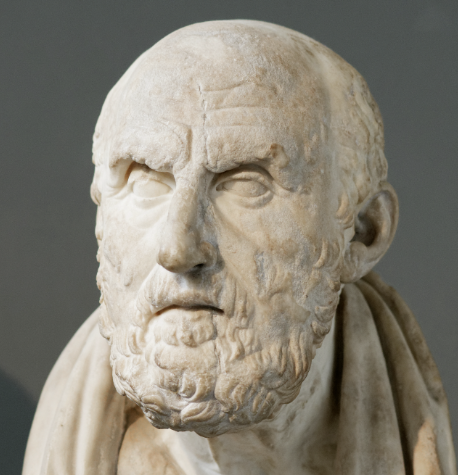
Now his principal doctrines were these. That atoms and the vacuum were the beginning of the universe; and that everything else existed only in opinion.
▼
Source
(trans. by Robert Drew Hicks 1925) Often paraphrased as "Nothing exists except atoms and empty space; everything else is opinion."
8 months ago
The universe itself is God and the universal outpouring of its soul.
▼
Source
As quoted in De Natura Deorum by Cicero, i. 15.
8 months ago
We should infer in the case of a beautiful dwelling-place that it was built for its owners and not for mice; we ought, therefore, in the same way to regard the universe as the dwelling-place of the gods.
▼
Source
As quoted in De Natura Deorum by Cicero, iii. 10.
8 months ago
Living virtuously is equal to living in accordance with one's experience of the actual course of nature.
▼
Source
As quoted by Diogenes Laërtius, vii. 182.
8 months ago
Wise people are in want of nothing, and yet need many things. On the other hand, nothing is needed by fools, for they do not understand how to use anything, but are in want of everything.
▼
Source
As quoted in Moral Epistles by Seneca, iii. 10.
8 months ago
He who is running a race ought to endeavor and strive to the utmost of his ability to come off victor; but it is utterly wrong for him to trip up his competitor, or to push him aside. So in life it is not unfair for one to seek for himself what may accrue to his benefit; but it is not right to take it from another.
▼
Source
As quoted in De Officiis by Cicero, iii. 10.
8 months ago
If I had followed the multitude, I should not have studied philosophy.
▼
Source
As quoted by Diogenes Laërtius, vii. 182.
8 months ago
If I knew that it was fated for me to be sick, I would even wish for it; for the foot also, if it had intelligence, would volunteer to get muddy.
▼
Source
As quoted by Epictetus, Discourses, ii. 6. 10.
8 months ago
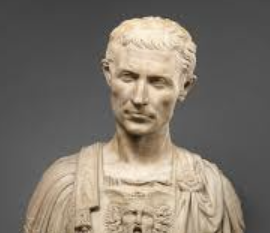
It is worth observing, how we feel ourselves affected in reading the characters of Cæsar, and Cato, as they are so finely drawn and contrasted in Salust. In one, the ignoscendo, largiundo; in the other, nil largiundo. In one, the miseris perfugium; in the other, malis perniciem. In the latter we have much to admire, much to reverence, and perhaps something to fear; we respect him, but we respect him at a distance. The former makes us familiar with him; we love him, and he leads us whither he pleases.
▼
Source
Edmund Burke, A Philosophical Enquiry into the Origin of Our Ideas of the Sublime and Beautiful (2nd ed. 1759), pp. 206-207
8 months ago
Bear in mind, that if through toil you accomplish a good deed, that toil will quickly pass from you, the good deed will not leave you so long as you live; but if through pleasure you do anything dishonourable, the pleasure will quickly pass away, that dishonourable act will remain with you for ever.
▼
Source
In the speech which he delivered ('At Numantia to the Knights'); quoted by Aulus Gellius, Attic Nights, XVI, i, 4 John C. Rolfe, ed. The Attic Nights of Aulus Gellius, Vol. 3, LCL 212 (1928), p. 131
8 months ago
I will begin to speak when I am not going to say what were better left unsaid.
▼
Source
Quoted by Plutarch, Life of Cato the Younger, 4 Bernadotte Perrin, ed. Plutarch's Lives, Vol. 8, LCL 100 (1919), pp. 247, 361
8 months ago
Nay, men, if any of you had heeded what I was ever foretelling and advising, ye would now neither be fearing a single man nor putting your hopes in a single man.
▼
Source
Quoted by Plutarch, Life of Cato the Younger, 52 Bernadotte Perrin, ed. Plutarch's Lives, Vol. 8, LCL 100 (1919), pp. 247, 361
8 months ago
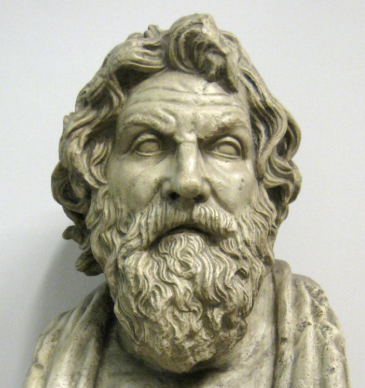
Wealth and poverty do not lie in a person's estate, but in their souls.
▼
Source
iv. 34
8 months ago
It is better to fight with a few good men against all the wicked, than with many wicked men against a few good men.
▼
Source
§ 5
8 months ago
Antisthenes ... was asked on one occasion what learning was the most necessary, and he replied, "To unlearn one's bad habits."
▼
Source
§ 4
8 months ago
I have enough to eat till my hunger is stayed, to drink till my thirst is sated; to clothe myself withal; and out of doors not Callias there, with all his riches, is more safe than I from shivering; and when I find myself indoors, what warmer shirting do I need than my bare walls? what ampler greatcoat than the tiles above my head?
▼
Source
iv. 34
8 months ago
One should attend to one's enemies, for they are the first persons to detect one's errors.
▼
Source
§ 5
8 months ago
When he was asked what advantage had accrued to him from philosophy, his answer was, "The ability to hold converse with myself."
▼
Source
§ 4
8 months ago
There is no work so mean, but it would amply serve me to furnish me with sustenance.
▼
Source
iv. 35
8 months ago
The investigation of the meaning of words is the beginning of education.
▼
Source
Arrian, Discourses of Epictetus, i. 17
8 months ago
Virtue is the same for a man and for a woman.
▼
Source
§ 5
8 months ago
States are doomed when they are unable to distinguish good men from bad.
▼
Source
§ 5
8 months ago
To all my friends without distinction I am ready to display my opulence: come one, come all; and whosoever likes to take a share is welcome to the wealth that lies within my soul.
▼
Source
iv. 35
8 months ago
I'd rather be mad than feel pleasure.
▼
Source
§ 3; quoted also by Eusebius of Caesarea, Praeparatio Evangelica xv. 13
8 months ago
Count all wickedness foreign and alien.
▼
Source
§ 5
8 months ago
As iron is eaten away by rust, so the envious are consumed by their own passion.
▼
Source
§ 5
8 months ago
It is a royal privilege to do good and be ill spoken of.
▼
Source
§ 3; quoted also by Marcus Aurelius, vii. 36
8 months ago
Being asked what learning is the most necessary, he replied, "How to get rid of having anything to unlearn.
▼
Source
" § 7
8 months ago
Once, when he was applauded by rascals, he remarked, "I am horribly afraid I have done something wrong."
▼
Source
§ 5
8 months ago
Antisthenes ... said once to a youth from Pontus who was on the point of coming to him to be his pupil, and was asking him what things he wanted, "You want a new book, and a new pen, and a new tablet;"
▼
Source
meaning a new mind. § 4
8 months ago
Pay attention to your enemies, for they are the first to discover your mistakes.
▼
Source
§ 12
8 months ago
Ill repute is a good thing and much the same as pain.
▼
Source
§ 5
8 months ago
It is better to fall in with crows than with flatterers; for in the one case you are devoured when dead, in the other case while alive.
▼
Source
§ 4
8 months ago
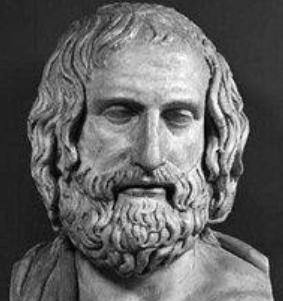
The Greeks follow a wrong usage in speaking of coming into being and passing away; for nothing comes into being or passes away, but there is mingling and separation of things that are. So they would be right to call coming into being mixture, and passing away separation.
▼
Source
Frag. B 17, quoted in John Burnet's Early Greek Philosophy, (1920), Chapter 6.
8 months ago
The sun provides the moon with its brightness.
▼
Source
Fragment in Plutarch De facie in orbe lunae, 929b, as quoted in The Riverside Dictionary of Biography (2005), p. 23
8 months ago
Wrongly do the Greeks suppose that aught begins or ceases to be; for nothing comes into being or is destroyed; but all is an aggregation or secretion of pre-existent things: so that all-becoming might more correctly be called becoming-mixed, and all corruption, becoming-separate.
▼
Source
quoted in Heinrich Ritter, Tr. from German by Alexander James William Morrison, The History of Ancient Philosophy, Vol.1
8 months ago
All things were together, infinite both in number and in smallness; for the small too was infinite.
▼
Source
Frag. B 1, quoted in John Burnet's Early Greek Philosophy, (1920), Chapter 6.
CivilSimian.com created by AxiomaticPanic, CivilSimian, Kalokagathia