
4 months 3 weeks ago
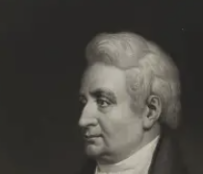
Macaulay is like a book in breeches...He has occasional flashes of silence, that make his conversation perfectly delightful.
▼
Source
Vol. I, ch. 11, p. 415
4 months 3 weeks ago
The truth is, that most men want knowledge, not for itself, but for the superiority which knowledge confers; and the means they employ to secure this superiority, are as wrong as the ultimate object, for no man can ever end with being superior, who will not begin with being inferior.
▼
Source
Lecture IX : On the Conduct of the Understanding
4 months 3 weeks ago
But now persecution is good, because it exists; every law which originated in ignorance and malice, and gratifies the passions from whence it sprang, we call the wisdom of our ancestors: when such laws are repealed, they will be cruelty and madness; till they are repealed, they are policy and caution.
▼
Source
Peter Plymley's Letters (1808), Letter V
4 months 3 weeks ago
As the French say, there are three sexes - men, women, and clergymen.
▼
Source
Vol. I, ch. 9, p. 313
4 months 3 weeks ago
He not only overflowed with learning but stood in the slops.
▼
Source
On Macaulay; reported in Hesketh Pearson, The Smith of Smiths (London: Hamish Hamilton, 1934), p. 180
4 months 3 weeks ago
A comfortable house is a great source of happiness. It ranks immediately after health and a good conscience.
▼
Source
Vol. II, letter to Lord Murray (29 September 1843), p. 501
4 months 3 weeks ago
The fox, when caught, is worth nothing: he is followed for the pleasure of following.
▼
Source
Vol. I, ch. 6, "Of Occupation", p. 177
4 months 3 weeks ago
The object of preaching is, constantly to remind mankind of what mankind are constantly forgetting; not to supply the defects of human intelligence, but to fortify the feebleness of human resolutions.
▼
Source
"The Judge That Smites Contrary to the Law: A Sermon Preached...March 28, 1824", in The Works of the Rev. Sydney Smith (1860) p. 428
4 months 3 weeks ago
You remember Thurlow's answer to some one complaining of the injustice of a company. "Why, you never expected justice from a company, did you? they have neither a soul to lose, nor a body to kick."
▼
Source
Vol. I, ch. 11, p. 428
4 months 3 weeks ago
The fact is that in order to do any thing in this world worth doing, we must not stand shivering on the bank thinking of the cold and the danger, but jump in and scramble through as well as we can.
▼
Source
Lecture IX : On the Conduct of the Understanding
4 months 3 weeks ago
Manners are the shadows of virtues; the momentary display of those qualities which our fellow creatures love, and respect.
▼
Source
Sermon XII, Sermons
4 months 3 weeks ago
To take Macaulay out of literature and society and put him in the House of Commons, is like taking the chief physician out of London during a pestilence.
▼
Source
Vol. I, ch. 9, p. 315
4 months 3 weeks ago
My idea of heaven is, eating pâté de foie gras to the sound of trumpets.
▼
Source
View ascribed by Smith to his friend Henry Luttrell; reported in Hesketh Pearson, The Smith of Smiths (London: Hamish Hamilton, 1934), p. 236
4 months 3 weeks ago
Let every man be occupied, and occupied in the highest employment of which his nature is capable, and die with the consciousness that he has done his best.
▼
Source
Vol. I, ch. 6, "Of Occupation", p. 178
4 months 3 weeks ago
Every rock in the ocean where a cormorant can perch is occupied by our troops - has a governor, deputy-governor, storekeeper, and deputy-storekeeper - and will soon have an archdeacon and a bishop. Military colleges, with thirty-four professors, educating seventeen ensigns per annum, being half an ensign for each professor, with every species of nonsense, athletic, sartorial, and plumigerous.
▼
Source
Catholics, published in The Edinburgh Review (1827). See The Works of the Rev. Sydney Smith. 2. 1859. p. 123.
4 months 3 weeks ago
I am old, but I certainly have not that sign of old age, extolling the past at the expense of the present.
▼
Source
Vol. I, ch. 11, p. 437
4 months 3 weeks ago
It is the greatest of all mistakes to do nothing because you can only do little.
▼
Source
Lecture XIX : On the Conduct of the Understanding, Part II
4 months 3 weeks ago
In fact, when a nation has become free, it is extremely difficult to persuade them that their freedom is only to be preserved by perpetual and minute jealousy. They do not observe that there is a constant, perhaps an unconscious, effort on the part of their governors to diminish, and so ultimately to destroy, that freedom.
▼
Source
Characters of Mr. Fox (review of Characters of the late Charles James Fox, edited by Philopatris Varvicensis, 2 vols), in The Edinburgh Review
4 months 3 weeks ago
Live always in the best company when you read.
▼
Source
Vol. I, ch. 10, p. 370
4 months 3 weeks ago
Bishop Berkeley destroyed this world in one volume octavo; and nothing remained after his time, but mind - which experienced a similar fate from the hand of Mr. Hume, in 1737.
▼
Source
Introduction
4 months 3 weeks ago
Life is to be fortified by many friendships. To love, and to be loved, is the greatest happiness of existence. If I lived under the burning sun of the equator, it would be a pleasure to me to think that there were many human beings on the other side of the world who regarded and respected me; I could and would not live if I were alone upon the earth, and cut off from the remembrance of my fellow-creatures. It is not that a man has occasion often to fall back upon the kindness of his friends; perhaps he may never experience the necessity of doing so; but we are governed by our imaginations, and they stand there as a solid and impregnable bulwark against all the evils of life.
▼
Source
Vol. I, ch. 6, "Of Friendship", p. 178
4 months 3 weeks ago
It is the safest to be moderately base - to be flexible in shame, and to be always ready for what is generous, good, and just, when anything is to be gained by virtue.
▼
Source
"Catholics", published in The Edinburgh Review (1827). See The Works of the Rev. Sydney Smith. 2. 1859. p. 134.
4 months 3 weeks ago
We know nothing of tomorrow; our business is to be good and happy today.
▼
Source
Vol. I, ch. 12, p. 472
4 months 3 weeks ago
Preaching has become a byword for long and dull conversation of any kind; and whoever wishes to imply, in any piece of writing, the absence of everything agreeable and inviting, calls it a sermon.
▼
Source
Vol. I, ch. 3, p. 81
4 months 3 weeks ago
It is true that every increase of knowledge may possibly render depravity more depraved, as well as it may increase the strength of virtue. It is in itself only power; and its value depends on its application.
▼
Source
"Female Education" (review of Thomas Broadhurst, Advice to Young Ladies on the Improvement of Mind, 1808), in The Edinburgh Review, No. 30 (January 1810), p. 314
4 months 3 weeks ago
Never give way to melancholy; resist it steadily, for the habit will encroach.
▼
Source
Vol. I, ch. 10, p. 372
4 months 3 weeks ago
Have the courage to be ignorant of a great number of things, in order to avoid the calamity of being ignorant of everything.
▼
Source
Lecture IX : On the Conduct of the Understanding
4 months 3 weeks ago
No furniture so charming as books.
▼
Source
Vol. I, ch. 9, p. 289
4 months 3 weeks ago
Dean Swift's rule is as good for women as for men - never to talk above a half minute without pausing, and giving others an opportunity to strike in.
▼
Source
Parisian Morals and Manners, published in The Edinburgh Review (1843)
4 months 3 weeks ago
If you could be alarmed into the semblance of modesty, you would charm everybody; but remember my joke against you about the Moon and the Solar System;-"Damn the solar system! bad light - planets too distant - pestered with comets - feeble contriviance; - could make a better with great ease."
▼
Source
Vol. II, letter to Lord Jeffrey (1806), p. 23 Discussed in David A. Kent, D. R. Ewen, "Romantic Parodies, 1797-1831", The Review of English Studies, New Series, Vol. 44, No. 175, (1993), pp. 430-432
4 months 3 weeks ago
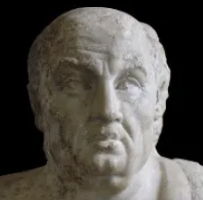
Our minds must have relaxation: rested, they will rise up better and keener. Just as we must not force fertile fields (for uninterrupted production will quickly exhaust them), so continual labor will break the power of our minds. They will recover their strength, however, after they have had a little freedom and relaxation.
4 months 3 weeks ago
You have, dearest Serene, things that can protect tranquility, things that restore it, things that resist creeping escapes. Be it known, however, that none of these things is sufficient for those who hold a feeble matter, unless a constant concern surrounds the slipping mind.
4 months 3 weeks ago
What, if you were to pass from the consideration of those single men against whom anger has broken out to view whole assemblies cut down by the sword, the people butchered by the soldiery let loose upon it, and whole nations condemned to death in one common ruin... as though by men who either freed themselves from our charge or despised our authority?
4 months 3 weeks ago
Who, then, can be more ignorant of nature than he who classes this cruel and hurtful vice as belonging to her best and most polished work?
4 months 3 weeks ago
You have demanded of me, Novatus, that I should write how anger may be soothed, and it appears to me that you are right in feeling especial fear of this passion, which is above all others hideous and wild: for the others have some alloy of peace and quiet, but this consists wholly in action and the impulse of grief, raging with an utterly inhuman lust for arms, blood and tortures, careless of itself provided it hurts another, rushing upon the very point of the sword, and greedy for revenge even when it drags the avenger to ruin with itself.
4 months 3 weeks ago
To preserve the life of citizens, is the greatest virtue in the father of his country.
▼
Source
The quote is from a Roman tragedy Octavia; Act 2, Line 444, where Seneca advises Nero against carrying out his tyrannical plans. Seneca's attribution to the play is generally discredited by modern scholarship.
4 months 3 weeks ago
What anger is has been sufficiently explained. The difference between it and irascibility is evident: it is the same as that between a drunken man and a drunkard; between a frightened man and a coward. It is possible for an angry man not to be irascible; an irascible man may sometimes not be angry. I shall omit the other varieties of anger, which the Greeks distinguish by various names, because we have no distinctive words for them in our language, although we call men bitter and harsh, and also peevish, frantic, clamorous, surly and fierce: all of which are different forms of irascibility.
4 months 3 weeks ago
When the changes of our times gave you an opportunity, you restored to the use of man that genius of your father for which he had suffered, and made him in real truth immortal by publishing as an eternal memorial of him those books which that bravest of men had written with his own blood. You have done a great service to Roman literature: a large part of Cordus's books had been burned; a great service to posterity, who will receive a true account of events, which cost its author so dear; and a great service to himself, whose memory flourishes and ever will flourish, as long as men set any value upon the facts of Roman history, as long as anyone lives who wishes to review the deeds of our fathers, to know what a true Roman was like - one who still remained unconquered when all other necks were broken in to receive the yoke of Sejanus, one who was free in every thought, feeling, and act.
4 months 3 weeks ago
Nothing lasts forever, few things even last for long: all are susceptible of decay in one way or another; moreover all that begins also ends.
▼
Source
From Ad Polybium De Consolatione (Of Consolation, To Polybius), chap. I; translation based on work of Aubrey Stewart
4 months 3 weeks ago
Everything of this sort is not anger, but the semblance of anger, like that of boys who want to beat the ground when they have fallen upon it, and who often do not even know why they are angry, but are merely angry without any reason or having received any injury, yet not without some semblance of injury received, or without some wish to exact a penalty for it.
4 months 3 weeks ago
Anger, as we have said, is eager to punish; and that such a desire should exist in man's peaceful breast is least of all according to his nature; for human life is founded on benefits and harmony and is bound together into an alliance for the common help of all, not by terror, but by love towards one another.
4 months 3 weeks ago
Some of the wisest of men have in consequence of this called anger a short madness: for it is equally devoid of self control, regardless of decorum, forgetful of kinship, obstinately engrossed in whatever it begins to do, deaf to reason and advice, excited by trifling causes, awkward at perceiving what is true and just, and very like a falling rock which breaks itself to pieces upon the very thing which it crushes.
4 months 3 weeks ago
Let us now enquire whether anger be in accordance with nature, and whether it be useful and worth entertaining in some measure.
4 months 3 weeks ago
By Hercules, the state would have sustained a great loss if you had not brought him forth from the oblivion to which his two splendid qualities, eloquence and independence, had consigned him: he is now read, is popular, is received into men's hands and bosoms, and fears no old age: but as for those who butchered him, before long men will cease to speak even of their crimes, the only things by which they are remembered.
4 months 3 weeks ago
A great fortune is a great slavery.
▼
Source
From Ad Polybium De Consolatione (Of Consolation, To Polybius), chap. VI, line 5
4 months 3 weeks ago
Thus they are deceived by the likeness of blows, and are appeased by the pretended tears of those who deprecate their wrath, and thus an unreal grief is healed by an unreal revenge.
4 months 3 weeks ago
Much must also be withdrawn into oneself: for a well-composed conversation of differences disturbs and renews the affections, and infuriates whatever is weak in the mind and has not been cared for...Loneliness will cure the hatred of the crowd, the boredom of solitude will be cured by the crowd.... A certain dullness and languor of the mind is born from constant toil....Nor would the desire of men so much tend to this, unless play and fun had a kind of natural voluptuousness. The frequent use of which will relieve all the weight of the soul and all the vigor.For sleep is also necessary for refreshment, but if you continue it day and night, death will result.
4 months 3 weeks ago
That you may know that they whom anger possesses are not sane, look at their appearance; for as there are distinct symptoms which mark madmen, such as a bold and menacing air, a gloomy brow, a stern face
4 months 3 weeks ago
What is more affectionate to others than man? Yet what is more savage against them than anger?
4 months 3 weeks ago
All vices sink into our whole being, if we do not crush them before they gain a footing; and in like manner these sad, pitiable, and discordant feelings end by feeding upon their own bitterness, until the unhappy mind takes a sort of morbid delight in grief... In like manner, wounds heal easily when the blood is fresh upon them: they can then be cleared out and brought to the surface, and admit of being probed by the finger: when disease has turned them into malignant ulcers, their cure is more difficult.
CivilSimian.com created by AxiomaticPanic, CivilSimian, Kalokagathia