

4 months ago
I don't feel that it is necessary to know exactly what I am. The main interest in life and work is to become someone else that you were not in the beginning. If you knew when you began a book what you would say at the end, do you think that you would have the courage to write it? What is true for writing and for a love relationship is true also for life. The game is worthwhile insofar as we don't know what will be the end. My field is the history of thought. Man is a thinking being.
▼
Source
Truth, Power, Self : An Interview with Michel Foucault (25 October 1982)

4 months ago
After defining semantical concepts like logical truth and related ones, I proposed to interpret the modalities as those properties of propositions which correspond to certain semantical properties of the sentences expressing the propositions. For example, a proposition is logically necessary if and only if a sentence expressing it is logically true.
▼
Source
p. 62

4 months ago
Liberty, as we all know, cannot flourish in a country that is permanently on a war footing, or even a near war footing. Permanent crisis justifies permanent control of everybody and everything by the agencies of central government.
▼
Source
Chapter 1 (p. 14)
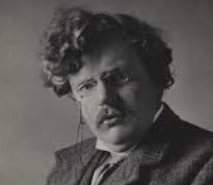
4 months ago
If a thing is worth doing, it is worth doing badly.
▼
Source
Folly and Female Education
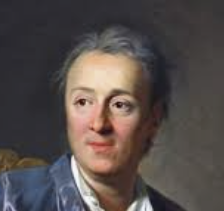
4 months ago
We swallow greedily any lie that flatters us, but we sip only little by little at a truth we find bitter.
4 months ago
Absurdity destroys the and of the enumeration by making impossible the in where the things enumerated would be divided up.
▼
Source
Preface
4 months ago
A child gets sick with a chronic disease of unhappiness not from unhappy circumstances but from unhappy people around him. Unhappy people cannot raise happy children; it’s impossible.
▼
Source
Book 1 part 1, ch. 23
4 months ago
The only good that I can see in the demonstration of the truth of "Spiritualism" is to furnish an additional argument against suicide. Better live a crossing-sweeper than die and be made to talk twaddle by a "medium" hired at a guinea a séance.
▼
Source
T. H. Huxley in Life and Letters Volume 1, p. 249
4 months ago
They spoke of Progress spiring round, Of Light and Mrs. Humphry Ward — It is not true to say I frowned, Or ran about the room and roared; I might have simply sat and snored — I rose politely in the club And said, “I feel a little bored; Will someone take me to a pub?”
▼
Source
A Ballade of an Anti-Puritan, st. 1

4 months ago
The application of algebra to geometry... far more than any of his metaphysical speculations, has immortalized the name of Descartes, and constitutes the greatest single step ever made in the progress of the exact sciences.
▼
Source
An Examination of Sir William Hamilton's Philosophy (1865) as quoted in 5th ed. (1878) [https://books.google.com/books?id=ojQNAQAAMAAJ&pg=PA617 p. 617.]
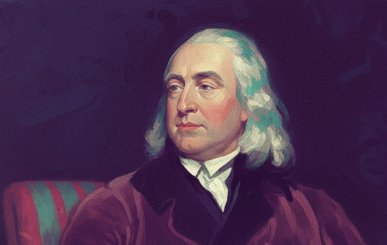
4 months ago
Want keeps pace with dignity. Destitute of the lawful means of supporting his rank, his dignity presents a motive for malversation, and his power furnishes the means.
▼
Source
[http://books.google.com/books?id=W2lYAAAAMAAJ&pg=PA246&dq=malversation&hl=en&ei=TQlHTKuqHYfJnAespJjOBA&sa=X&oi=book_result&ct=result&resnum=28&ved=0CKsBEOgBMBs4ZA#v=onepage&q=malversation&f=false The Rationale of Reward (1811)]
4 months ago
We are aware of all the inconveniences of prison, and that it is dangerous when it is not useless. And yet one cannot 'see' how to replace it. It is the detestable solution, which one seems unable to do without.
▼
Source
Part Four, Complete and austere institutions

4 months ago
I was born in Italy on the 17th May 1279 in a castle in the city of Carmona.
▼
Source
71
4 months ago
The last hundred years has seen a general decline in the democratic idea. If there be anybody left to whom this historical truth appears a paradox, it is only because during that period nobody has been taught history, least of all the history of ideas. If a sort of intellectual inquisition had been established, for the definition and differentiation of heresies, it would have been found that the original republican orthodoxy had suffered more and more from secessions, schisms, and backslidings. The highest point of democratic idealism and conviction was towards the end of the eighteenth century, when the American Republic was 'dedicated to the proposition that all men are equal.' It was then that the largest number of men had the most serious sort of conviction that the political problem could be solved by the vote of peoples instead of the arbitrary power of princes and privileged orders.
▼
Source
[http://www.online-literature.com/chesterton/what-i-saw-in-america/19/ "The Future of Democracy"]
4 months ago
In a really equal democracy, every or any section would be represented, not disproportionately, but proportionately. ... Unless they are, there is not equal government, but a government of inequality and privilege: one part of the people rule over the rest: there is a part whose fair and equal share of influence in the representation is withheld from them, contrary to all just government, but, above all, contrary to the principle of democracy, which professes equality as its very root and foundation.
▼
Source
Ch. VII: Of True and False Democracy; Representation of All, and Representation of the Majority only (p. 248)
4 months ago
The second characteristic of parrhesia... there is always an exact coincidence between belief and truth.
4 months ago
Since it is the Other within us who is old, it is natural that the revelation of our age should come to us from outside — from others. We do not accept it willingly.
▼
Source
Pt. 2, Ch. 1: The discovery and assumption of old age: the body's experience, p. 288
4 months ago
A man knocking on the door of a brothel is looking for God.
▼
Source
The source is actually a 1945 book by Bruce Marshall, The World, The Flesh, and Father Smith, in which he says, "...the young man who rings the bell at the brothel is unconsciously looking for God."
4 months ago
Since the state must necessarily provide subsistence for the criminal poor while undergoing punishment, not to do the same for the poor who have not offended is to give a premium on crime.
▼
Source
Book V, Chapter XI, §13
4 months ago
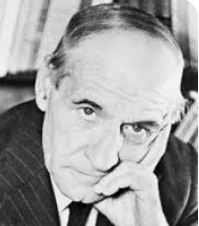
When shall we open our minds to the conviction that the ultimate reality of the world is neither matter nor spirit, is no definite thing, but a perspective?
4 months ago
Many cultural historians have found both inspiration and an intellectual rationale for their synchronic approach in the work of a celebrated and controversial French thinker, Michel Foucault. Along with E. P. Thompson and Fernand Braudel, Foucault is among the most influential figures in recent Western historiography. But while even their critics express respect for Thompson's and Braudel's achievements, Foucault is a thinker many historians love to hate, if only because he was not a member of the discipline but a philosopher who wrote books based on historical sources. A mythical figure even in his relatively short lifetime (he died in 1984, aged fifty-eight), Foucault was a brilliant intellectual polymath who, although formally trained in philosophy, developed an early interest in the history of psychiatry and produced as his doctoral thesis a thousand-page study of madness in early modern Europe. His many books include philosophical histories of the knowledge-systems of early modern and modern Europe, The Order of Things and The Archaeology of Knowledge, a multivolume meditation on the history of sexuality, and the book many consider his masterpiece, Discipline and Punish, a study of the shift in Western societies from physical punishment to imprisonment as the standard response to crime.
▼
Source
Sarah Maza, Thinking About History (2017), Chap. 5 : Causes or Meaninings?
4 months ago
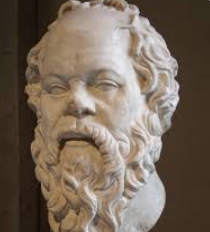
And will he who is a true lover of wisdom, and is persuaded in like manner that only in the world below can he worthily enjoy her, still repine at death? Will he not depart with joy? Surely he will, my friend, if he be a true philosopher. ...And if this be true, he would be very absurd, ...if he were to fear death.
4 months ago
There is a pressing need to understand our technological destiny from principles more comprehensive than its own. This need lifts us up to ask about the great western experiment in a more than piecemeal way. It pushes us to try to understand its meaning in terms of some openness to the whole which is not simply sustenance for the further realisation of that experiment. But the exigency of our need for understanding must not blind us to the tightening circle in which we find ourselves. We are called to understand technological civilisation just when its very realisation has radically put in question the possibility that there could be any such understanding.
▼
Source
p. 34
4 months ago
All this is merely saying that he, in a degree once common, but now very unusual, threw his feelings into his opinions; which truly it is difficult to understand how any one who possesses much of both, can fail to do. None but those who do not care about opinions, will confound it with intolerance. Those, who having opinions which they hold to be immensely important, and their contraries to be prodigiously hurtful, have any deep regard for the general good, will necessarily dislike, as a class and in the abstract, those who think wrong what they think right, and right what they think wrong: though they need not therefore be, nor was my father, insensible to good qualities in an opponent, nor governed in their estimation of individuals by one general presumption, instead of by the whole of their character.
▼
Source
([https://archive.org/details/autobiography01mill/page/50/mode/1up pp. 50-51])
4 months ago
Diogenes, in his mud-covered sandals, tramps over the carpets of Aristippus. The cynic pullulated at every corner, and in the highest places. This cynic did nothing but saboter the civilisation of the time. He was the nihilist of Hellenism. He created nothing, he made nothing. His role was to undo — or rather to attempt to undo, for he did not succeed in his purpose. The cynic, a parasite of civilisation, lives by denying it, for the very reason that he is convinced that it will not fail. What would become of the cynic among a savage people where everyone, naturally and quite seriously, fulfils what the cynic farcically considers to be his personal role?
▼
Source
Chapter XI: The Self-Satisfied Age
4 months ago
And thus one man makes a vortex all round and steadies the earth by the heaven; another gives the air as support for the earth, which is sort of a broad trough. Any power which in disposing them as they are disposes them for the best never enters into their minds, not do they imagine that there is any superhuman strength in that; they rather expect to find another Atlas of the world who is stronger and more everlasting and more containing than the good is, and are clearly of the opinion that the obligatory and containing power of the good is as nothing; and yet this is the principle which I would fain learn if anyone would teach me. But as I have failed either to discover myself or to learn of anyone else, the nature of the best, I will exhibit to you, if you like, what I have found to be the second best mode of inquiring into the cause.
4 months ago
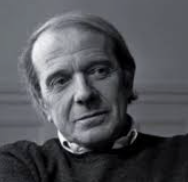
One of the principal motifs of Nietzsche’s work is that Kant had not carried out a true critique because he was not able to pose the problem of critique in terms of values.
▼
Source
p. 1

4 months ago
The suicide bomber is an explosion of a contradiction in its paradox, victim and victimizer, yin and yang, two sides of the coin, fire bomb and fire extinguisher, prosecutor and defendant, hangman and hanged.
4 months ago
Compared with the greatest poets, he may be said to be the poet of unpoetical natures, possessed of quiet and contemplative tastes. But unpoetical natures are precisely those which require poetic cultivation. This cultivation Wordsworth is much more fitted to give, than poets who are intrinsically far more poets than he.
▼
Source
([https://archive.org/details/autobiography01mill/page/149/mode/1up p. 149])
4 months ago
History tells us of innumerable retrogressions, of decadences and degenerations. But nothing tells us that there is no possibility of much more basic retrogressions than any so far known, including the most radical of all: the total disappearance of man as man and his silent return to the animal scale, to complete and definitive alteration. The fate of culture, the destiny of man, depends upon our maintaining this dramatic consciousness ever alive in our inmost being, and upon our being well aware, as of a murmuring counterpoint in our entrails, that we can only be sure of insecurity.
▼
Source
p. 26

4 months ago
Remember that all is opinion.
▼
Source
Ὅτι πᾶν ὑπόληψις. | II, 15
4 months ago
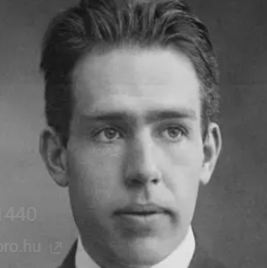
I am absolutely prepared to talk about the spiritual life of an electronic computer: to state that it is reflecting or is in a bad mood... The question whether the machine really feels or ponders, or whether it merely looks as though it did, is of course absolutely meaningingless.
▼
Source
As quoted in a letter written from J. Kalckar to John A. Wheeler dated June 10, 1977, which appears in Wheeler's "Law Without Law," pg 207.

4 months ago
Philosophy is not politics, and we do our best, within our all-too-human limitations, to seek the truth, not to score points against opponents. There is little satisfaction in gaining an easy triumph over a weak opponent while ignoring better arguments against your views.
▼
Source
[http://opinionator.blogs.nytimes.com/2010/06/16/last-generation-a-response/ 'Last Generation': A Response], The New York Times, June 16, 2010.
4 months ago
I am not an Athenian or a Greek, but a citizen of the world.
▼
Source
Note: Compare doctrine of fidelity to Athenian law in Plato's Crito.

4 months ago
It is frequently insufficient to identify the motives that guide our conduct, or that shape our attitudes and our thinking, just by observing vaguely that there are various things we want. That often leaves out too much. In numerous contexts, it is both more precise and more fully explanatory to say that there is something we care about.
4 months ago
Mr. J. S. Mill speaks, in his celebrated work, Utilitarianism, (1864, pp. 45, 46), of the social feelings as a "powerful natural sentiment," and as "the natural basis of sentiment for utilitarian morality." Again he says, "Like the other acquired capacities above referred to, the moral faculty, if not a part of our nature, is a natural out-growth from it; capable, like them, in a certain small degree of springing up spontaneously." But in opposition to all this, he also remarks, "if, as in my own belief, the moral feelings are not innate, but acquired, they are not for that reason less natural." It is with hesitation that I venture to differ at all from so profound a thinker, but it can hardly be disputed that the social feelings are instinctive or innate in the lower animals; and why should they not be so in man? Mr. Bain (see, for instance, The Emotions and the Will, 1865, p. 481) and others believe that the moral sense is acquired by each individual during his lifetime. On the general theory of evolution this is at least extremely improbable. The ignoring of all transmitted mental qualities will, as it seems to me, be hereafter judged as a most serious blemish in the works of Mr. Mill.
▼
Source
Charles Darwin, The Descent of Man, and Selection in Relation to Sex (1871; rev. ed., 1874), p. 98, n. 5
4 months ago
Be straightforward. Look at things like a man, like a human being, like a citizen, like a mortal.
▼
Source
IV, 4 (Hays translation)
4 months ago
When my ability to reason shows me that the suffering of another being is very similar to my own suffering and matters just as much to that other being as my own suffering matters to me, then my reason is showing me something that is undeniably true. ... The perspective on ourselves that we get when we take the point of view of the universe also yields as much objectivity as we need if we are to find a cause that is worthwhile in a way that is independent of our own desires. The most obvious such cause is the reduction of pain and suffering, wherever it is to be found.
▼
Source
[http://books.google.com/books?id=BoDMBgAAQBAJ&pg=PT238 p. 238]
4 months ago
It is exactly as it was in the time of Socrates, according to the accusation brought against him: “Everyone understood how to instruct the young men; there was but one single individual who did not understand it – that was Socrates.” So in our time, “all” are the wise, there is only one single individual here and there who is a fool. So near is the world to having achieved perfection that now “all” are wise; if it were not for the individual cranks and fools the world would be absolutely perfect. Through all this God sits in heaven. No one longs to be away from the noise and clamor of the moment in order to find the stillness in which God dwells. While man admires man, and admires him – because he is just like everyone else, no one longs for the solitude wherein one worships God. No one disdains this cheap intermission from aiming at the highest, by longing for the standard of the eternal! So important has the immediate itself become. It is for this reason that superficial disinterestedness is needed. Oh, that I might in truth present such a disinterested figure!
▼
Source
Soren Kierkegaard, Works of Love (1847), Swenson translation (1946) Princeton University Press, p. 297.
4 months ago
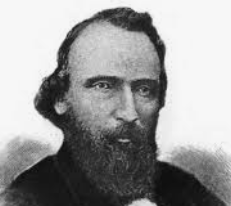
Redemption, eternal life, divinity, humanity, propitiation, incarnation, judgment, Satan, heaven and hell — all these beliefs have been so materialized and coarsened, that with a strange irony they present to us the spectacle of things having a profound meaning and yet carnally interpreted. Christian boldness and Christian liberty must be reconquered; it is the church which is heretical, the church whose sight is troubled and her heart timid. Whether we will or no, there is an esoteric doctrine, there is a relative revelation; each man enters into God so much as God enters into him, or as Angelus, I think, said, "the eye by which I see God is the same eye by which He sees me."
▼
Source
1 October 1849; Amiel is here actually quoting Meister Eckhart, not Angelus Silesius as he supposed.
4 months ago
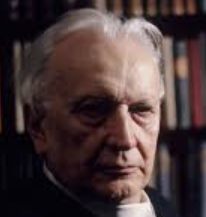
Rohde became more and more firmly bound to the bourgeois world, its institutions and accepted opinions. … The contrast between the two natures makes Rohde and Nietzsche exemplary representatives of two distinctive worlds. In their youth they both live in the realm of boundless possibilities and feel an affinity through the exuberance of their noble aspirations. Subsequently they go in opposite directions. Nietzsche remains young, leaving concrete reality as his task assumes existential import. Rohde grows old, bourgeois, stable, and skeptical. Hence courage is a fundamental trait in Nietzsche, plaintive self-irony in Rohde. … Rohde retained the interests but not the attitudes of his youth; he looked to the world of the Greeks for the object of his contemplation rather than the norm of obligation.
▼
Source
pp. 61-62
4 months ago
That which comes after ever conforms to that which has gone before.
▼
Source
IV, 45

4 months ago
God gave us faculties for our use; each of them will receive its proper reward. Then do not let us try to charm them to sleep, but permit them to do their work until divinely called to something higher.
▼
Source
Fourth Mansions, Ch. 3: Prayer of Quiet, as translated by the Benedictines of Stanbrook (1911), revised and edited by Fr. Benedict Zimmerman
4 months ago
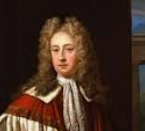
Truth lies within a little and certain compass, but error is immense.
▼
Source
Reflections upon Exile (1716)
4 months ago
Whensoever by some present hard occurrences thou art constrained to be in some sort troubled and vexed, return unto thyself as soon as may be, and be not out of tune longer than thou must needs. For so shalt thou be the better able to keep thy part another time, and to maintain the harmony, if thou dost use thyself to this continually; once out, presently to have recourse unto it, and to begin again.
▼
Source
VI, 9

4 months ago
Originality is a thing we constantly clamour for, and constantly quarrel with; as if, observes our author himself, any originality but our own could be expected to content us! In fact all strange thing are apt, without fault of theirs, to estrange us at first view, and unhappily scarcely anything is perfectly plain, but what is also perfectly common.
▼
Source
Richter.

4 months ago
In pursuit of gain, men have begun to consider their violence an article to be bought and sold.
▼
Source
Chapter 38
4 months ago
A patriot king is the most powerful of all reformers; for he is himself a sort of standing miracle, so rarely seen and so little understood, that the sure effects of his appearance will be admiration and love in every honest breast, confusion and terror to every guilty conscience, but submission and resignation in all. A new people will seem to arise with a new king. In numerable metamorphoses, like those which poets feign, will happen in very deed: and while men are conscious that they are the same individuals, the difference of their sentiments will almost persuade them that they are changed into different beings.
▼
Source
p. 135
4 months ago
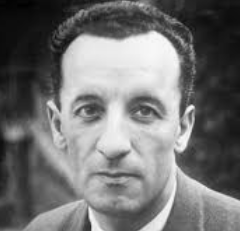
The accidents of our bodily constitution can always play this revealing role on the condition that they become a means of extending our knowledge by the consciousness which we have of them, instead of being submitted to as pure facts which dominate us. Ultimately, El Greco's supposed visual disorder was conquered by him and so profoundly integrated into his manner of thinking and being that it appears finally as the necessary expression of his being much more than as a peculiarity imposed from the outside. It is no longer a paradox to say that "El Greco was astigmatic because he produced elongated bodies." Everything which was accidental in the individual, that is, everything which revealed partial and independent dialectics without relationship to the total signification of his life, has been assimilated and centered in his deeper life. Bodily events have ceased to constitute autonomous cycles, to follow the abstract patterns of biology and psychology, and have received a new meaning.
▼
Source
p. 203
4 months ago
From Antisthenes: It is royal to do good and be abused.
▼
Source
VII, 36
CivilSimian.com created by AxiomaticPanic, CivilSimian, Kalokagathia